|
|
|
Other Asian Cultures Division
Image Code AC01 |
Catalogue No.: AC01
Description: The Buddha enthroned - a rare manuscript with paintings. From the Ratanakosin period (King Rama II) of Thailand. These manuscript paintings are extremely rare. The survival of paintings in Buddhist manuscripts of this period probably comprises the richest resource from which we can try to form a picture of what was clearly a superb painting tradition.
Size: 640 X 180mm. |
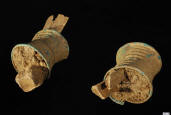
Image Code AC02 |
Catalogue No.: AC02
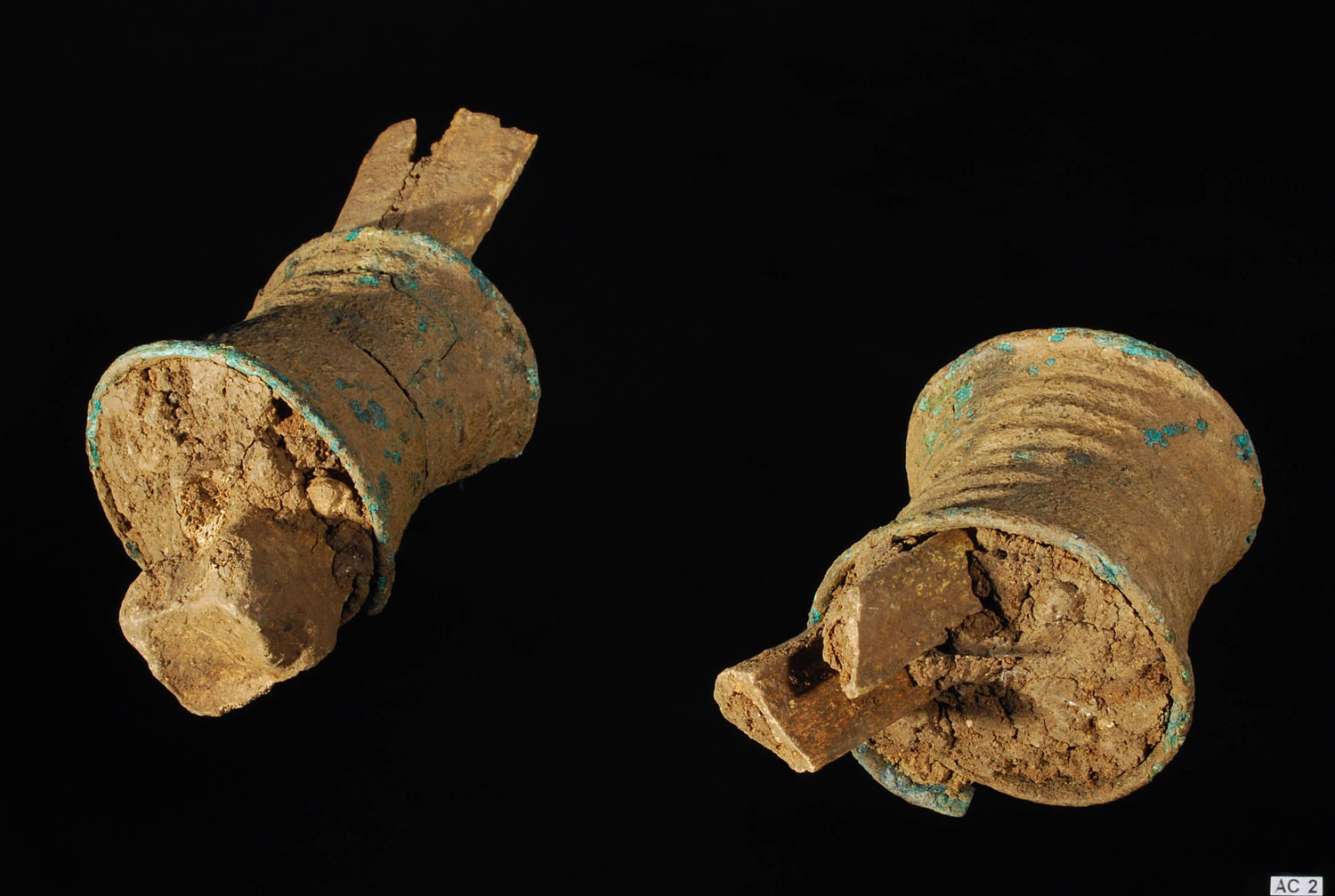
Description: Bronze Age Human Bone Relics with Bronze Bangles. 2 pieces.
Rare Bronze Age cast metal bangles with intact segments of human radius and ulna forearm bones, as recovered from a Bronze Age site in the region of Ban Chiang, Northern Thailand. Ban Chiang has been the subject of much controversy over claims for very early Neolithic settlement and the inception of bronze and iron working. The 1974 excavation of Ban Chiang revealed Bronze Age graves over a Neolithic cemetery, while Bronze Age graves were at the base of the sequence in the area opened a year later for investigation. It is now considered likely that Bronze casting was established within the period 1500 – 1000 BC. The early Bronze Age graves in this area underlay the remains of a clay furnace surrounded by ceramic crucible fragments still containing bronze from the casting process. Most Bronze Age graves in the area are devoid of bronzes but contain up to three pottery vessels. It is considered likely, therefore, the burial site from which these bangle were recovered, belonged to an important aristocrat of the time.
Size: 155 X 70mm. |
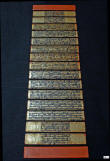
Image Code AC03 |
Catalogue No.: AC03
Description: Buddhist Sutra Boards. Of Burmese/Thai origin, each board double faced and of enamel lacquered silk fibre construction with gilt and red lacquer coating. The text in black relief enamel has been written on a background of red and metallic silver and probably relates to the ordination rites of a Buddhist monk. Impressive and in superb original condition, early 19th Century.
Size: Each leaf 535 X 90mm. |
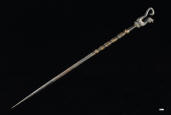
Image Code AC04 |
Catalogue No.: AC04
Description: Bronze South-East Asian Tattoo Tool, 19th century.
Size: 410 X 15mm. |
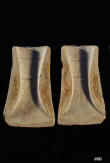
Image Code AC05 |
Catalogue No.: AC05
Description: Bronze Age Bi-valve Mould for the casting of an Axe
Rare Bronze Age mould from a Bronze Age site in the region of Ban Chiang, Northern Thailand. (2nd half of the 2nd millennium BC).
Ban Chiang has been the subject of much controversy over claims for very early Neolithic settlement and the inception of bronze and iron working. The 1974 excavation of Ban Chiang revealed Bronze Age graves over a Neolithic cemetery, while Bronze Age graves were at the base of the sequence in the area opened a year later for investigation. It is now considered likely that Bronze casting was established within the period 1500 – 1000 BC. The early Bronze Age graves in this area underlay the remains of a clay furnace surrounded by ceramic crucible fragments still containing bronze from the casting process. Casting moulds such as this pair and crucible fragments have also been found since the time of the 1974 excavation at the site. Copper and tin ingots must have been obtained by exchange, heated and then locally cast in such sandstone bi-vale moulds, considered especially rare as an intact pair.
Size: 126 X 73mm. |
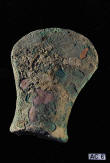
Image Code AC06 |
Catalogue No.: AC06
Description: Bronze Age Socketted Axe Head. Mainland South-east Asia, (2nd half of the 2nd millennium BC).
Size: 86 X 67mm. |
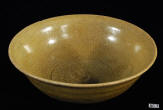
Image Code AC07 |
Catalogue No.: AC07
Description: Thai Celadon Ware Bowl. 16th century. Highly crazed green Celadon bowl collected at Tenggarong village (Barito River trade route) East Borneo.
Size: 165mm dia. |
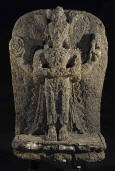
Image Code AC08 |
Catalogue No.: AC08
Description: Volcanic Stone Relief Carving of Lakshmi. Lakshmi is a major Hindu goddess who originated perhaps as a mother goddess but who now represents wealth and prosperity. She is identified as the consort of Vishnu and the epitome of feminine beauty. In her right hand she grasps a discus, in her left hand a conch shell, while her two front hands hold a lotus flower. c. 11th century AD, Yogyakarta, Java, Indonesia.
Size: 480 X 293mm. |
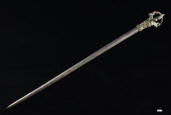
Image Code AC09 |
Catalogue No.: AC09
Description: Bronze South-East Asian Tattoo Tool, 19th century.
Size: 410 X 15mm. |
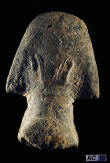
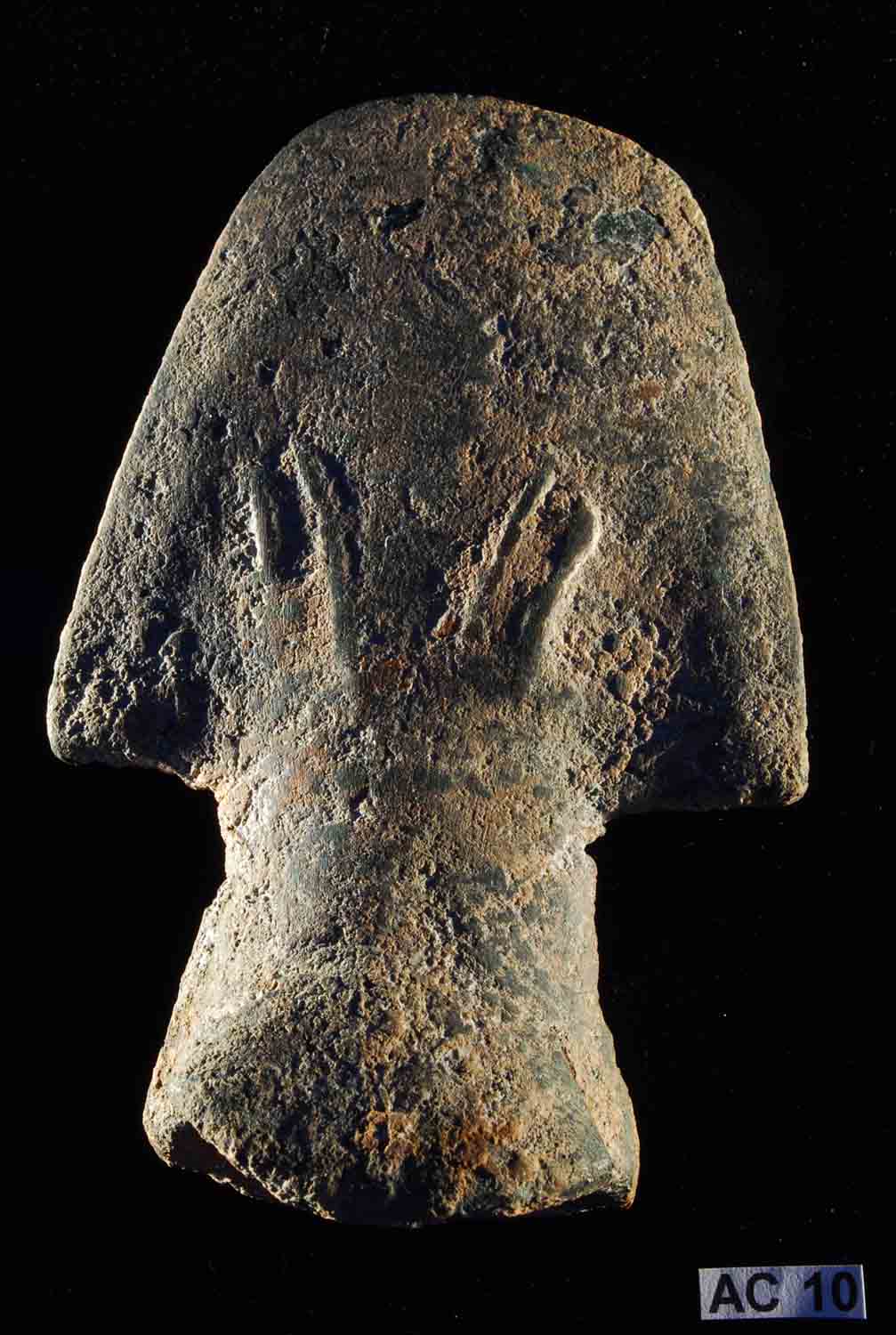
Image Code AC10 |
Catalogue No.: AC10
Description: Bronze Age Socketed Axe Head. Mainland South-east Asia, (2nd half of the 2nd millennium BC).
Size: 95 X 63mm. |
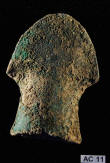
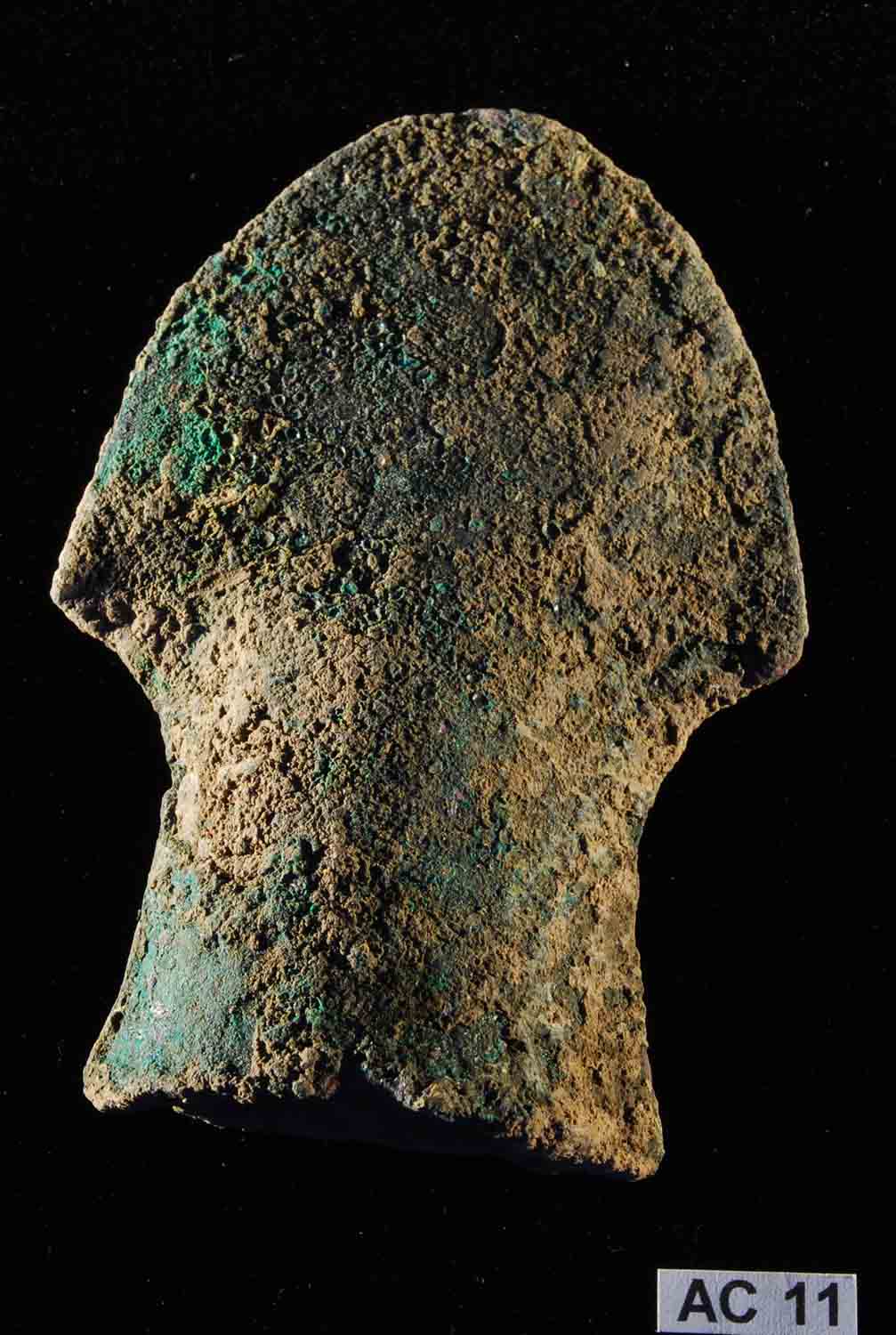
Image Code AC11 |
Catalogue No.: AC11
Description: Bronze Age Socketed Axe Head. Mainland South-east Asia, (2nd half of the 2nd millennium BC).
Size: 77 X 55mm. |
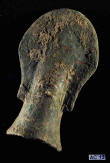
Image Code AC12 |
Catalogue No.: AC12
Description: Bronze Age Socketed Axe Head. Mainland South-east Asia, (2nd half of the 2nd millennium BC).
Size: 118 X 68mm. |
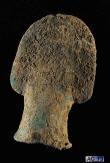
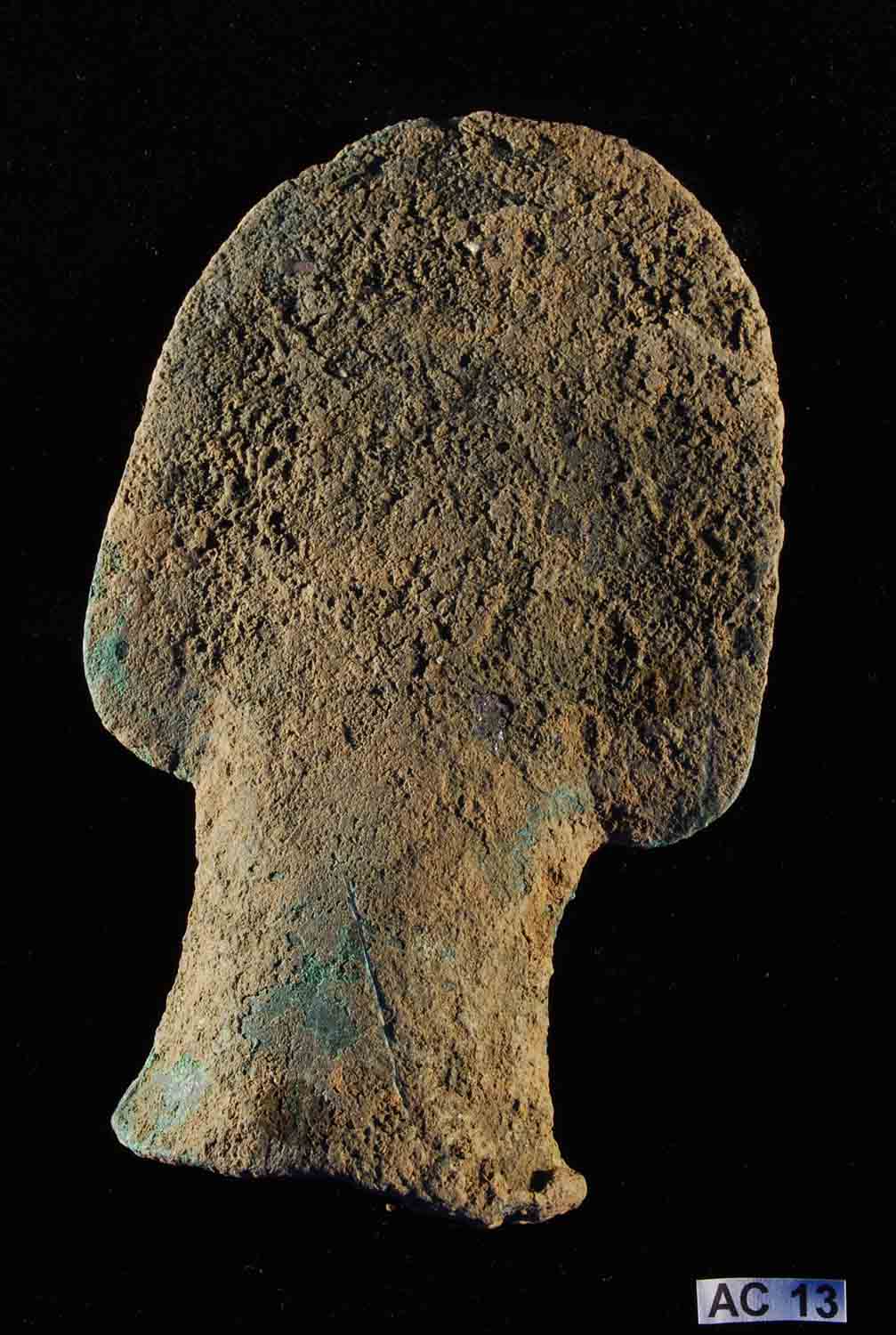
Image Code AC13 |
Catalogue No.: AC13
Description: Bronze Age Socketed Axe Head. Mainland South-east Asia, (2nd half of the 2nd millennium BC).
Size: 105 X 64mm. |

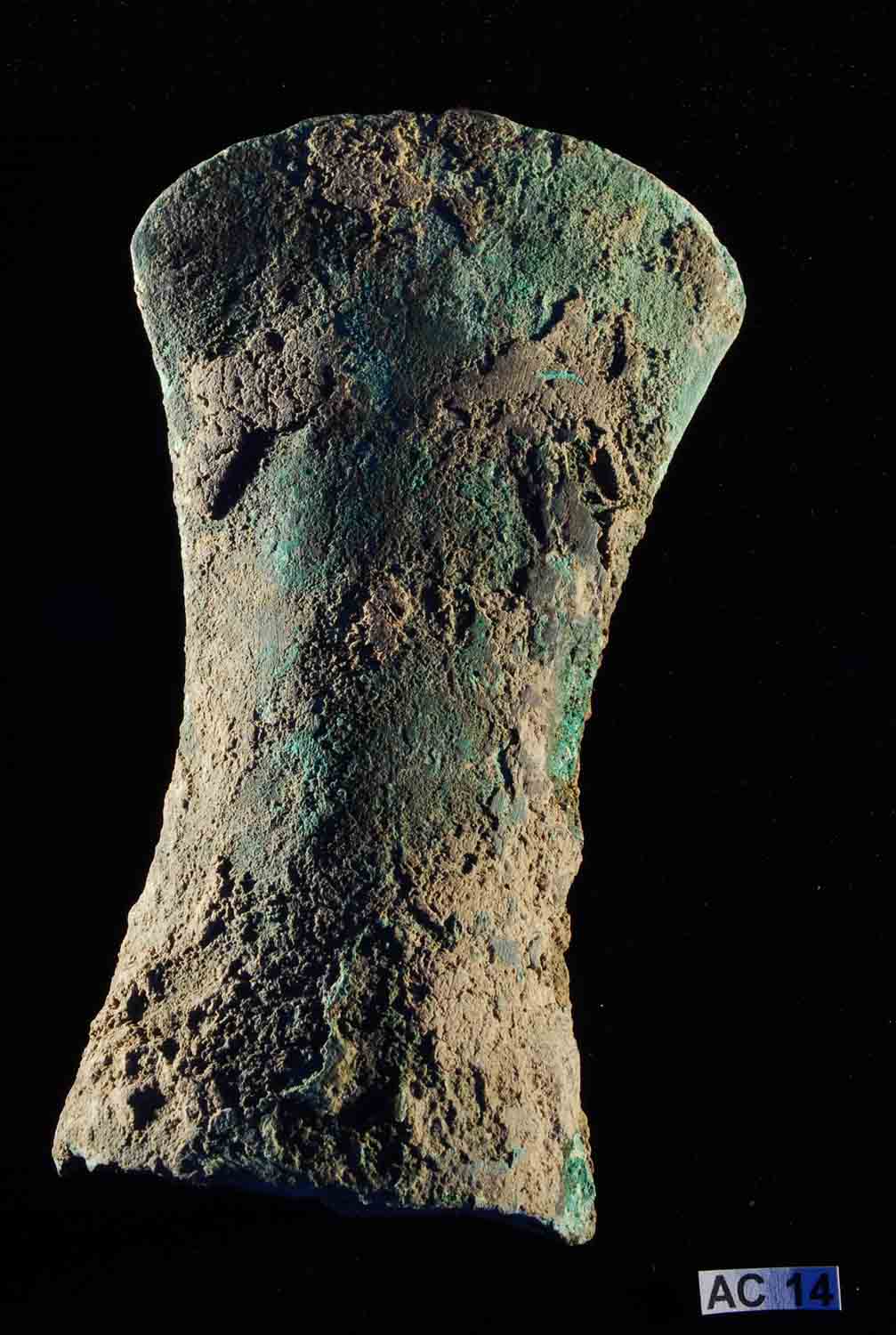
Image Code AC14 |
Catalogue No.: AC14
Description: Bronze Age Socketed Axe Head. Mainland South-east Asia, (2nd half of the 2nd millennium BC).
Size: 112 X 63mm. |
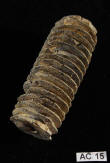
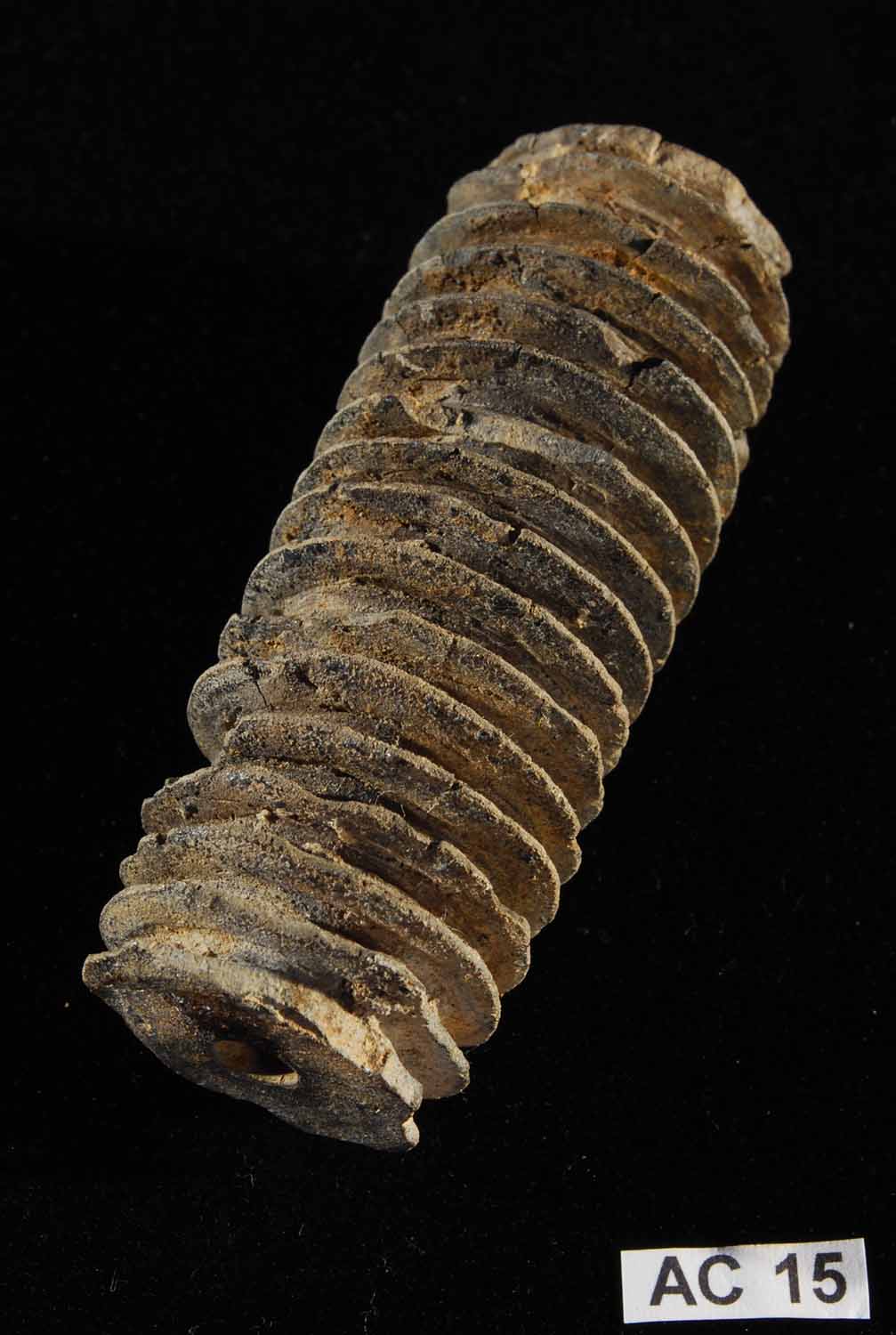
Image Code AC15 |
Catalogue No.: AC15
Description: Bronze Age South-east Asian Ceramic Roller Implement. Mainland South-east Asia, (2nd half of the 2nd millennium BC).
Ban Chiang, Northern Thailand has been the subject of much controversy over claims for very early Neolithic settlement and the inception of bronze and iron working. The 1974 excavation of Ban Chiang revealed Bronze Age graves over a Neolithic cemetery, while Bronze Age graves were at the base of the sequence in the area opened a year later for investigation. It is now considered likely that Bronze casting was established within the period 1500 – 1000 BC. The early Bronze Age graves in this area underlay the remains of a clay furnace surrounded by ceramic crucible fragments still containing bronze from the casting process.
Clay rollers such as this have an as yet unknown function but are often found as grave goods. Such rollers may have been used to decorate print fabric or alternatively, served as some form of tattoo or marking implement for the skin.
Size: 66 X 26mm. |

Image Code AC16 |
Catalogue No.: AC16
Description: Early Annamese (Vietnam) Lidded Pot 15th - 16th century. Of circular form with a flattened cover, the white stoneware fabric decorated in underglaze cobalt blue with a transparent glaze also covering the interior and base, the top and bottom decorated with floral motifs.
Size: 76mm. |
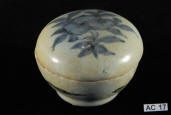
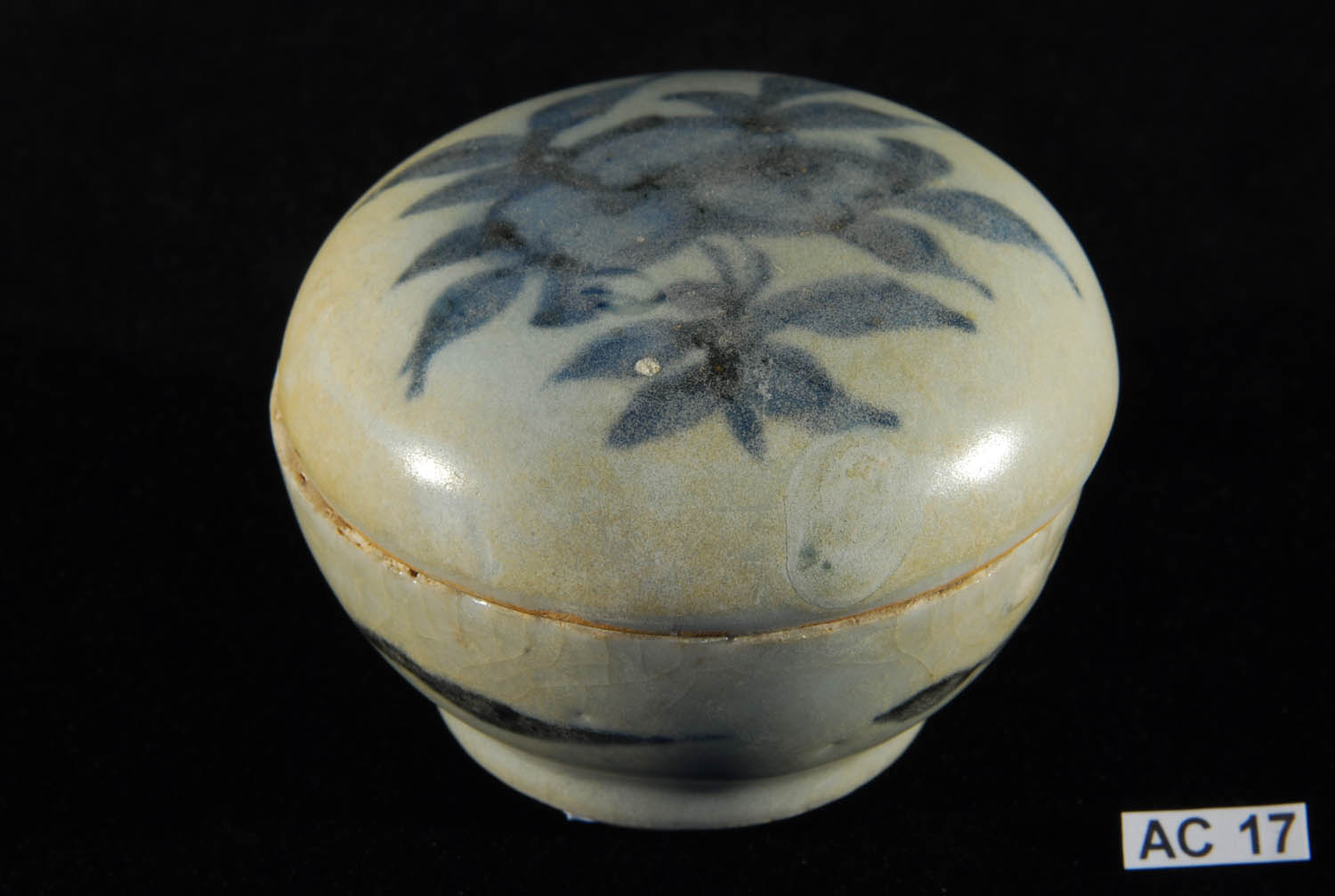
Image Code AC17 |
Catalogue No.: AC17
Description: Early Annamese (Vietnam) Lidded Pot 15th - 16th century. Of circular form with a flattened cover, the white stoneware fabric decorated in underglaze cobalt blue with a transparent glaze also covering the box interior and base, the top and bottom decorated with floral spray decoration.
Size: 64mm. |
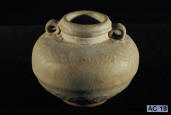
Image Code AC18 |
Catalogue No.: AC18
Description: Sukhothai Miniature Pot 14th -15th Century AD. With moulded decoration and pierced lug handles. Glazed terracotta. Thailand.
Size: 75mm. |

Image Code AC19 |
Catalogue No.: AC19
Description: Sukhothai Miniature Pot 14th -15th Century AD. Sawankhalok ware ceramic large lidded pot with iron-brown and white decoration and flat topped lid and with brown glazed interior. Thailand.
Size: 79mm. |

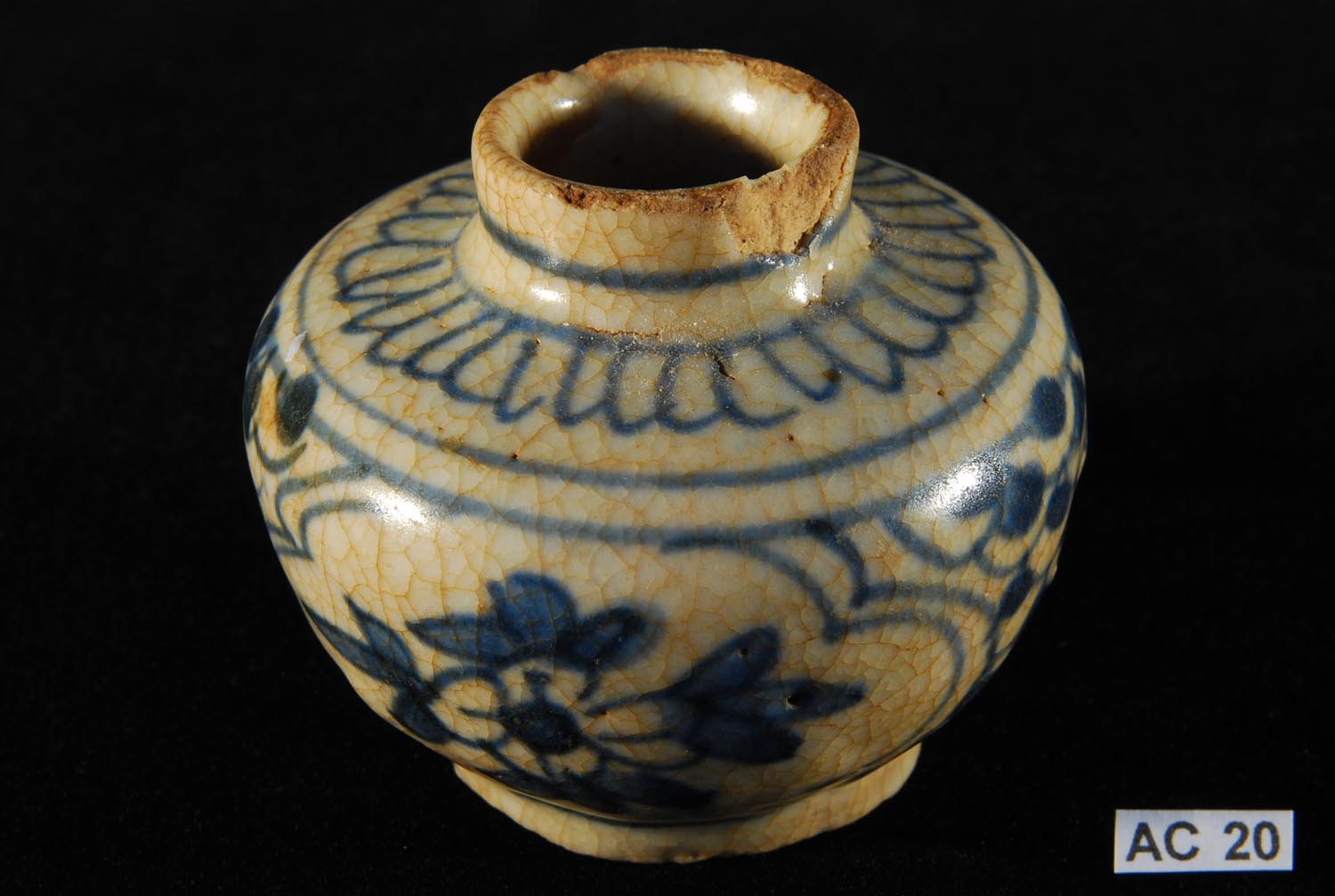
Image Code AC20 |
Catalogue No.: AC20
Description: Early Chinese Miniature Ointment Pot. Ming Dynasty (1368 - 1644).
Size: 59mm. |
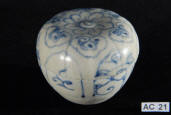
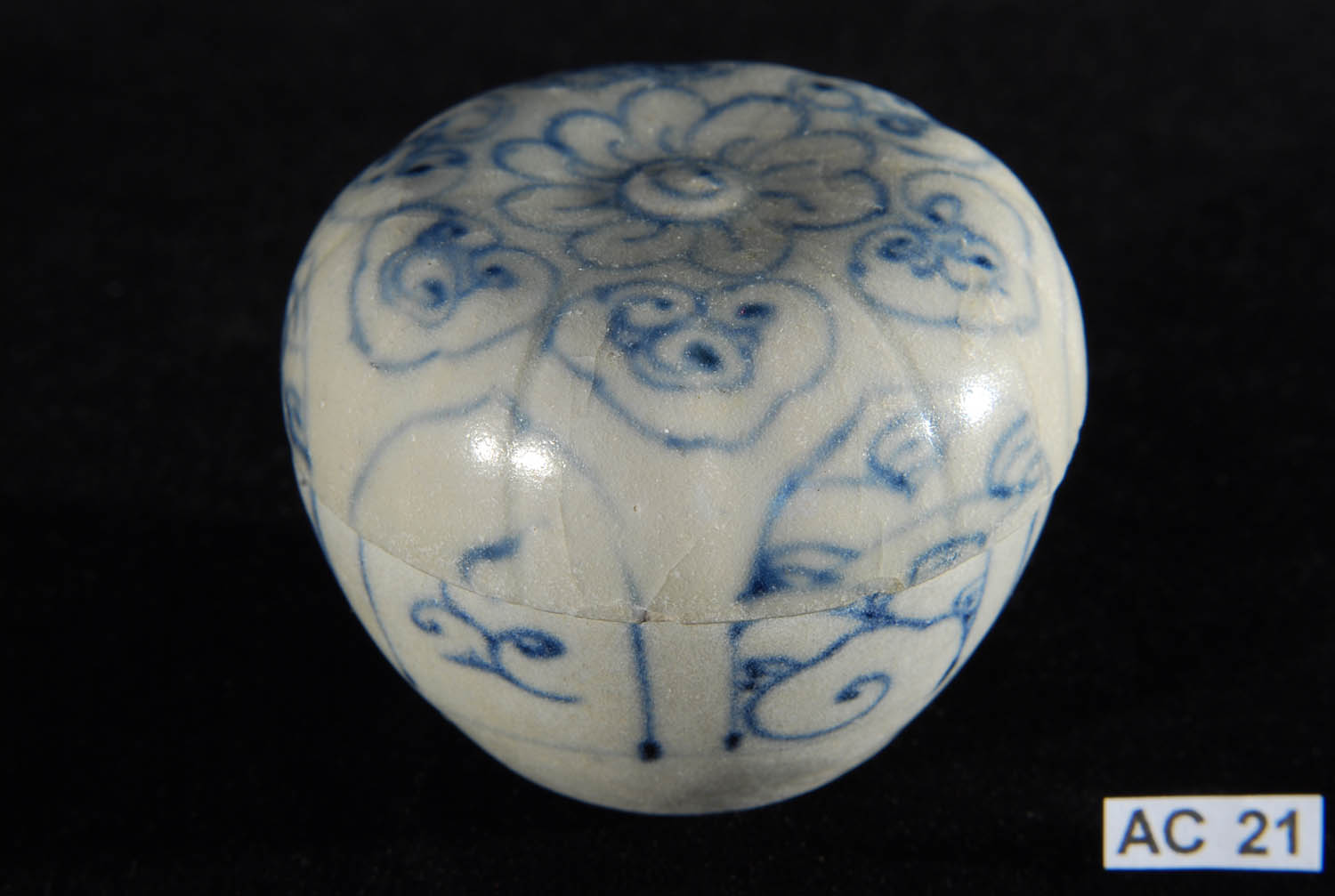
Image Code AC21 |
Catalogue No.: AC21
Description: Early Chinese Miniature Lidded Pot. Ming Dynasty (1368 - 1644). Of circular form with a flattened cover and scalloped rim at the shoulder, decorated in underglaze cobalt blue with a central floral medallion and lotus-petal lappets on a grey biscuit with a transparent glaze. 16th century.
Size: 47mm. |

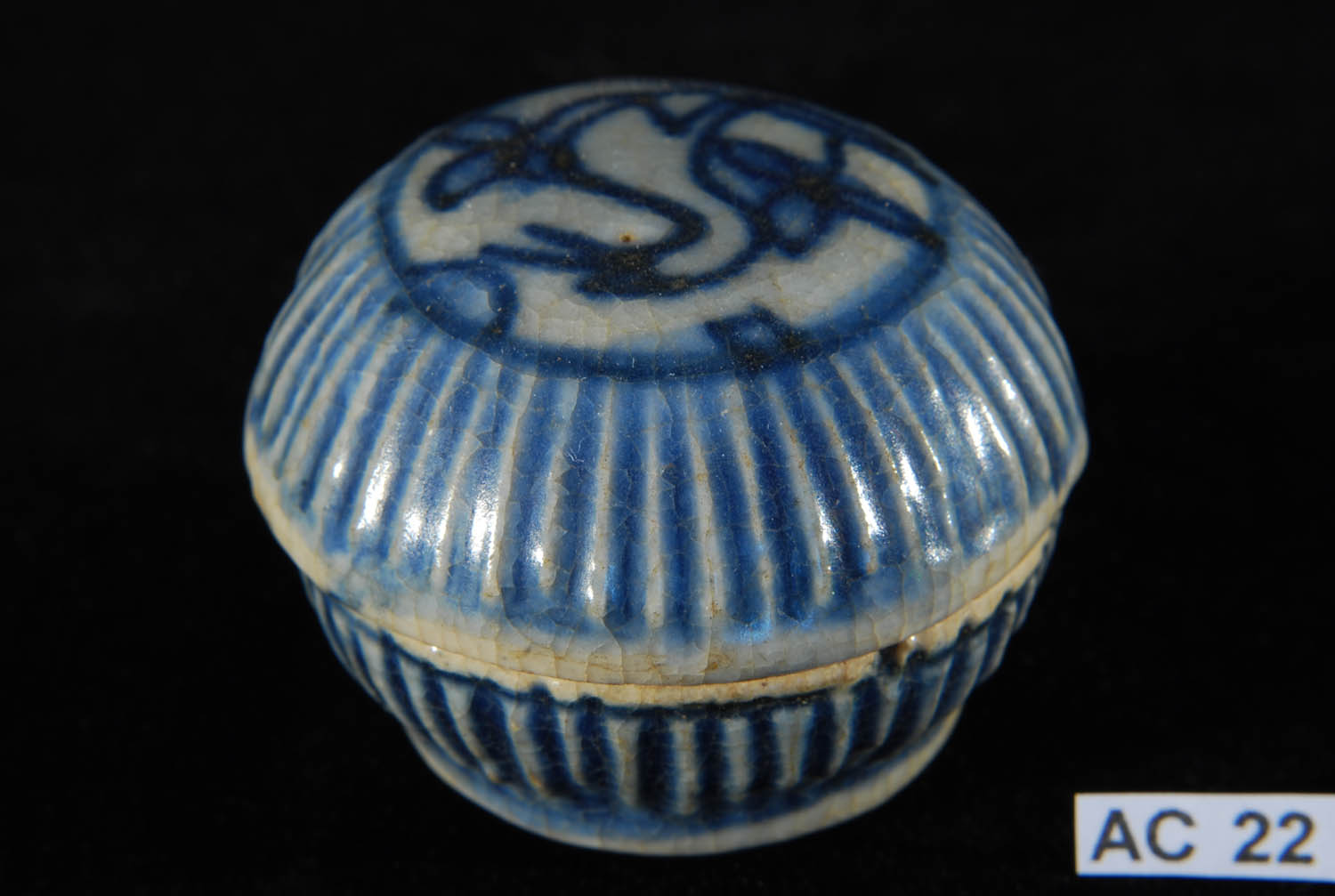
Image Code AC22 |
Catalogue No.: AC22
Description: Early Annamese (Vietnam) Ointment Pot. 15th - 16th century. With heron or stork and floral decoration to lid. Thailand.
Size: 42mm. |
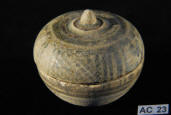
Image Code AC23 |
Catalogue No.: AC23
Description: Sukhothai Miniature Pot. 14th -15th Century AD. Sawankhalok ware ceramic lidded pot with brown and white decoration and domed top to the lid and with brown glazed interior. Thailand.
Size: 45mm. |
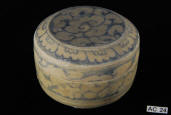
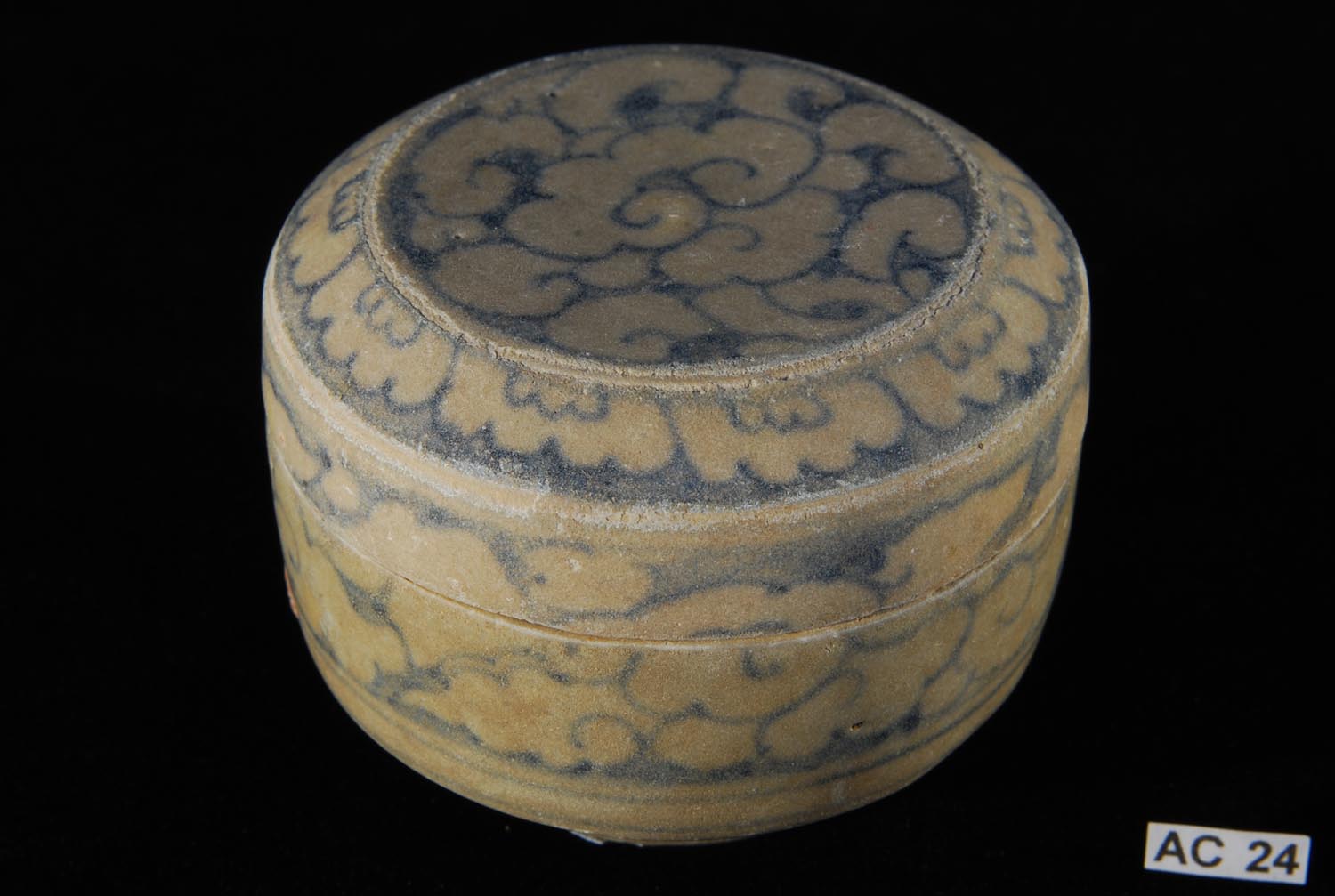
Image Code AC24 |
Catalogue No.: AC24
Description: Early Annamese (Vietnam) Ointment Pot
15th - 16th century. Of circular form with a flattened cover, the white stoneware fabric decorated in underglaze cobalt blue with a transparent glaze also covering the box interior and base, the top and bottom decorated with floral motifs.
Size: 62mm. |

Image Code AC25 |
Catalogue No.: AC25
Description: Sukhothai Miniature Pot . 14th -15th Century AD. Sawankhalok ware ceramic lidded pot with iron brown and white decoration and applied fruits (mangosteen) motif to the top and with brown glazed interior. Thailand.
Size: 66mm. |
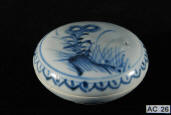
Image Code AC26 |
Catalogue No.: AC26
Description: Early Annamese (Vietnam) Ointment Pot. 15th - 16th Century. Of circular form with a flattened cover, the white stoneware fabric decorated in underglaze cobalt blue with a transparent glaze also covering the box interior and base, the top and bottom decorated with a central chrysanthemum spray medallion.
Size: 63mm. |
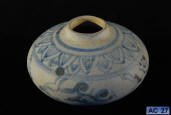
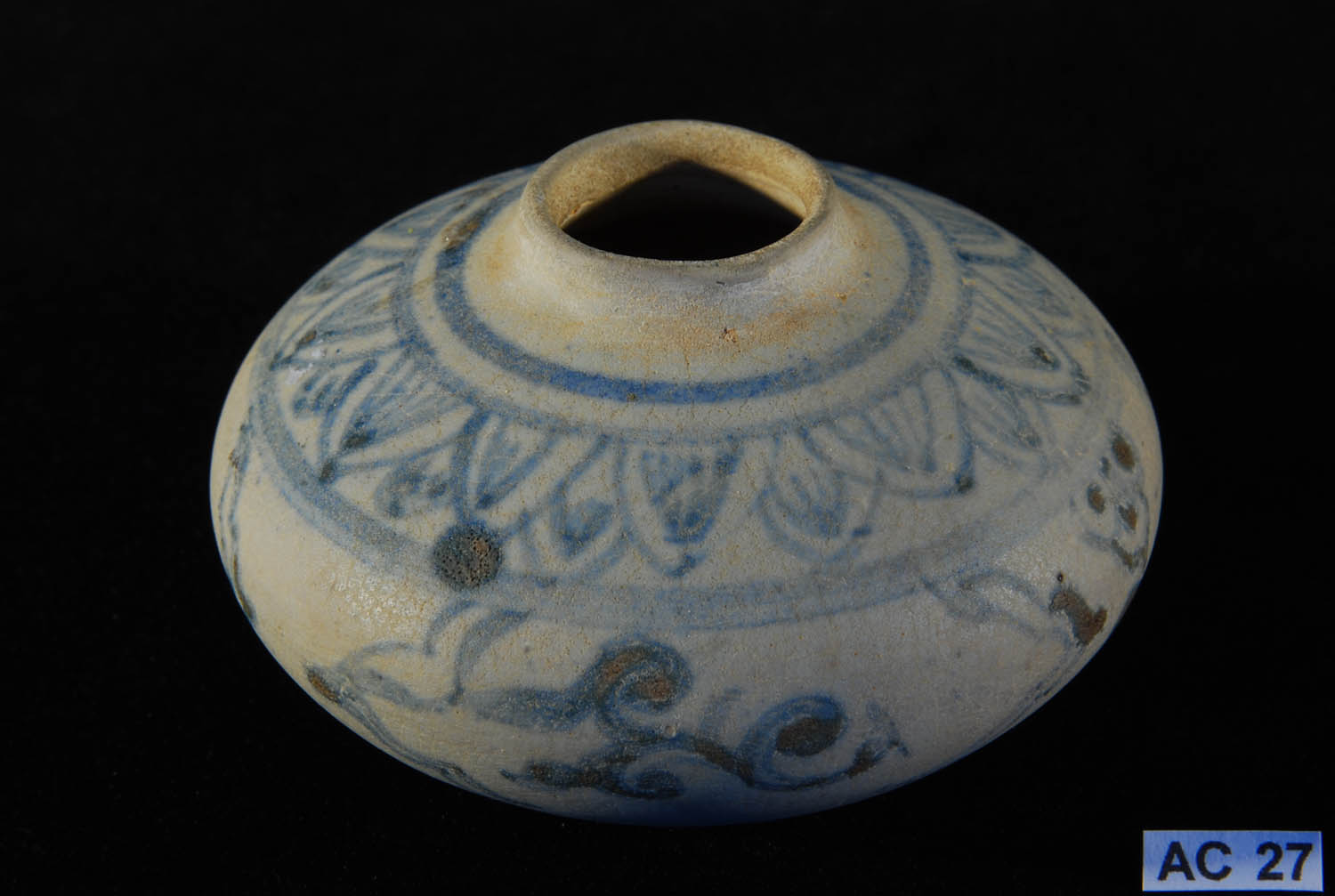
Image Code AC27 |
Catalogue No.: AC27
Description: Early Chinese Miniature Ointment Pot
Ming Dynasty (1368 - 1644). Of flattened globular form with collar of lotus petals and a band of cloud scrolls in underglaze cobalt blue and brown on a beige coloured biscuit. Ex wreck of the Hoian, 16th century.
Size: 84mm. |

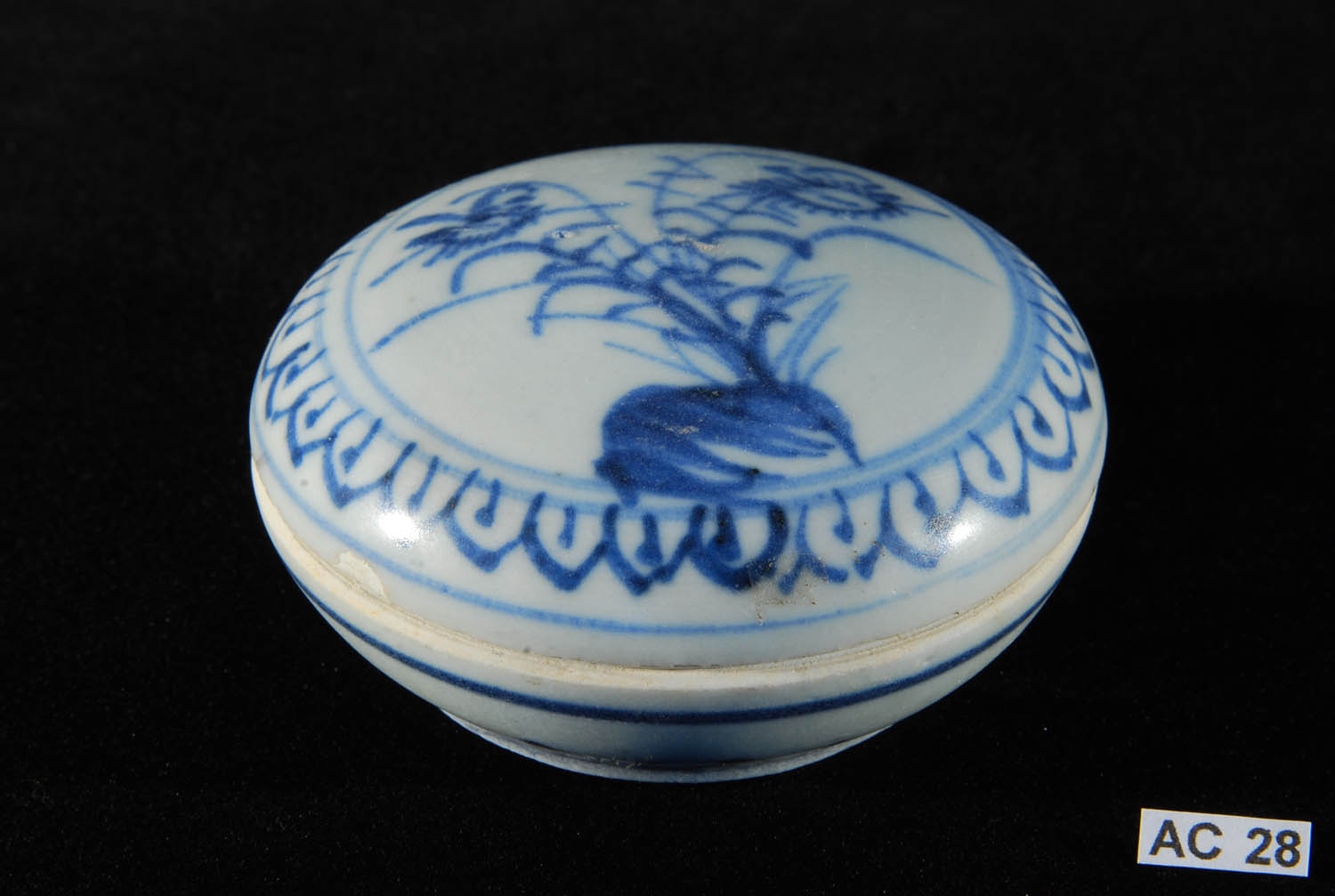
Image Code AC28 |
Catalogue No.: AC28
Description: Early Annamese (Vietnam) Ointment Pot. 15th - 16th Century. Of circular form with a flattened cover, the white stoneware fabric decorated in underglaze cobalt blue with a transparent glaze also covering the box interior and base, the top and bottom decorated with a central chrysanthemum spray medallion.
Size: 66mm. |

Image Code AC29 |
Catalogue No.: AC29
Description: Majapahit Terracotta Head, Java, c.14th Century
Size: 130mm. |
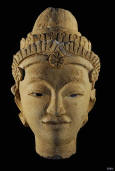
Image Code AC30 |
Catalogue No.: AC30
Description: Khmer Head of a Buddha.
In stucco with blue glass eyes. c.18th Century, with blue glass to eyes probably added later. Stylish early depiction of the head of Buddha with some original colour remaining, the glass inlay eyes being a later (probably 19th century) addition.
Size: 310 X 180mm. |
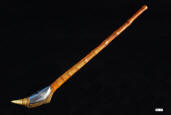
Image Code AC31 |
Catalogue No.: AC31
Description: Chinese Opium Smoking Pipe. Cane, copper, brass and white metal.
Size: 285mm. |
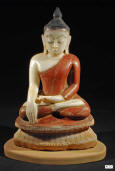
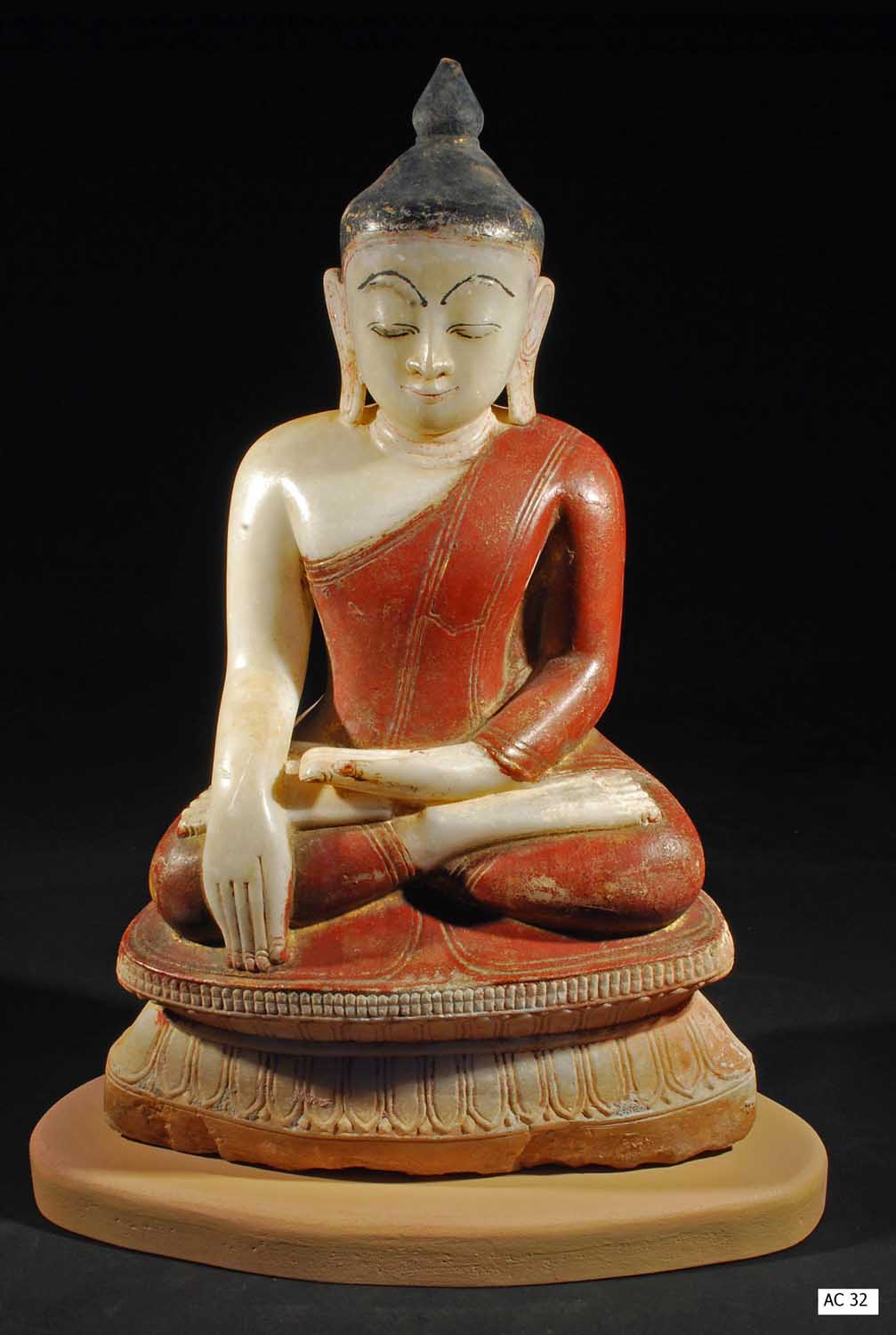
Image Code AC32 |
Catalogue No.: AC32
Description: Fine style Burmese alabaster statue of the seated Buddha in original condition with original lacquer and gilding. Shan style, c. 18th – 19th Century AD, Burma.
Size: 545 X 350mm. |
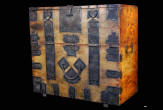
Image Code AC33 |
Catalogue No.: AC33
Description: Korean Blanket/Marriage Chest (Bandaji). 19th century (Yi Dynasty), Pyongyang, North Korea. Originally from Pak Chung, close to Pyongyang, this piece is decorated with pierced black iron resembling lace and representing the south gates (namdaemun) of the city.
Size: 835L X 430W X 775H mm. |
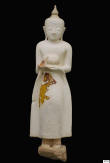
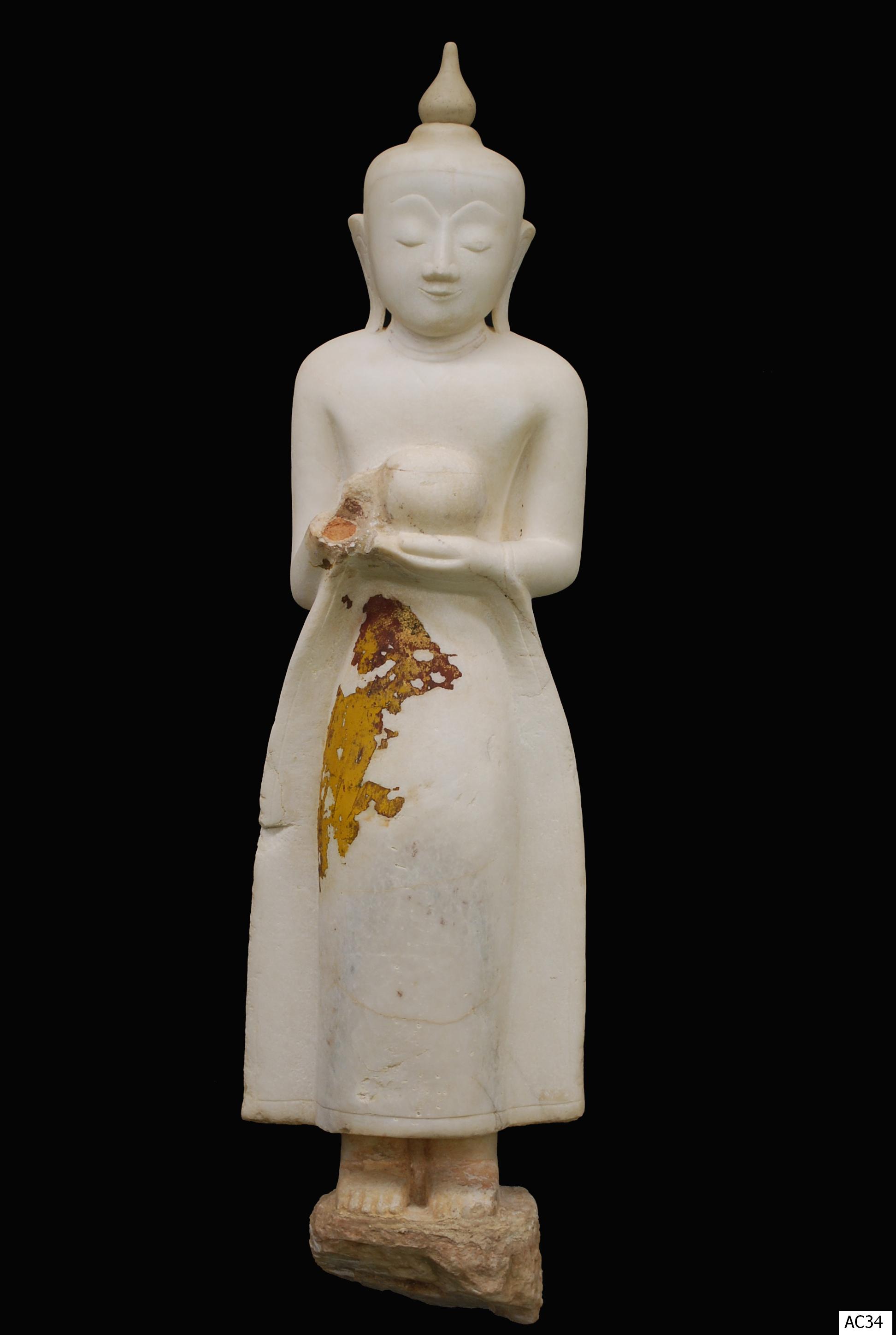
Image Code AC34 |
Catalogue No.: AC34
Description: Marble Standing Buddha. Superb and rare Burmese temple standing Buddha in the Shan style with remnant traces of gold leaf gilding. The Buddha, with serene pose and countenance holds an offering bowl and is attired in a long flaring garment to the ankles. With remnant original lacquer and gilding and on original plinth as constructed. Shan style c. Late 18th century, Burma.
Size: 1500 X 360mm. |
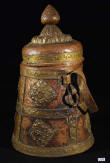
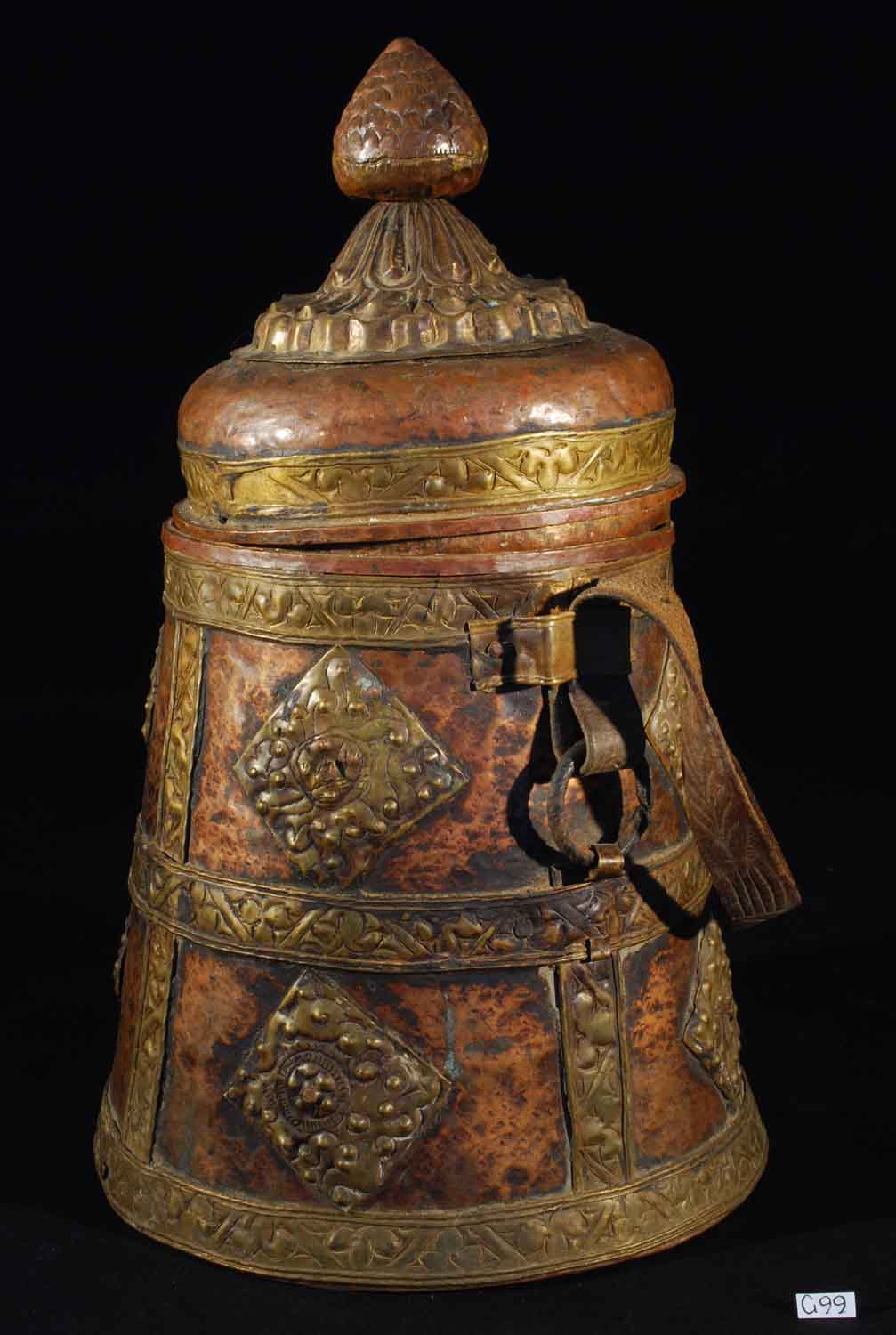
Image Code G99 |
Catalogue No.: G99
Description: Himalayan Ritual Container. Early Buddhist lidded ritual container with beaten copper and brass embellishment and leather strap handle, Tibet/Nepal, 19th Century.
Size: 350X200mm. |
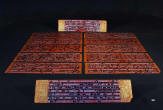
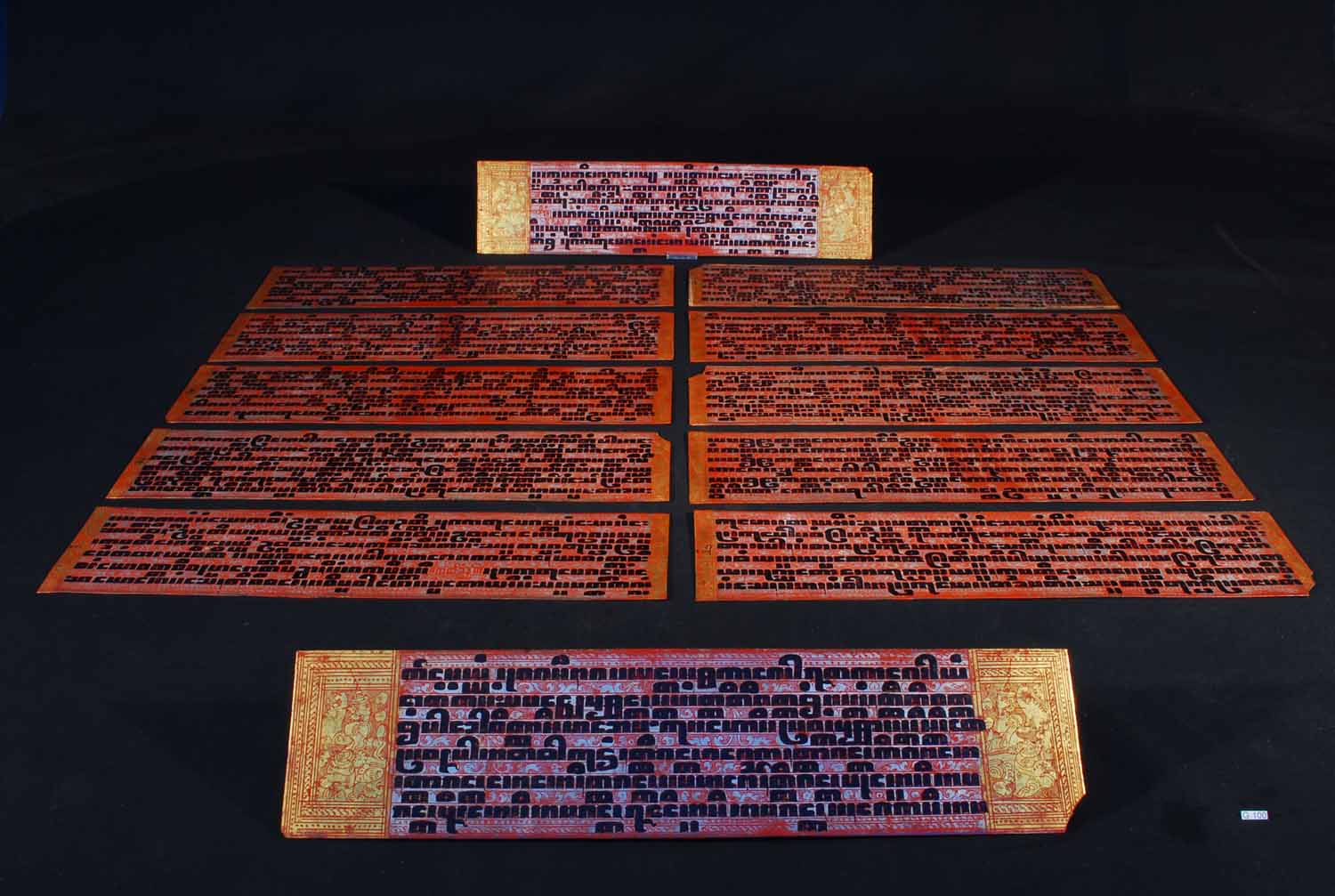
Image Code G100 |
Catalogue No.: G100
Description: Buddhist Sutra Boards. Each board double faced and of enamel lacquered silk fibre construction with gilt and red lacquer coating. The text in black relief enamel has been written on a background of red and metallic silver and probably relates to the ordination rites of a buddhist monk. Impressive and in superb original condition, each leaf 520 x 120 mm, early 19th Century.
Size: 520X120mm. |
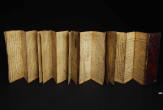
Image Code G101 |
Catalogue No.: G101
Description: Early Buddhist Religious Text. In fold out format with lacquered board covers c 1800.
Size: 220X100mm. |
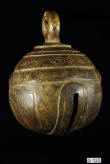
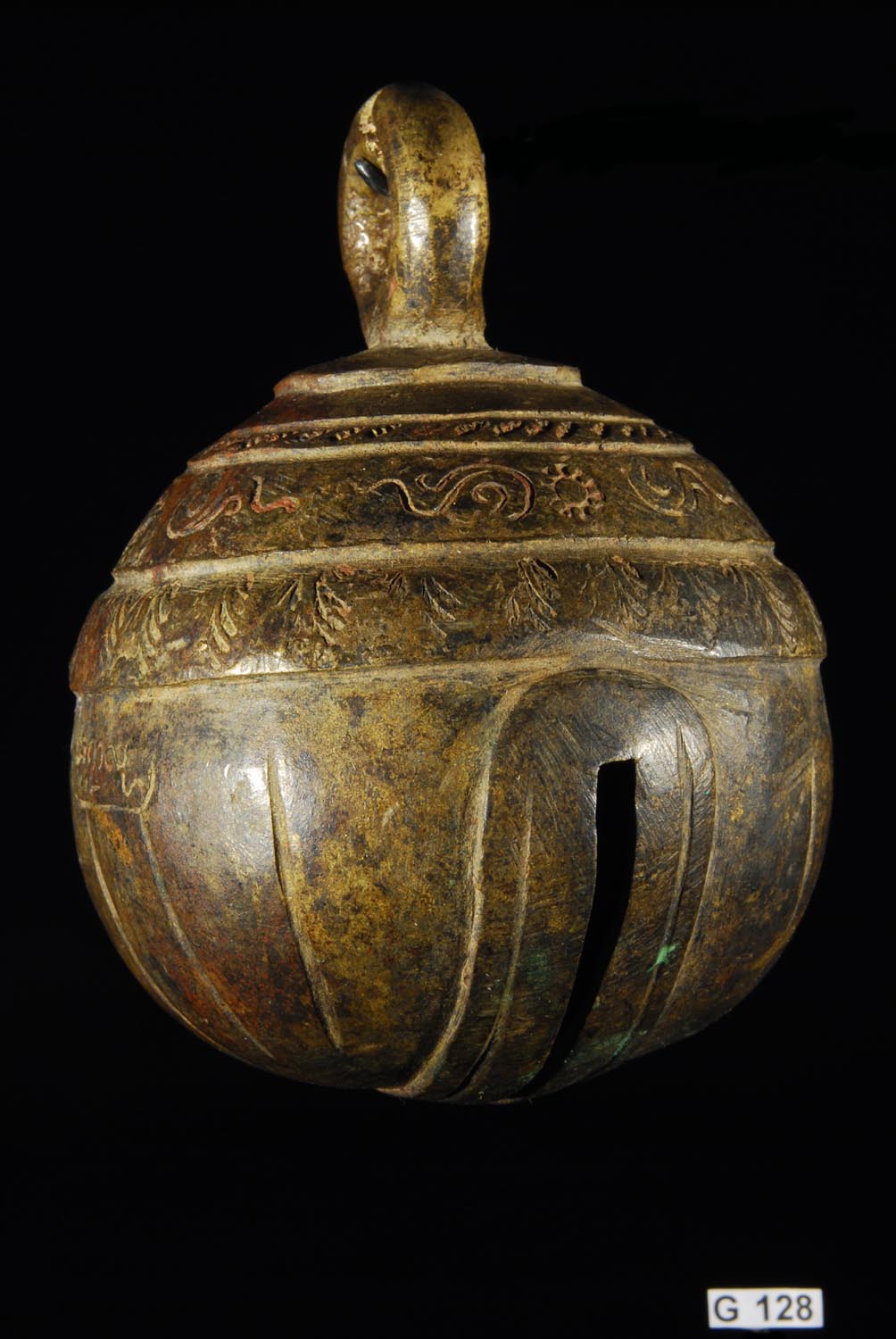
Image Code G128 |
Catalogue No.: G128
Description: Bronze Animal Bell. Nepal/Tibet, 19th Century.
Size: 108 X 84mm. |
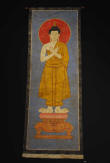
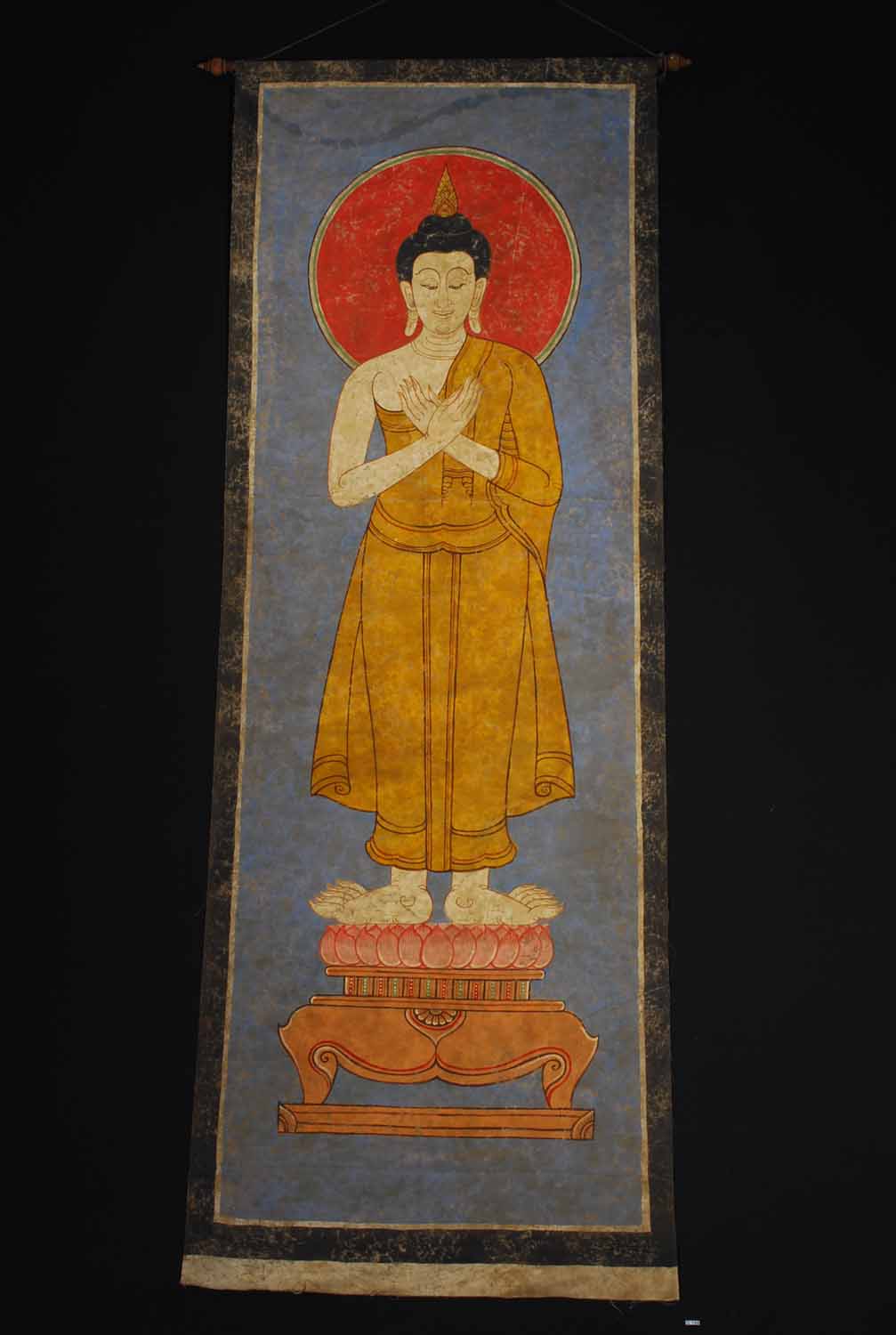
Image Code G144 |
Catalogue No.: G144
Description: Buddhist Thangka Painting of the Standing Buddha. Tibet or Nepal.
A Thangka is a painted or embroidered Buddhist banner which was hung in a monastery or a family altar and occasionally carried by monks in ceremonial processions. In Tibetan the word thang means flat, and thus the Thangka is a kind of painting done on a flat surface but which can be rolled up when not required for display, sometimes called a scroll-painting. The most common shape of a Thangka is the upright rectangular form.
Originally thangka painting became popular among travelling monks because scroll paintings were easily rolled and transported from monastery to monastery. These thangka served as important teaching tools depicting the life of Buddha, various influential lamas and other deities and bodhisattvas.
While regarded by some as colourful wall hangings, to Buddhists, these Tibetan religious paintings offer a beauty, believed to be a manifestation of the divine, and are thus visually stimulating.
Painted thangkas are done on canvas or silk with water soluble pigments, both mineral and organic, tempered with a herb and glue solution – in Western terminology, a distemper technique. The entire process demands great mastery over the drawing and perfect understanding of iconometric principles.
Thangka are often overflowing with symbolism and allusion. Because the art is explicitly religious all symbols and allusions must be in accordance with strict guidelines laid out in Buddhist scripture. The artists must be properly trained and have sufficient religious understanding, knowledge and background in order to create an accurate and appropriate thangka.
Thangka art exemplifies nirmanakaya, the physical body of Buddha, and also the qualities of the Buddha, perhaps in the form of a deity. Art objects, therefore, must follow rules specified in the Buddhist scriptures regarding proportions, shape, colour, stance, hand positions, and attributes in order to personify correctly the Buddha or Deities.
Size: 1670 X 580mm. |

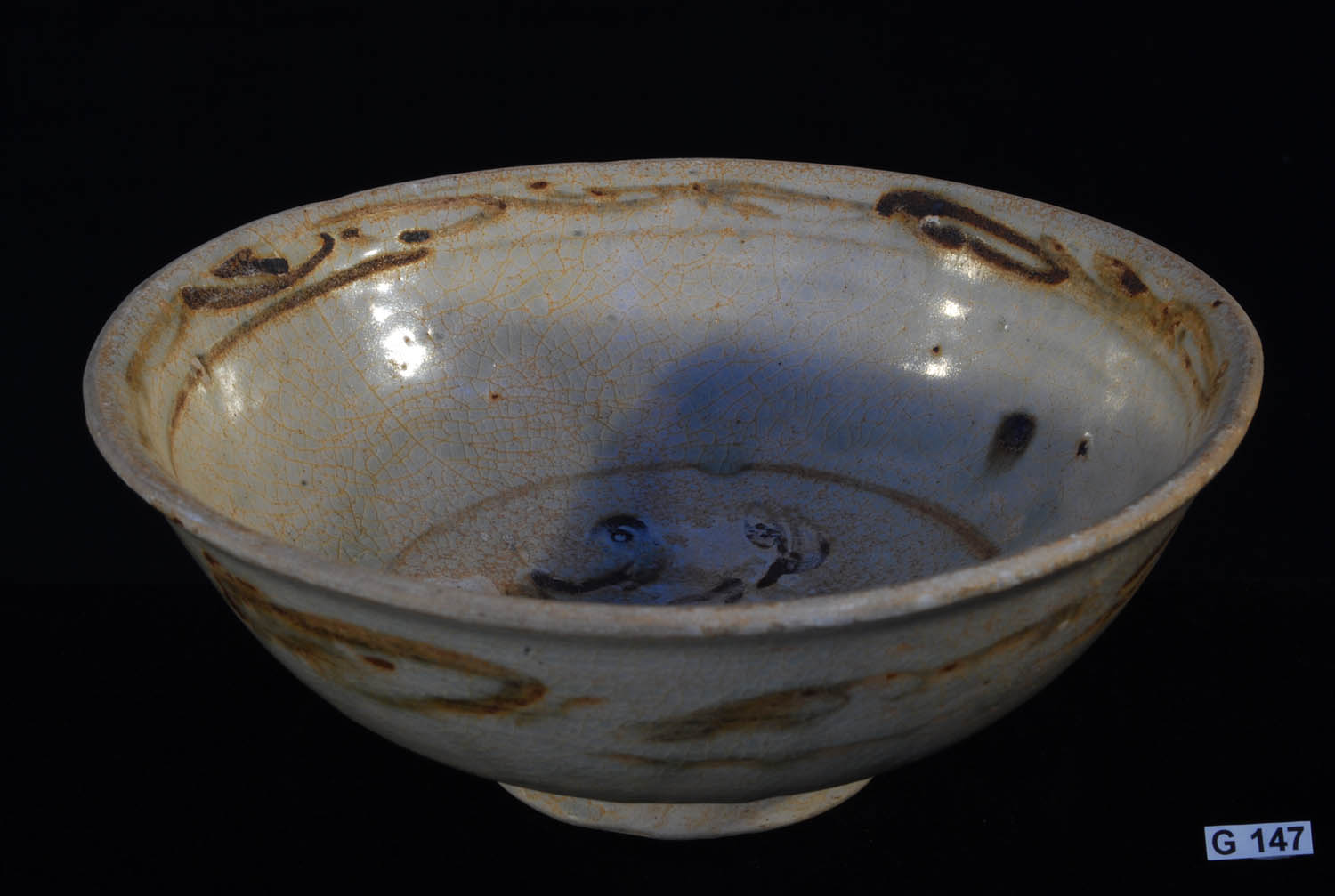
Image Code G147 |
Catalogue No.: G147
Description: Thai Bowl.
Size: 152 x 55mm. |
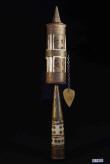
Image Code H1465 |
Catalogue No.: H1465
Description: Buddhist prayer wheel with religious writings inside. Himalayas, Asia.
Size: 310mm. |
Return to Top
|