|
|
|
Roman Division
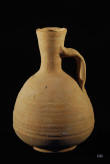
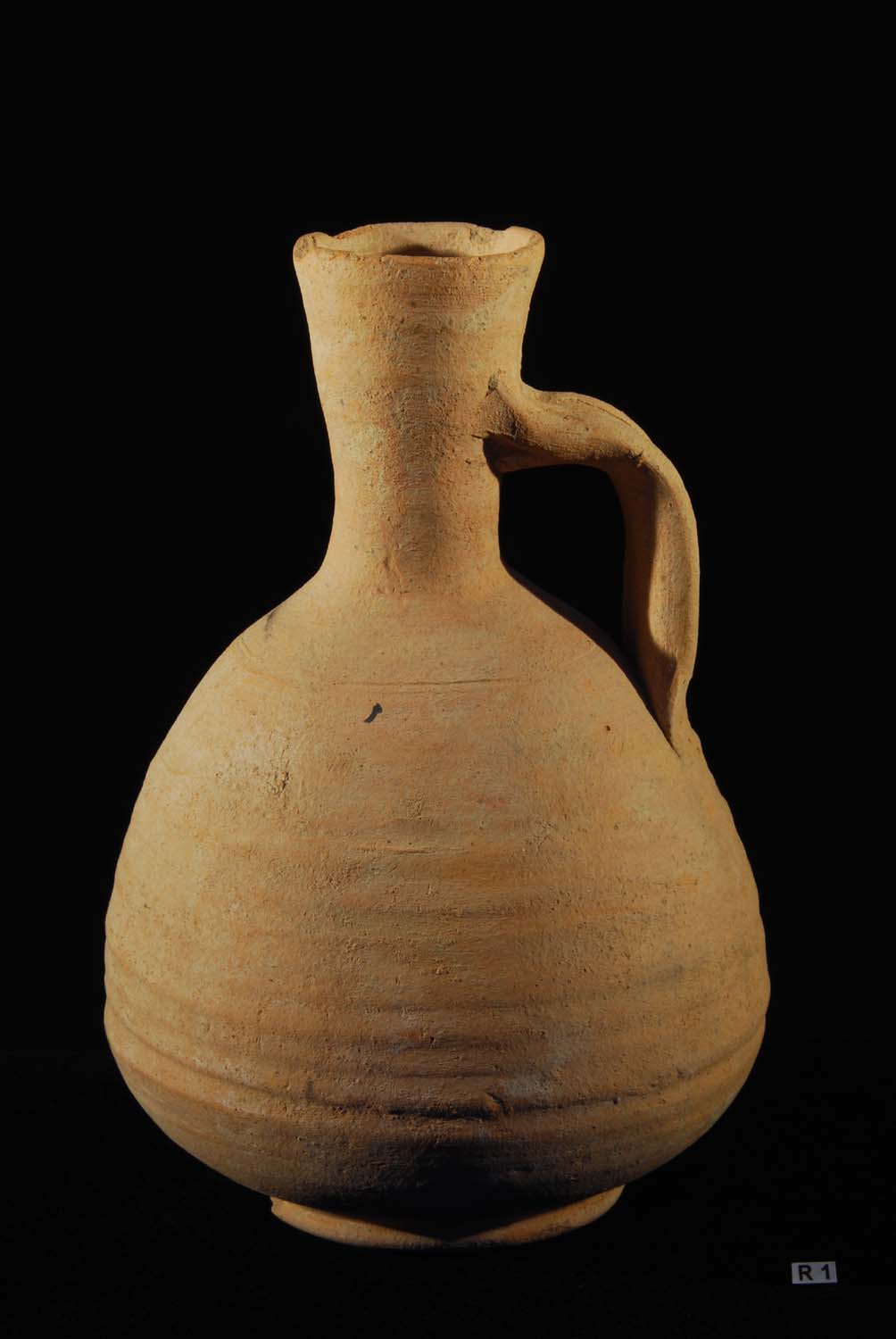
Image Code R01 |
Catalogue No.: R01
Description: Roman Pottery Jug. 1st - 2nd Century. Small jug of globular form with grooved strap handle, tall tapering neck and grooved band decoration, on a broad ring foot. Pale pink clay with white wash. Palestine.
Size: 175 X 110mm. |
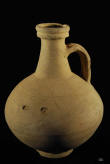
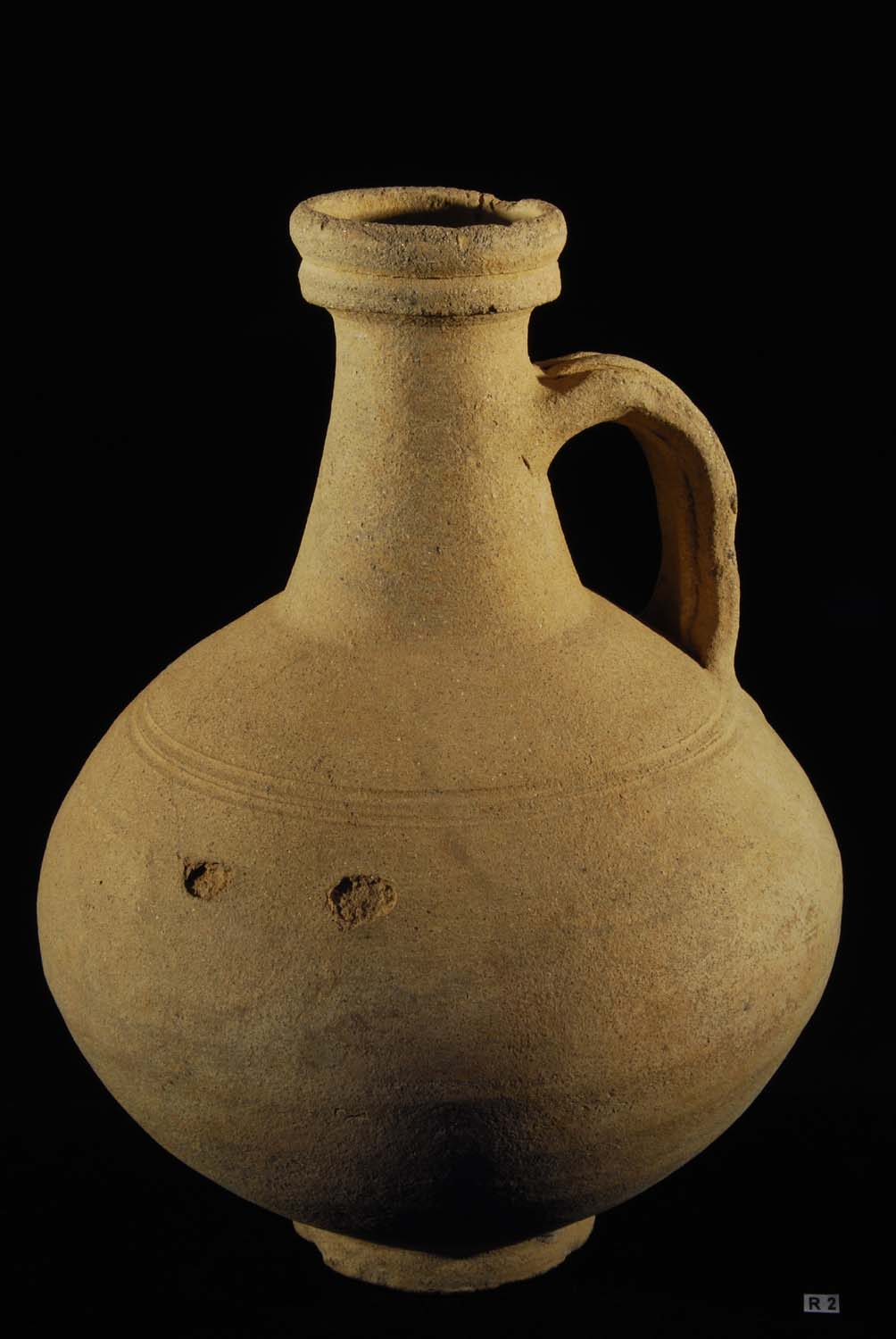
Image Code R02 |
Catalogue No.: R02
Description: Roman Pottery Jug. 1st - 2nd Century AD. Large white slip decorated jug with grooved strap handle and wide mouth, the shoulder decorated with two incised grooves, on a ringed foot. Coarse grey clay with white wash. Palestine.
Size: 235 X 150mm. |
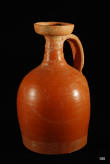
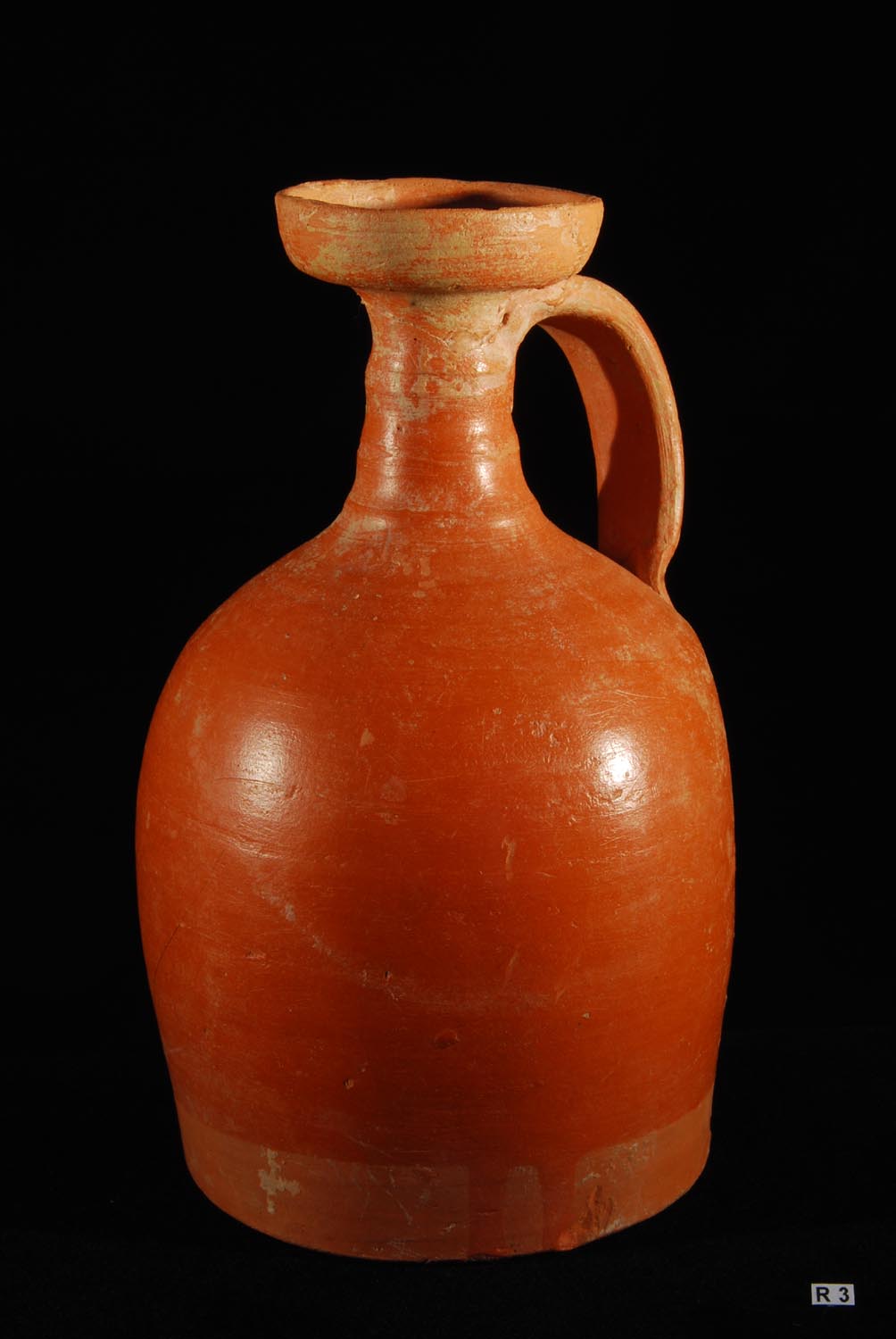
Image Code R03 |
Catalogue No.: R03
Description: Roman Red Ware Jug. c 3rd Century AD. Red-slip ware jug of rare bell-form type with flat base, grooved strap handle and flared-top mouth of a type used for the Roman colonies of north Africa. Finer pink clay with red wash.
By the 2nd century BC, potters in Asia Minor had begun to fire their wares in a simple oxidising atmosphere instead of the traditional three-stage firing, the resulting potteries were therefore not black but a rich glossy red. Mainland Greek and Italian potters were slower to adopt this fashion but it had spread to Italy by the mid 1st century BC, and by the 1st century AD red-slip pottery had become standard throughout the empire.
Size: 188 X 115mm. |
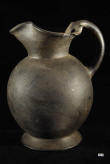
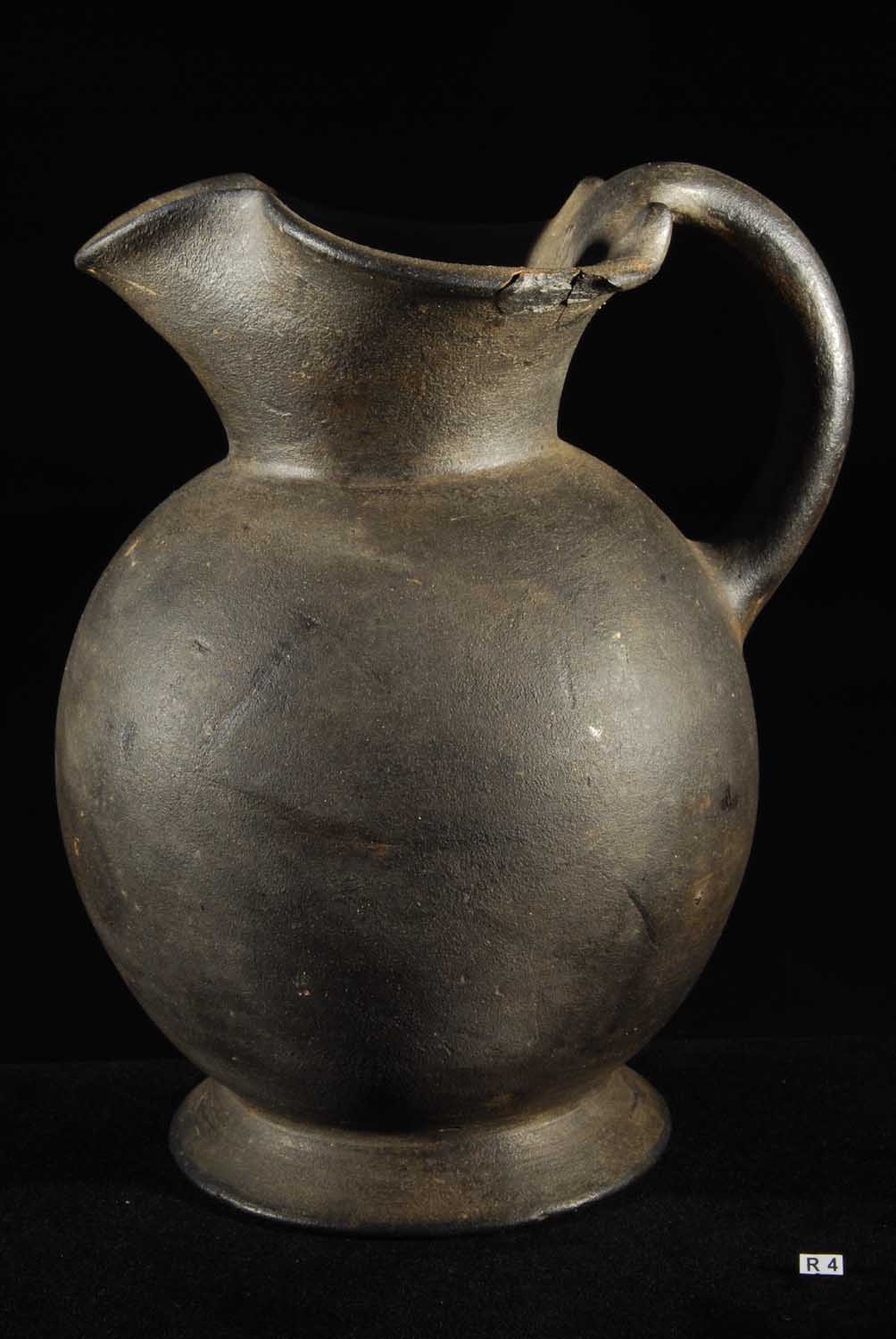
Image Code R04 |
Catalogue No.: R04
Description: Etruscan Trefoil Oinochoe. C. 6th Century BC. Of globular body form on a flaring foot and with a neck flaring to a trefoil lip with stirrup rotellae and a loop handle. Bucchero ware pottery. Northern Italy.
Size: 190 X 130mm. |
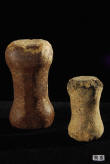
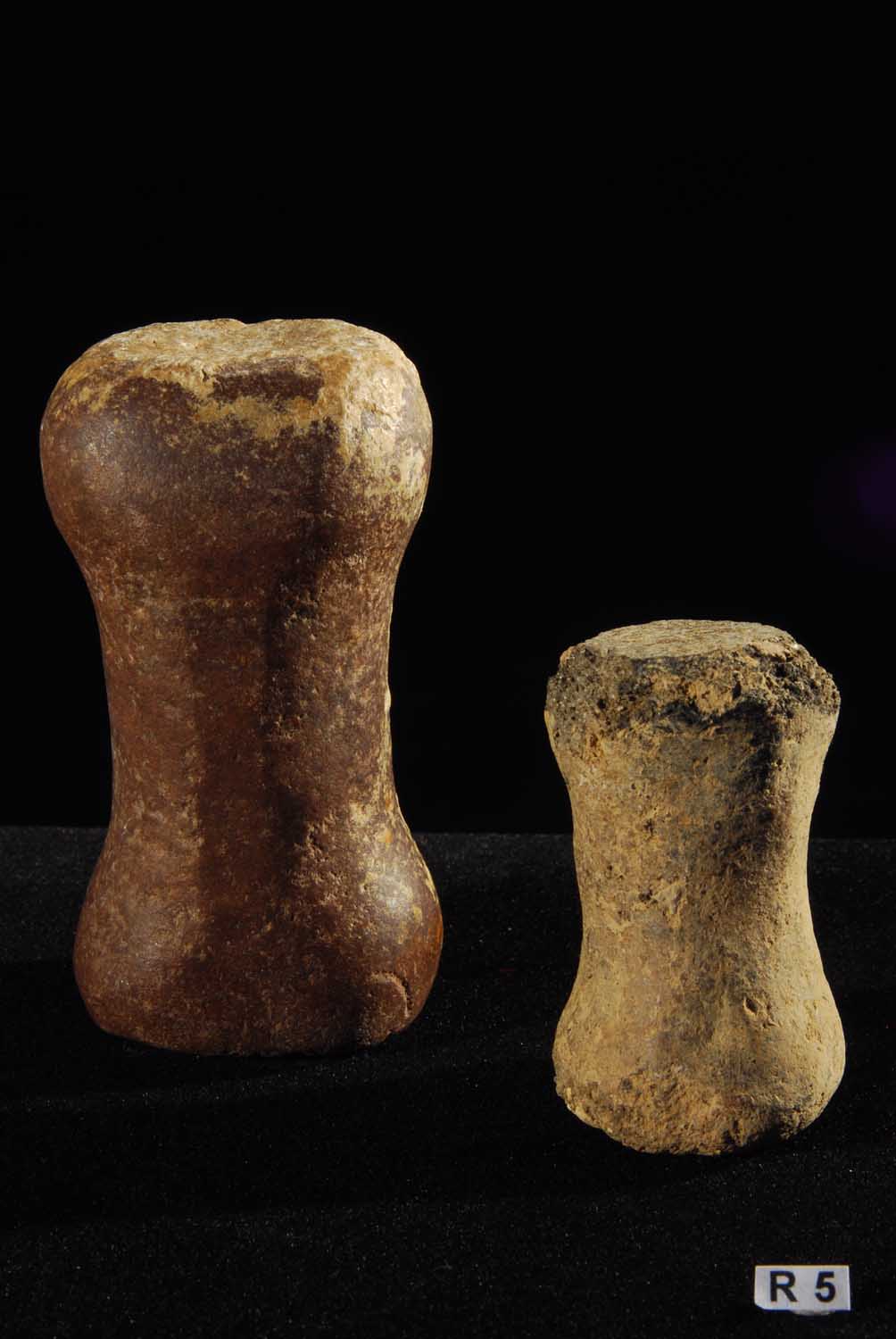
Image Code R05 |
Catalogue No.: R05
Description: Ceramic Spool. Location: Italy. Age/Culture: c 800 BC/Etruscan. Condition: Fairly good. Remarks: This spool shaped fired ceramic was identified as Etruscan by Dr Heflin. Not certain of its use but may have been worn as an item of adornment. 2 X pieces.
Size: 71 X 38mm. |
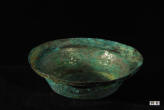
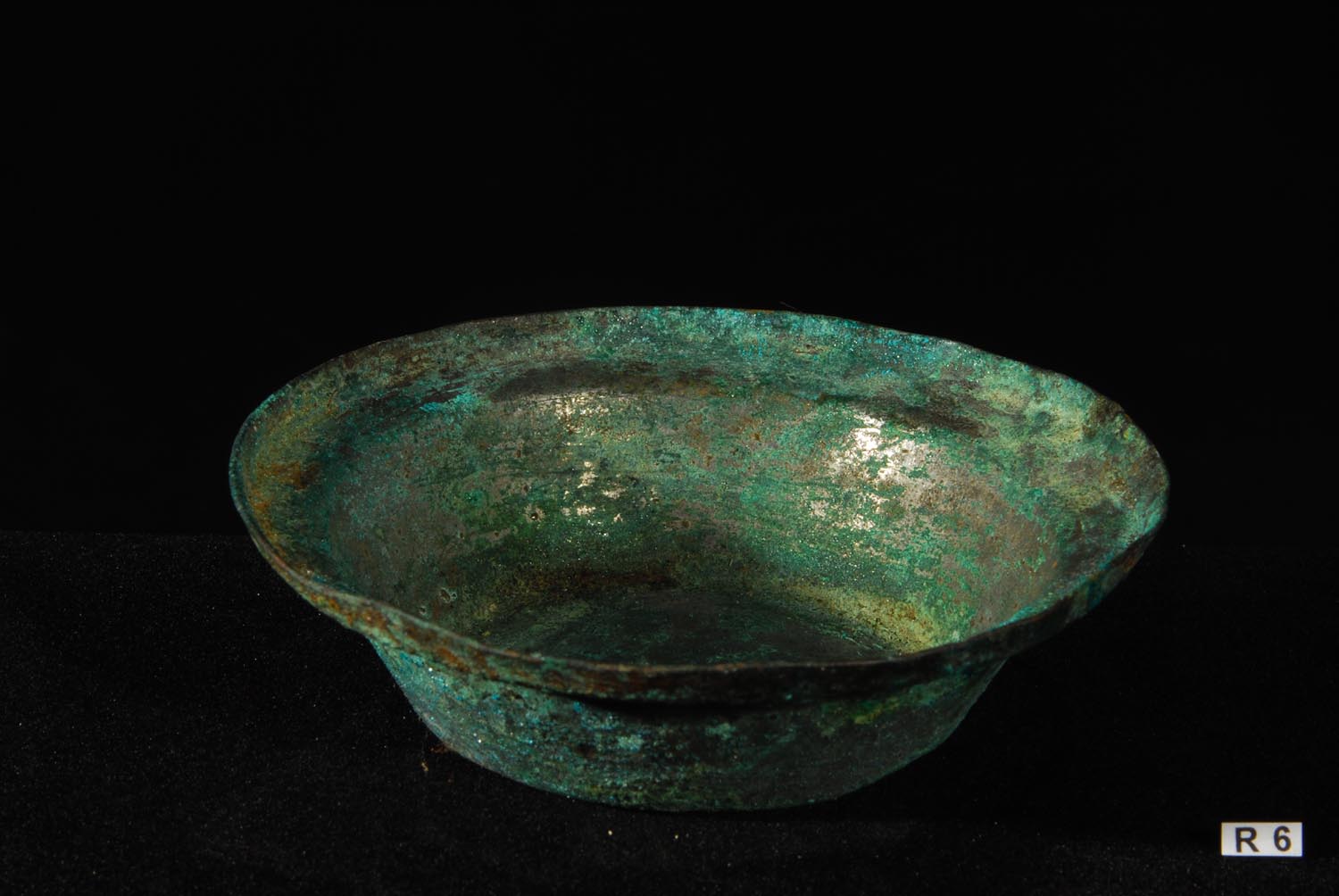
Image Code R06 |
Catalogue No.: R06
Description: Byzantine Silvered Bronze Bowl. 6th Century AD. Nicely preserved, as excavated piece, with incised decorative banding across the base and with remnants of silvering on the inside. Bronze with silvering. Alexandria, Egypt.
Size: 103 X 28mm. |
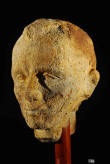
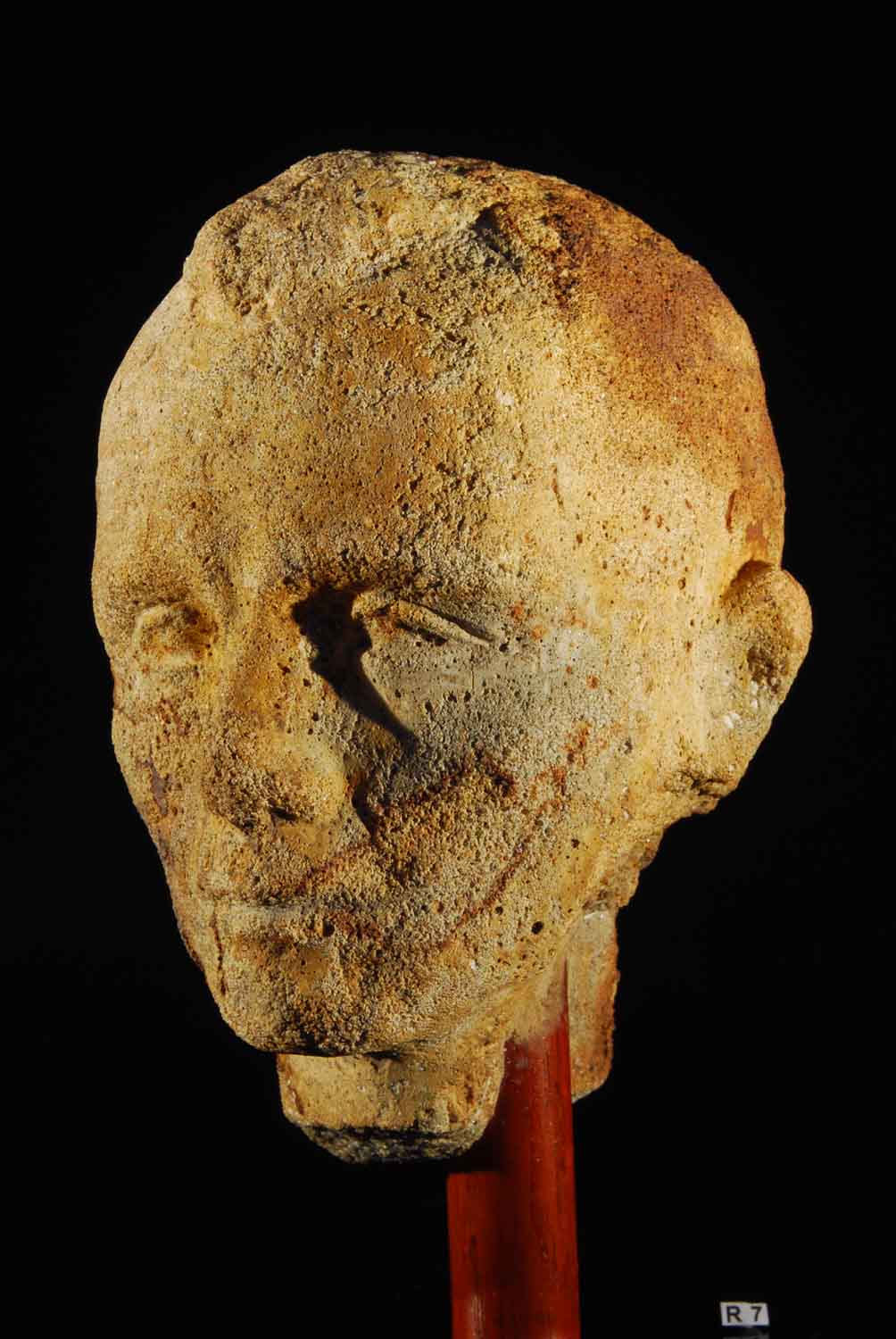
Image Code R07 |
Catalogue No.: R07
Description: Roman Portrait Sculpture. c 1st Century BC - 1st Century AD. Superb artistic rendering of the head of a Roman Emperor, official or military dignitary, probably of the late Republican to Julio Claudian period when this style of portraiture became popular, as inspired by the Roman practice of keeping death masks of notable persons and presenting subjects in a realistic and unflattering manner. The piece was likely previously coated with a light gesso wash, remnants of which still exist. Limestone with remnant gesso coating. Roman Egypt, Alexandria.
Size: 148 X 89mm. |
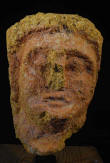
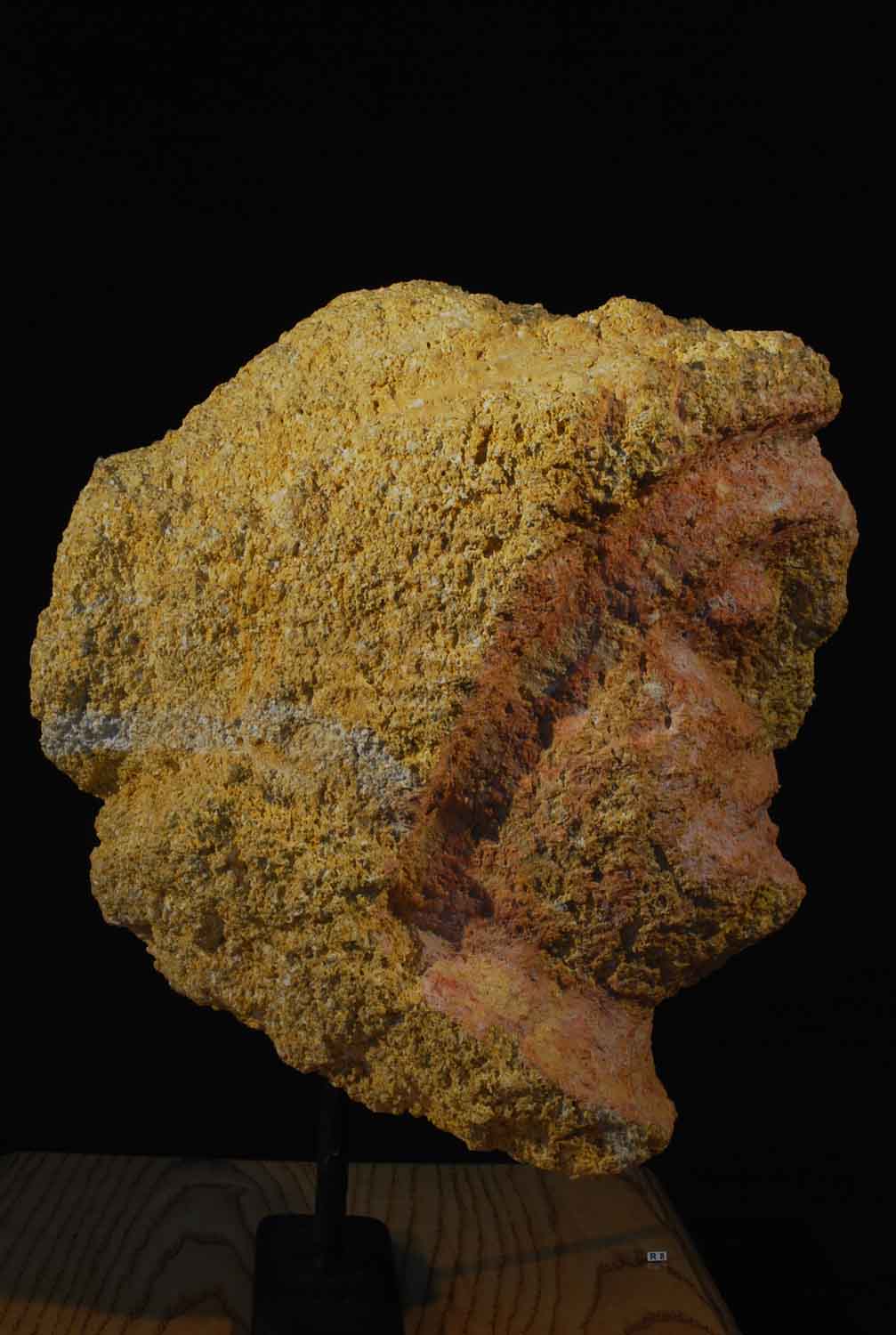
Image Code R08
Image Code R08a |
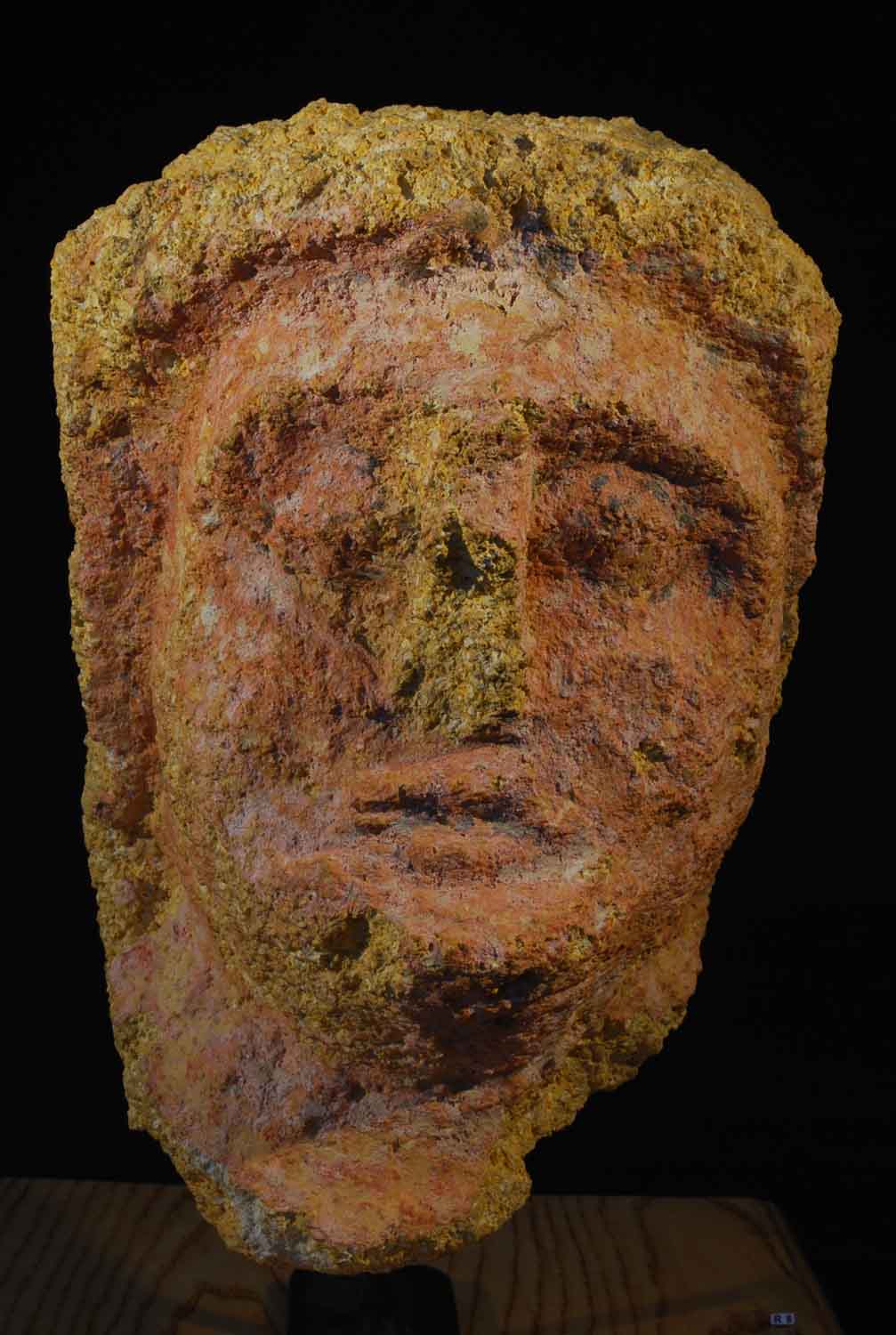
Catalogue No.: R08
Description: Roman Gallic Carved Limestone Head of a Man, c. 1st century AD.
Gallia was the Roman name from the province of Gaul, roughly embracing modern France and the low countries; one of the largest areas under imperial control in the Roman Empire. By Italian standards, Gaul was appallingly underdeveloped and primitive, untouched by outside influences, and even unlike other Celtic lands, most notably Britain. Romanisation was only marginally successful in Gaul and the Celts not only survived, but also, with a number of compromises, actually flourished.
The Romans put great importance on the rise and use of large towns and cities in Gaul, fostering economic life and political control. Throughout the Provinces, Augustus initiated the Imperial Cult, the idea of worshipping the emperors of Rome, which was propagated in the concilia, the councils of each province conceived to maintain communication between the ruler and the actual people of the many lands he commanded. Julius Caesar had found such a group useful in Gaul, summoning together major chieftains to hear their opinions and to hear their adulations. The idea was virtually unknown in the west in the early imperial epoch. Until the decline of the empire in the west, Gaul knew little hardship or war, and the use of Latin became commonplace. In the 1st century AD, the attempted revolts of Sacrovir, Vindex and Julius Civilus all failed because the tribes on whom they depended for support refused to join them or were spilt by their loyalties to Rome and knew what a Barbarian invasion would mean. In fact throughout the catastrophes of the 3rd centuries AD, Gallia survived better than many regions by virtue of its location as the gateway to Britain, Germany and Spain. Its craftsmen and artists furthered their economic monopoly of foreign markets because war ravaged other areas. The Gallic peoples became skilled in metallurgy and carving, and Gallic workmanship in jewellery and art was known throughout the provinces. Long periods of peace allowed strides in industry, so that textile, wood and glass manufacturing developed. Especially noted were Gaul’s potters who eventually exported their wares and its wine.
This early, somewhat weathered limestone piece is thought to be a depiction of a Roman emperor or noble and is from the most Romanised of the three provinces in Gaul, Lugdunensis which was centred around the important city of Lugdunem (Lyon). A mint was also situated there and the city served as a seat of administration for the legate. Boundaries for the province were established to the east and south by three rivers, the Loire, Saone and the Seine.
Lugdunem (Lyon), France.
Size: 270 X 270mm. |
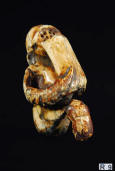
Image Code R09 |
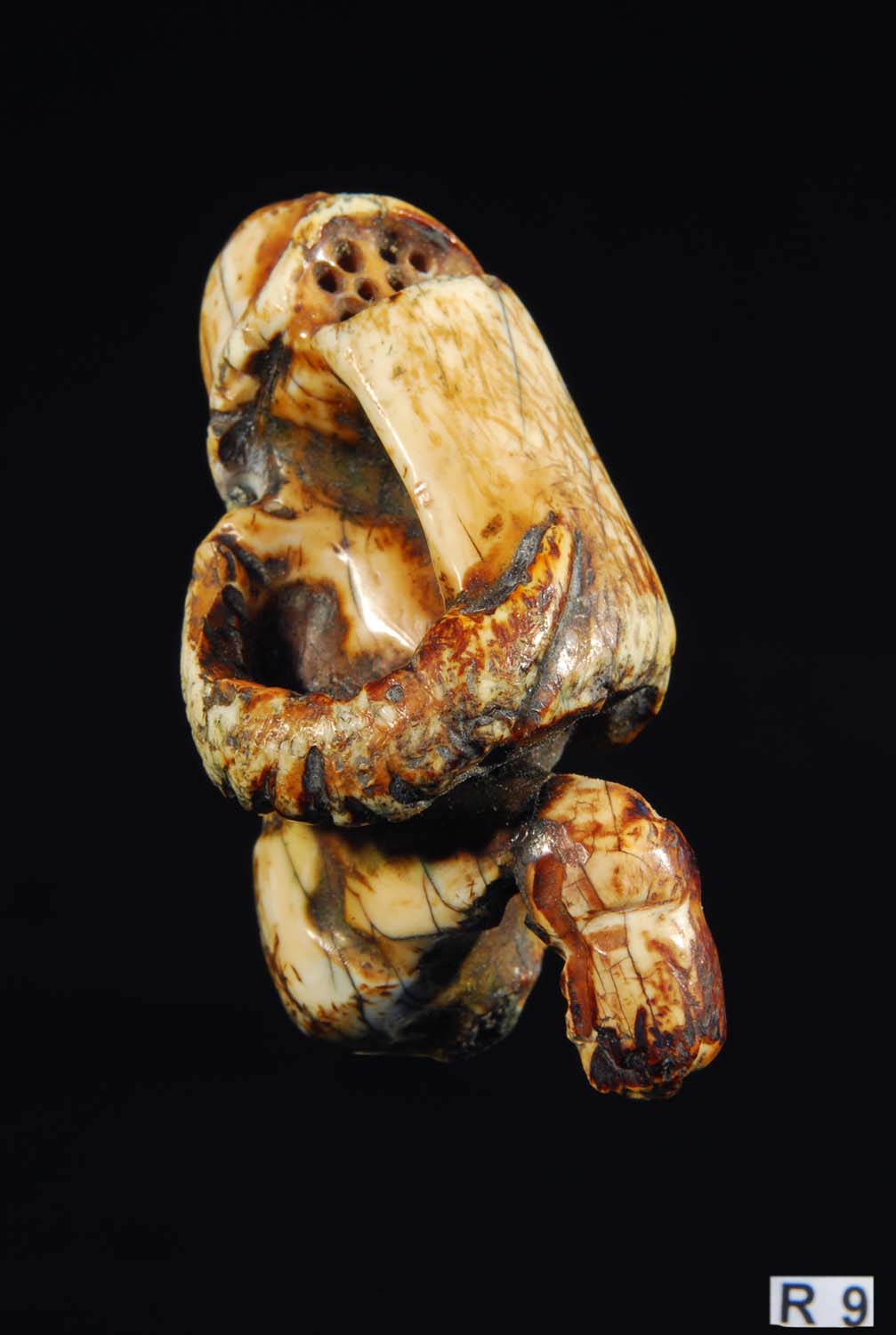
Catalogue No.: R09
Description: Roman Ivory Gladiator Figurine. 1st – 3rd century AD.
Gladiators became known as one of the most famous elements of Roman society and entertainment. A unique product of Rome and Italy, gladiators epitomised the socially decadent nature of the Romans with their taste for blood and sports. Gladiators had first emerged amongst the Etruscans as a form of the traditional blood sacrifice held at funerals, when teams of warriors duelled to the death. From approximately 264 BC, burials honoured by bouts between gladiators became both common and grand. The gladiatorial school, the type and combatants and their place in society were all fully developed. After the election of Julius Caesar in 65 BC, he held a massive celebration, complete with over 300 duelling pairs of gladiators. Henceforth, the contests became an important part of the imperial control of the Roman mobs, satisfying the Romans’ thirst for action and directing their frustrations and energies.
There were five classes of gladiators: Eques, Essedarii, Galli, Thraeces and Etiarii. The Eques was a horseman, and Essedarii were charioteers and the Galli were heavy fighters, further divided into several types. The Mirmillos (myrmillones) and Samnites fought with short swords, long shields and large helmets. A secutor was a variation on the Samnite, although in later years the Greek term hoplimachi was applied to all heavy fighters. The Murmillo (identified by the fish-crest on his helmet) was often put into combat against the lighter armed but mobile Thracians. Thracians carried long scimitars and bucklers or smaller shields. Their armour was normally tight leather (fasciae), fastened around a leg. The least protected of all, but perhaps the most famous, were the retiarii or the net-and-trident duellers. They wore no armour at all, holding instead a net and trident. Quickness was their only hope, for once cornered or separated from their weapons they were easy prey for the heavier classes. Gladiators learned never to rely upon the mercy of the spectators to save them.
This exquisite small ivory carving of a gladiator, who is thought to be a variant of the Samnite or Thracian is depicted wearing greaves on both legs, a perforated helmet with crest and arms bound with leather thongs, his right hand armed with a short sword. The thrax was normally matched against a heavily armed hoplimachus or the lighter myrmillo. Similar figures of gladiators, but made of terracotta, are known to have served as small gifts presented on the occasion of the New Year feast of Saturnalia. This piece, as constructed of ivory, however, would more likely have served as an important votive or ornamental piece. Italy.
Size: 59 X 34mm. |
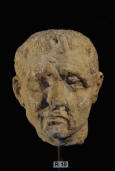
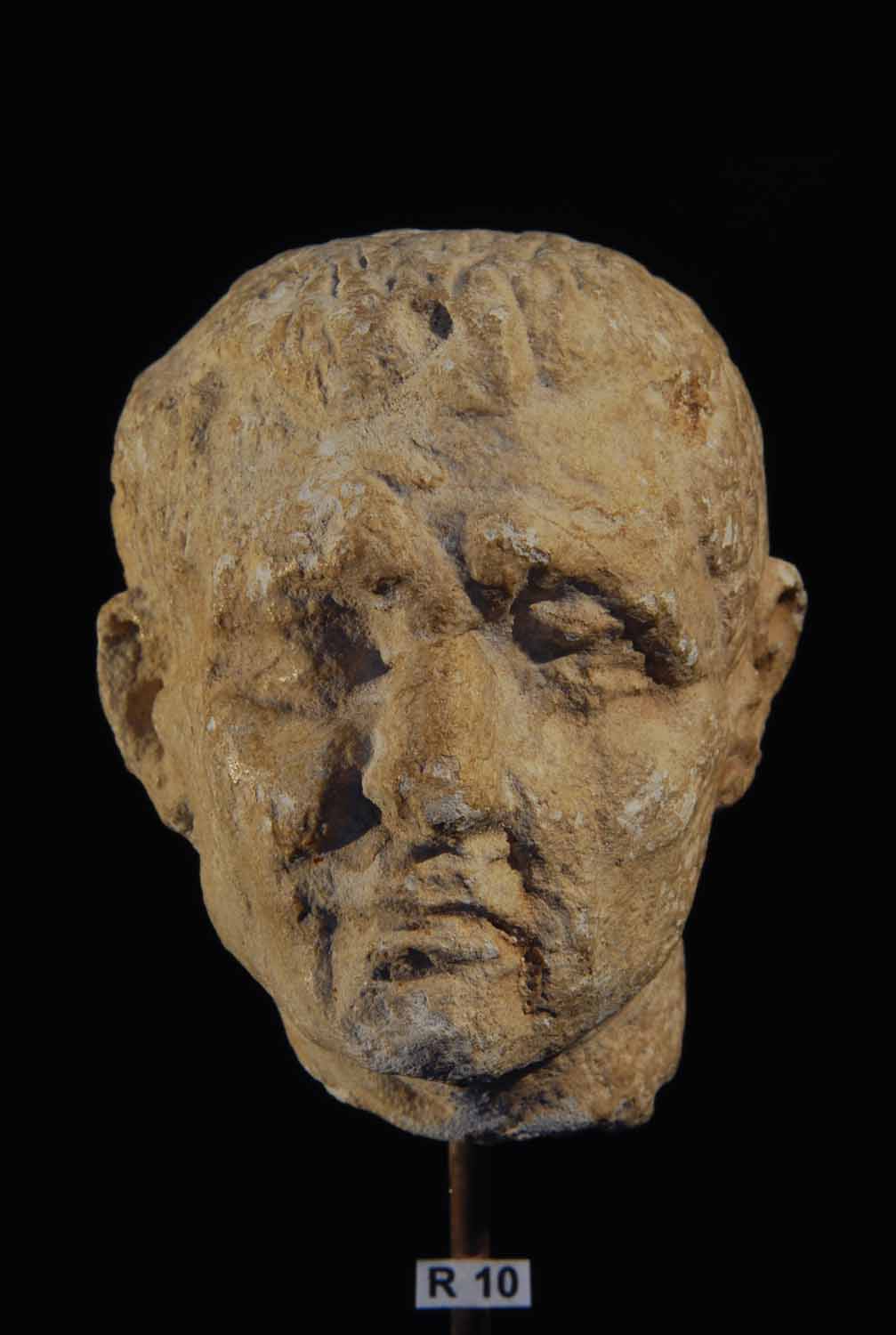
Image Code R10 |
Catalogue No.: R10
Description: Roman Portrait Sculpture. c 1st Century BC - 1st Century AD. Finely detailed and expressive rendering of the head of a Roman Emperor, official or military dignitary, probably of the late Republican to Julio Claudian period when this style of portraiture became popular, as inspired by the Roman practice of keeping death masks of notable persons and presenting subjects in a realistic and unflattering manner. The piece was likely previously coated with a light gesso wash, remnants of which still exist. Fine limestone with remnant gesso coating. Roman Egypt, Alexandria.
Size: 72 X 72mm. |
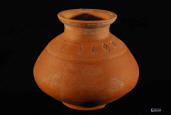
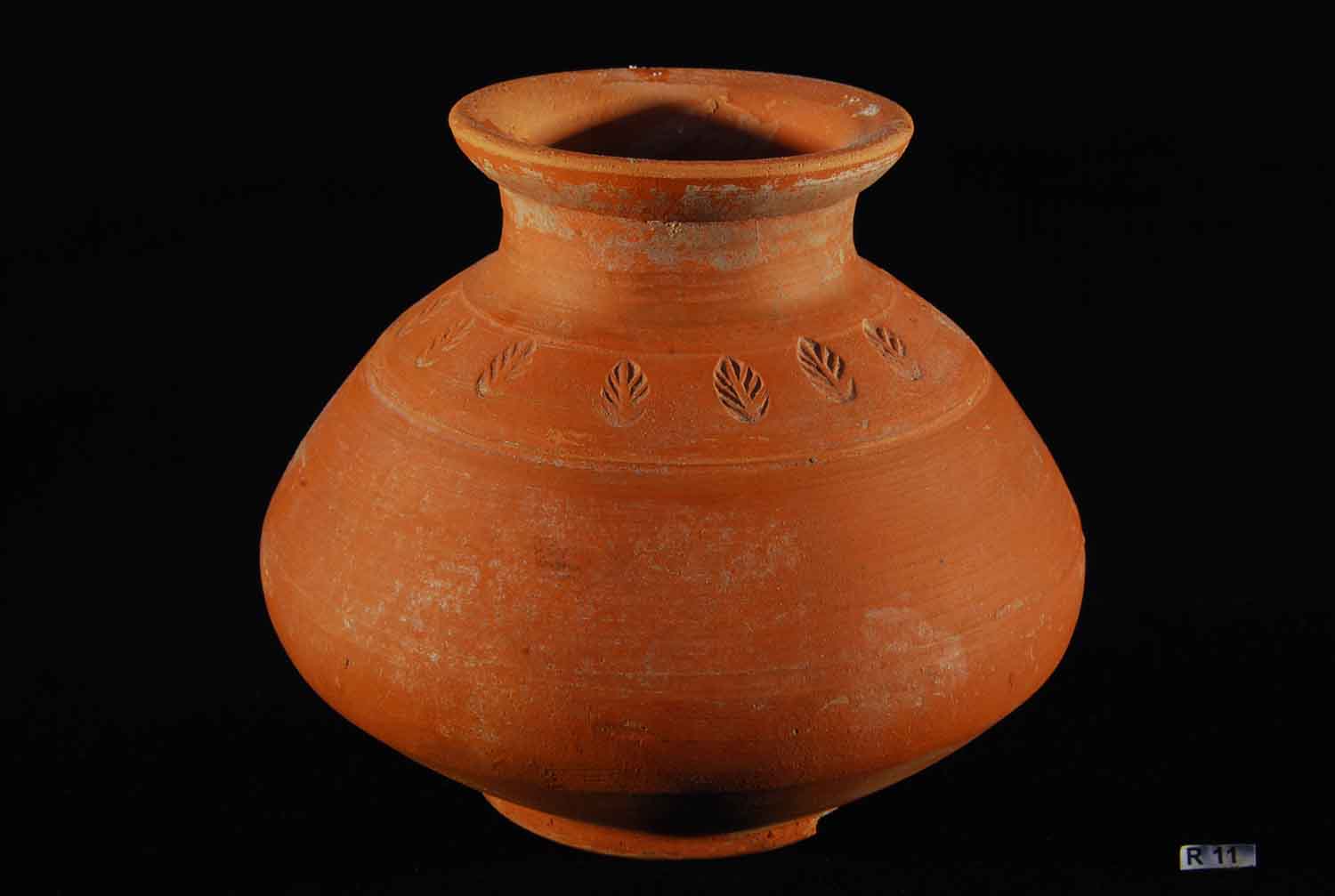
Image Code R11 |
Catalogue No.: R11
Description: Roman Provincial Red Ware Bowl.
Elegant bowl of fine terracotta with a slightly flared lip, high neck and bulbous body sitting on a well-formed ring base.
By the 2nd century BC, potters in Asia Minor had begun to fire their wares in a simple oxidising atmosphere instead of the traditional three-stage firing, the resulting potteries were therefore not black but a rich glossy red. Mainland Greek and Italian potters were slower to adopt this fashion but it had spread to Italy by the mid 1st century BC, and by the 1st century AD red-slip pottery had become standard throughout the empire. North Africa,
2nd – 3rd century AD.
Size: 109 X 119mm. |
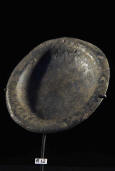
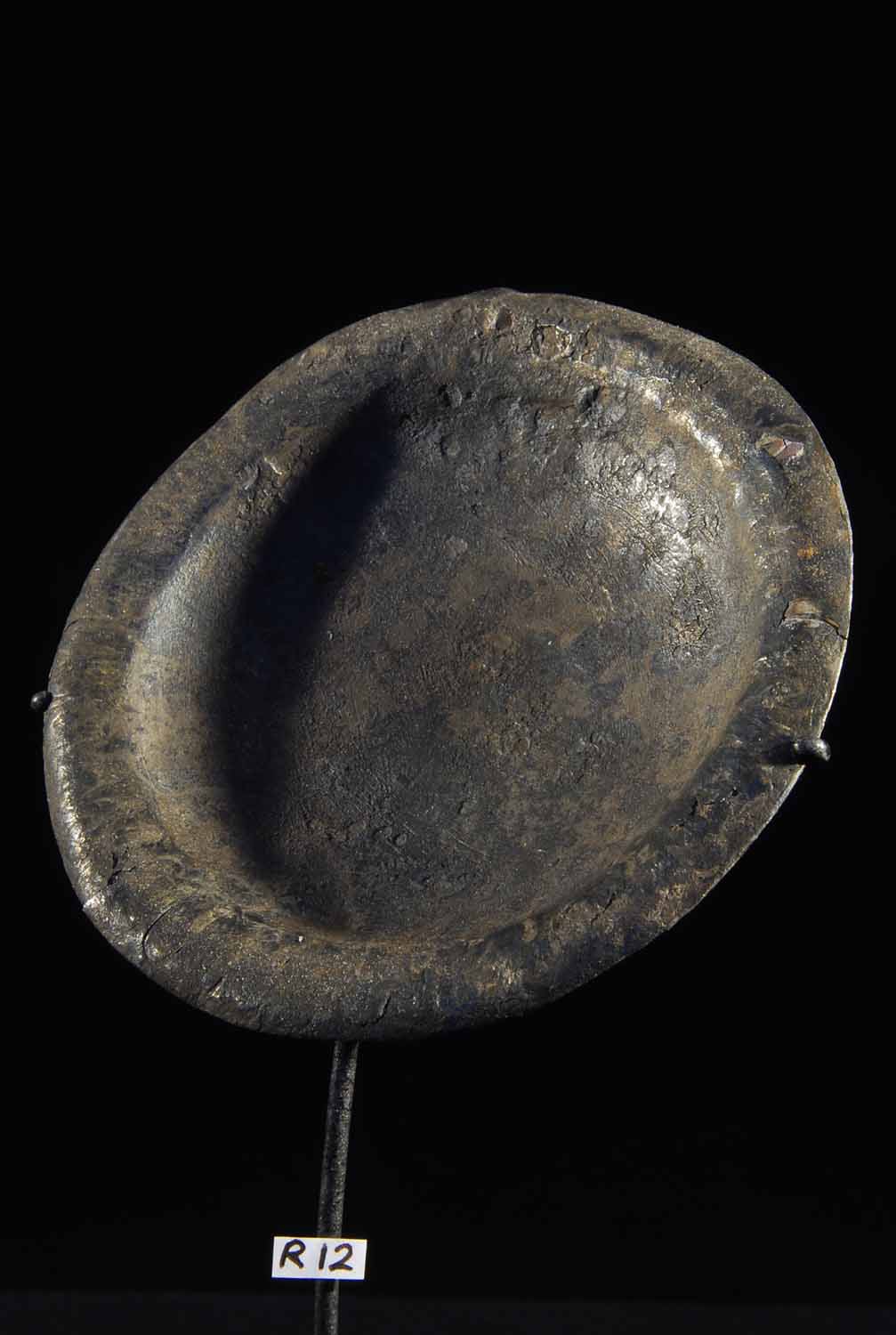
Image Code R12 |
Catalogue No.: R12
Description: Roman Silver Dish. c 1st Century BC - 1st Century AD. Small silver dish of shallow rounded form, the rounded rim with chased patterning. Said to have been excavated from the River Tiber (Tevere) north of Rome. Silver.
Size: 98mm dia. |
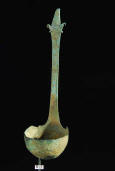
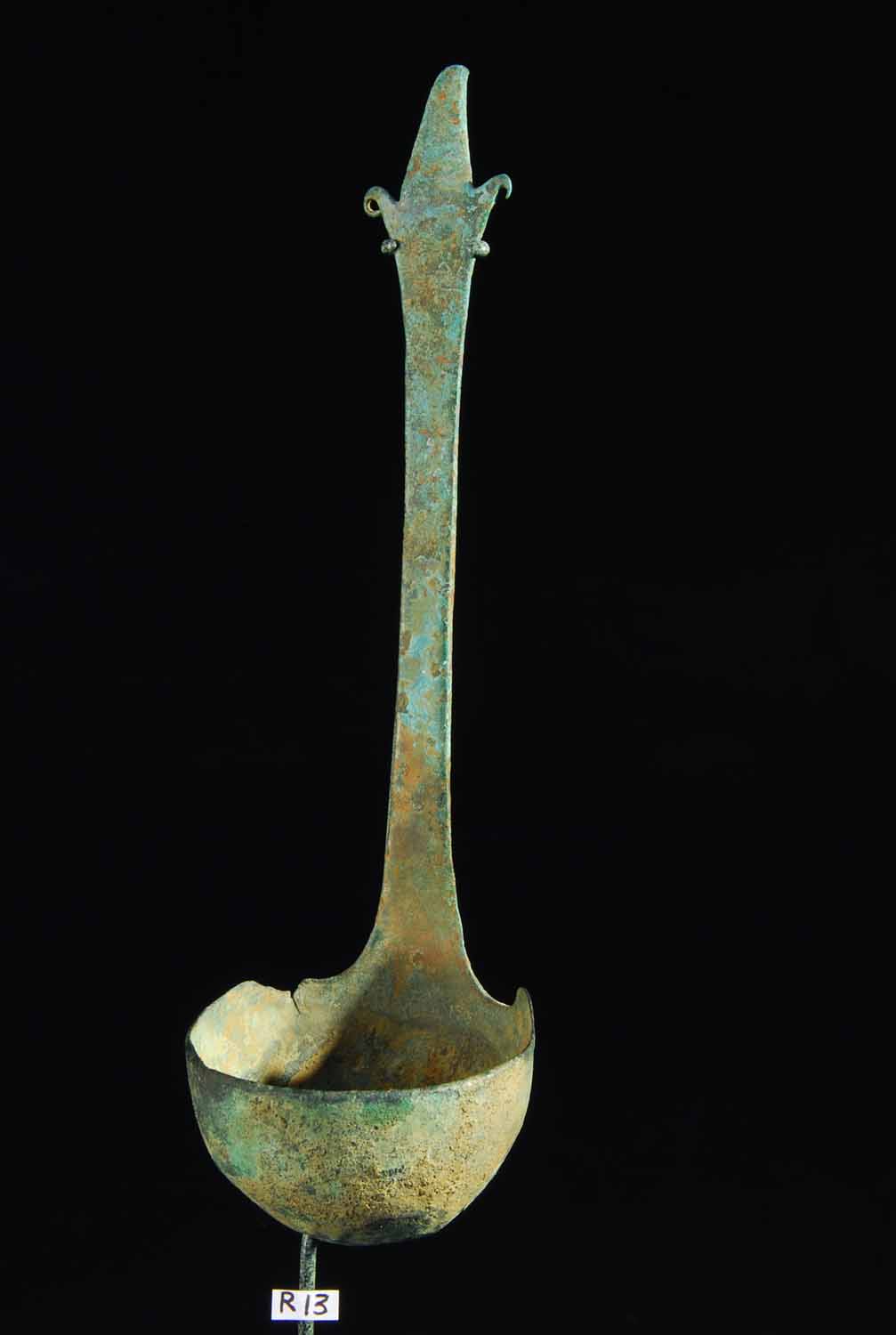
Image Code R13 |
Catalogue No.: R13
Description: Roman Bronze Ladle. 3rd-2nd Century BC. Elegant ladle with hemispherical bowl, the back of the handle possession incised lines than run from the spurs above the bowl to the spurs at the top. Bronze.
Size: 174 X 51mm. |
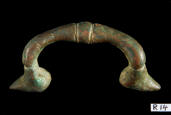
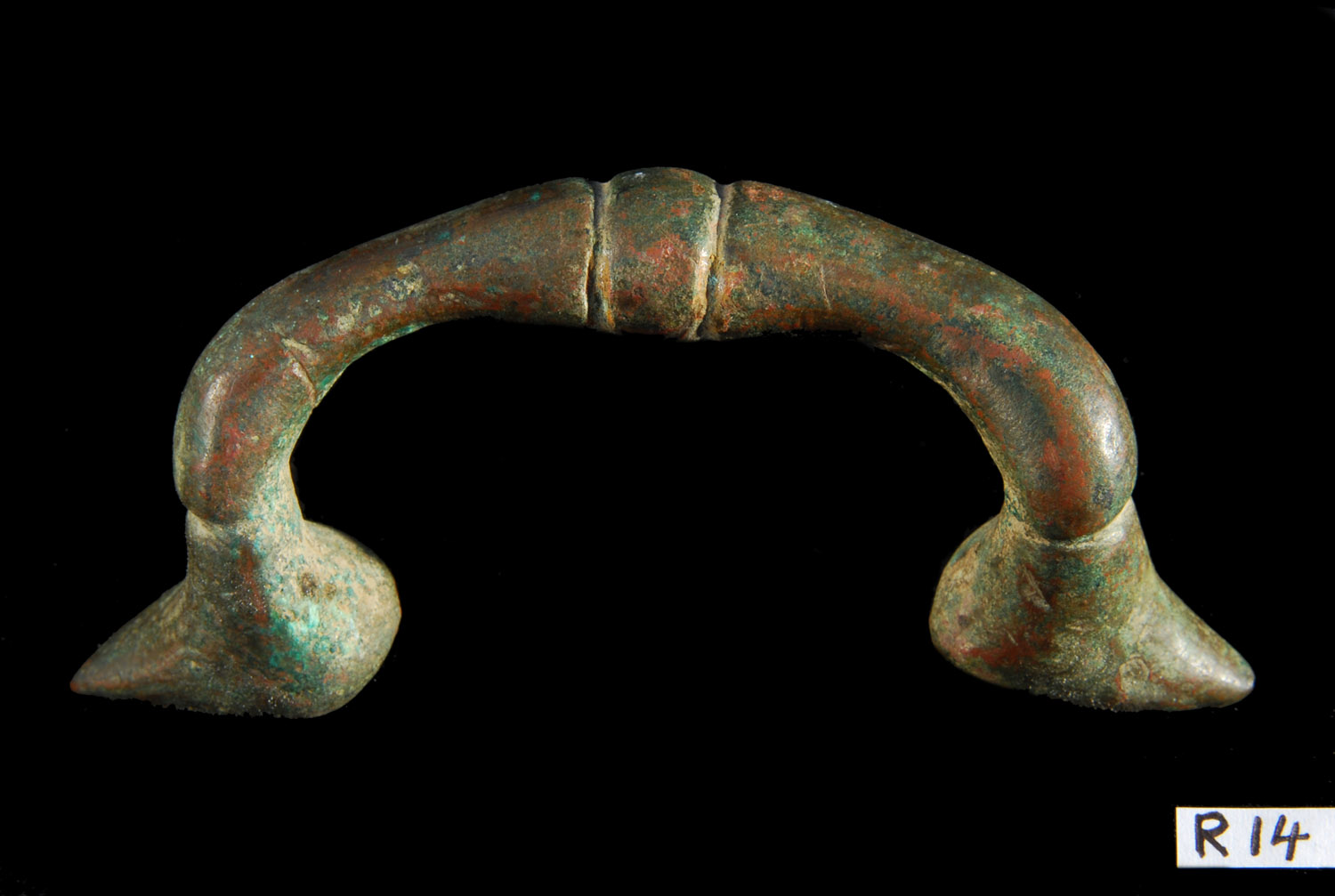
Image Code R14 |
Catalogue No.: R14
Description: Roman Bronze Handle or Furniture Ornament.
Handles such as this are known to have been found on large bronze bowls, and on a much larger scale on stoves and equipment for heating liquids, as well as on items of furniture. Italy. 1st – 3rd century AD.
Size: 99 X 35mm. |
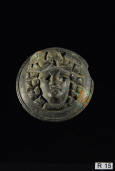
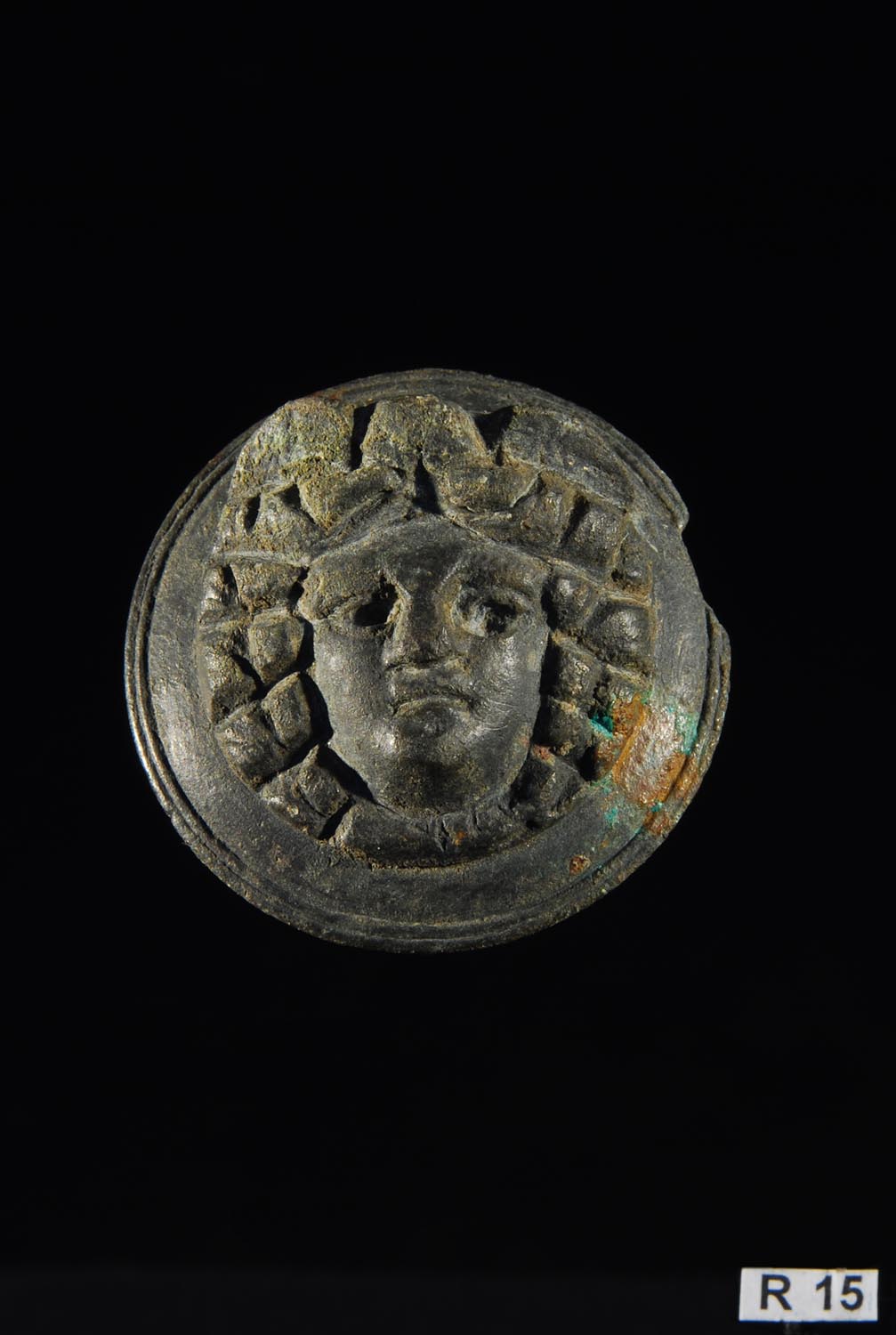
Image Code R15 |
Catalogue No.: R15
Description: Roman Bronze Boss with Head of Medusa. 1st century BC – 1st century AD.
Roundel or boss, perhaps having once formed part of a larger ornament, upon which is portrayed in relief the head of Medusa, the snake-head female monster whose glance turned all who looked at her to stone, and who was slain by Perseus. The Romans considered a Medusa head capable of protecting the object it adorned. Such a shape was well suited to filling circular spaces, and it was often used as an inlay or handle of some form. This piece may once have possessed inlaid eyes in the form of silver or perhaps coloured glass.
Size: 41 X 14mm. |
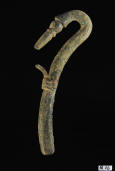
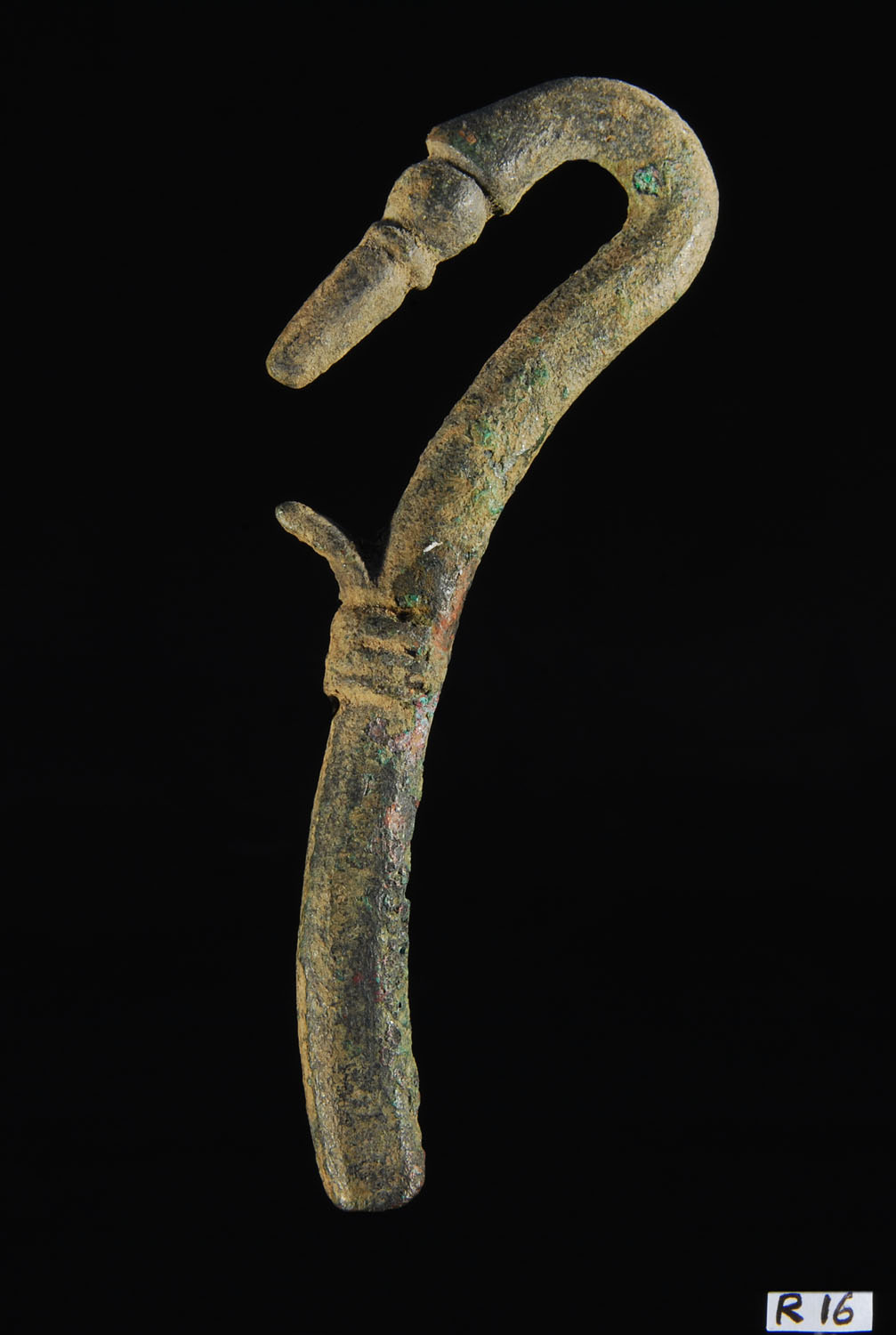
Image Code R16 |
Catalogue No.: R16
Description: Roman Bronze Drop Handle Fixture. 1st – 3rd century AD.
This piece is thought to be part of a handle in the form of a stylised elongated animal head. The absence of nail holes shows that the piece was probably soldered on to some portable bronze object such as a brazier or a heating apparatus or bowl.
Size: 121 X 49mm. |
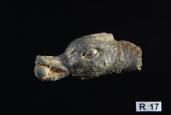
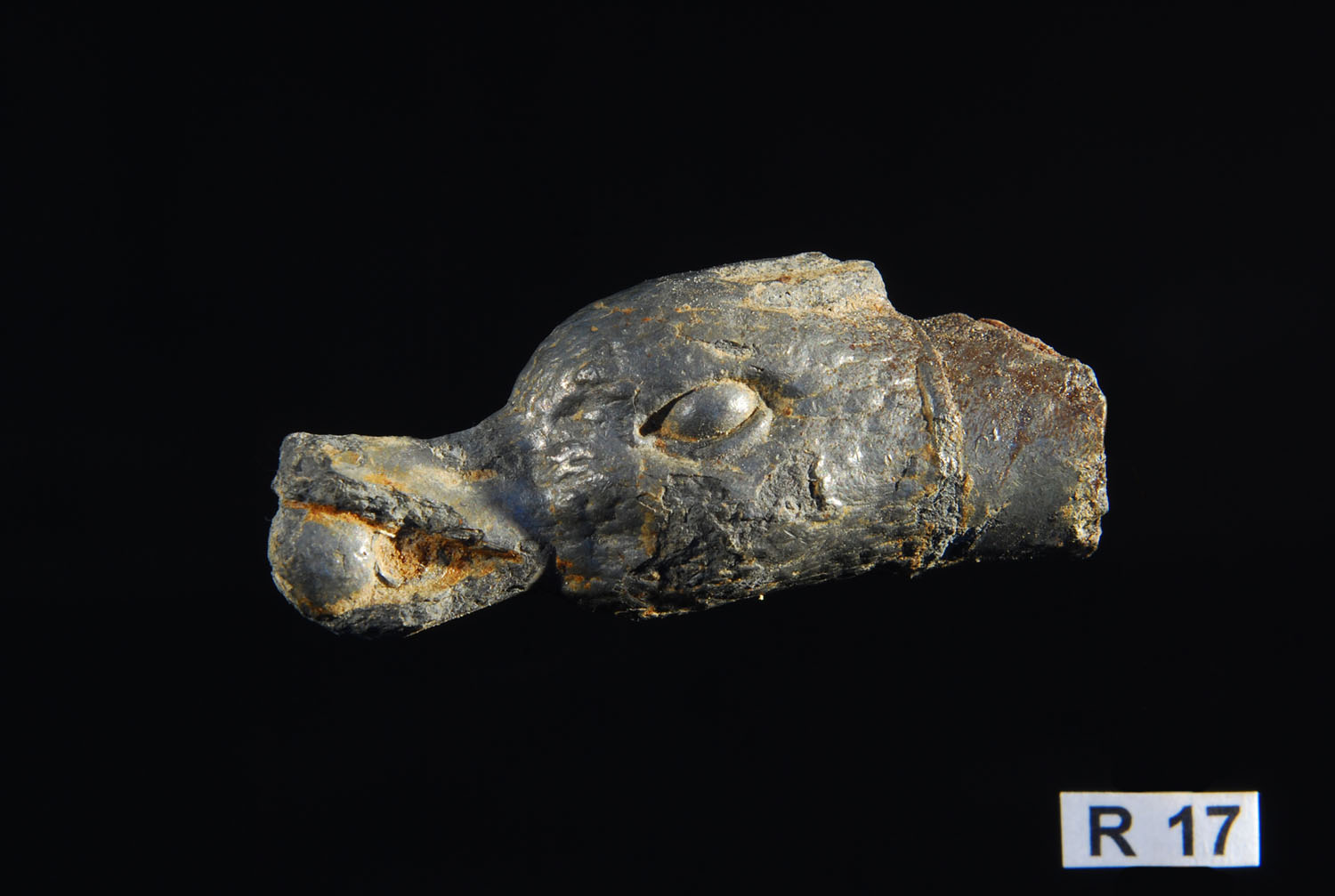
Image Code R17 |
Catalogue No.: R17
Description: Roman Spelter Figurine of a Duck with a Sphere in its Mouth.
This piece, with its duck motif, would likely have formed part of an item of furniture or kitchenware, perhaps as a finial or handle. Spelter, which is an alloy of zinc, lead and other impurities was being used by Roman craftsmen in early times for the manufacture of ornamental pieces such as this. c. 1st century AD.
Size: 39 X 15mm. |
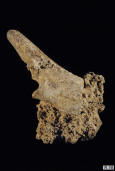
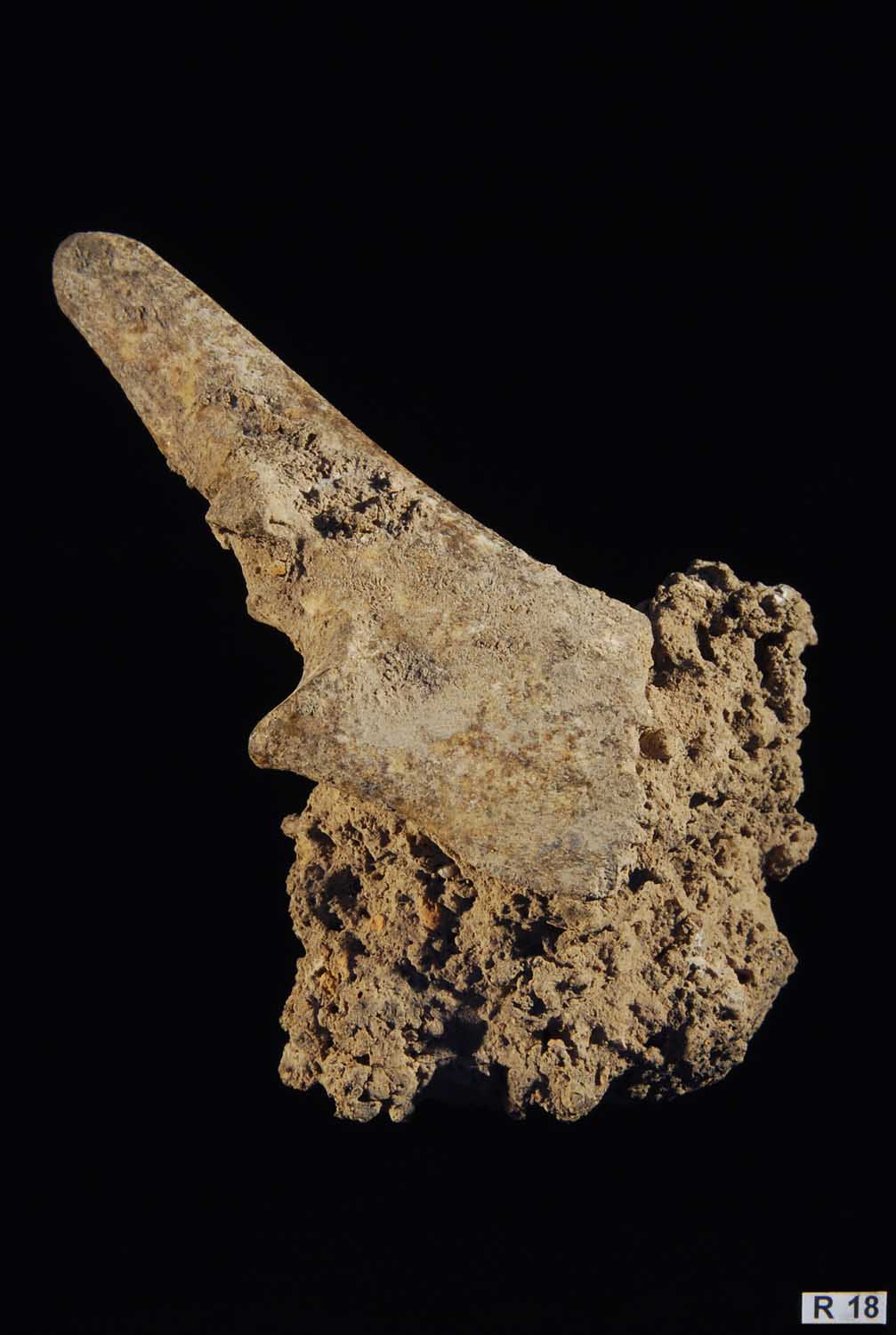
Image Code R18 |
Catalogue No.: R18
Description: Human Bone Relic from Pompeii. 1st century AD.
Important human bone relic from the eruption of Mount Vesuvius on 24th August, AD79, the eruption having buried the Roman city of Pompeii under a layer of pumice and ash as deep as five metres in places. Although it is thought some residents of Pompeii may have escaped the destruction, early explorers have found the remains of those who were not so lucky. Archaeologists, upon realising that humans had perished in certain places, realised that if holes in the ash were filled with plaster, details of the body could be retrieved, thus offering a glimpse of those last tragic moments. This particular bone relic still retains pumice and mud-ash adhesion and was obtained from an archaeologist / researcher conducting early studies at the site during the early 20th century.
Nestled in the shadow of Mount Vesuvius, Pompeii had been a prosperous city of some 20,000 people. Its streets were laid out on a grid system and its buildings included a Roman forum and amphitheatre, shops, temples and homes. The luxurious lifestyle enjoyed by ancient Rome’s other classes is exemplified by many of the well-preserved houses on the Pompeii site. The importance of Pompeii (along with the neighbouring town of Herculaneum which was buried under volcanic mud) is that it provides an insight into life in a provincial city of Italy in the late 1st century AD. A number of houses have been excavated; their walls were decorated with elaborate, sometimes mythological paintings and their public rooms were filled with portrait sculptures and other works of art. One of the houses outside the walls, known as the ‘Villa of the Mysteries’, gained its name from an elaborate series of paintings that showed initiation into the secret rites of the god Bacchus (Dionysos).
The destruction of Pompeii has also provided a snapshot of the commercial life of the city. The preservation of wine shops, bakeries still with loaves in their ovens, and the meat market is without parallel in the rest of the empire. Even political slogans were still painted on the walls of the streets. Public areas such as the amphitheatre (scene of a famous riot described by the historian Tacitus) and the forum (the centre of civic administration), reflect the wealth of the city at that time.
After much research and gathering of evidence, it is now known that during the morning of the 24th of August, AD 79, the long-dormant volcano of Mount Vesuvius erupted, and by the evening of that day the two flourishing towns of Pompeii and Herculaneum and the nearby coastal resort of Stabiae were dead, already half-buried by the rain of ash, pumice and volcanic mud beneath which they were to lie entombed for more than 16 centuries. Before long their very locations were lost and it was not until 1709 well-diggers hit upon the theatre of Herculaneum. It was another thirty years or so before the Bourbons put in hand their programme of organised treasure hunting which furnished the first nucleus of the royal collection of artifacts that eventually came to rest in the National Museum of Naples. In 1748 attention was diverted to another Vesuvian site, where peasants had recently made promising finds and where digging was easiest. This proved to be the lost city of Pompeii. Systematic archaeological work has been carried out at the site ever since. Pompeii, Italy.
Size: 73 X 123mm. |
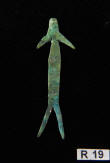
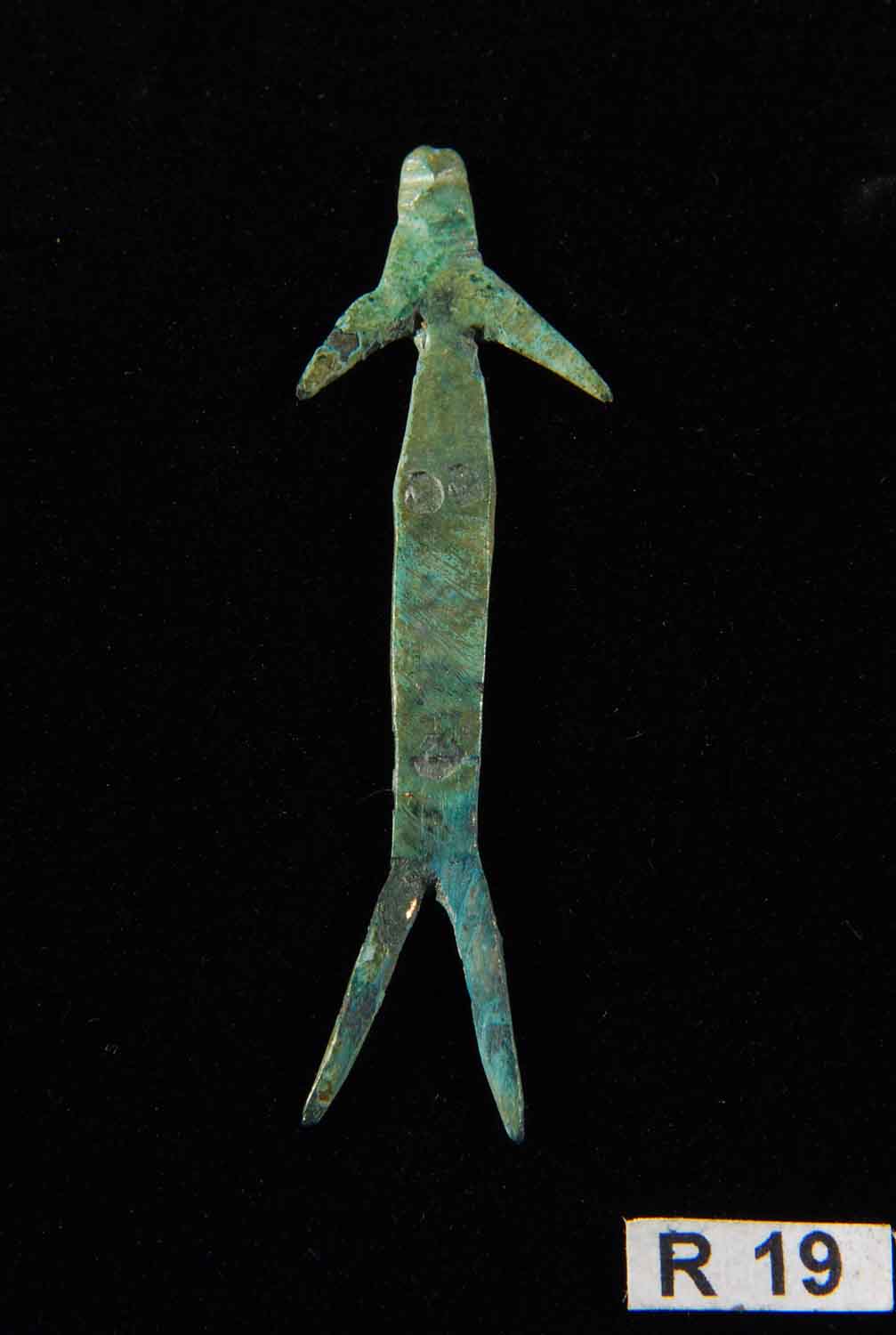
Image Code R19 |
Catalogue No.: R19
Description: Early Bronze Votive ‘Orant’ Figurine Umbro-Sabellica Culture (7th – 5th century BC).
This very early delicate bronze piece portrays a female figure in the ancient attitude of prayer, believed to be symbolising the deceased’s soul in the afterlife praying for its friends on earth. The great majority of such figures are female, even when depicted on or in the tombs of men.
Picena, Umbria, Italy.
Size: 43 X 14mm. |
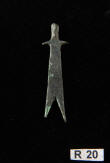
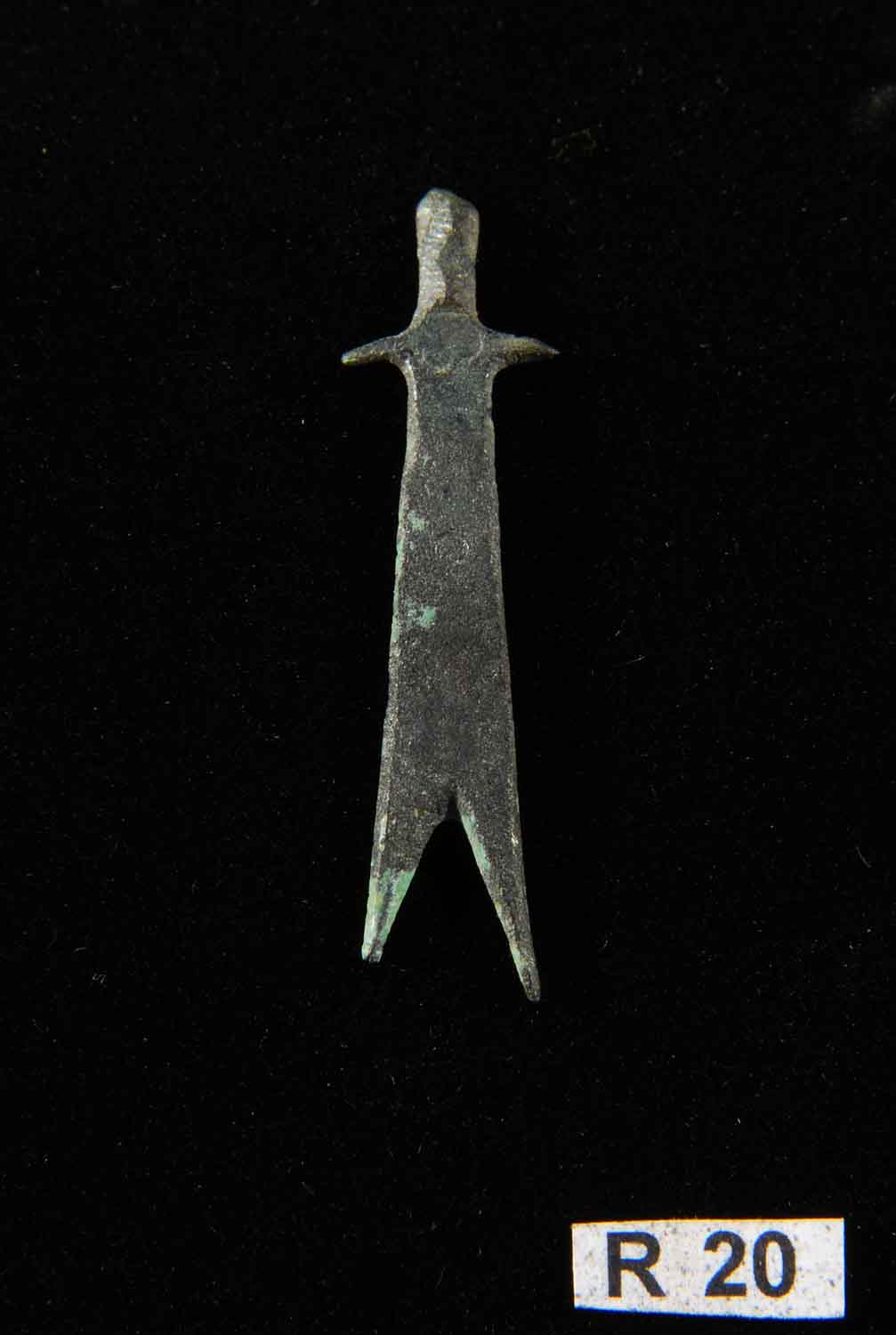
Image Code R20 |
Catalogue No.: R20
Description: Early Bronze Votive ‘Orant’ Figurine Umbro-Sabellica Culture (7th – 5th century BC).
This very early delicate bronze piece portrays a female figure in the ancient attitude of prayer, believed to be symbolising the deceased’s soul in the afterlife praying for its friends on earth. The great majority of such figures are female, even when depicted on or in the tombs of men.
Picena, Umbria, Italy.
Size: 35 X 6mm. |
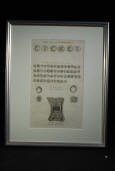
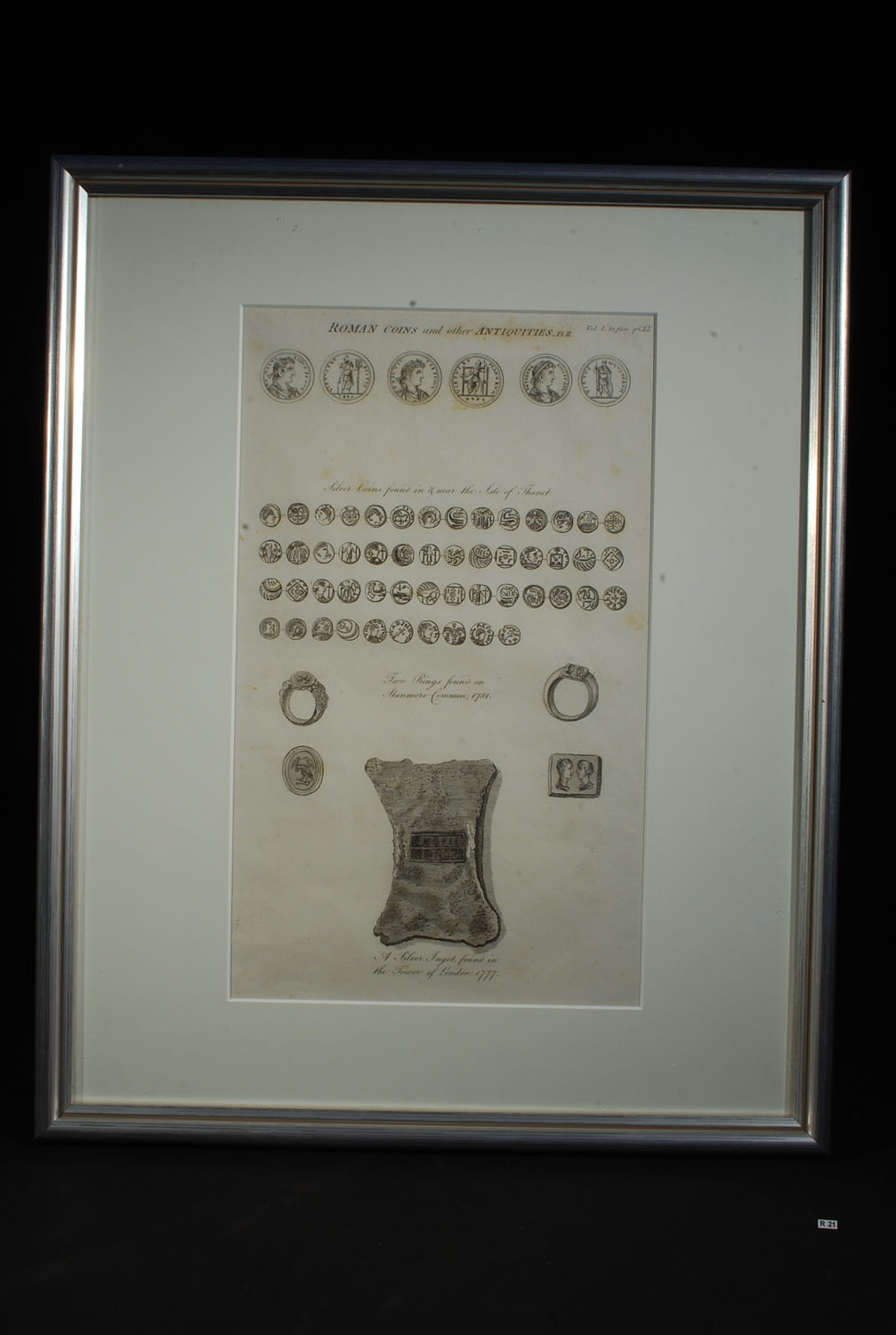
Image Code R21 |
Catalogue No.: R21
Description: Framed Early Woodblock Print of Roman Republican Coinage.
Size: 534 X 432mm. |
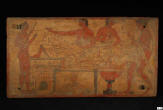
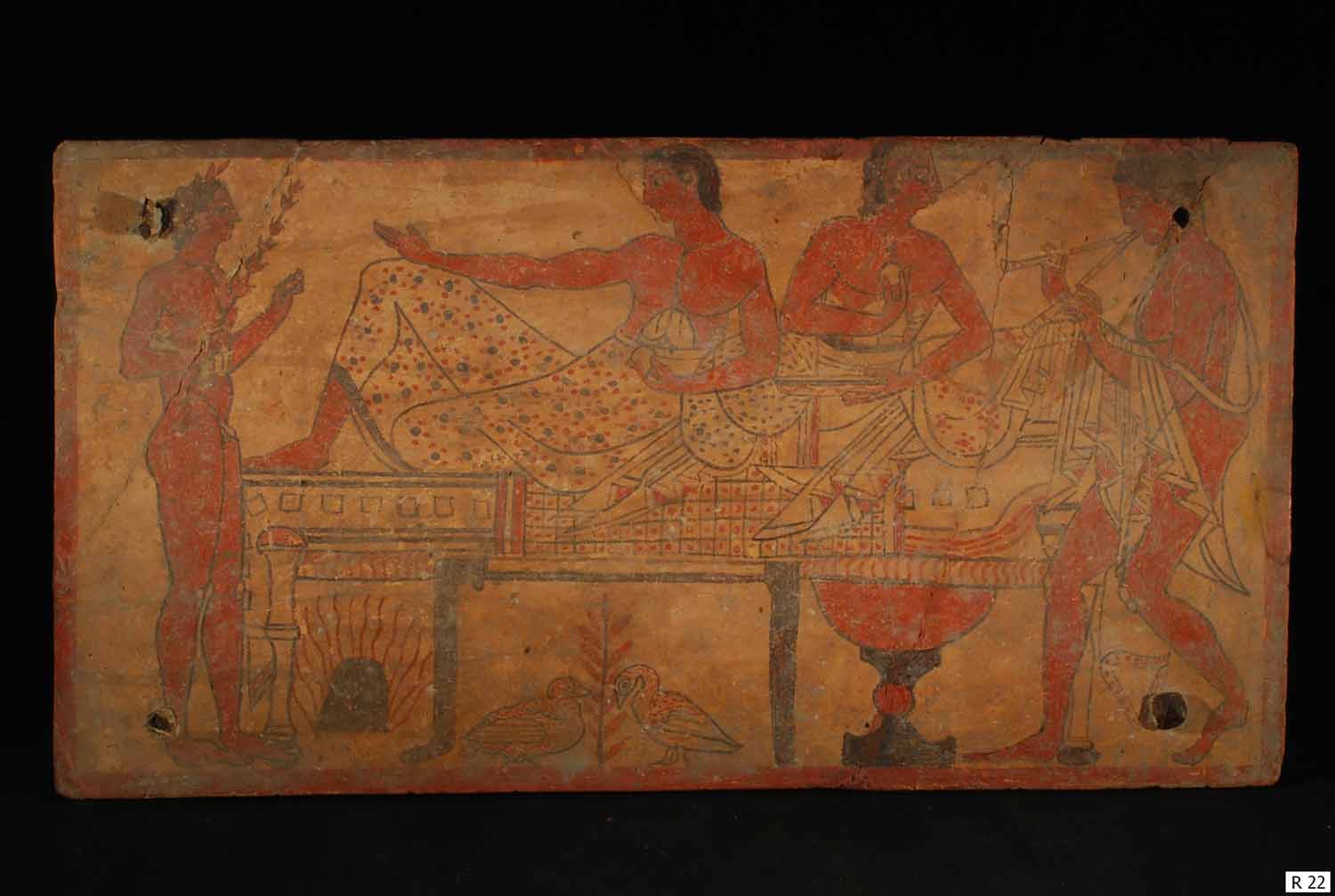
Image Code R22 |
Catalogue No.: R22
Description: Etruscan Painted Architectural Terracotta Plaque
Impressive large painted plaque with remnant iron stud fixing bolts, the
painted front depicting an erotic banquet / entertainment scene.
The plaque has been rejoined from a number of fragments and is constructed
of orange-buff micaceous clay. The plaque is likely one of a series that
might have served as a covering or protective plaque to be placed along
the top of a wall or building, presumably on a timber beam, immediately
below the roof tiles. Similar plaques are known, however, to have been
used in a domestic context and affixed to the internal walls of a villa,
or in some cases, a brothel or commercial premises. The plaque retains
remnant traces of iron nails or fixing bolts that would have been hammered
through suspension holes for affixment.
Etruria, the area bounded by the river Arno in the north and the Tiber in
the south, was the home of the Etruscans, whose civilisation in Italy
during the 8th - 4th centuries BC almost rivaled that of the Greeks.
Little is known of their origin and their culture is in many respects a
mystery as the Etruscan language has never been interpreted.
Size: 632 X 336mm. |
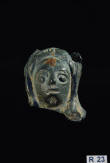
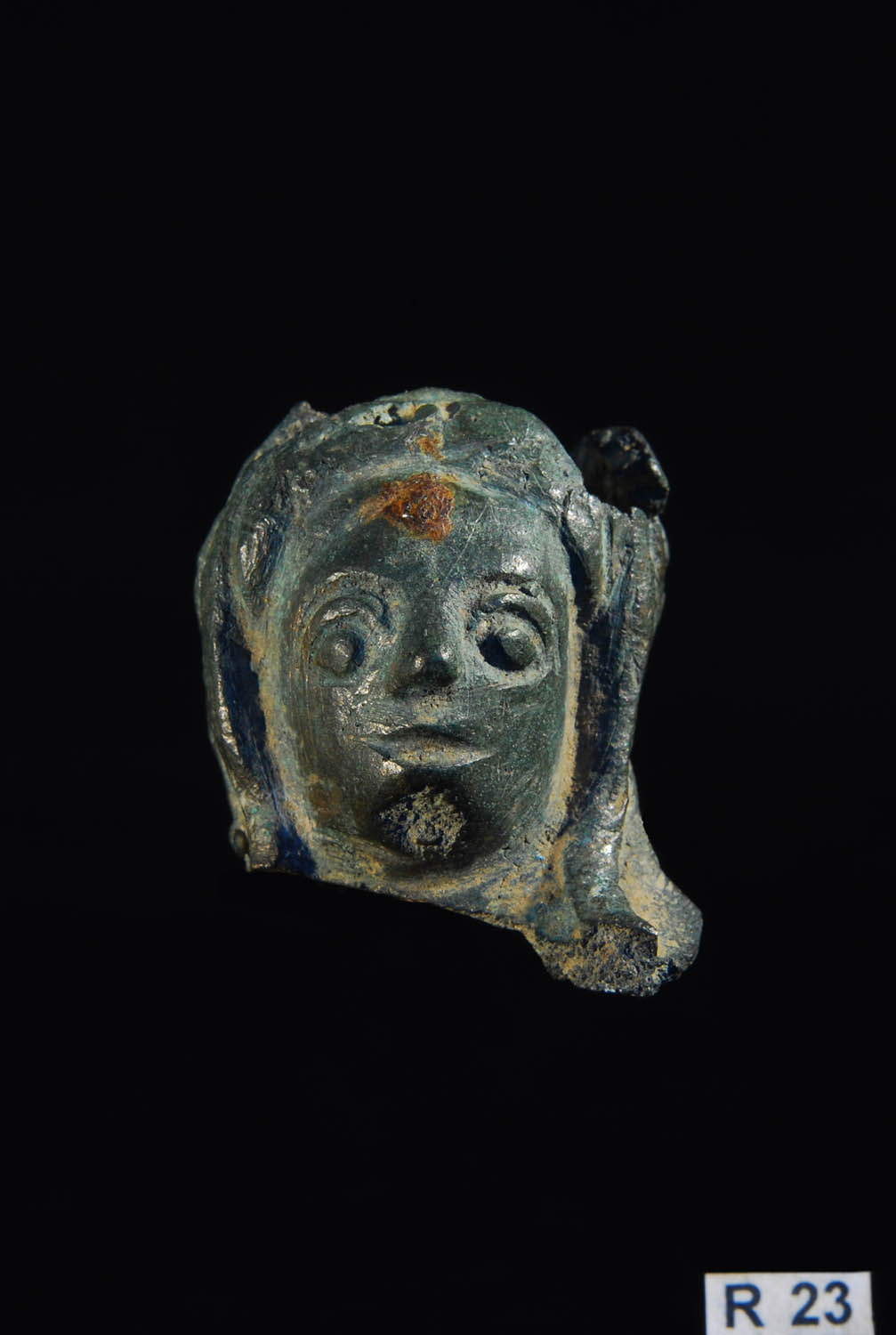
Image Code R23 |
Catalogue No.: R23
Description: Roman Bronze Head. 1st century BC – 1st century AD.
Hollow-cast head of a noblewoman or female deity, probably once forming part of a larger statuette or finial. Bronze.
Size: 32 X27mm. |
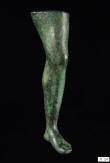
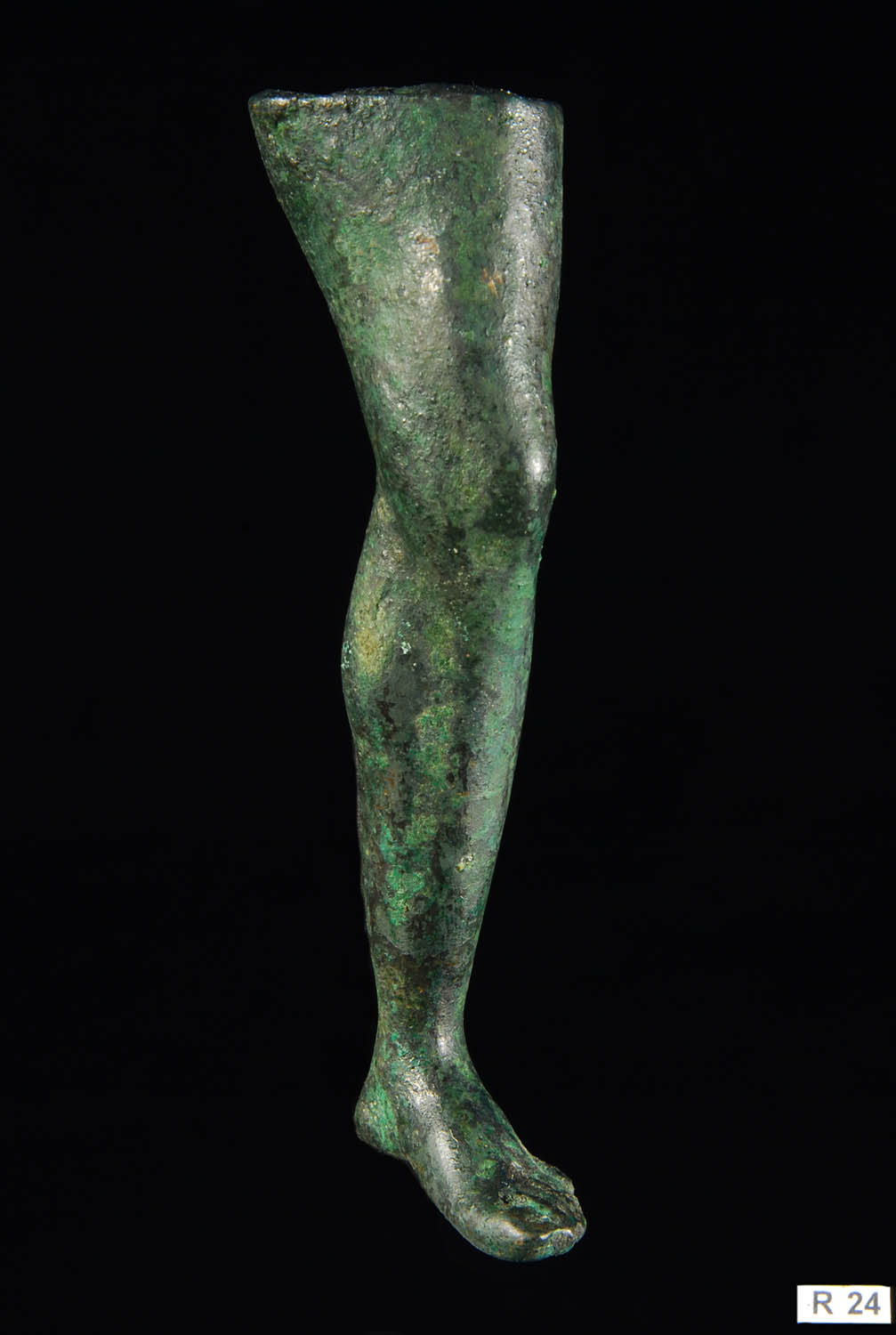
Image Code R24 |
Catalogue No.: R24
Description: Etruscan Bronze Votive Leg. 6th century BC.
Impressive solid cast complete leg, probably intended to serve in a votive capacity within the home as conjunctive treatment for a leg ailment or injury. Etruria, the area bounded by the river Arno in the north and the Tiber in the south, was the home of the Etruscans, whose civilisation in Italy during the 8th - 4th centuries BC almost rivalled that of the Greeks. Little is known of their origin and their culture is in many respects a mystery as the Etruscan language has never been interpreted.
Marzabotto, Bologna, Italy
Size: 170mm. |
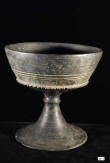
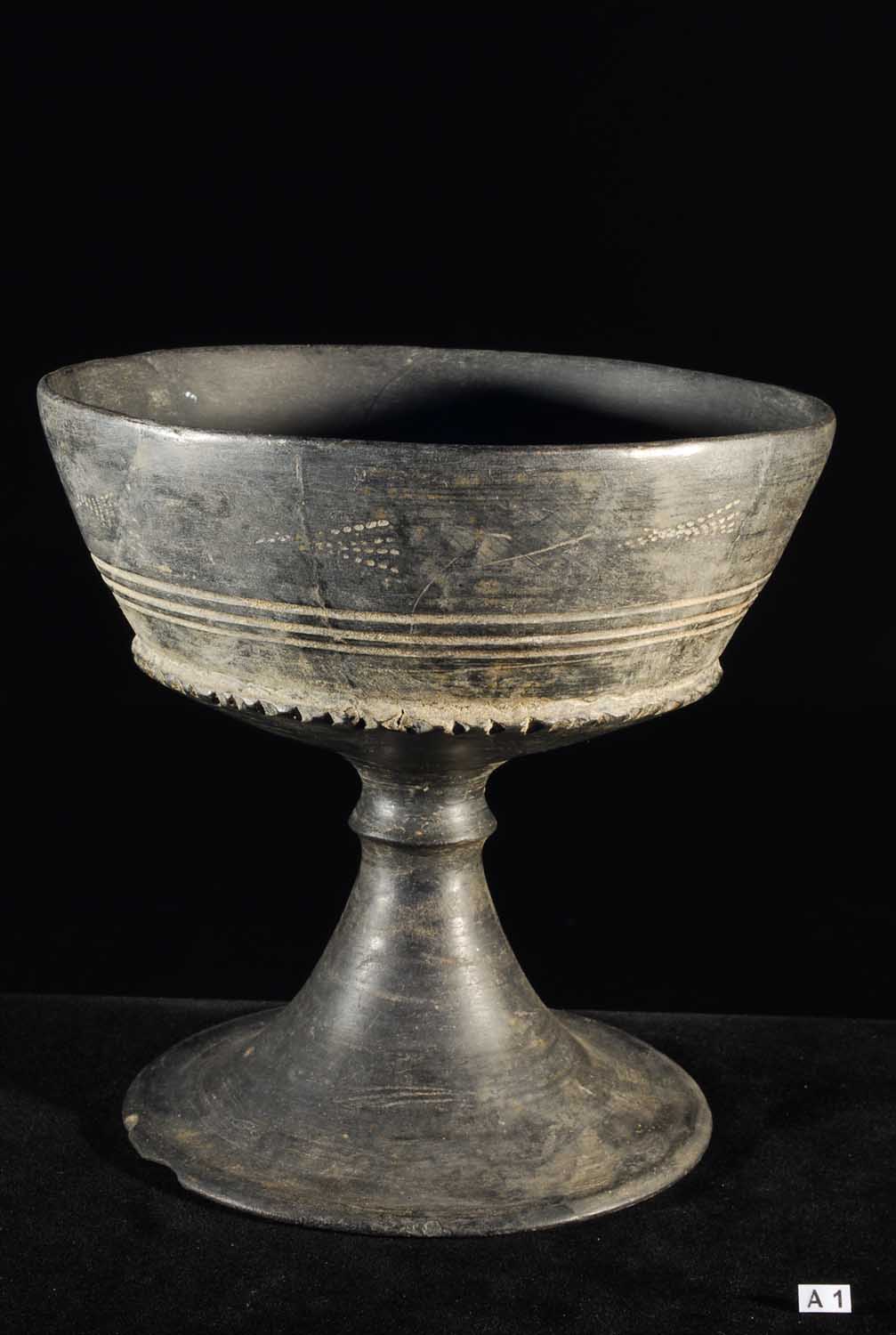
Image Code A01 |
Catalogue No.: A01
Description: Etruscan Bucchero Chalice.
Etruria, the area bounded by the river Arno in the north and the Tiber in the south, was the home of the Etruscans, whose civilisation in Italy during the 8th - 4th centuries BC almost rivalled that of the Greeks. Little is known of their origin and their culture is in many respects a mystery as the Etruscan language has never been interpreted.
Bucchero ware, the national pottery of Etruria, spans the period 700 – 525 BC. This was a ware fired black or grey with a glossy surface. At first it was modelled by hand and was plain or had simple incised geometric decoration. The later wheel-made wares were comparatively thin-walled and sharper in outline. About 600 BC, relief, impressed or stamped decoration began to be introduced. The subjects included animals, centaurs, hunting scenes and banquets. Bucchero has a strong connection with metalwork, and many of the reliefs also showed the influence of ivories and repousse bronzes imported from the east.
This superb stemmed cup in the shape of a chalice shows both incised and moulded relief decoration.
Size: 150 X 147mm. |
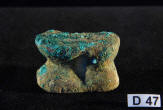
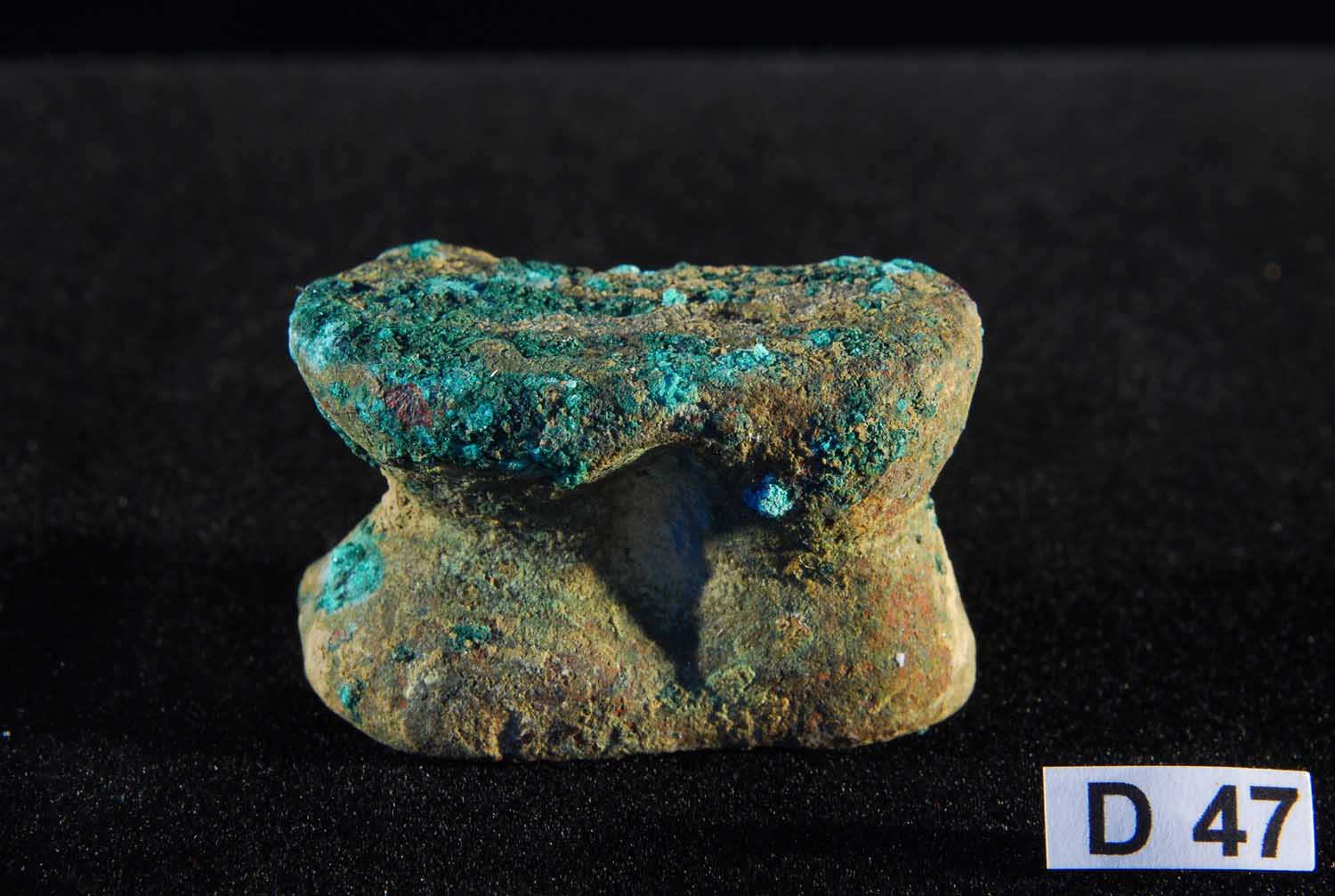
Image Code D47 |
Catalogue No.: D47
Description: Roman Bronze Knucklebone Weight. In Roman times, the accuracy of weights and measures was a guarantee for both public and private businesses, with the reference point being given by the weights and measures periodically fixed under Roman control. Scales and weights preceded the invention of coinage by at least two thousand years. Stone was one of the first frequently used weight materials. Different civilisations used different kinds of stone and shaped and inscribed it for use. Bronze weights were used at a very early period in Mesopotamia and the Greeks employed lead weights. The Romans used stone initially, later bronze and later still, glass. Glass was also used extensively in the Islamic world.
Size: 31 X 20mm. |

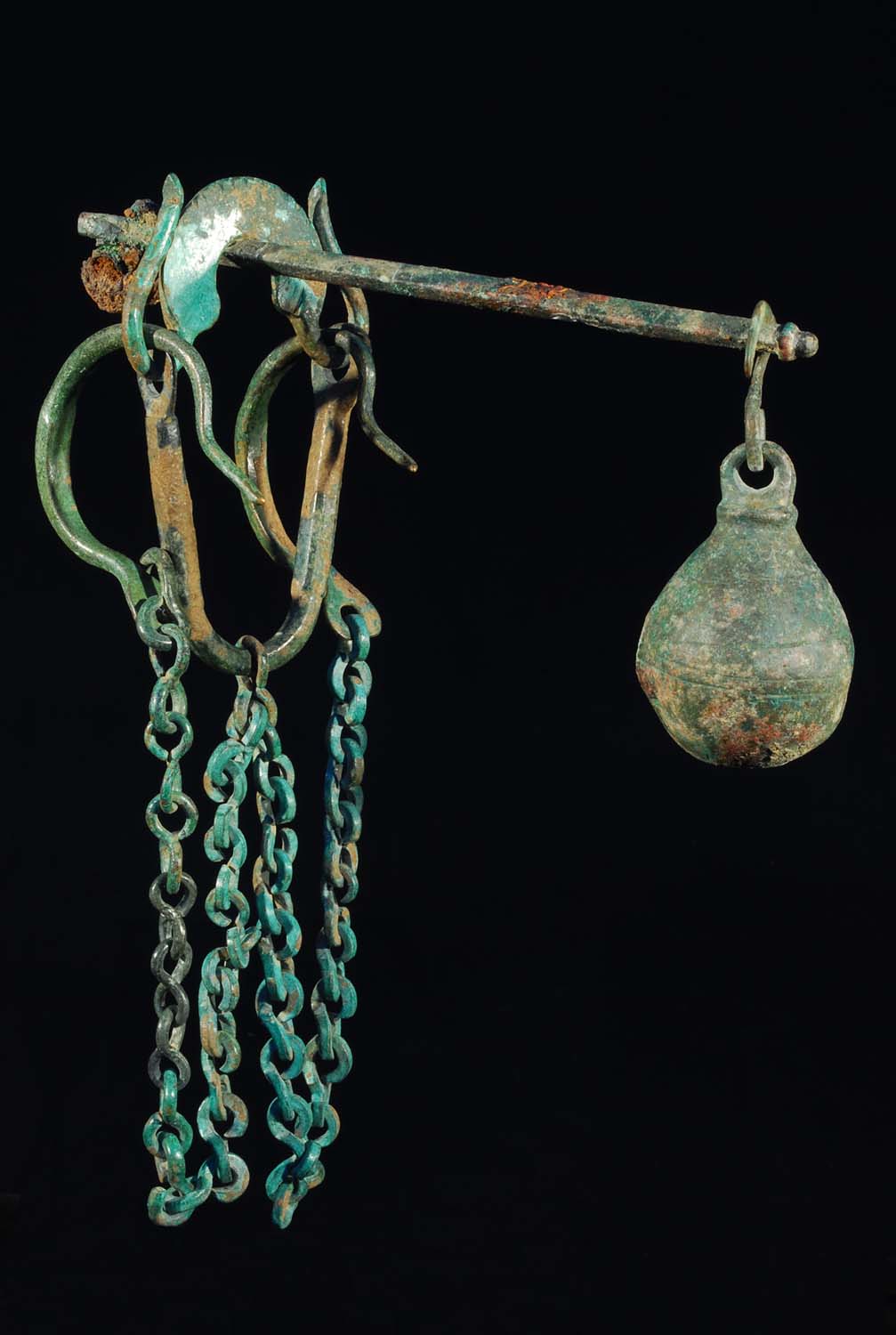
Image Code D49 |
Catalogue No.: D49
Description: Roman Bronze ‘Steelyard’ Balance with Weights, Hooks and Chains.
5th century AD.
Rare and relatively complete set of steelyard components constructed of copper alloy. In later Byzantine times, this device came to be known as a kampanos and generally consisted of a lever of two uneven arms and two or three fulcra. From the short arm hangs a suspension unit to support the goods to be weighed, while the longer arm is graduated on two or three faces depending on the number of fulcra. Along this arm the counterpoise weight would be moved until the steelyard was in a state of equilibrium and the weight of the goods indicated by its position on the relevant scale of the arms. The outermost fulcra was used for the heaviest, the innermost for the lightest amounts. On a similar steelyard balance housed in the British Museum, one scale reads from 12 to 85 pounds, the other from 80 to 240 pounds. The balance would probably once have also possessed a decorative counterpoise weight, often styled in the form of a bust of the emperor or his wife.
Asia Minor.
Size: 500 X 190mm. |
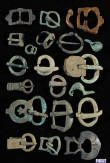
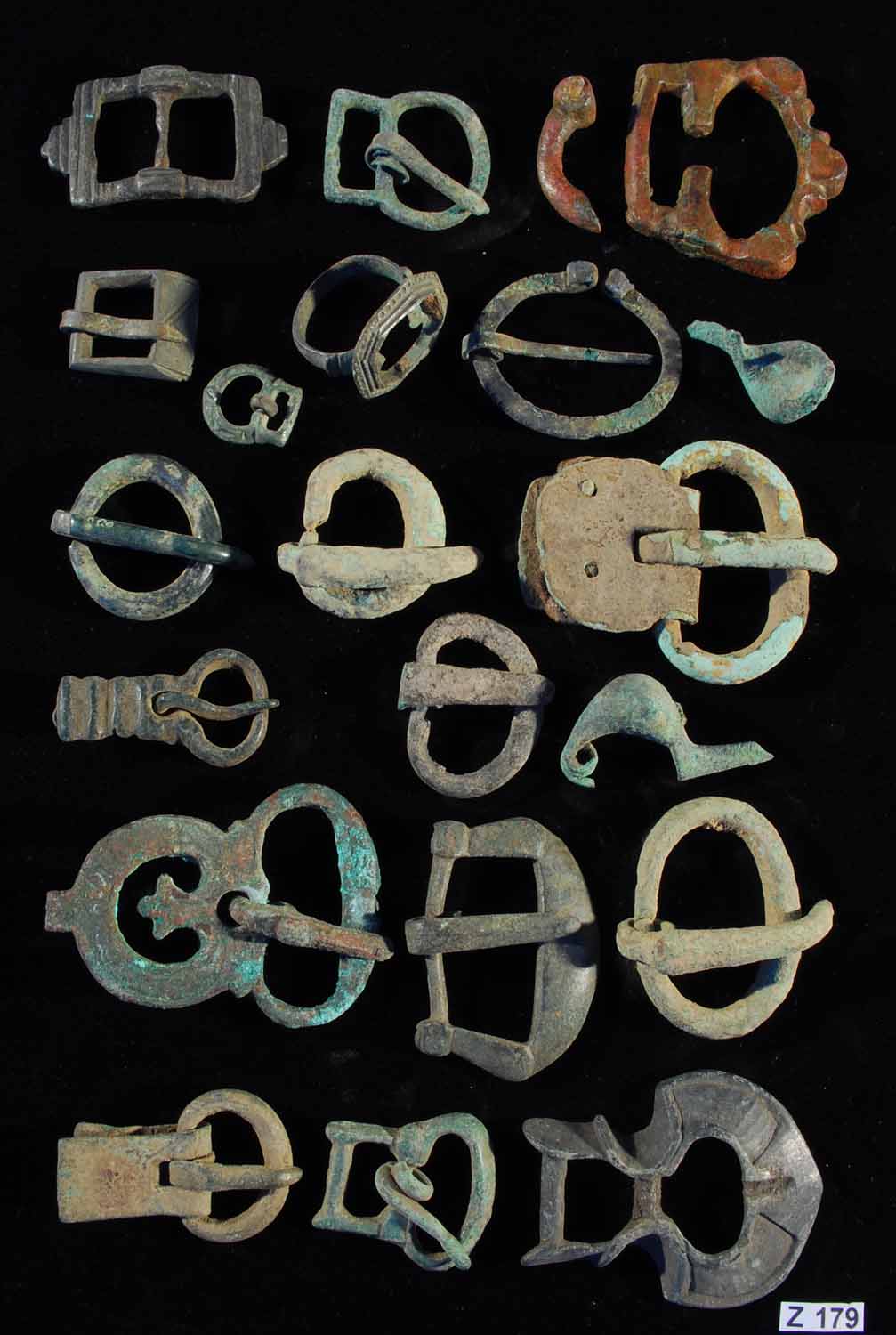
Image Code Z179 |
Catalogue No.: Z179
Description: Roman/Byzantine Buckles/Clasps. 4th-12th Century. 17 pieces.
Size: 47 x 40mm. |
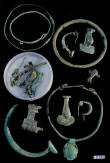
Image Code Z181 |
Catalogue No.: Z181
Description: Celtic/Roman Jewellery. 14+ pieces. Northern Italy/Yugoslavia/Switzerland.
Size: 85 x 80mm. |
Return to Top
|