|
| |
Shipwreck Division
Image Code CH40 |
Catalogue No.: CH40
Description: Chinese Dish. Blue and white with a
flaring lip, a standing phoenix below a large chrysanthemum at the centre,
16 alternating floral panels at the inner cavetto, two bamboo shoots and two
bubbles at the exterior, sand adhesions at the foot-rim. Ming Dynasty.
Size: 380Ømm. |
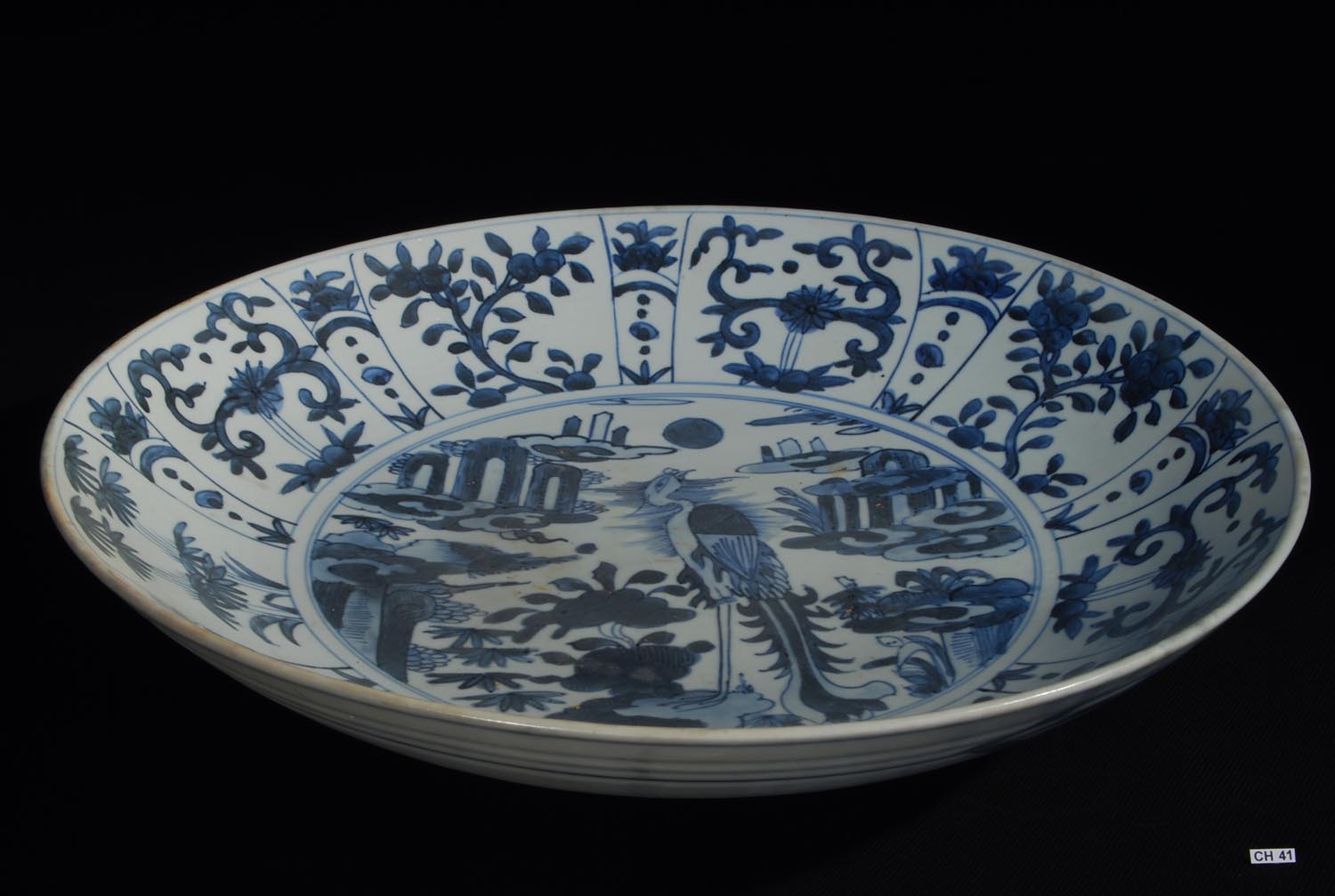
Image Code CH41 |
Catalogue No.: CH41
Description: Chinese Dish. Blue and white with a
flaring lip, a standing phoenix amid rocks and clouds at the centre, 16
alternating floral panels at the inner cavetto, two bamboo shoots and two
bubbles at the exterior, sand adhesions at the foot-rim. Ming Dynasty.
Size: 380Ømm. |
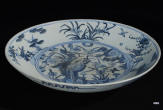
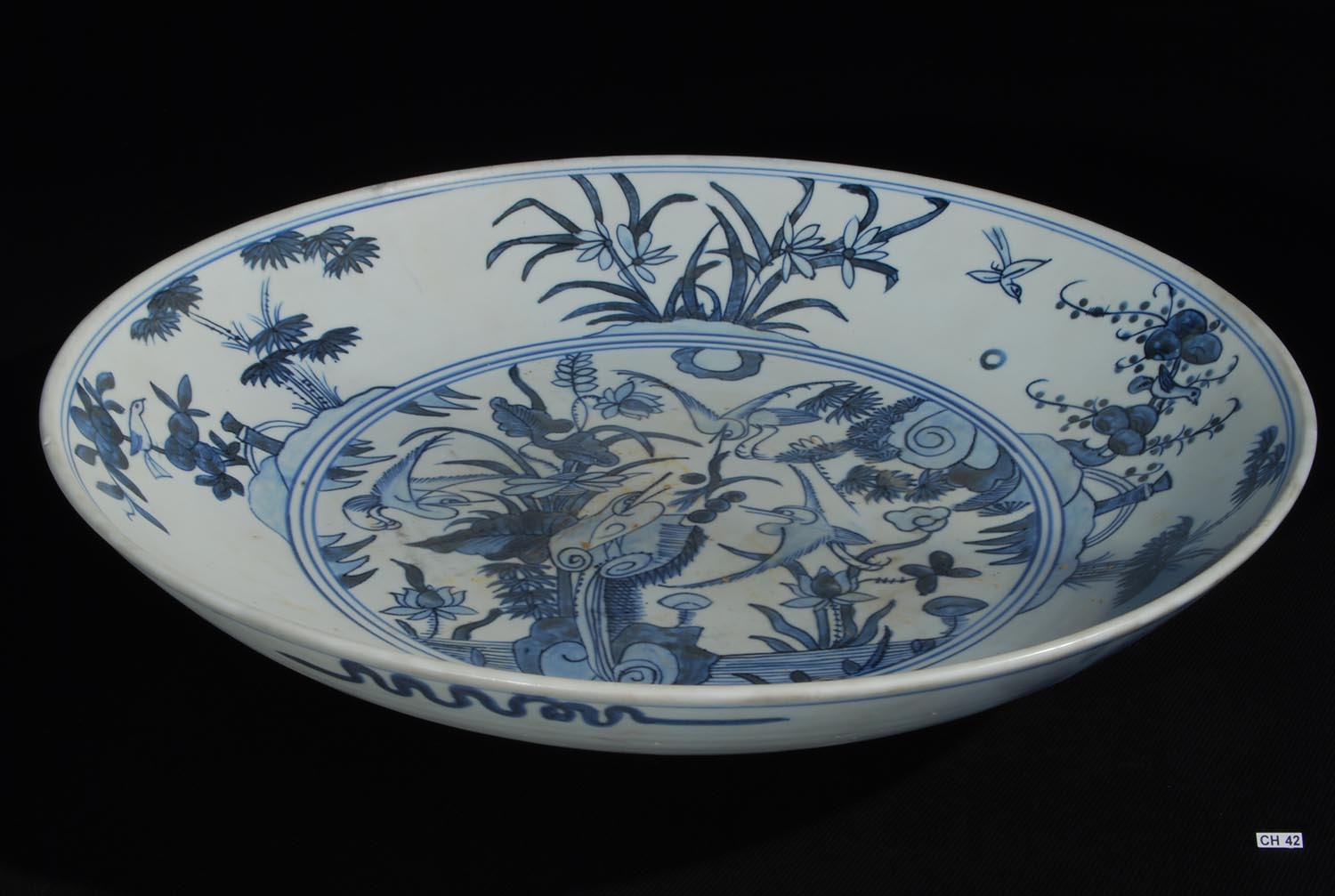
Image Code CH42 |
Catalogue No.: CH42
Description: Chinese Dish. Blue and white with a
flaring lip, three flying birds amid flowers at the centre, five small birds
amid flowers at the inner cavetto, three spirals and a circular ring at the
exterior, sand adhesions at the foot-rim. Ming Dynasty.
Size: 380Ømm. |
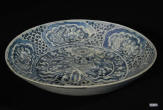
Image Code CH43 |
Catalogue No.: CH43
Description: Chinese Dish. Blue and white with a
flaring lip. Ming Dynasty.
Size: 258Ømm. |
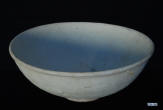
Image Code CH56 |
Catalogue No.: CH56
Description: Yuan Dynasty Celadon Bowl. 14th
Century deep footed bowl, as recovered from the wreck of a Chinese merchant
vessel on a reef off Quezon Province, Southern Luzon, Philippines.
Size: 180mm dia. |

Image Code CH59 |
Catalogue No.: CH59
Description: Yuan Dynasty Celadon Shallow Bowl.
14th Century olive green degraded Celadon-glaze bowl, as recovered from the
wreck of a Chinese merchant vessel on a reef off Quezon Province, Southern
Luzon, Philippines.
Size: 165mm dia. |
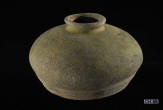
Image Code CH69 |
Catalogue No.: CH69
Description: Sung Dynasty Shipwreck Pottery -
Jarlet. Squat jar of flattened globular form with a short neck and flared
lip, the lower body and wide base unglazed and with a pale grey biscuit. The
jar may possess Chinese calligraphic script to the base, probably in
reference to the contents at the time of shipping out of China. This item
was recovered from the wreck of a Chinese merchant junk sunk in the South
China Sea west of Palawan Island in the Philippines during the Northern Sung
Dynasty (960-1127 AD). During the Sung Dynasty, Chinese merchant vehicles
had begun carrying goods from China to the Philippine Islands and south-east
Asia where Chinese colonies had been established. The upper glazed portion
of this piece is now somewhat degraded, bearing testimony to a period of
exposure on the sea floor of nearly 1000 years.
Size:106 X 61mm. |
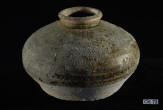
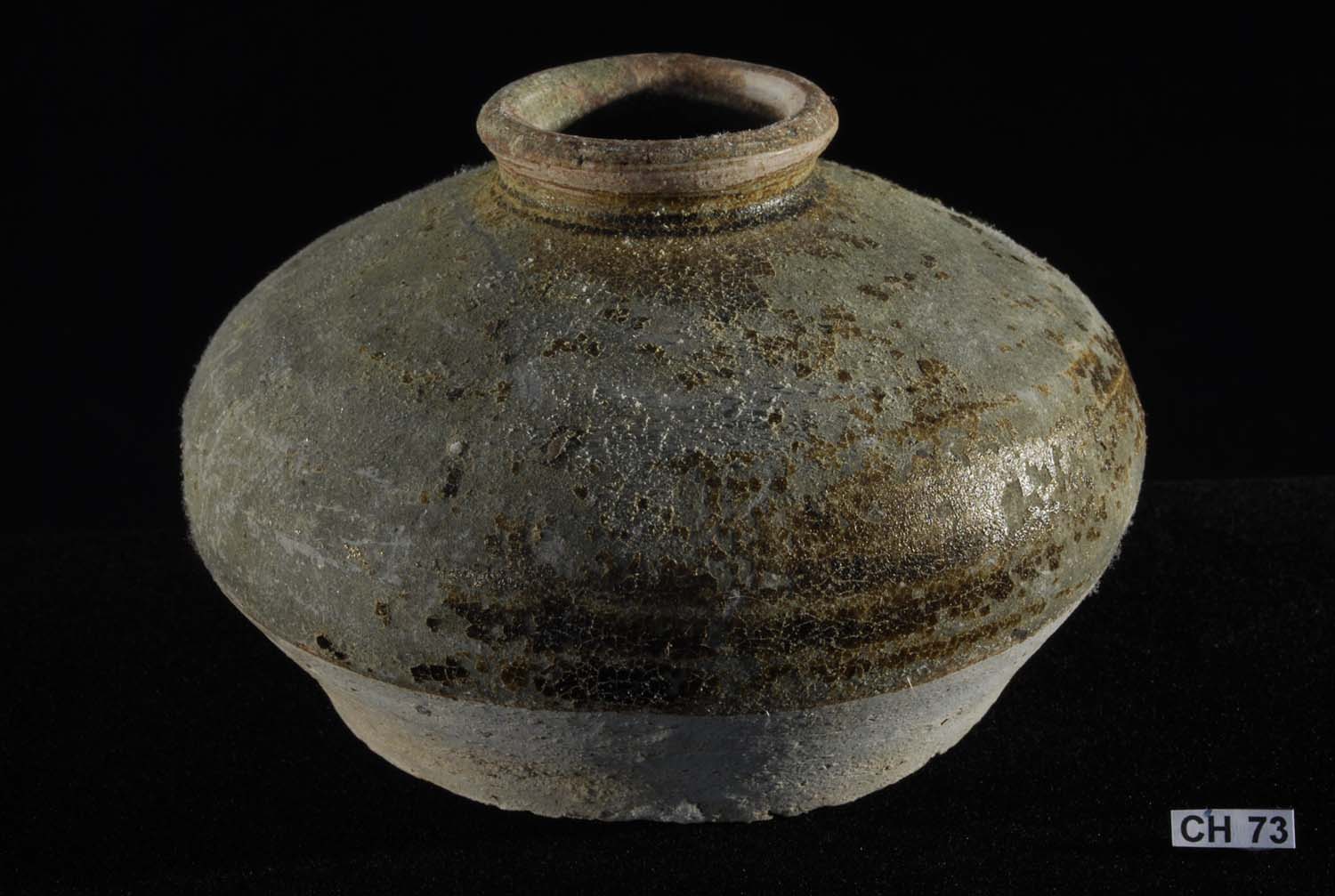
Image Code CH73 |
Catalogue No.: CH73
Description: Sung Dynasty Shipwreck Pottery -
Jarlet. Squat jar of flattened globular form with a short neck and flared
lip, the lower body and wide base unglazed and with a pale grey biscuit. The
jar may possess Chinese calligraphic script to the base, probably in
reference to the contents at the time of shipping out of China. This item
was recovered from the wreck of a Chinese merchant junk sunk in the South
China Sea west of Palawan Island in the Philippines during the Northern Sung
Dynasty (960-1127 AD). During the Sung Dynasty, Chinese merchant vehicles
had begun carrying goods from China to the Philippine Islands and south-east
Asia where Chinese colonies had been established. The upper glazed portion
of this piece is now somewhat degraded, bearing testimony to a period of
exposure on the sea floor of nearly 1000 years.
Size: 102 X 64mm. |
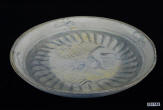
Image Code CH144 |
Catalogue No.: CH144
Description: Ming Dynasty Shipwreck Porcelain.
Attractive 15-16th Century Chinese Ming shallow dish with underglaze
"flaming pearl" design. As recovered from a Chinese trading vessel
shipwrecked on a reef at Zambales, north-west Luzon, Philippines.
Size:
179 X 31mm. |
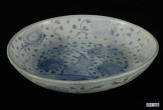
Image Code CH145 |
Catalogue No.: CH145
Description: Ming Dynasty Shipwreck Porcelain
Dish. Attractive 15-16th Century Chinese Ming Dynasty dish with underglaze
blue decoration, the design featuring a rock and peony motif. As recovered
from a Chinese trading vessel shipwrecked on a reef at Zambales, north-west
Luzon, Philippines.
Size:
194 X 42mm. |
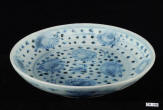
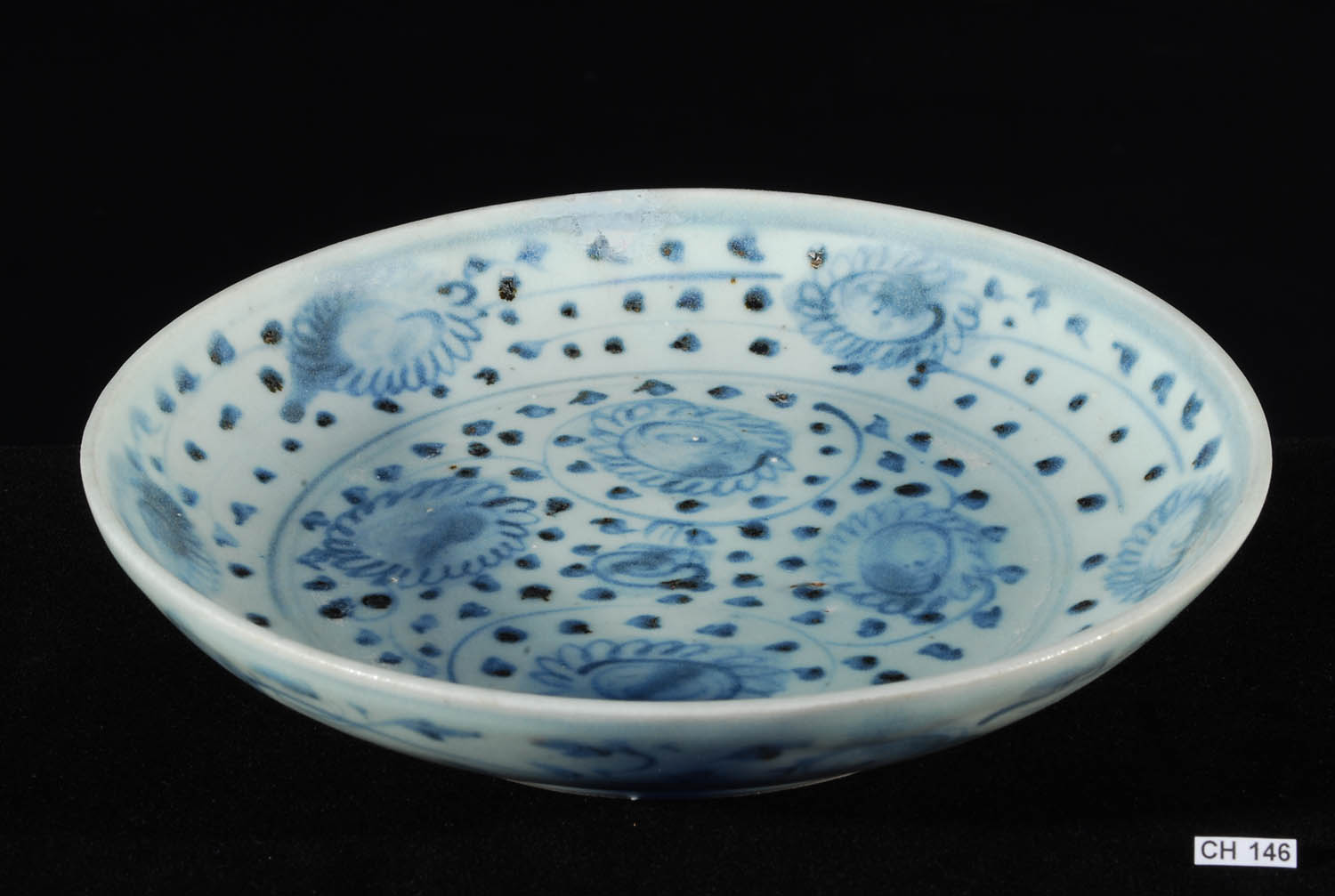
Image Code CH146 |
Catalogue No.: CH146
Description: Ming Dynasty Shipwreck Porcelain
Dish. Attractive 15-16th Century Chinese Ming Dynasty dish with underglaze
blue decoration, the design featuring a rock and peony motif. As recovered
from a Chinese trading vessel shipwrecked on a reef at Zambales, north-west
Luzon, Philippines.
Size:
190 X 39mm. |
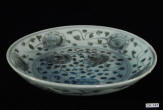
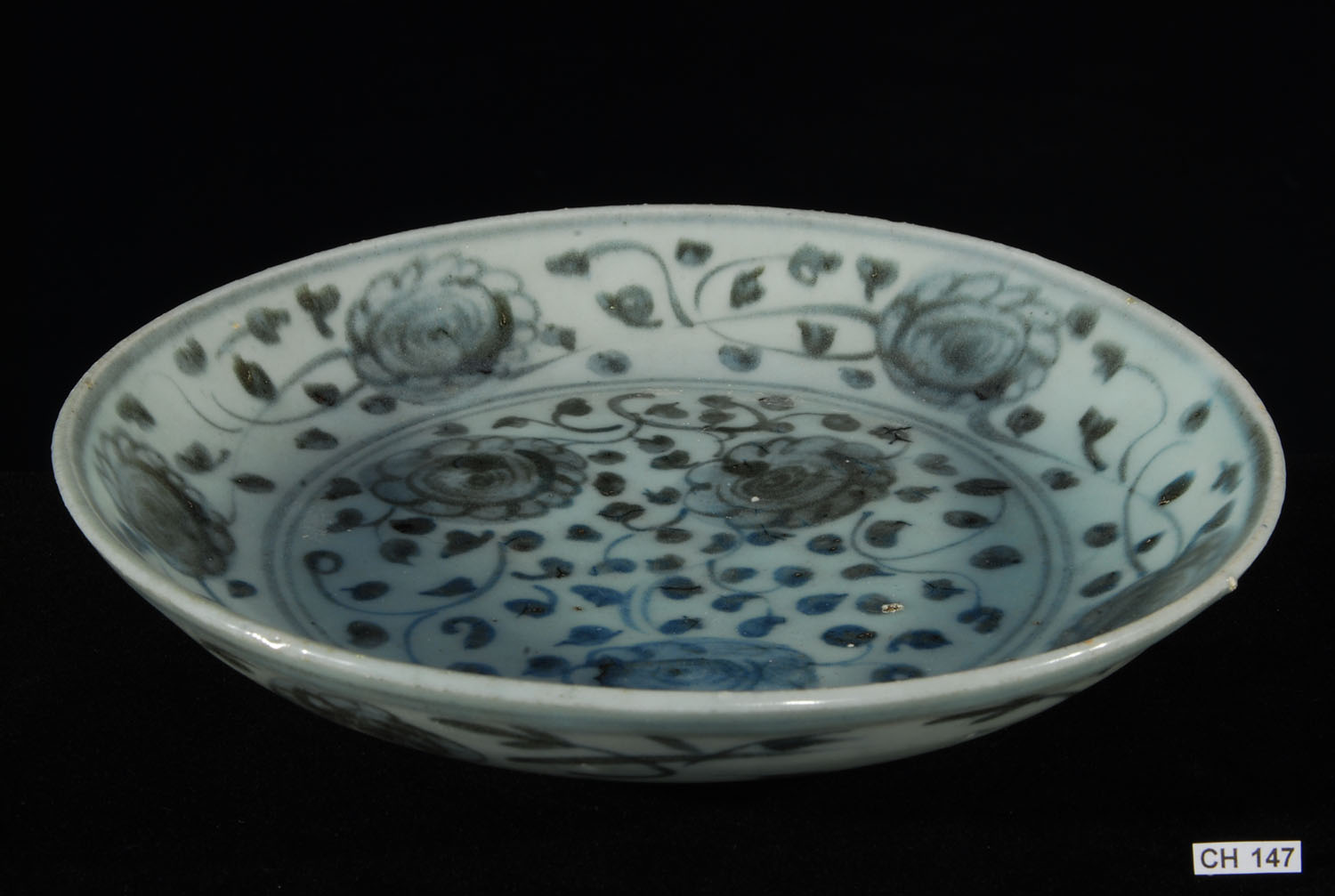
Image Code CH147 |
Catalogue No.: CH147
Description: Ming Dynasty Shipwreck Porcelain
Dish. 15-16th Century Chinese Ming Dynasty dish with underglaze blue
decoration, the design featuring a rock and peony motif. As recovered from a
Chinese trading vessel shipwrecked on a reef at Zambales, north-west Luzon,
Philippines.
Size:
193 X 35mm. |
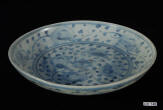
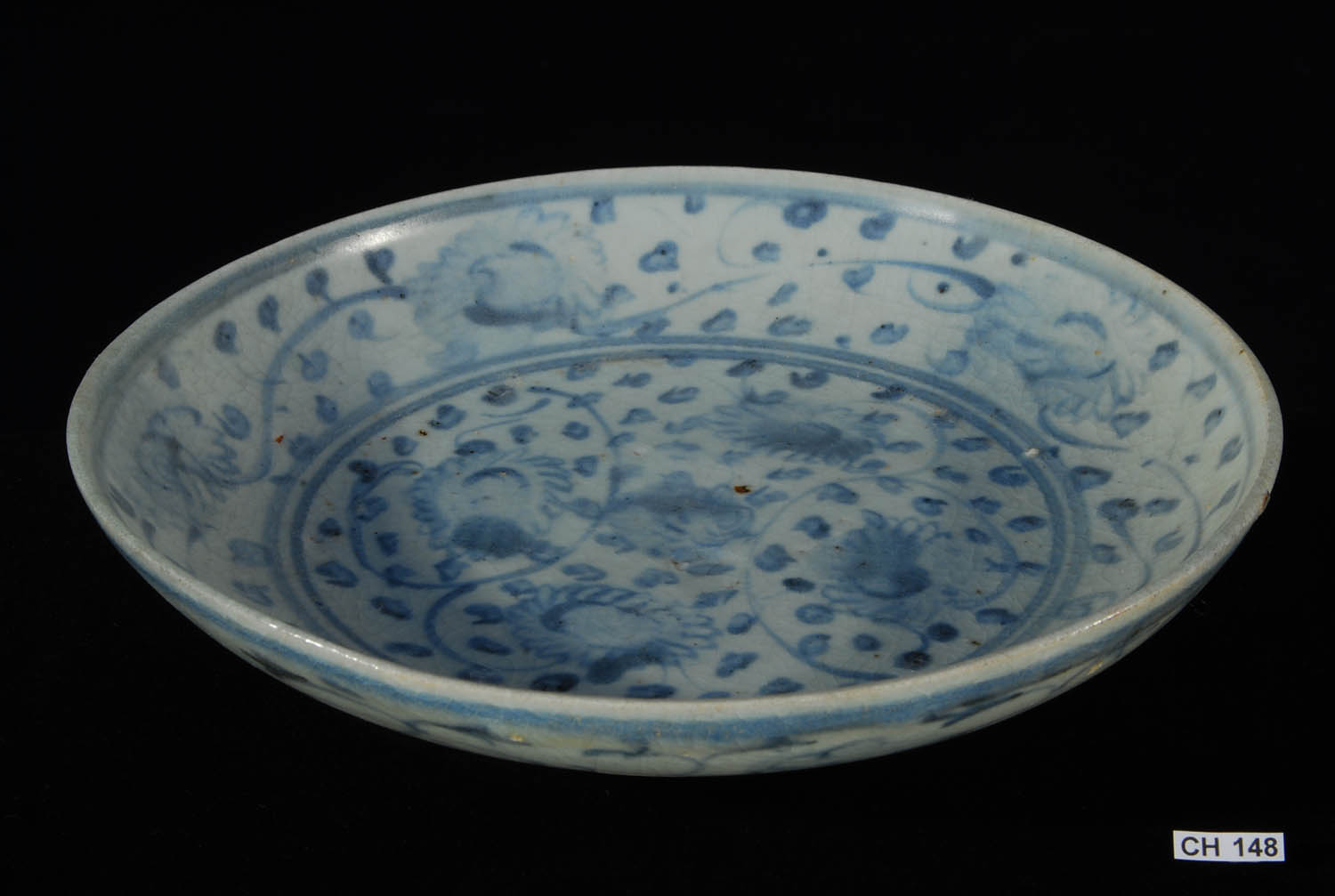
Image Code CH148 |
Catalogue No.: CH148
Description: Ming Dynasty Shipwreck Porcelain
Dish. 15-16th Century Chinese Ming Dynasty dish with underglaze blue
decoration, the design featuring a rock and peony motif. As recovered from a
Chinese trading vessel shipwrecked on a reef at Zambales, north-west Luzon,
Philippines.
Size:
188 X 35mm. |
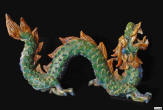
Image Code CH180 |
Catalogue No.: CH180
Description: Chinese
glazed ceramic dragon. Exquisite handmade dragon on four feet, each with
four claws, the body of slender style and arched design with extravagant
fins and scale design, the head of the beast with mouth agape, wide flaring
nostrils and tenacious countenance. The piece is decorated in polychromy
colours of blue, green, brown and cream with all-over glazing. The precise
provenance and dating of this piece (together with an accompanying piece in
the collection - item CH181) is unknown, although the piece is known to have
been recovered from the wreck of a Chinese merchant vessel in the South
China Sea, possibly dating to the Ming period. A small cargo of similar
dragons, each of similar but original design, is known to have been lost in
the wreck with all but approximately eight pieces having been badly broken
and destroyed at the time.
Size: 480X250mm. |
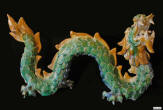
Image Code CH181 |
Catalogue No.: CH181
Description: Chinese
glazed ceramic dragon. Exquisite handmade dragon on four feet, each with
four claws, the body of slender style and arched design with extravagant
fins and scale design, the head of the beast with mouth agape, wide flaring
nostrils and tenacious countenance. The piece is decorated in polychromy
colours of blue, green, brown and cream with all-over glazing. The precise
provenance and dating of this piece (together with an accompanying piece in
the collection - item CH180) is unknown, although the piece is known to have
been recovered from the wreck of a Chinese merchant vessel in the South
China Sea, possibly dating to the Ming period. A small cargo of similar
dragons, each of similar but original design, is known to have been lost in
the wreck with all but approximately eight pieces having been badly broken
and destroyed at the time.
Size: 480X270mm. |
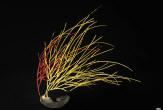
Image Code F4378 |
Catalogue No.: F4378
Description: Rock with Sea Fan.
Size: 43 X 91mm. |
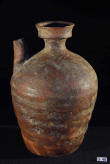
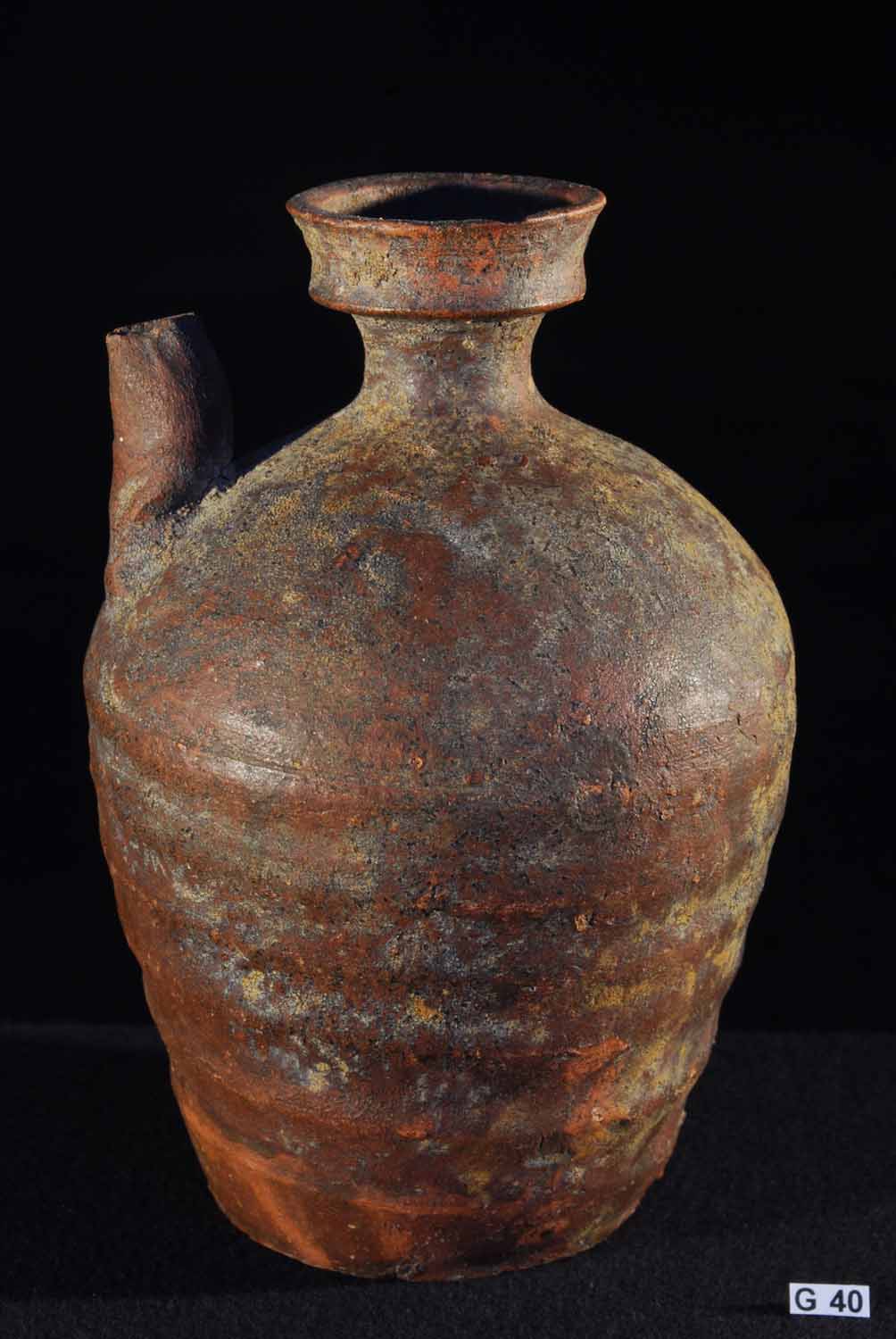
Image Code G40 |
Catalogue No.: G40
Description: Sung Dynasty Shipwreck. Early Chinese Rice Wine Bottle.
Attractive reddish-brown glaze bottle with wide-flaring dish-like top and a
vertical spout, as recovered from the wreck of a Chinese merchant junk sunk
in the South China Sea west of Palawan Island in the Philippines during the
12th - 13th centuries. During the 12th - 13th century AD, Chinese merchant
vessels had begun carrying goods from China to the Philippine Islands and
south-east Asia were Chinese colonies had been established. This piece
retain traces of coral incrustation, evidence of their period of exposure on
the sea floor for nearly 1000 years.
Size: 97 x 146mm. |

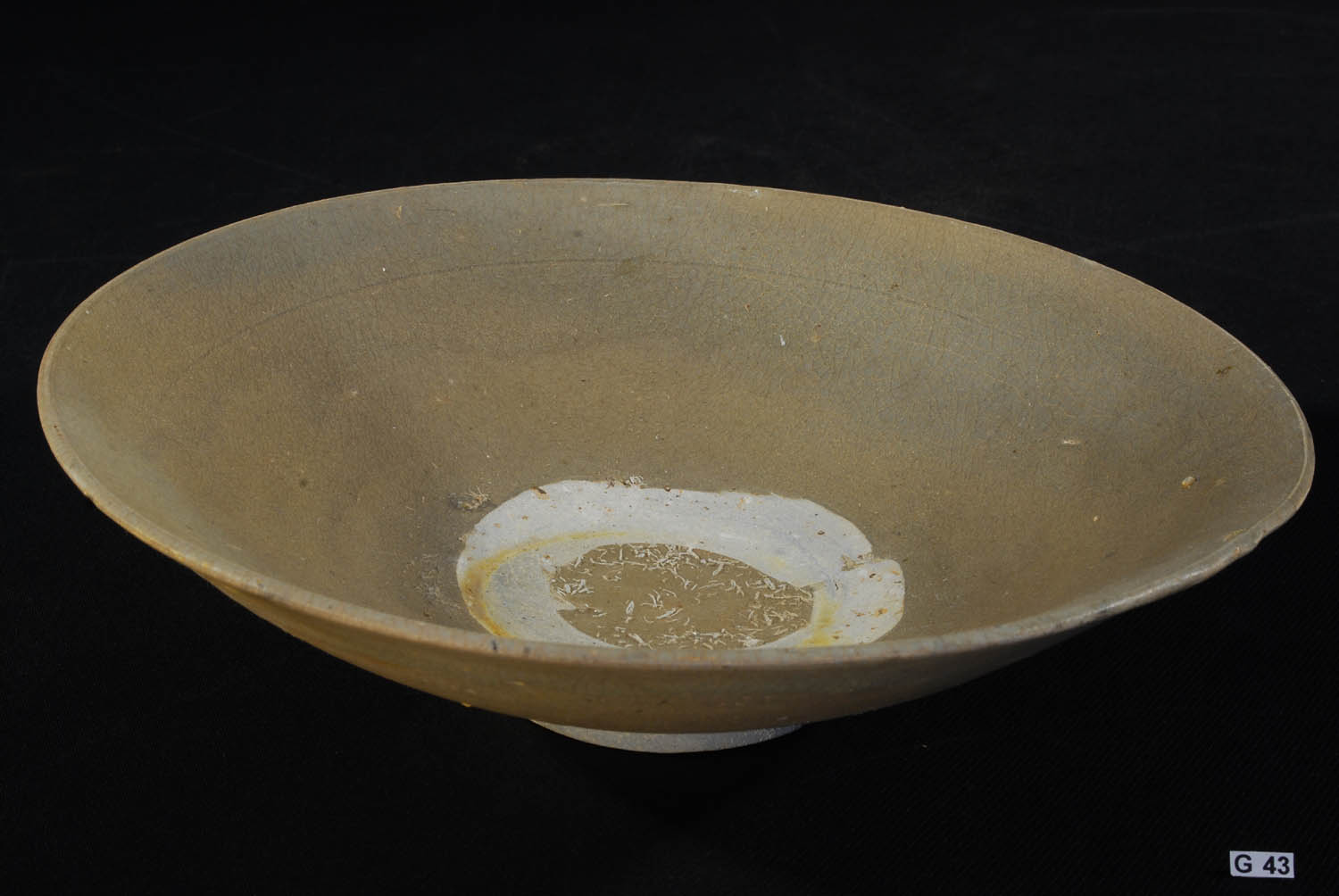
Image Code G43 |
Catalogue No.: G43
Description: Sung Dynasty Shipwreck Bowl.
Attractive wide-flaring shallow bowl with salt affected Celadon glaze, as
recovered from the wreck of a Chinese merchant junk sunk in the South China
Sea west of Palawan Island in the Philippines during the Northern Sung
Dynasty (960 - 1127 AD).. During the Sung Dynasty, Chinese merchant vessels
had begun carrying goods from China to the Philippine Islands and south-east
Asia were Chinese colonies had been established. This piece retain traces of
coral incrustation, evidence of their period of exposure on the sea floor
for nearly 1000 years.
Size: 230 x 65mm. |

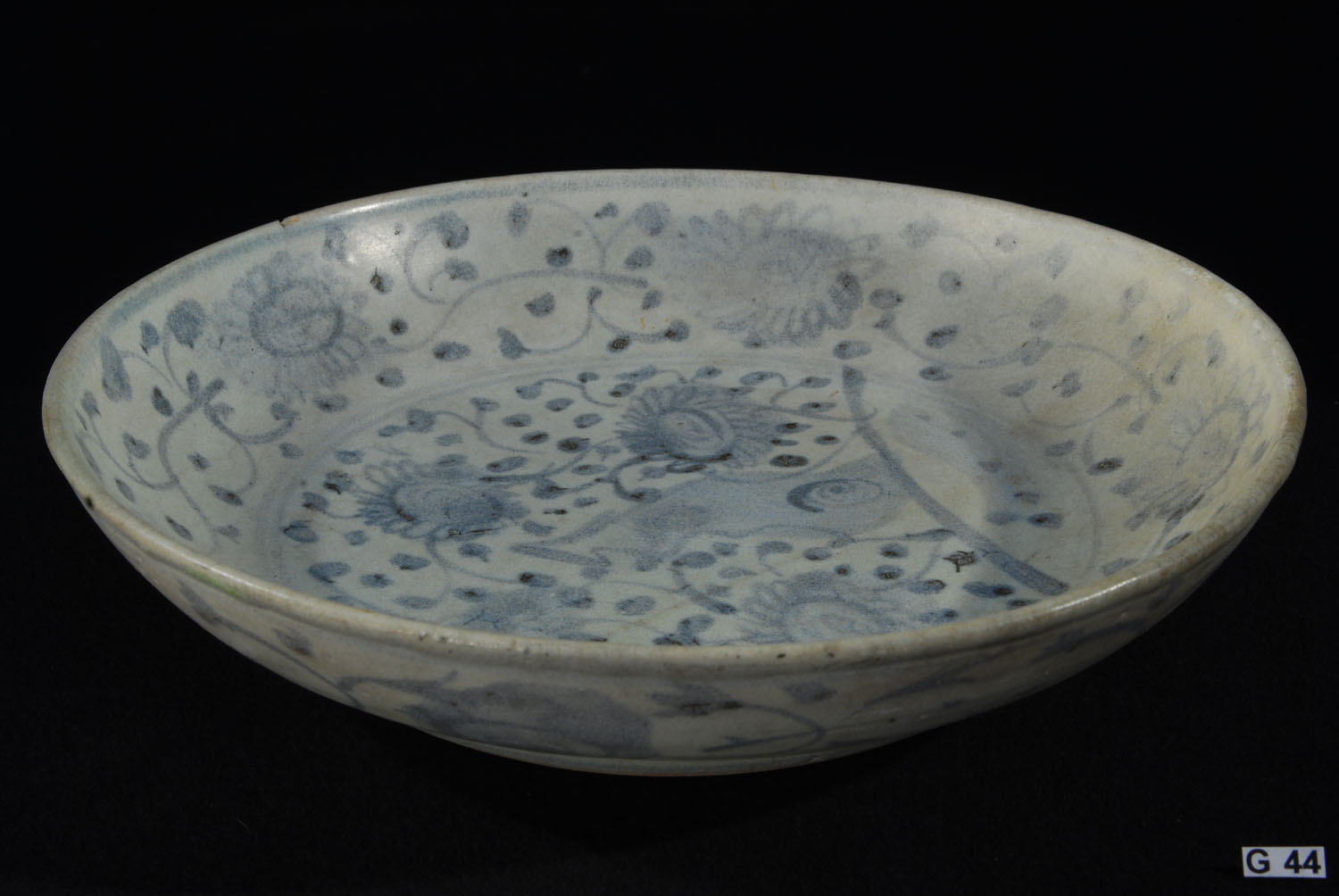
Image Code G44 |
Catalogue No.: G44
Description: Ming Dynasty Dish. 15th - 16th
Dynasty. With rock & peony design. 192mm. diameter from a ship wrecked at
Zambales, North Western Luzon, Philippines.
Size: 192 x 40mm. |
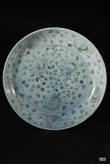
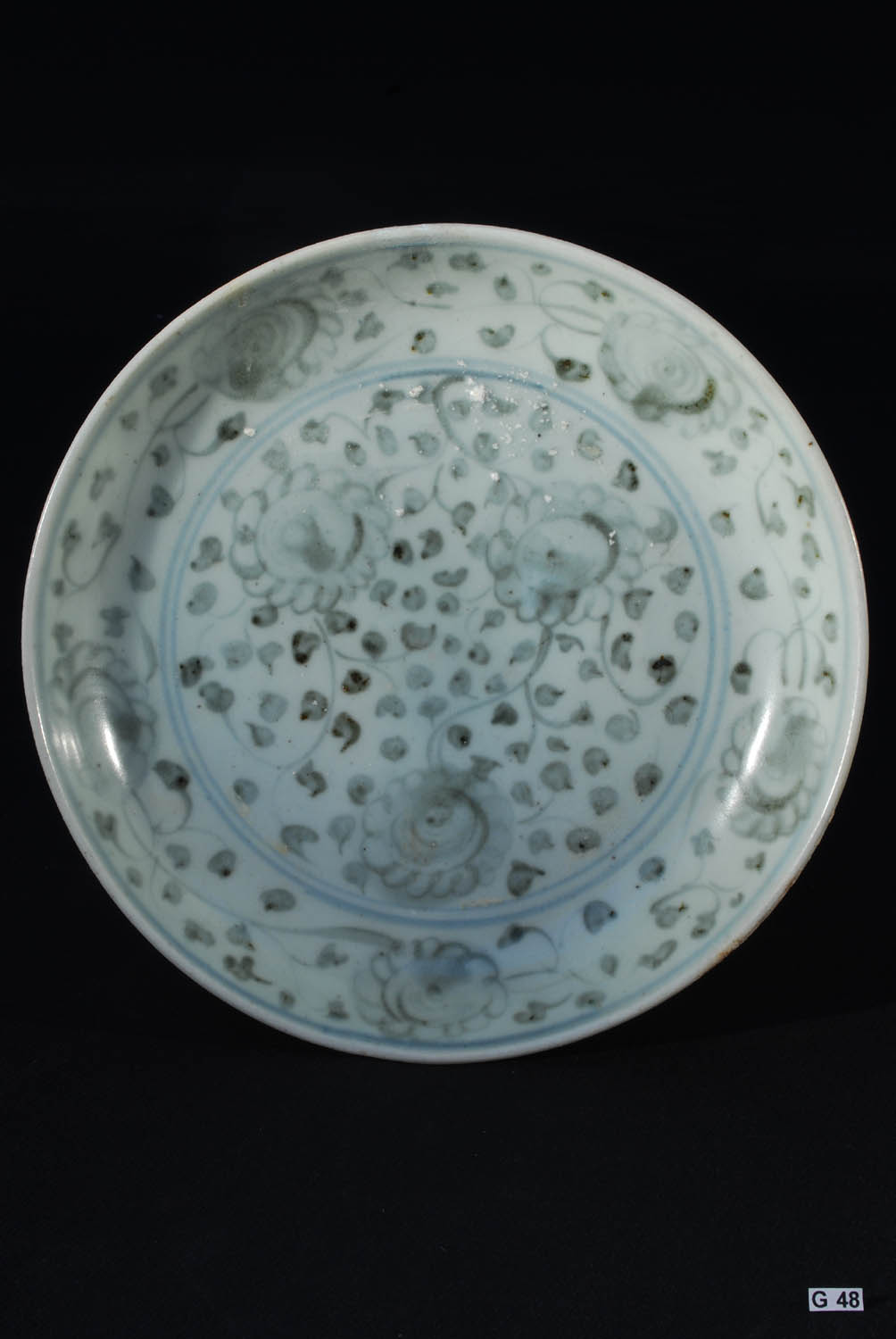
Image Code G48 |
Catalogue No.: G48
Description: Ming Dynasty Dish. 15th - 16th
Dynasty. With rock & peony design. 199mm. diameter from ship wrecked at
Zambales, North Western Luzon, Philippines.
Size: 190 x 35mm. |
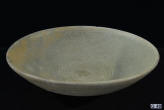
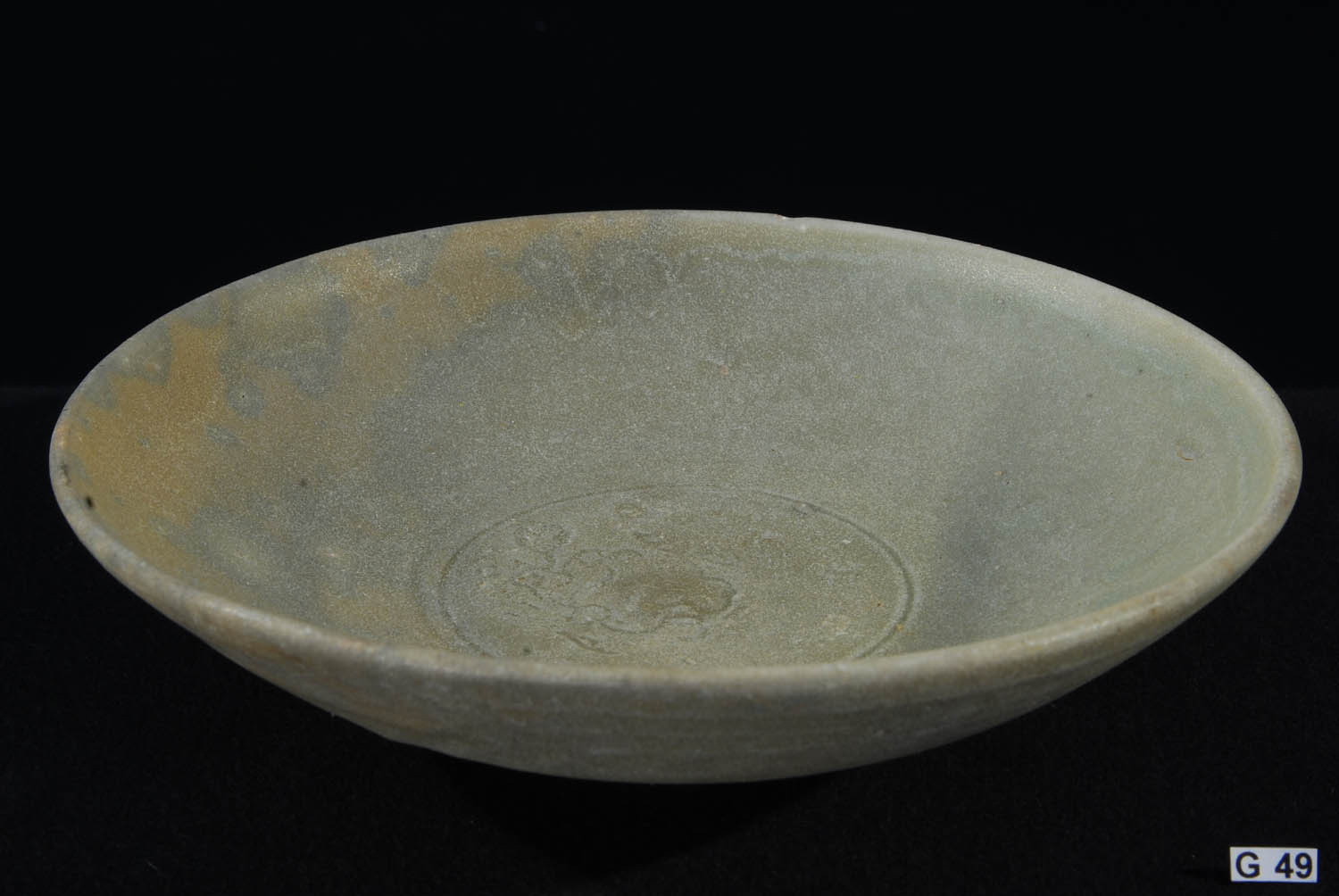
Image Code G49 |
Catalogue No.: G49
Description: Yuan Celabon Shallow Bowl, 14th
Century from ship wrecked in Quezon Province Southern Luzon, Philippines.
160mm. diameter.
Size: 160 x 40mm. |

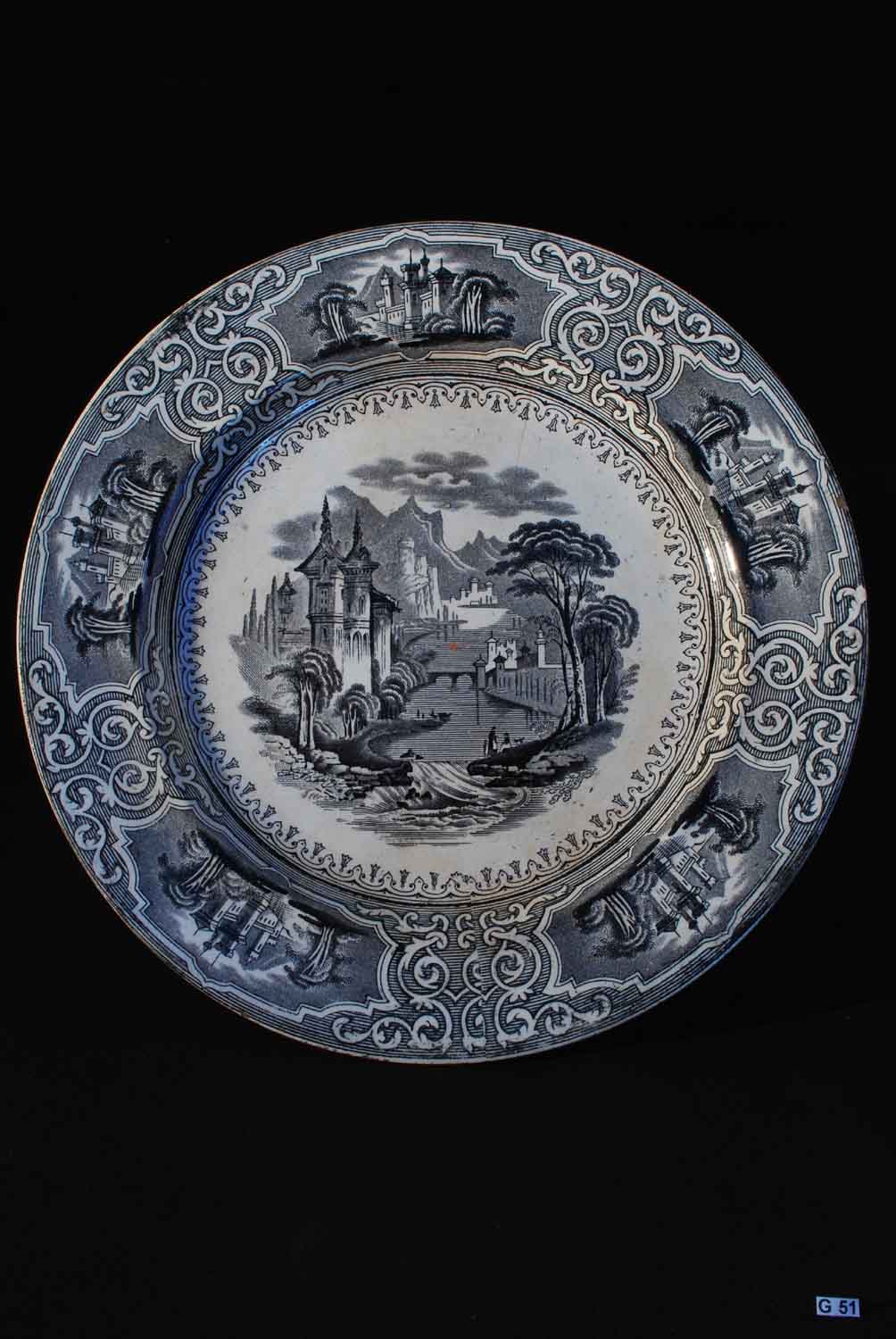
Image Code G51 |
Catalogue No.: G51
Description:
English Oriental Themed Shipwreck Plate. 19th Century. Transfer painted
black on white "creamware plate with oriental design, the back marked
Castello (J.P. & Co.) as recovered from the wreck of an English merchant
vessel in the South China Sea.
Size: 245 x 25mm. |
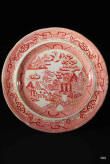
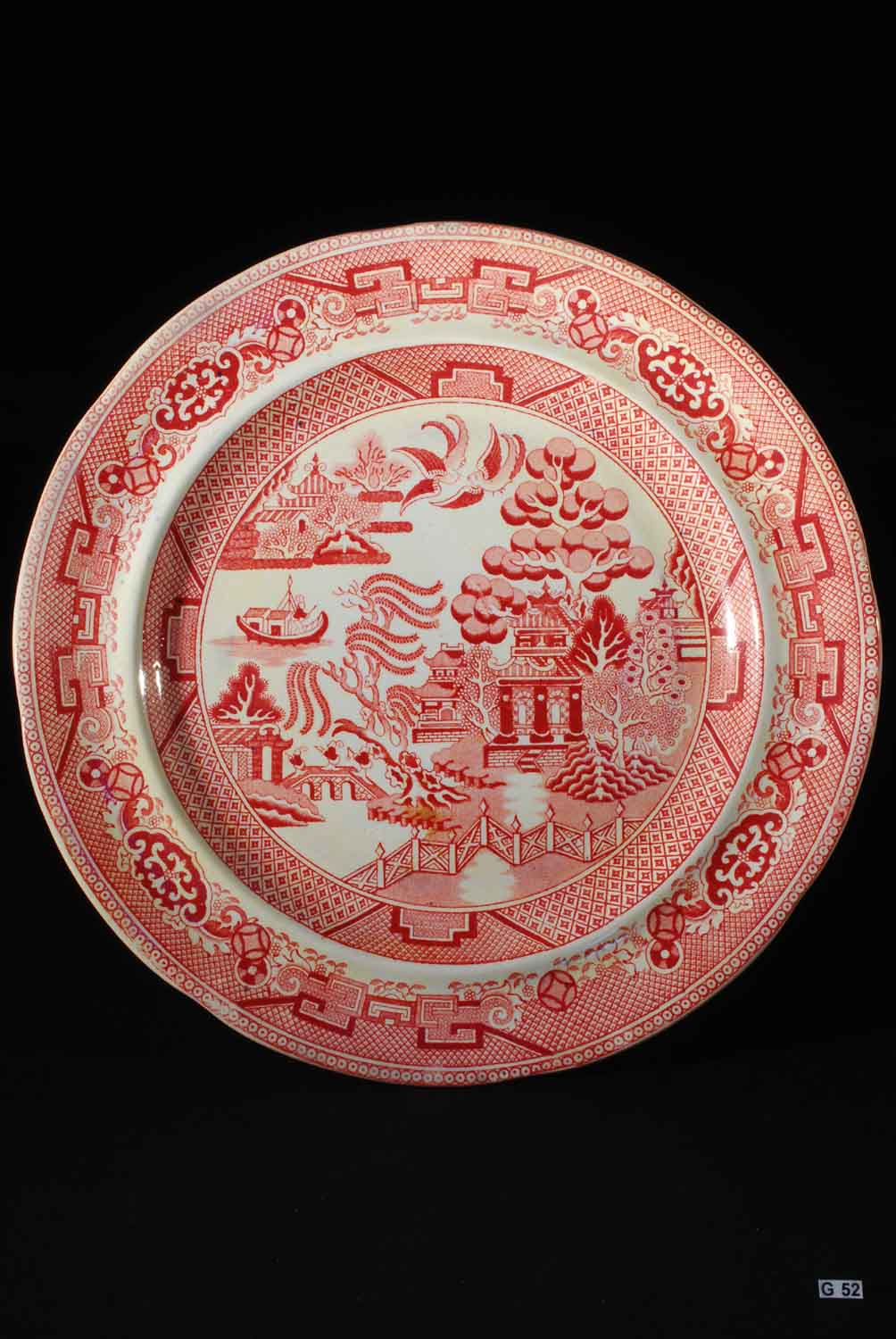
Image Code G52 |
Catalogue No.: G52
Description: Willow Pattern Shipwreck Plate.
Attractive 19th Century "Willow Pattern" transfer printed red on white "creamware"
plate recovered from a wreck in the South China Sea. The willow pattern was
developed by Josiah Spode from an original Chinese pattern called Mandarin
in about 1790. The pattern has been extremely popular ever since and in the
late 18th / early 19th centuries any blue printed design imitating Chinese
porcelain was often described as willow. The main features of the true
willow pattern are the bridge with three persons crossing it, the willow
tree, the boat, the main tea house, the two birds and the fence in the
foreground of the garden. There is apparently no Chinese pattern which
contains all the features of the standard willow pattern.
Size: 260 x 20mm. |

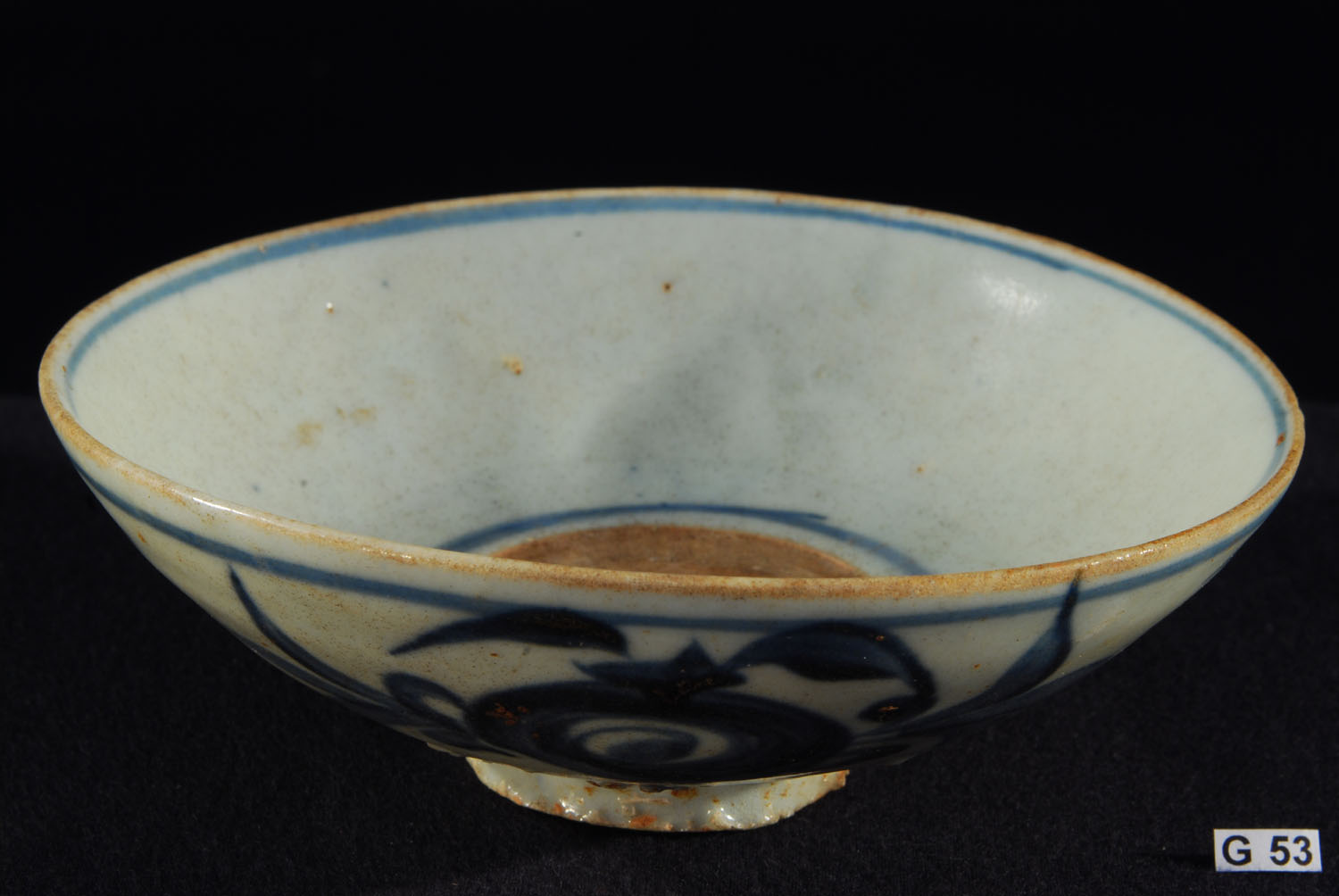
Image Code G53 |
Catalogue No.: G53
Description: Ming Dynasty Shipwreck Porcelain
Dish. Attractive 15th - 16th century Chinese Ming Dynasty dish with
underglaze blue decoration featuring a floral peony spray design with
banding in deep blue. As recovered from a Chinese trading vessel shipwrecked
on a reef at Zambales, north-west Luzon, Philippines.
Size: 130 x 48mm. |

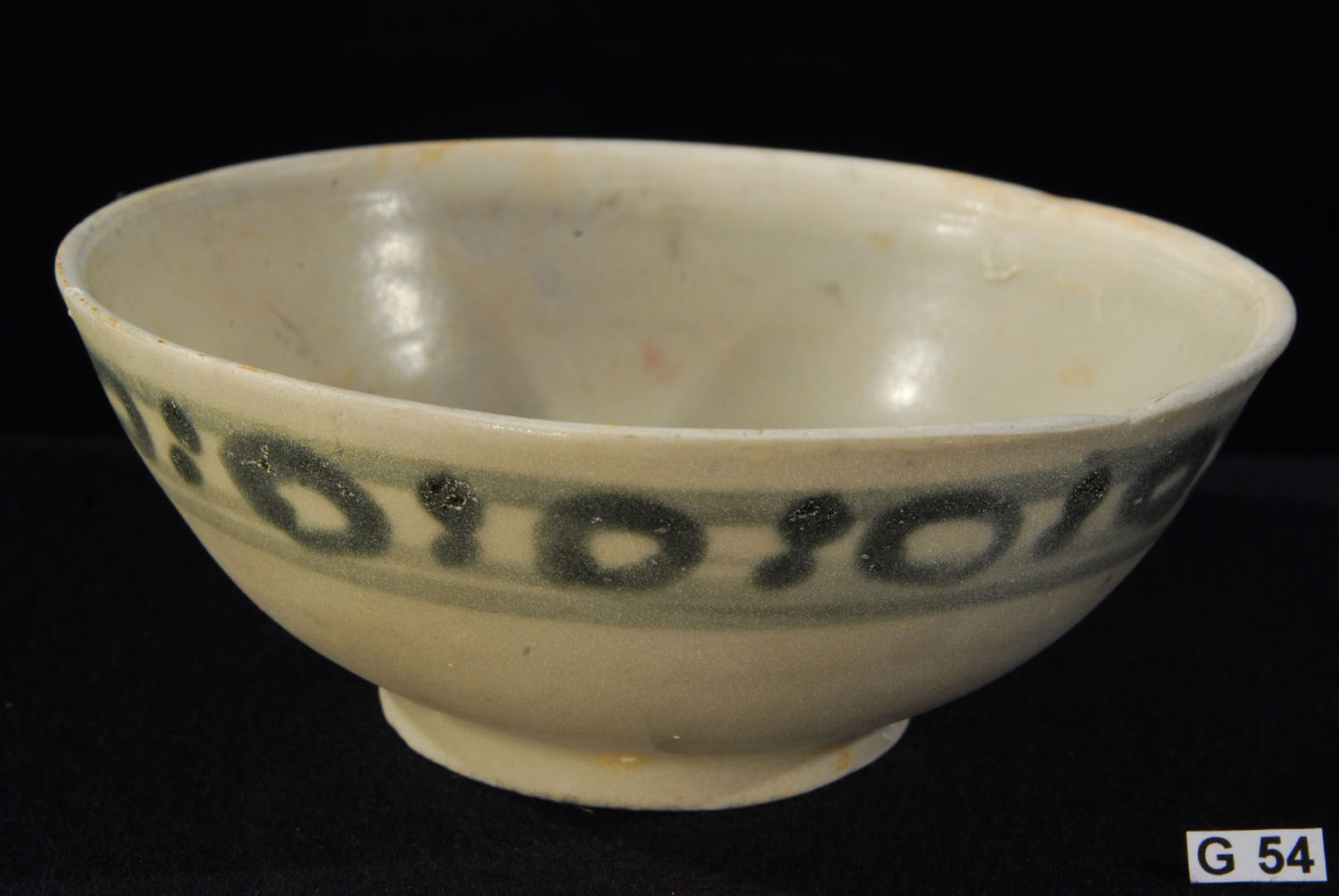
Image Code G54 |
Catalogue No.: G54
Description: Ming Dynasty Shipwreck Porcelain
Dish. Attractive 15th - 16th century Chinese Ming Dynasty dish with
underglaze blue-green decoration to the outside rim. As recovered from a
Chinese trading vessel shipwrecked on a reef at Zambales, North-West Luzon,
Philippines.
Size: 108 x 45mm. |
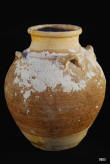
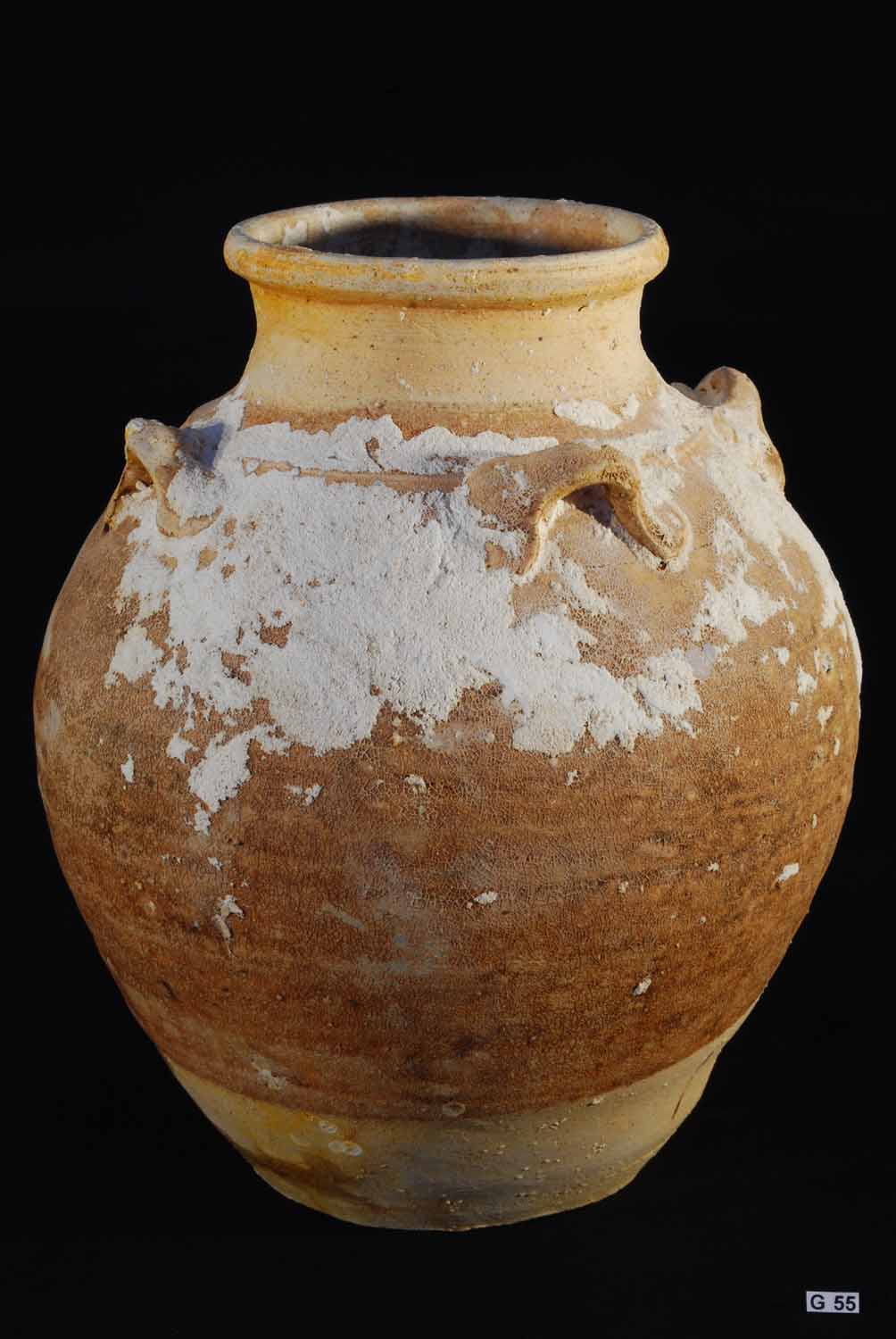
Image Code G55 |
Catalogue No.: G55
Description: Sung Dynasty Shipwreck Pottery Jar.
Attractive sea-salvage jar of tall ovoid form with everted mouth rim and
four horizontal lugs on the shoulder and a degraded brown-caramel glaze to
the upper portion, as recovered from the wreck of a Chinese merchant junk
sunk in the South China Sea west of Palawan Island in the Philippines during
the 12th - 13th centuries. During the 12th - 13th century AD, Chinese
merchant vessels had begun carrying goods from China to the Philippine
Islands and south-east Asia were Chinese colonies had been established. This
piece retain traces of coral incrustation, evidence of their period of
exposure on the sea floor for nearly 1000 years.
Size: 180 x 230mm. |

Image Code G56 |
Catalogue No.: G56
Description: Tang Dynasty Shipwreck Jar. Tang
Dynasty (618 - 906 AD). Sea-salvage jar of heavy bulbous form with four
applied lug handles, as recovered from the wreck of an early Chinese
merchant vessel in the South China Sea. This piece retains traces of coral
encrustation, evidence of its period of exposure on the sea floor for over a
1000 years.
Size: 230 x 230mm. |

Image Code G60 |
Catalogue No.: G60
Description: Ming Dynasty Shipwreck Porcelain
Dish. Attractive 17th century Chinese Ming Dynasty dish with underglaze blue
decoration, featuring a floral peony spray design with banding in deep blue.
As recovered from a Chinese trading vessel shipwrecked on a reef at Zambales,
north-west Luzon, Philippines.
Size: 131 x 50mm. |

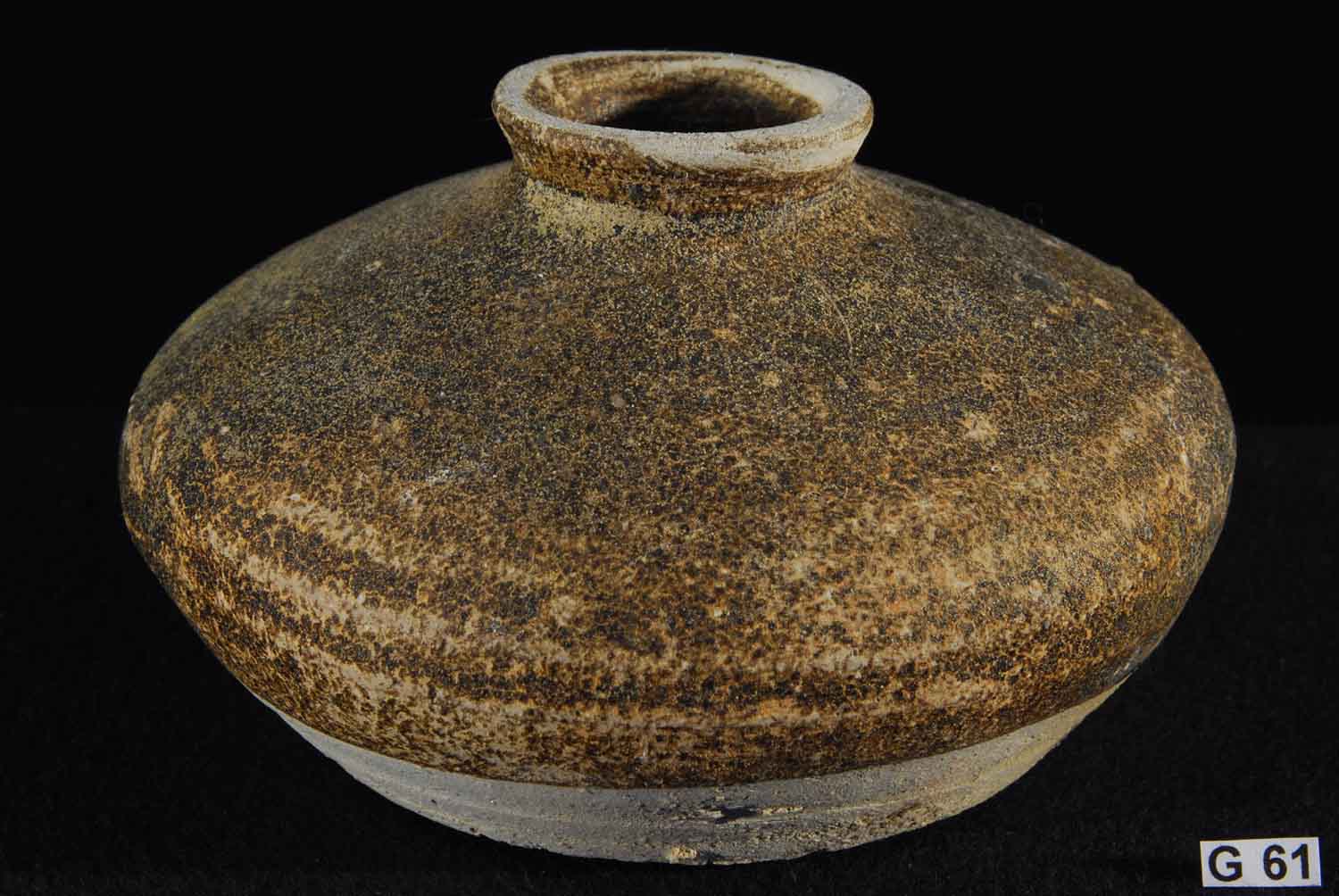
Image Code G61 |
Catalogue No.: G61
Description: Sung Dynasty Shipwreck Pottery
Jarlet. Squat jars of flattened globular form with a short neck and flared
lip, the lower body and wide base unglazed and with a pale grey biscuit. the
majority of jars possess Chinese calligraphic script to the base, probably
in reference to the contents at the time of shipping out of China. These
items were recovered from the wreck of a Chinese merchant junk sunk in the
South China Sea west of Palawan Island in the Philippines during the
Northern Sung Dynasty (960 - 1127 AD). During the Sung Dynasty, Chinese
merchant vessels had begun carrying goods from China to the Philippine
Islands and south-east Asia where Chinese colonies had been established.
These pieces are of varying colours, the upper glazed portion of each piece
now somewhat degraded, bearing testimony to a period of exposure on the sea
floor for nearly 1000 years.
Size: 103 x 59mm. |

Image Code G62 |
Catalogue No.: G62
Description: Sung Dynasty Shipwreck Pottery
Jarlet. Squat jars of flattened globular form with a short neck and flared
lip, the lower body and wide base unglazed and with a pale grey biscuit. the
majority of jars possess Chinese calligraphic script to the base, probably
in reference to the contents at the time of shipping out of China. These
items were recovered from the wreck of a Chinese merchant junk sunk in the
South China Sea west of Palawan Island in the Philippines during the
Northern Sung Dynasty (960 - 1127 AD). During the Sung Dynasty, Chinese
merchant vessels had begun carrying goods from China to the Philippine
Islands and south-east Asia where Chinese colonies had been established.
These pieces are of varying colours, the upper glazed portion of each piece
now somewhat degraded, bearing testimony to a period of exposure on the sea
floor for nearly 1000 years.
Size: 104 x 59mm. |
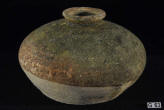
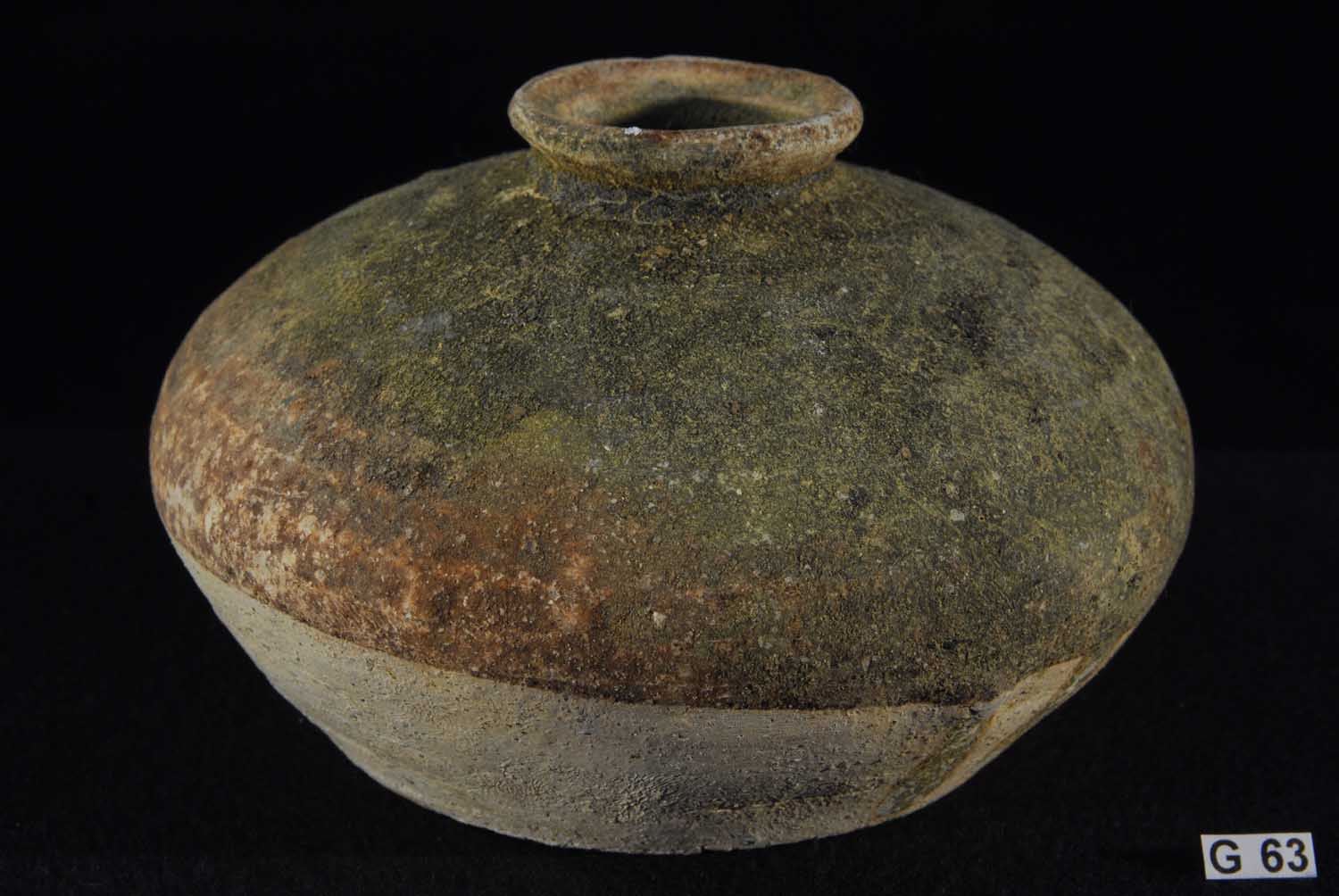
Image Code G63 |
Catalogue No.: G63
Description: Sung Dynasty Shipwreck Pottery
Jarlet. Squat jars of flattened globular form with a short neck and flared
lip, the lower body and wide base unglazed and with a pale grey biscuit. the
majority of jars possess Chinese calligraphic script to the base, probably
in reference to the contents at the time of shipping out of China. These
items were recovered from the wreck of a Chinese merchant junk sunk in the
South China Sea west of Palawan Island in the Philippines during the
Northern Sung Dynasty (960 - 1127 AD). During the Sung Dynasty, Chinese
merchant vessels had begun carrying goods from China to the Philippine
Islands and south-east Asia where Chinese colonies had been established.
These pieces are of varying colours, the upper glazed portion of each piece
now somewhat degraded, bearing testimony to a period of exposure on the sea
floor for nearly 1000 years.
Size: 105 x 59mm. |
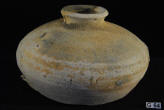
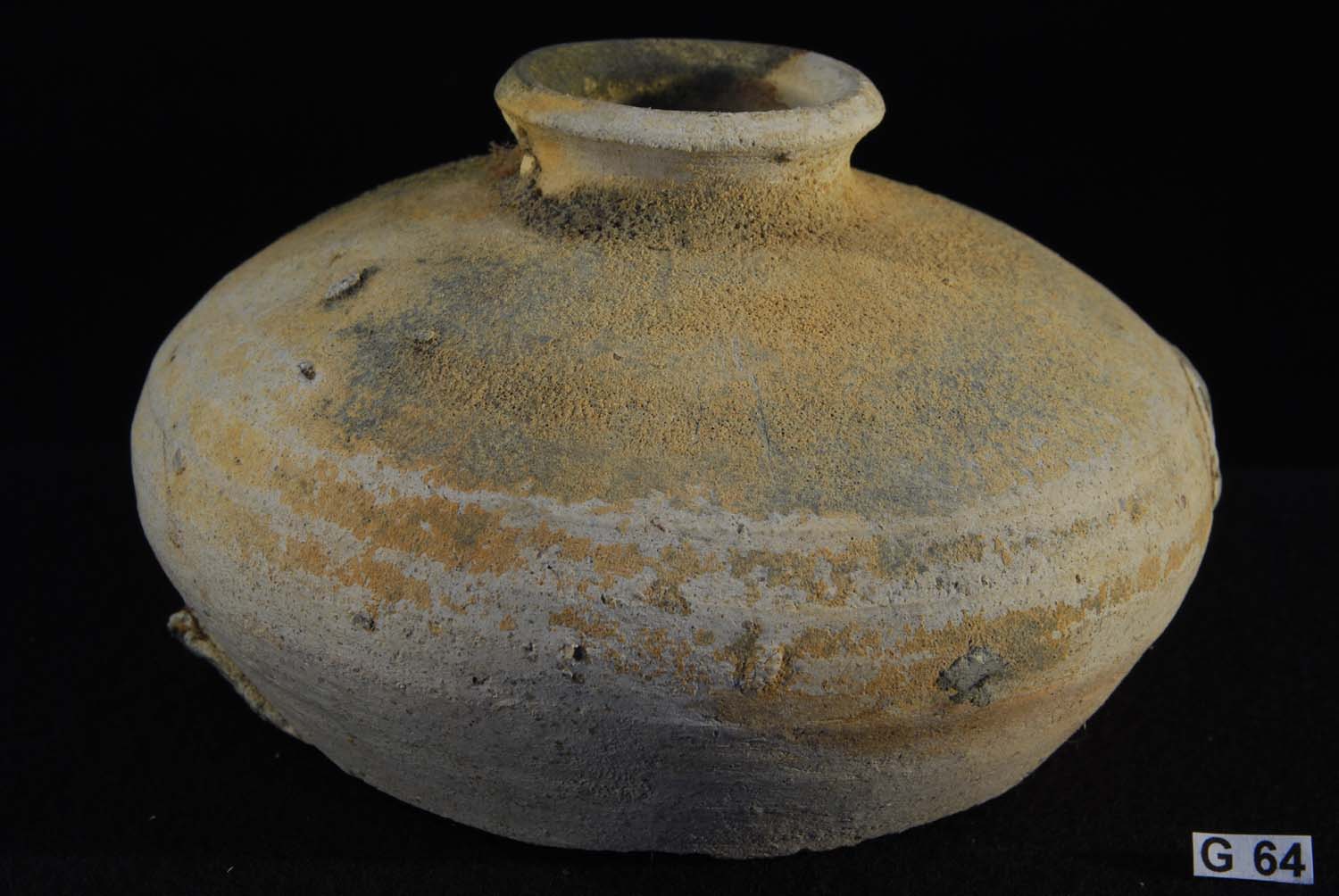
Image Code G64 |
Catalogue No.: G64
Description: Sung Dynasty Shipwreck Pottery
Jarlet. Squat jars of flattened globular form with a short neck and flared
lip, the lower body and wide base unglazed and with a pale grey biscuit. the
majority of jars possess Chinese calligraphic script to the base, probably
in reference to the contents at the time of shipping out of China. These
items were recovered from the wreck of a Chinese merchant junk sunk in the
South China Sea west of Palawan Island in the Philippines during the
Northern Sung Dynasty (960 - 1127 AD). During the Sung Dynasty, Chinese
merchant vessels had begun carrying goods from China to the Philippine
Islands and south-east Asia where Chinese colonies had been established.
These pieces are of varying colours, the upper glazed portion of each piece
now somewhat degraded, bearing testimony to a period of exposure on the sea
floor for nearly 1000 years.
Size: 106 x 59mm. |
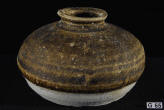
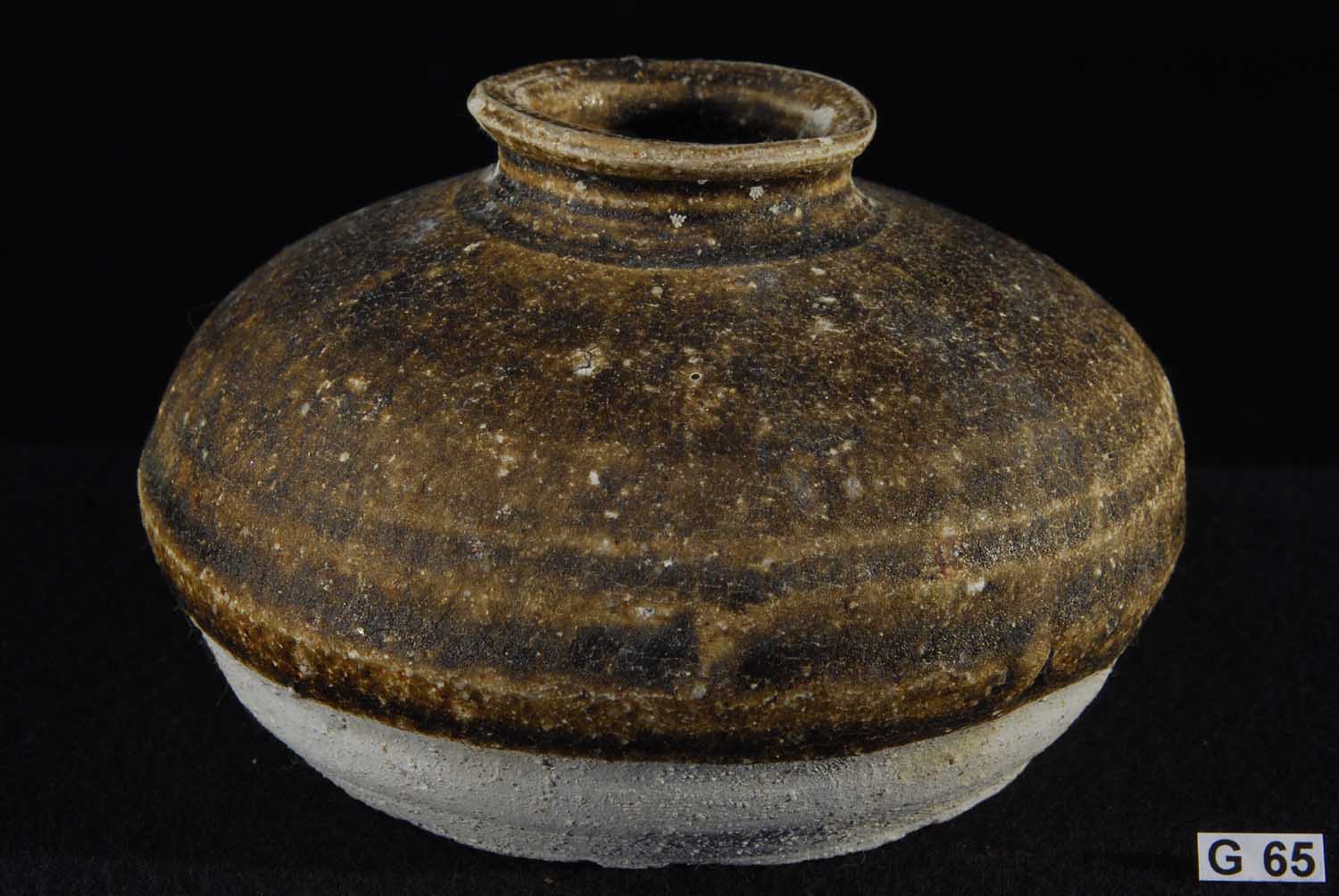
Image Code G65 |
Catalogue No.: G65
Description: Sung Dynasty Shipwreck Pottery
Jarlet. Squat jars of flattened globular form with a short neck and flared
lip, the lower body and wide base unglazed and with a pale grey biscuit. the
majority of jars possess Chinese calligraphic script to the base, probably
in reference to the contents at the time of shipping out of China. These
items were recovered from the wreck of a Chinese merchant junk sunk in the
South China Sea west of Palawan Island in the Philippines during the
Northern Sung Dynasty (960 - 1127 AD). During the Sung Dynasty, Chinese
merchant vessels had begun carrying goods from China to the Philippine
Islands and south-east Asia where Chinese colonies had been established.
These pieces are of varying colours, the upper glazed portion of each piece
now somewhat degraded, bearing testimony to a period of exposure on the sea
floor for nearly 1000 years.
Size: 107 x 59mm. |

Image Code G66 |
Catalogue No.: G66
Description: Sung Dynasty Shipwreck Pottery
Jarlet. Squat jars of flattened globular form with a short neck and flared
lip, the lower body and wide base unglazed and with a pale grey biscuit. the
majority of jars possess Chinese calligraphic script to the base, probably
in reference to the contents at the time of shipping out of China. These
items were recovered from the wreck of a Chinese merchant junk sunk in the
South China Sea west of Palawan Island in the Philippines during the
Northern Sung Dynasty (960 - 1127 AD). During the Sung Dynasty, Chinese
merchant vessels had begun carrying goods from China to the Philippine
Islands and south-east Asia where Chinese colonies had been established.
These pieces are of varying colours, the upper glazed portion of each piece
now somewhat degraded, bearing testimony to a period of exposure on the sea
floor for nearly 1000 years.
Size: 108 x 59mm. |
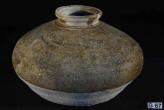
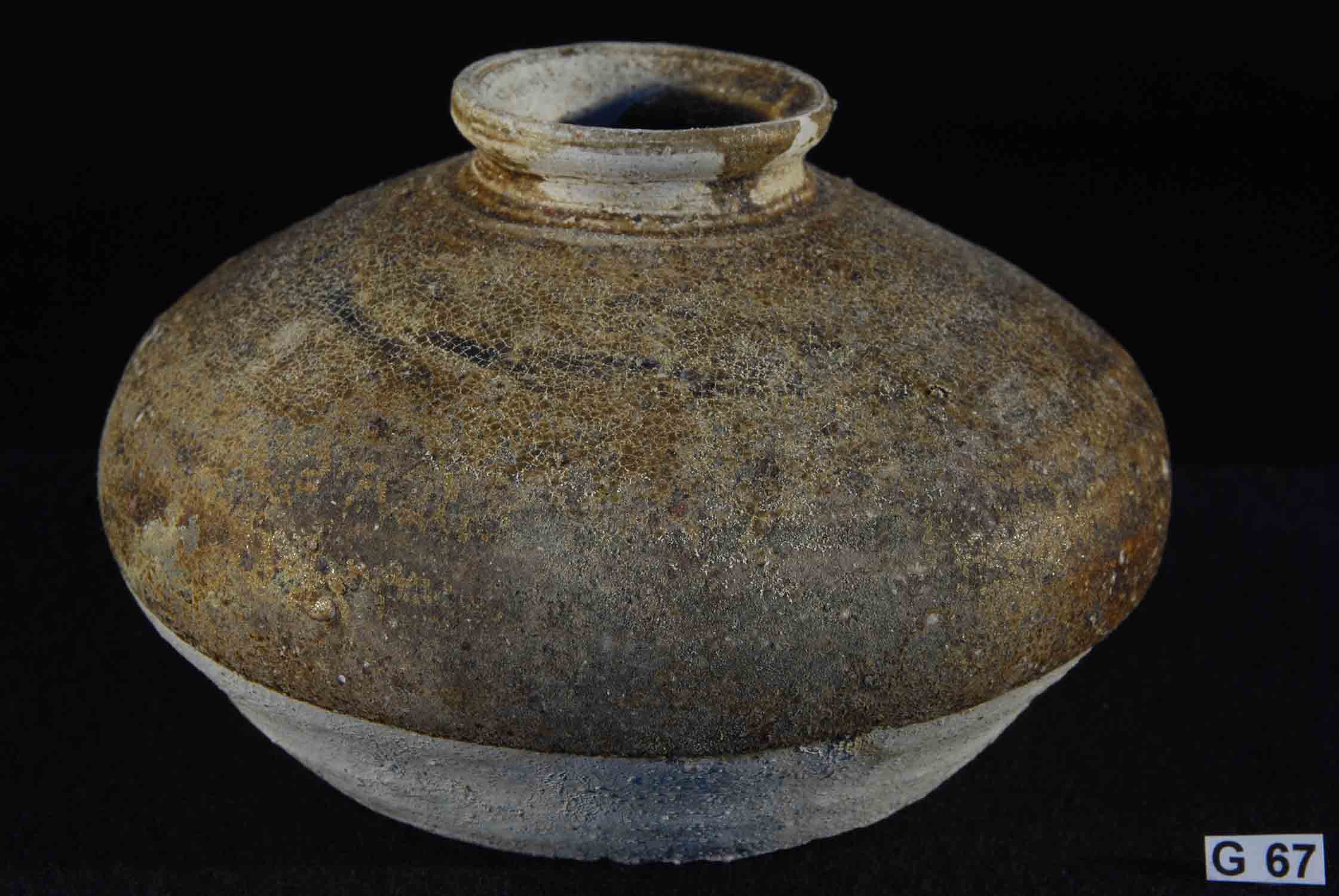
Image Code G67 |
Catalogue No.: G67
Description: Sung Dynasty Shipwreck Pottery
Jarlet. Squat jars of flattened globular form with a short neck and flared
lip, the lower body and wide base unglazed and with a pale grey biscuit. the
majority of jars possess Chinese calligraphic script to the base, probably
in reference to the contents at the time of shipping out of China. These
items were recovered from the wreck of a Chinese merchant junk sunk in the
South China Sea west of Palawan Island in the Philippines during the
Northern Sung Dynasty (960 - 1127 AD). During the Sung Dynasty, Chinese
merchant vessels had begun carrying goods from China to the Philippine
Islands and south-east Asia where Chinese colonies had been established.
These pieces are of varying colours, the upper glazed portion of each piece
now somewhat degraded, bearing testimony to a period of exposure on the sea
floor for nearly 1000 years.
Size: 109 x 59mm. |
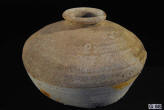
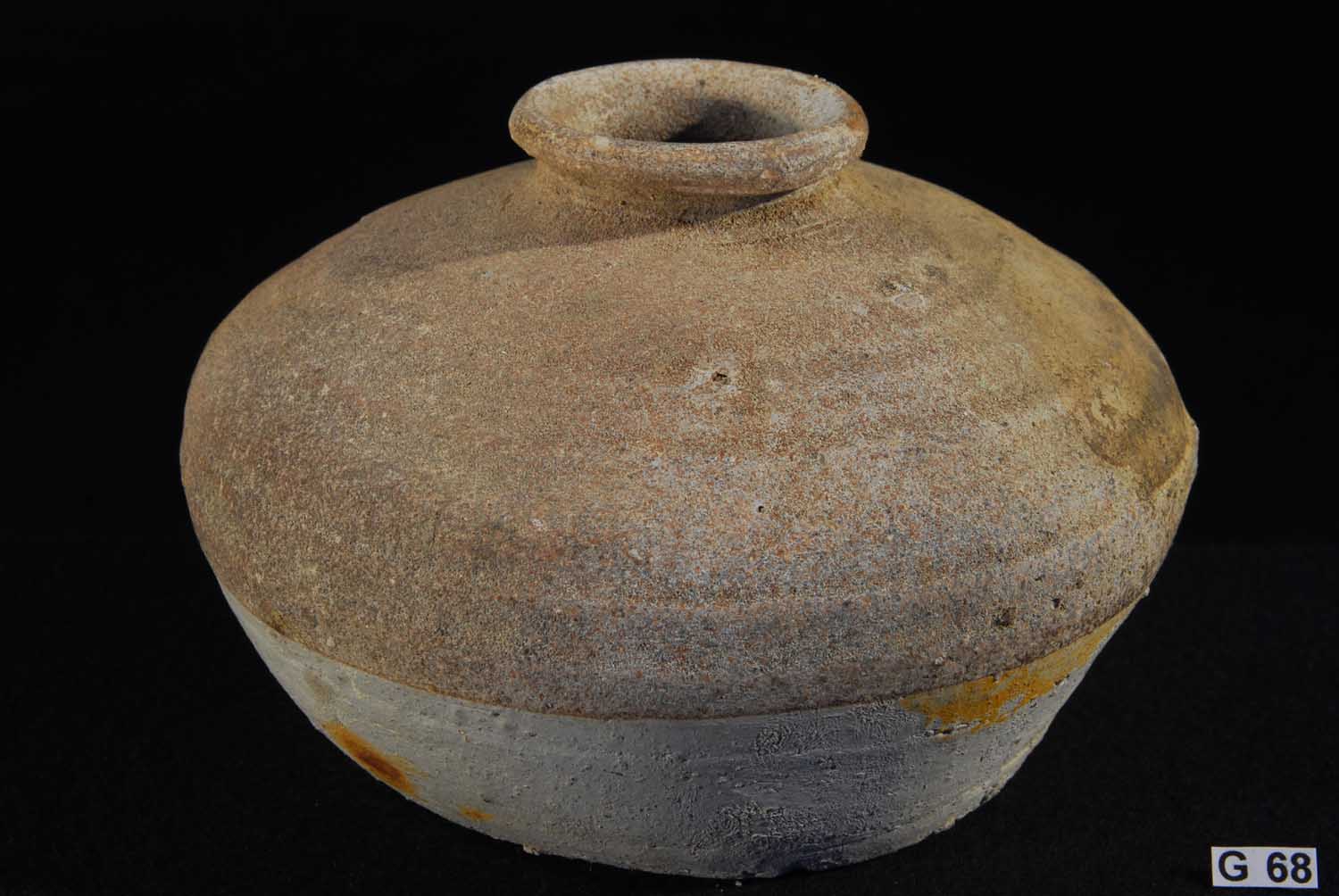
Image Code G68 |
Catalogue No.: G68
Description: Sung Dynasty Shipwreck Pottery
Jarlet. Squat jars of flattened globular form with a short neck and flared
lip, the lower body and wide base unglazed and with a pale grey biscuit. the
majority of jars possess Chinese calligraphic script to the base, probably
in reference to the contents at the time of shipping out of China. These
items were recovered from the wreck of a Chinese merchant junk sunk in the
South China Sea west of Palawan Island in the Philippines during the
Northern Sung Dynasty (960 - 1127 AD). During the Sung Dynasty, Chinese
merchant vessels had begun carrying goods from China to the Philippine
Islands and south-east Asia where Chinese colonies had been established.
These pieces are of varying colours, the upper glazed portion of each piece
now somewhat degraded, bearing testimony to a period of exposure on the sea
floor for nearly 1000 years.
Size: 110 x 59mm. |

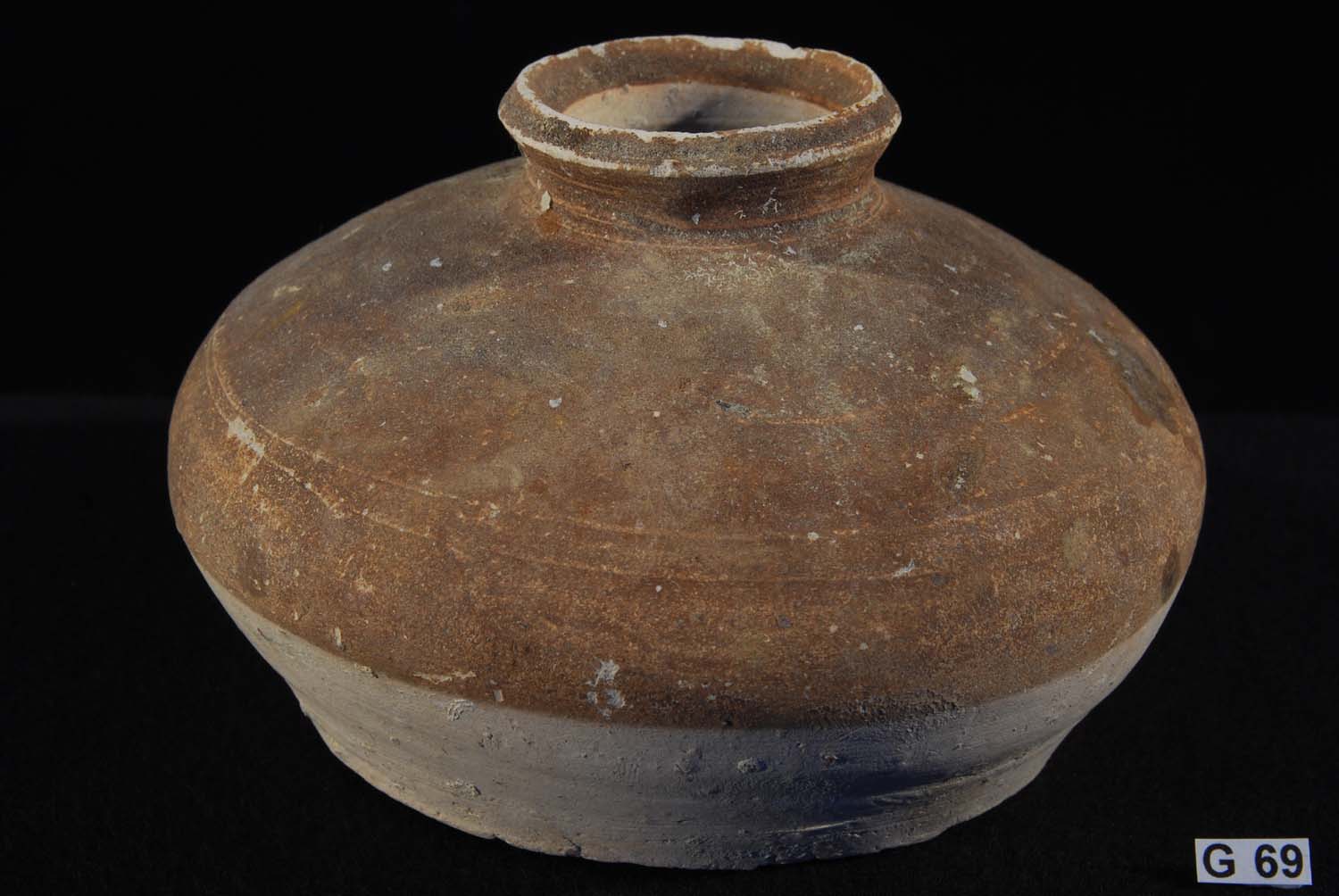
Image Code G69 |
Catalogue No.: G69
Description: Sung Dynasty Shipwreck Pottery
Jarlet. Squat jars of flattened globular form with a short neck and flared
lip, the lower body and wide base unglazed and with a pale grey biscuit. The
majority of jars possess Chinese calligraphic script to the base, probably
in reference to the contents at the time of shipping out of China. These
items were recovered from the wreck of a Chinese merchant junk sunk in the
South China Sea west of Palawan Island in the Philippines during the
Northern Sung Dynasty (960 - 1127 AD). During the Sung Dynasty, Chinese
merchant vessels had begun carrying goods from China to the Philippine
Islands and south-east Asia where Chinese colonies had been established.
These pieces are of varying colours, the upper glazed portion of each piece
now somewhat degraded, bearing testimony to a period of exposure on the sea
floor for nearly 1000 years.
Size: 111 x 59mm. |
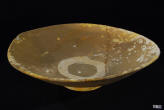
Image Code G70 |
Catalogue No.: G70
Description: Sung Dynasty Shipwreck Pottery. As
recovered from the wreck of a Chinese merchant junk sunk in the South China
Sea west of Palawan Island in the Philippines during the Northern Sung
Dynasty (960 - 1127 AD). During the Sung Dynasty Chinese merchant vessels
had begun carrying goods from China to the Philippines Islands and
south-east Asia were Chinese colonies had been established. This piece
retain traces of coral incrustation, evidence of their period of exposure on
the sea floor for nearly 1000 years.
Size: 220 x 65mm. |

Image Code G71 |
Catalogue No.: G71
Description: Sung Dynasty Shipwreck Pottery. As
recovered from the wreck of a Chinese merchant junk sunk in the South China
Sea west of Palawan Island in the Philippines during the Northern Sung
Dynasty (960 - 1127 AD). During the Sung Dynasty Chinese merchant vessels
had begun carrying goods from China to the Philippines Islands and
south-east Asia were Chinese colonies had been established. This piece
retain traces of coral incrustation, evidence of their period of exposure on
the sea floor for nearly 1000 years.
Size: 210 x 70mm. |
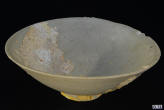
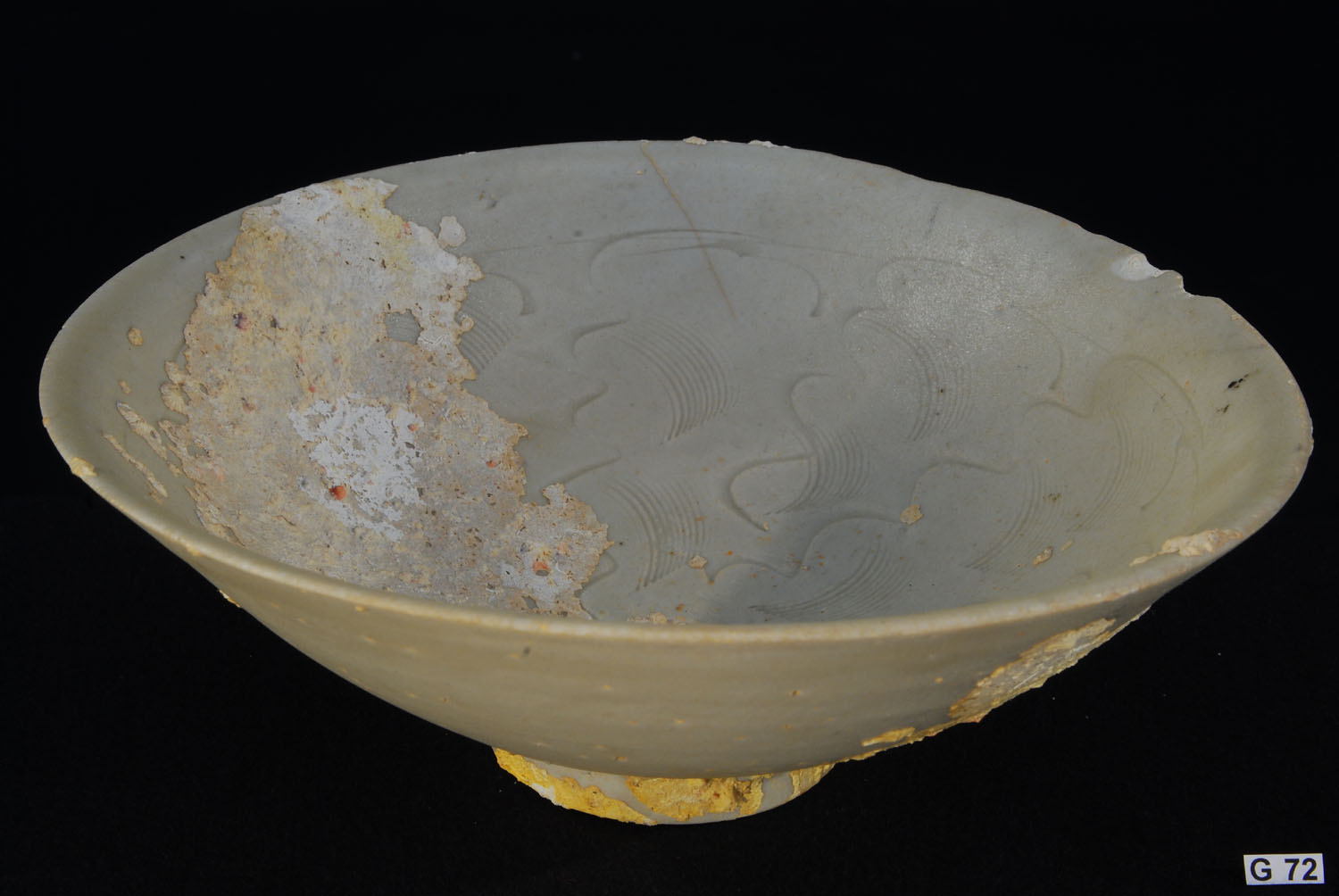
Image Code G72 |
Catalogue No.: G72
Description: Sung Dynasty Shipwreck Celadon
Pottery. Assorted attractive sea-salvage bowls and pots with incised and
moulded designs and Celadon glaze as recovered from the wreck of a Chinese
merchant junk sunk in the South China Sea west of Palawan Island in the
Philippines during the 12th - 13th centuries. During the Sung Dynasty,
Chinese merchant vessels had begun carrying goods from China to the
Philippine Islands and south-east Asia were Chinese colonies had been
established. These pieces retain traces of coral incrustation, evidence of
their period of exposure on the sea floor for nearly 1000 years.
Size: 180 x 65mm. |

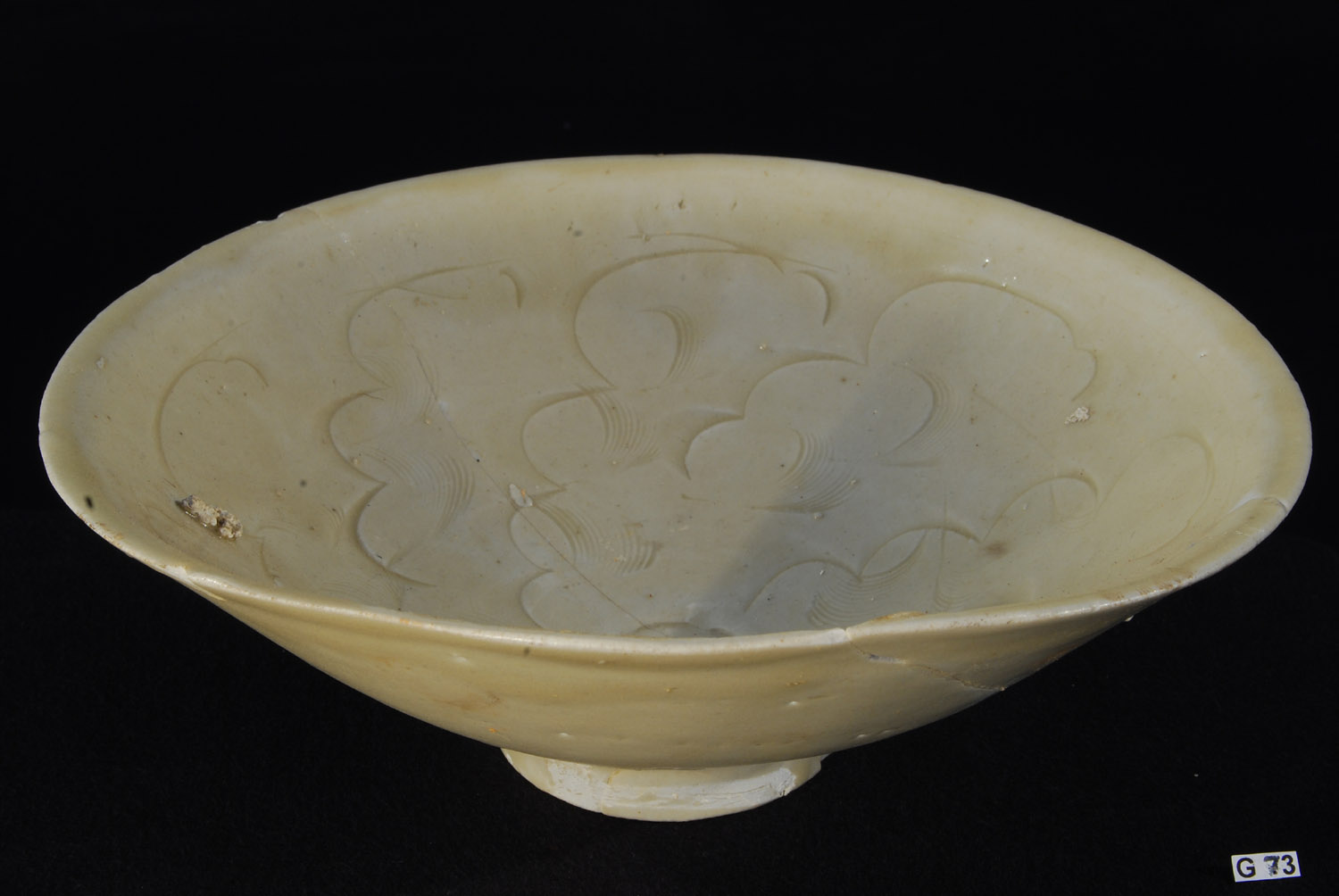
Image Code G73 |
Catalogue No.: G73
Description: Sung Dynasty Shipwreck Pottery. As
recovered from the wreck of a Chinese merchant junk sunk in the South China
Sea west of Palawan Island in the Philippines during the Northern Sung
Dynasty (960 - 1127 AD). During the Sung Dynasty Chinese merchant vessels
had begun carrying goods from China to the Philippine Islands and south-east
Asia were Chinese colonies had been established. These pieces retain traces
of coral encrustation, evidence of their period of exposure on the sea floor
for nearly 1000 years.
Size: 195 x 70mm. |
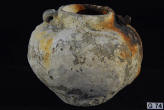
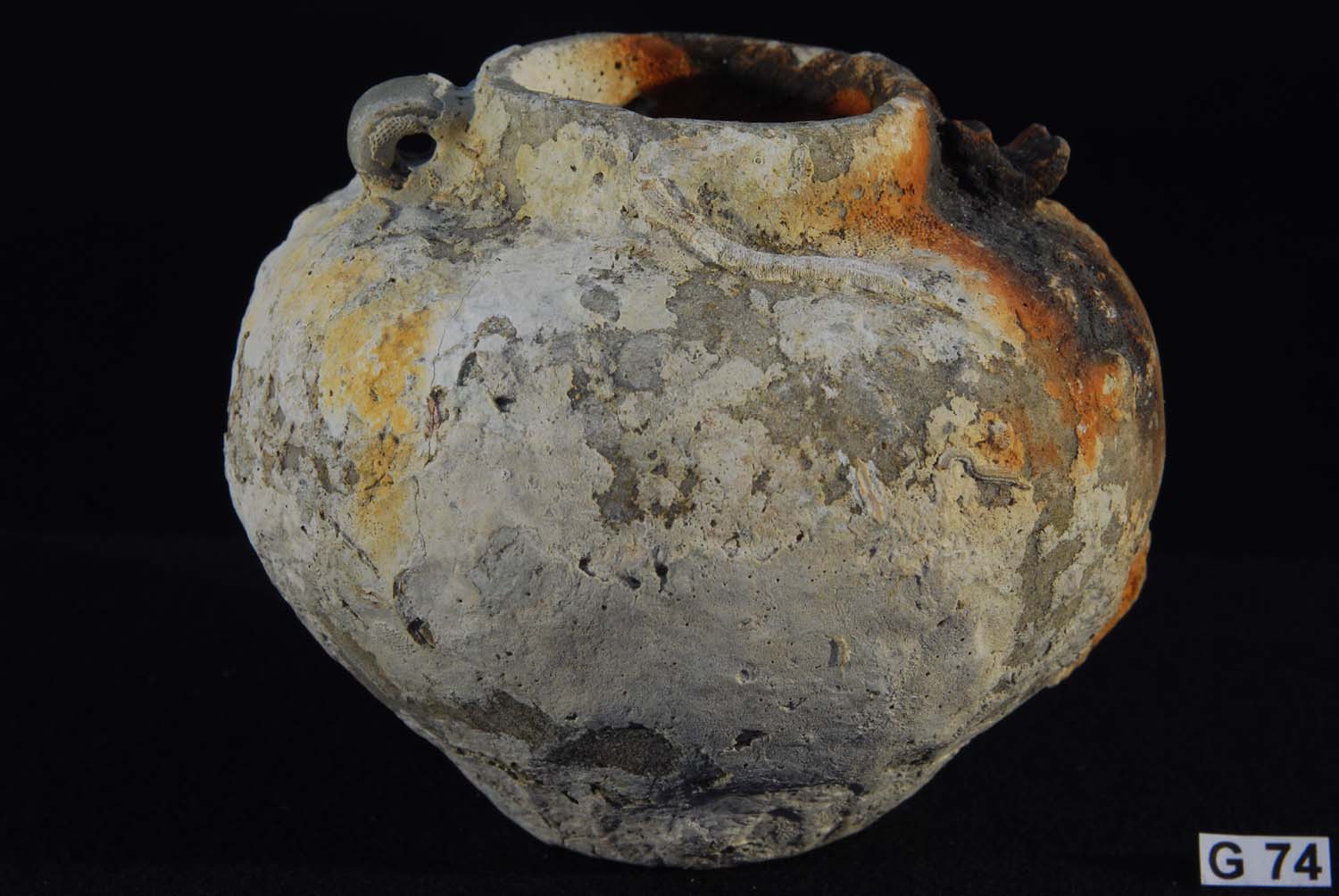
Image Code G74 |
Catalogue No.: G74
Description: Pot. These items were recovered from
the wreck of a Chinese merchant junk sunk in the South China Sea west of Palawan Island in the Philippines during the
Northern Sung Dynasty (960 - 1127 AD). During the Sung Dynasty, Chinese
merchant vessels had begun carrying goods from China to the Philippine
Islands and south-east Asia where Chinese colonies had been established.
These pieces are of varying colours, the upper glazed portion of each piece
now somewhat degraded, bearing testimony to a period of exposure on the sea
floor for nearly 1000 years.
Size: 78 x 62mm. |
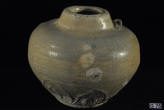
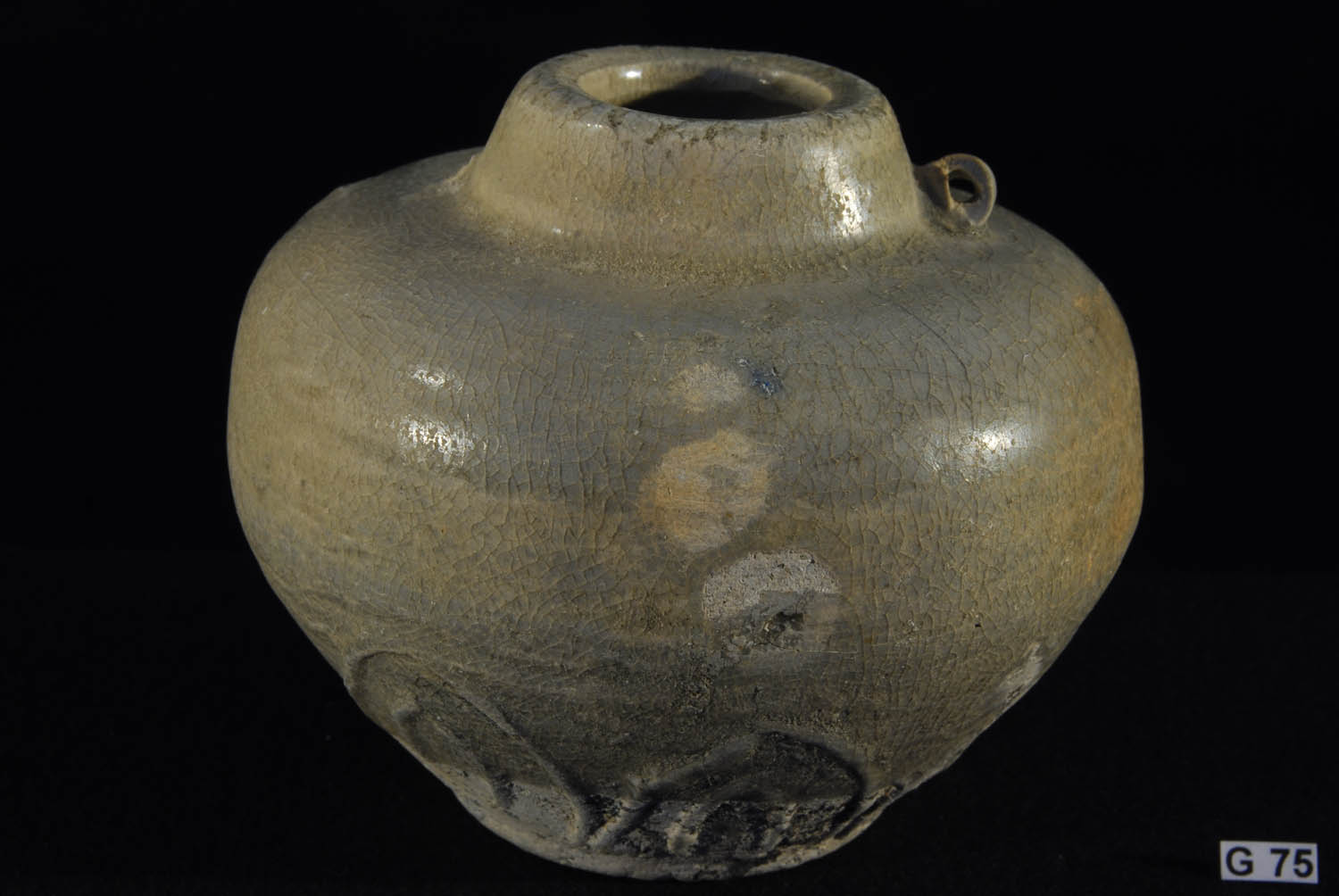
Image Code G75 |
Catalogue No.: G75
Description: Pot. These items were recovered from
the wreck of a Chinese merchant junk sunk in the South China Sea west of Palawan Island in the Philippines during the
Northern Sung Dynasty (960 - 1127 AD). During the Sung Dynasty, Chinese
merchant vessels had begun carrying goods from China to the Philippine
Islands and south-east Asia where Chinese colonies had been established.
These pieces are of varying colours, the upper glazed portion of each piece
now somewhat degraded, bearing testimony to a period of exposure on the sea
floor for nearly 1000 years.
Size: 95 x 85mm. |

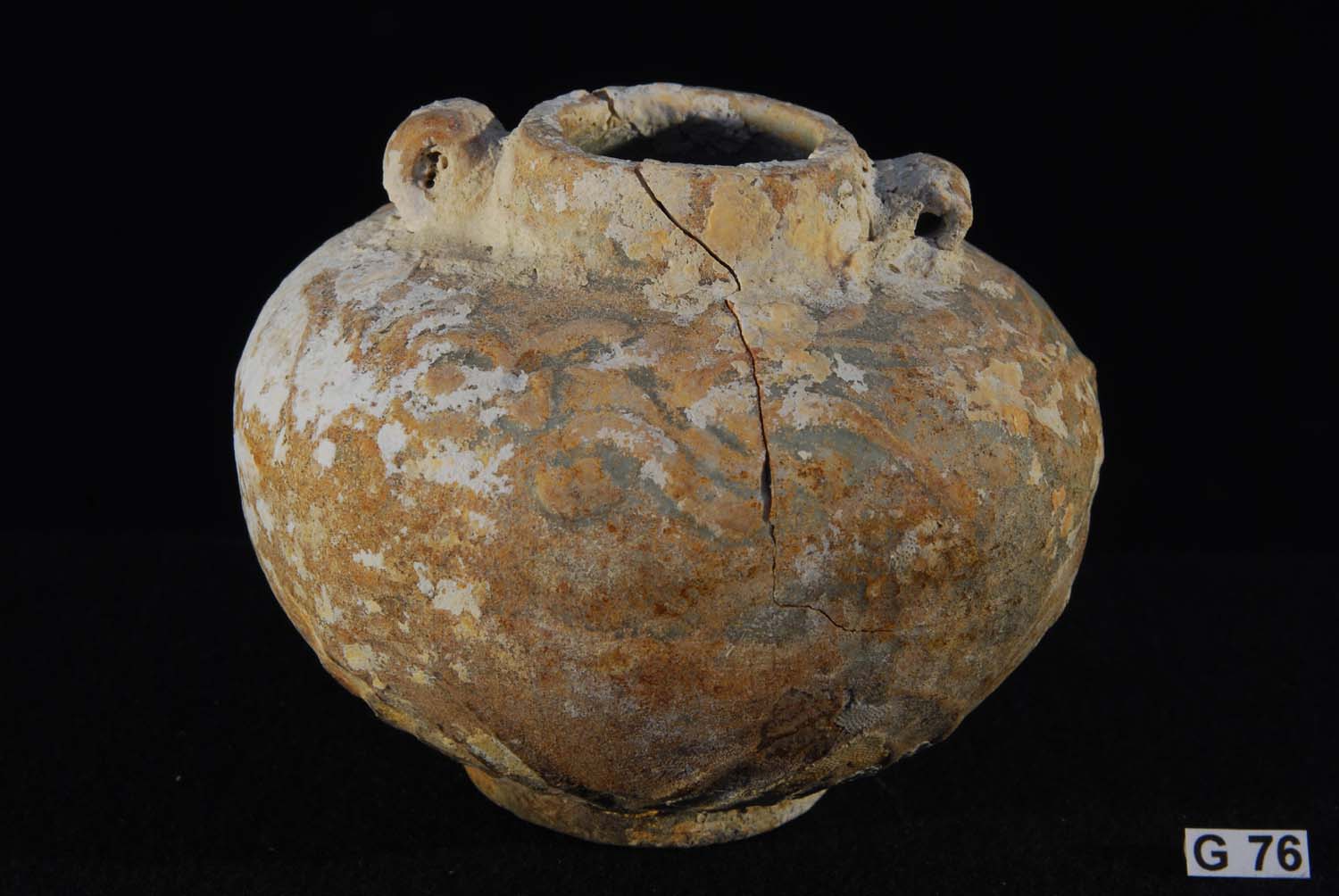
Image Code G76 |
Catalogue No.: G76
Description: Pot. These items were recovered from
the wreck of a Chinese merchant junk sunk in the South China Sea west of Palawan Island in the Philippines during the
Northern Sung Dynasty (960 - 1127 AD). During the Sung Dynasty, Chinese
merchant vessels had begun carrying goods from China to the Philippine
Islands and south-east Asia where Chinese colonies had been established.
These pieces are of varying colours, the upper glazed portion of each piece
now somewhat degraded, bearing testimony to a period of exposure on the sea
floor for nearly 1000 years.
Size: 73 x 59mm. |
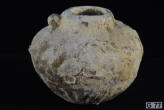
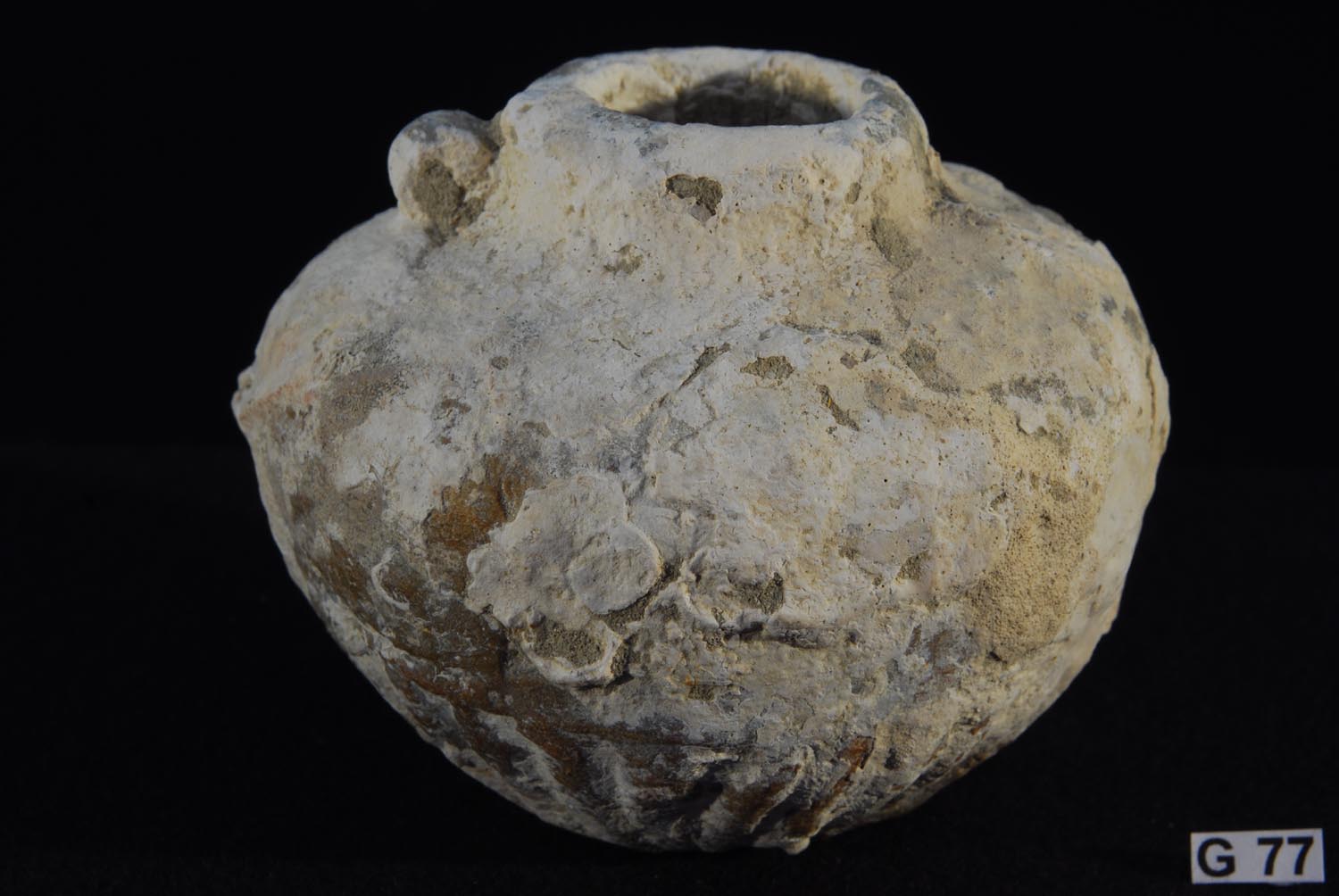
Image Code G77 |
Catalogue No.: G77
Description: Pot. These items were recovered from
the wreck of a Chinese merchant junk sunk in the South China Sea west of Palawan Island in the Philippines during the
Northern Sung Dynasty (960 - 1127 AD). During the Sung Dynasty, Chinese
merchant vessels had begun carrying goods from China to the Philippine
Islands and south-east Asia where Chinese colonies had been established.
These pieces are of varying colours, the upper glazed portion of each piece
now somewhat degraded, bearing testimony to a period of exposure on the sea
floor for nearly 1000 years.
Size: 74 x 59mm. |

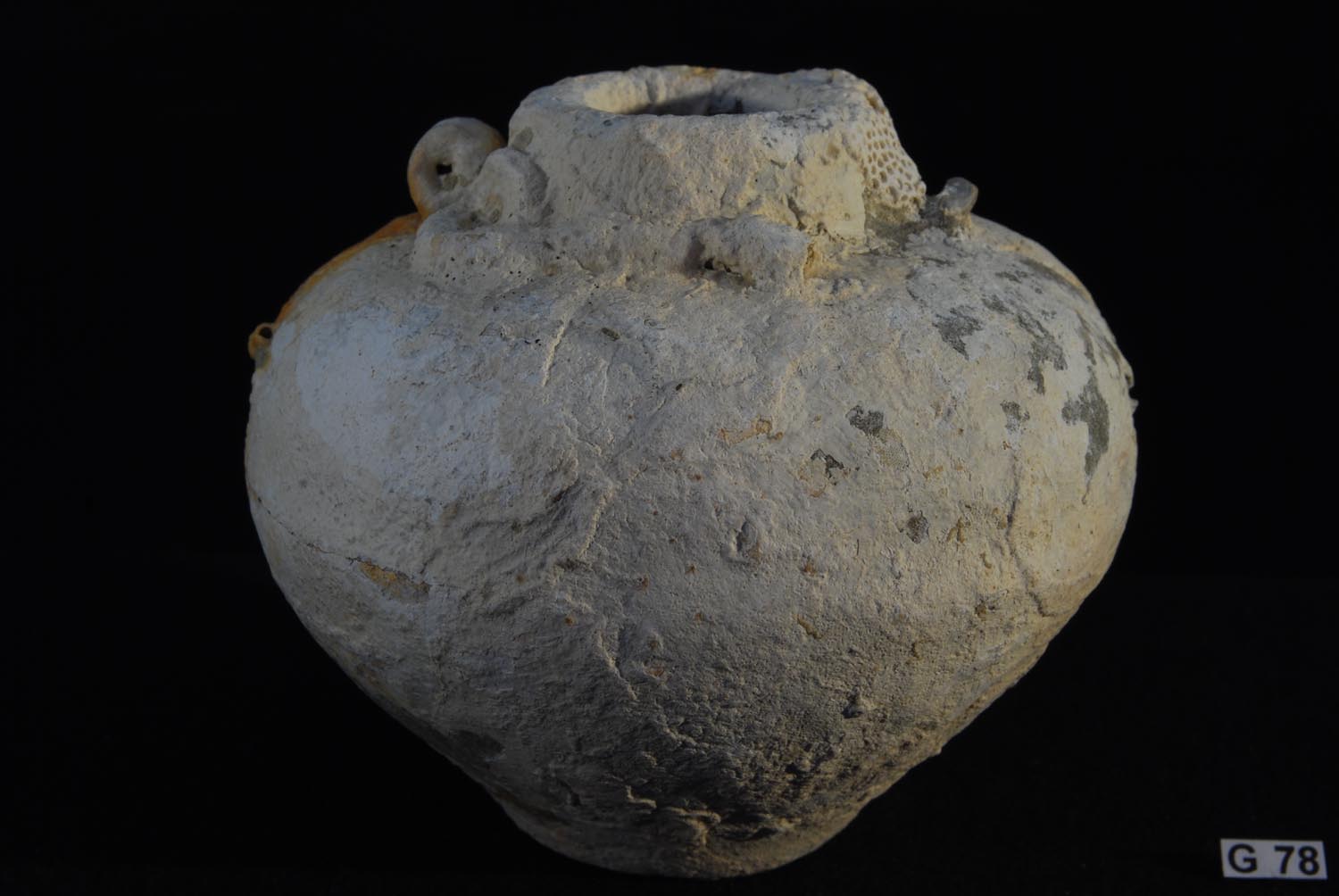
Image Code G78 |
Catalogue No.: G78
Description: Pot. These items were recovered from
the wreck of a Chinese merchant junk sunk in the South China Sea west of Palawan Island in the Philippines during the
Northern Sung Dynasty (960 - 1127 AD). During the Sung Dynasty, Chinese
merchant vessels had begun carrying goods from China to the Philippine
Islands and south-east Asia where Chinese colonies had been established.
These pieces are of varying colours, the upper glazed portion of each piece
now somewhat degraded, bearing testimony to a period of exposure on the sea
floor for nearly 1000 years.
Size: 89 x 77mm. |

Image Code G79 |
Catalogue No.: G79
Description: Pot. These items were recovered from
the wreck of a Chinese merchant junk sunk in the South China Sea west of Palawan Island in the Philippines during the
Northern Sung Dynasty (960 - 1127 AD). During the Sung Dynasty, Chinese
merchant vessels had begun carrying goods from China to the Philippine
Islands and south-east Asia where Chinese colonies had been established.
These pieces are of varying colours, the upper glazed portion of each piece
now somewhat degraded, bearing testimony to a period of exposure on the sea
floor for nearly 1000 years.
Size: 72 x 57mm. |

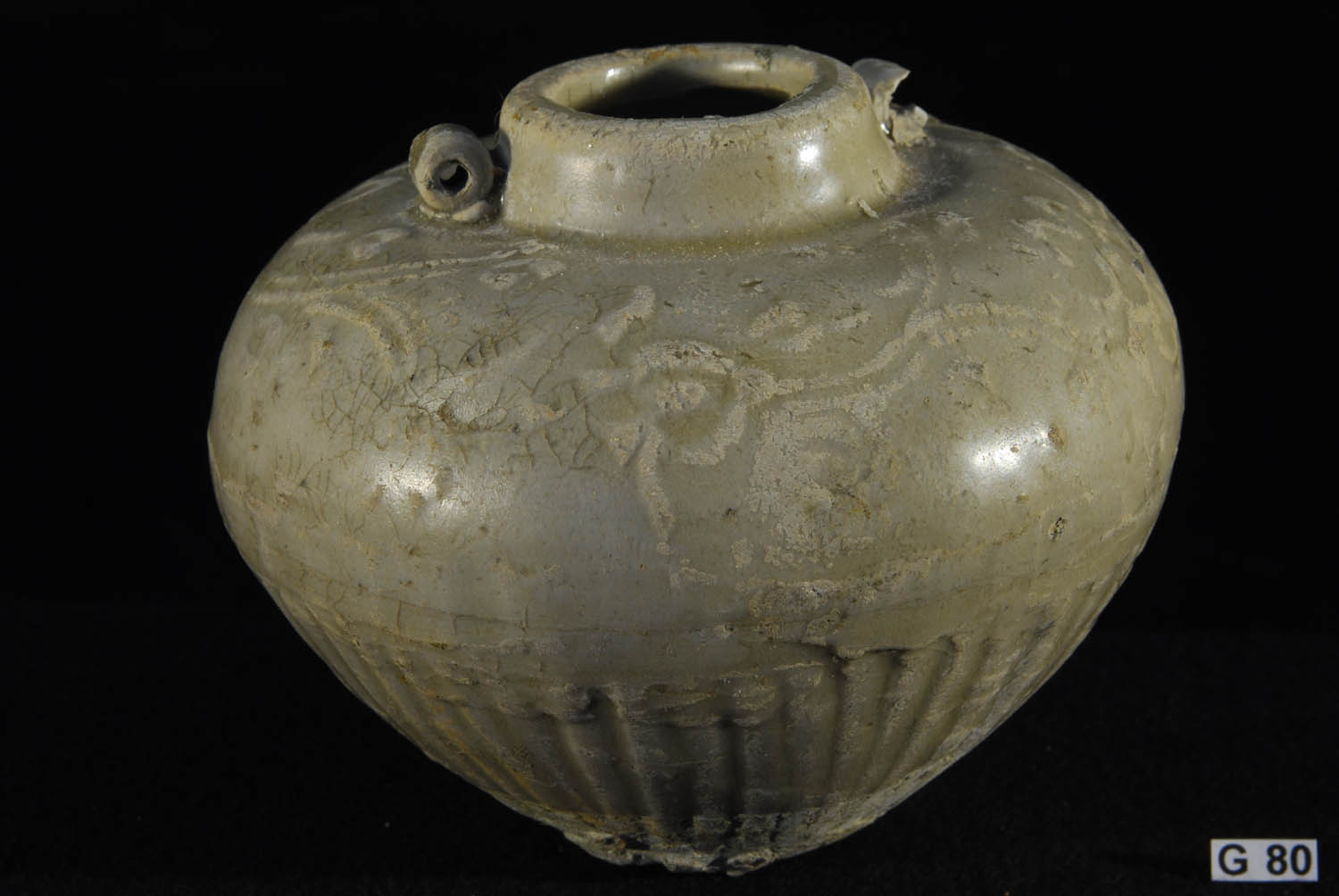
Image Code G80 |
Catalogue No.: G80
Description: Pot. These items were recovered from
the wreck of a Chinese merchant junk sunk in the South China Sea west of Palawan Island in the Philippines during the
Northern Sung Dynasty (960 - 1127 AD). During the Sung Dynasty, Chinese
merchant vessels had begun carrying goods from China to the Philippine
Islands and south-east Asia where Chinese colonies had been established.
These pieces are of varying colours, the upper glazed portion of each piece
now somewhat degraded, bearing testimony to a period of exposure on the sea
floor for nearly 1000 years.
Size: 95 x 77mm. |

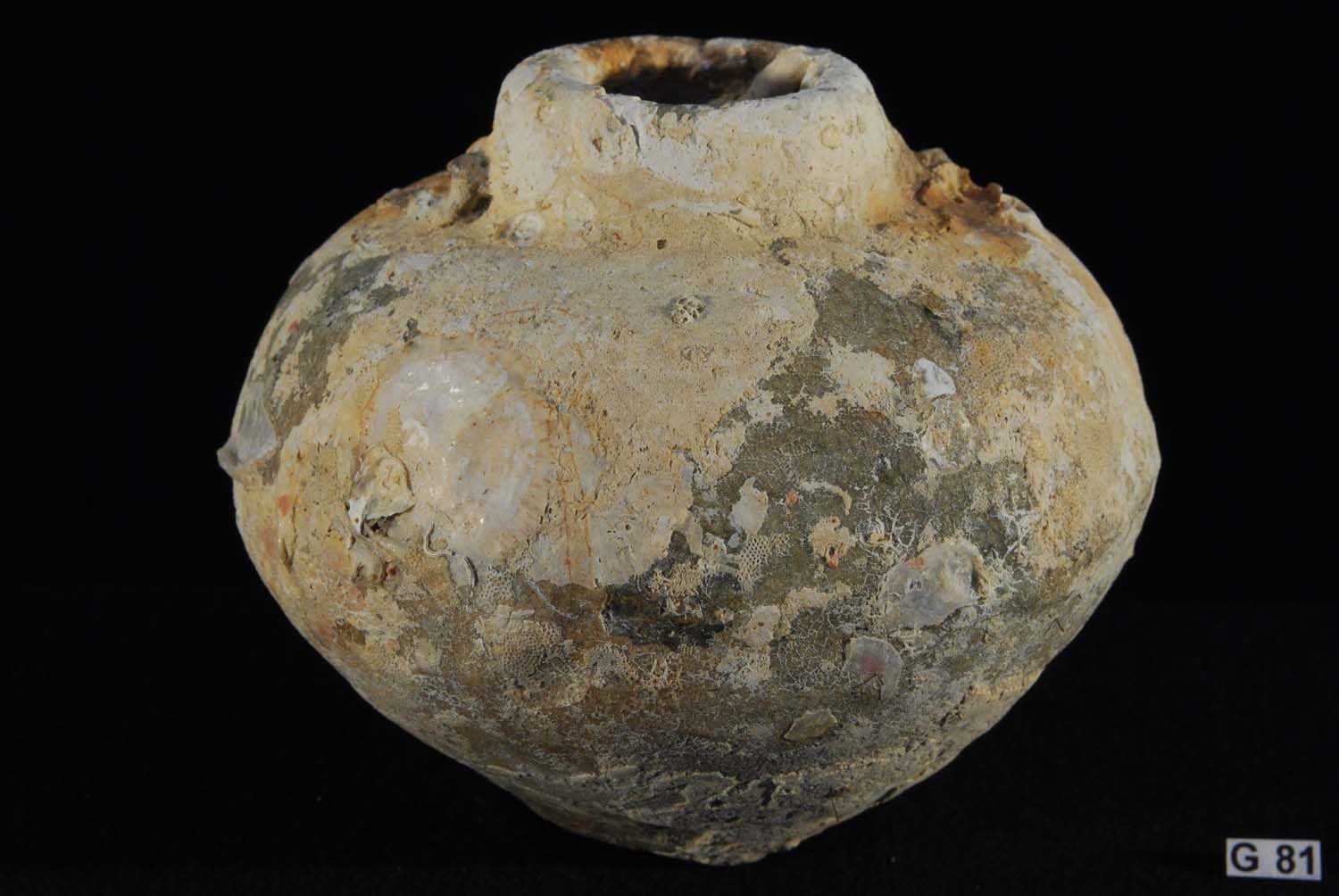
Image Code G81 |
Catalogue No.: G81
Description: Pot. These items were recovered from
the wreck of a Chinese merchant junk sunk in the South China Sea west of Palawan Island in the Philippines during the
Northern Sung Dynasty (960 - 1127 AD). During the Sung Dynasty, Chinese
merchant vessels had begun carrying goods from China to the Philippine
Islands and south-east Asia where Chinese colonies had been established.
These pieces are of varying colours, the upper glazed portion of each piece
now somewhat degraded, bearing testimony to a period of exposure on the sea
floor for nearly 1000 years.
Size: 95 x 81mm. |

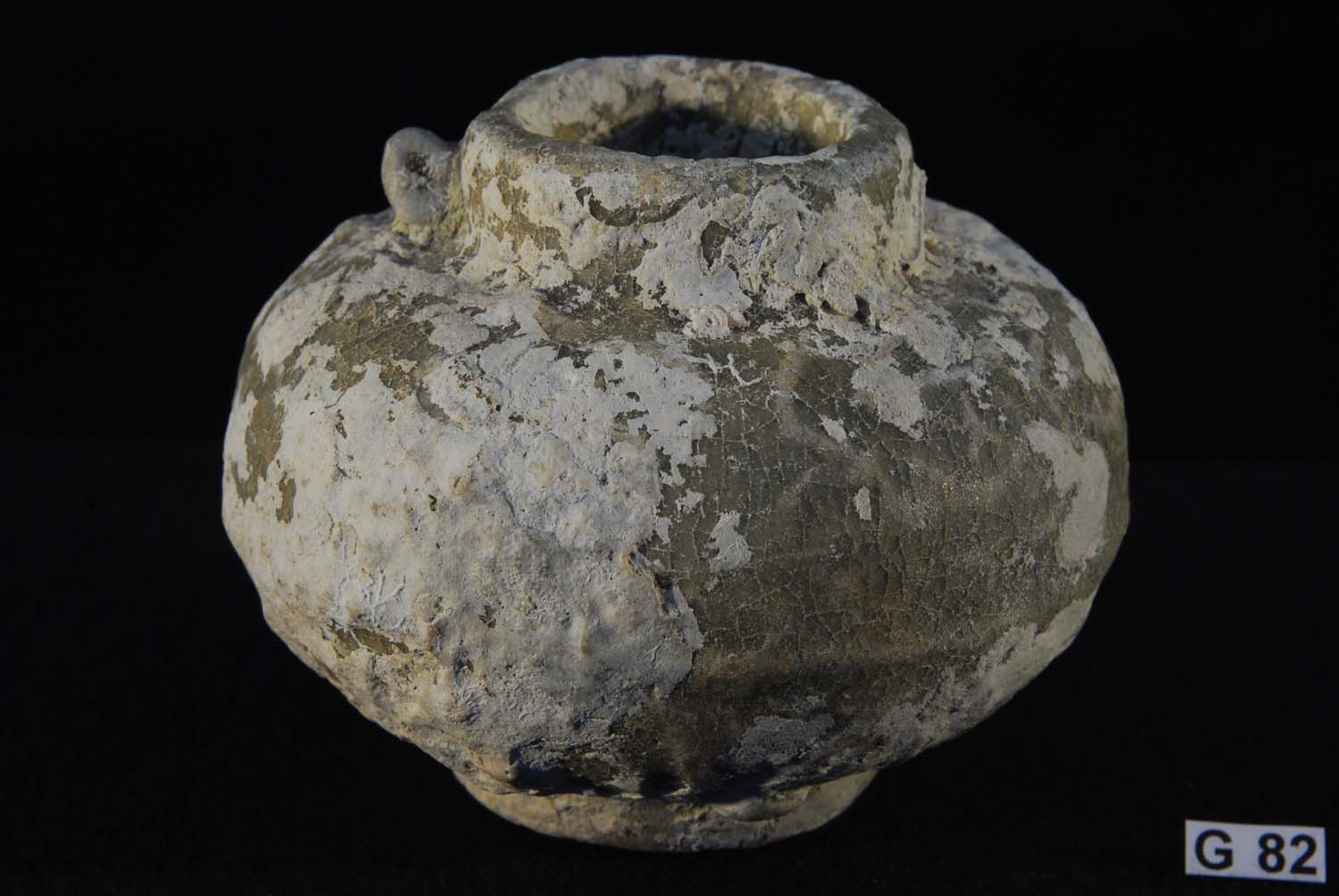
Image Code G82 |
Catalogue No.: G82
Description: Pot. These items were recovered from
the wreck of a Chinese merchant junk sunk in the South China Sea west of Palawan Island in the Philippines during the
Northern Sung Dynasty (960 - 1127 AD). During the Sung Dynasty, Chinese
merchant vessels had begun carrying goods from China to the Philippine
Islands and south-east Asia where Chinese colonies had been established.
These pieces are of varying colours, the upper glazed portion of each piece
now somewhat degraded, bearing testimony to a period of exposure on the sea
floor for nearly 1000 years.
Size: 69 x 54mm. |
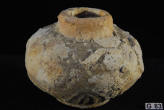
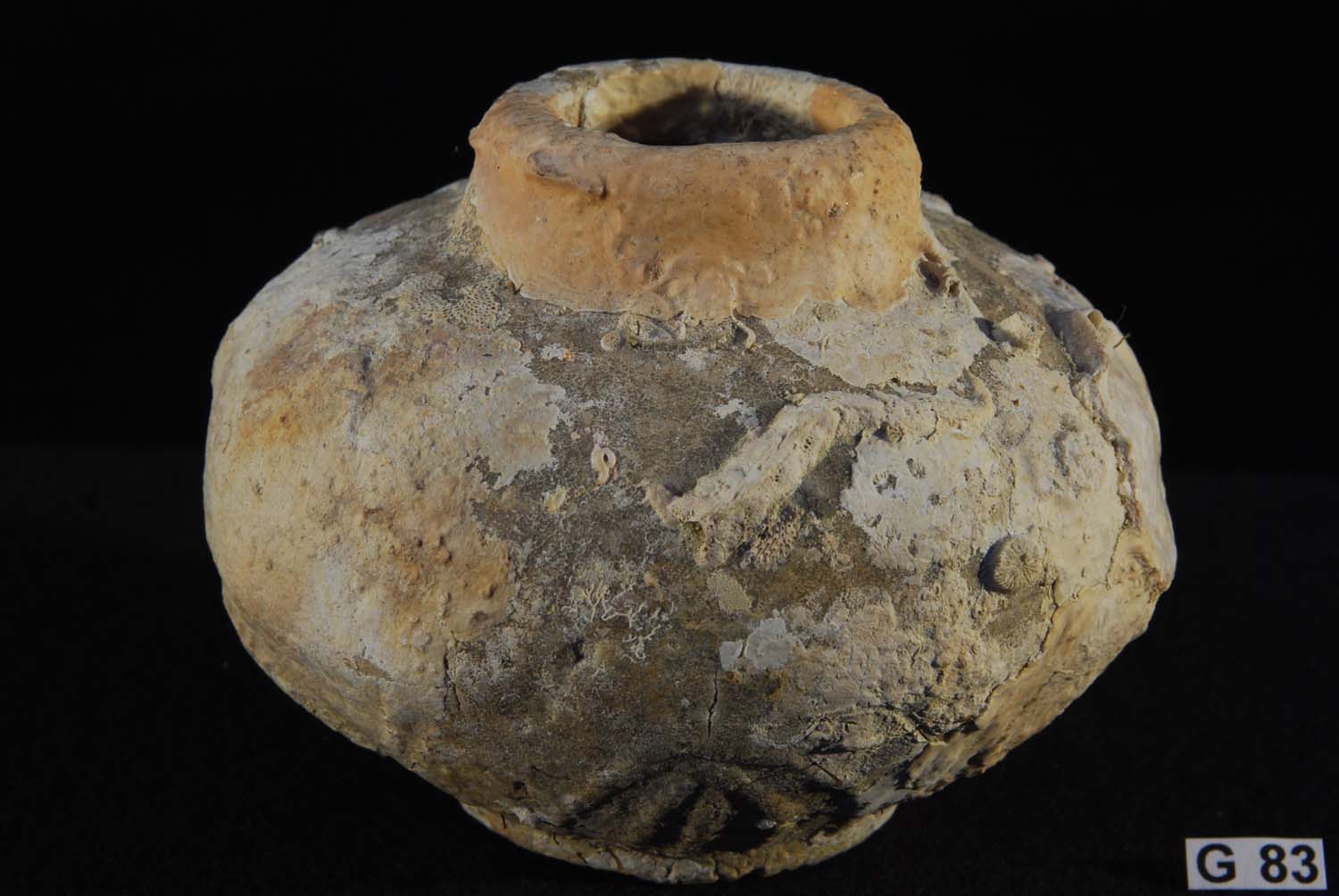
Image Code G83 |
Catalogue No.: G83
Description: Pot. These items were recovered from
the wreck of a Chinese merchant junk sunk in the South China Sea west of Palawan Island in the Philippines during the
Northern Sung Dynasty (960 - 1127 AD). During the Sung Dynasty, Chinese
merchant vessels had begun carrying goods from China to the Philippine
Islands and south-east Asia where Chinese colonies had been established.
These pieces are of varying colours, the upper glazed portion of each piece
now somewhat degraded, bearing testimony to a period of exposure on the sea
floor for nearly 1000 years.
Size: 73 x 58mm. |

Image Code G84 |
Catalogue No.: G84
Description: Pot. These items were recovered from
the wreck of a Chinese merchant junk sunk in the South China Sea west of Palawan Island in the Philippines during the
Northern Sung Dynasty (960 - 1127 AD). During the Sung Dynasty, Chinese
merchant vessels had begun carrying goods from China to the Philippine
Islands and south-east Asia where Chinese colonies had been established.
These pieces are of varying colours, the upper glazed portion of each piece
now somewhat degraded, bearing testimony to a period of exposure on the sea
floor for nearly 1000 years.
Size: 95 x 80mm. |

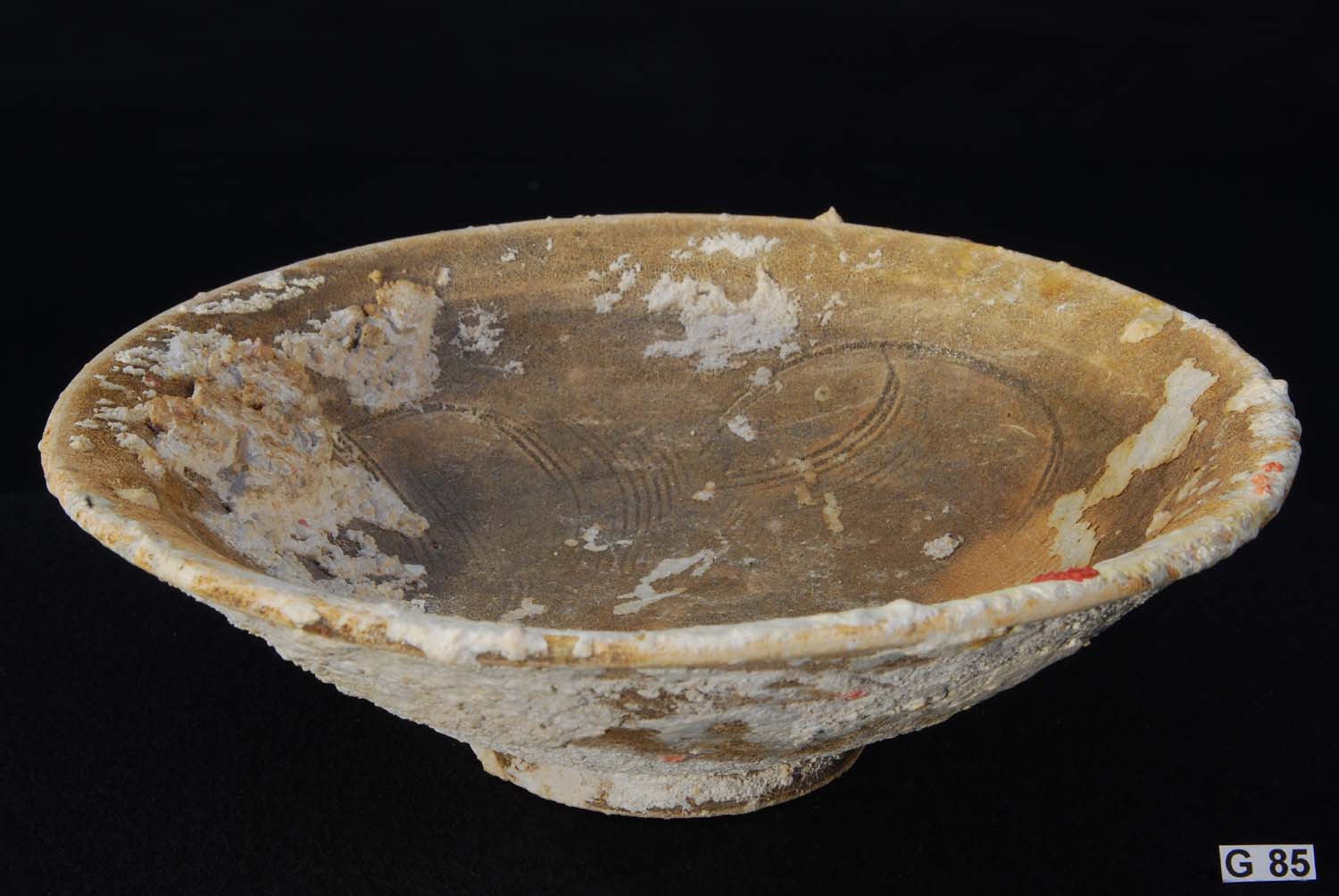
Image Code G85 |
Catalogue No.: G85
Description: Sung Dynasty Shipwreck Pottery. As
recovered from the wreck of a Chinese merchant junk sunk in the South China
Sea west of Palawan Island in the Philippines during the Northern Sung
Dynasty (960 - 1127 AD). During the Sung Dynasty Chinese merchant vessels
had begun carrying goods from China to the Philippine Islands and south-east
Asia were Chinese colonies had been established. These pieces retain traces
of coral encrustation, evidence of their period of exposure on the sea floor
for nearly 1000 years.
Size: 146 x 45mm. |
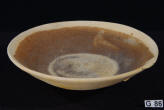
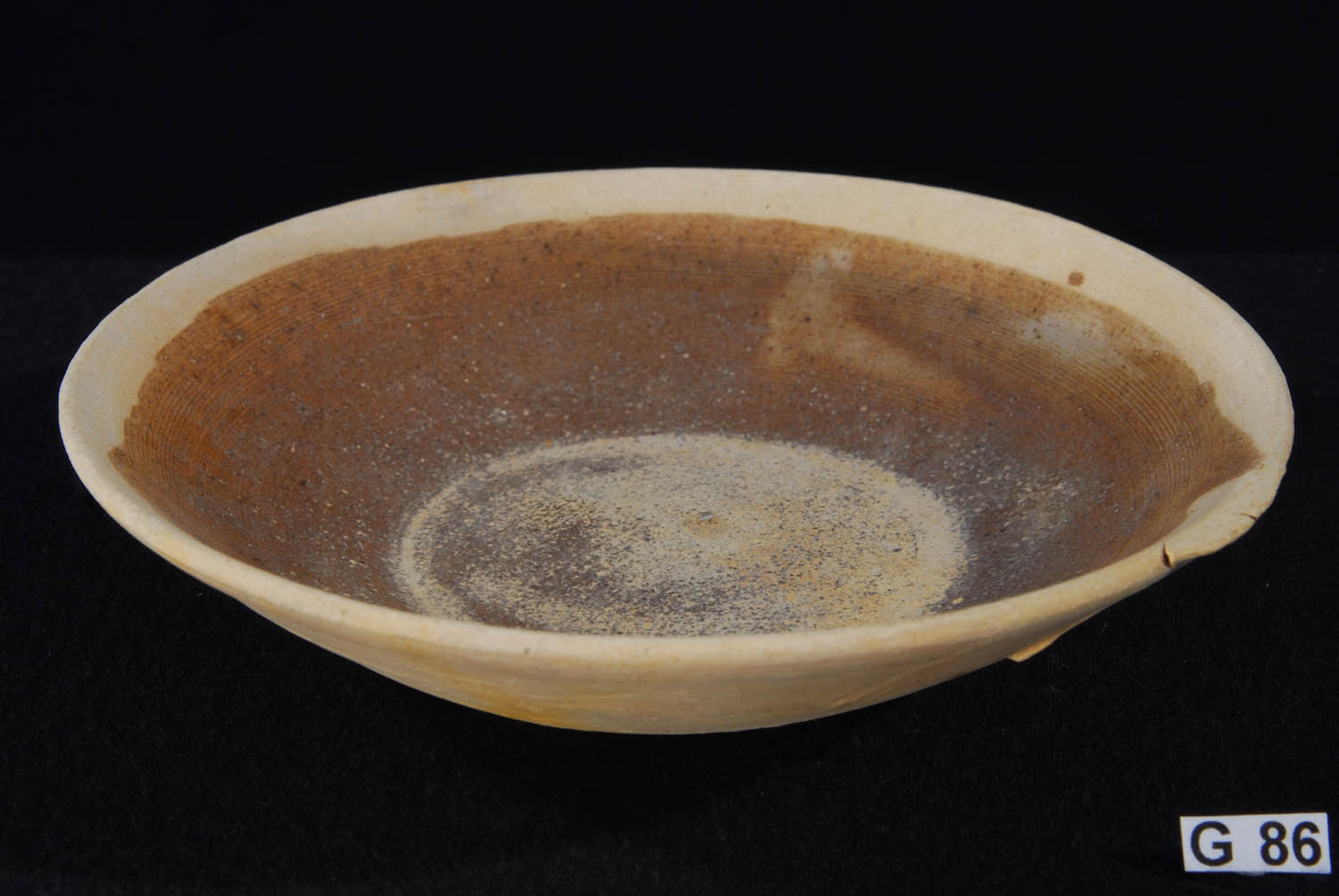
Image Code G86 |
Catalogue No.: G86
Description: Sung Dynasty Shipwreck Pottery. As
recovered from the wreck of a Chinese merchant junk sunk in the South China
Sea west of Palawan Island in the Philippines during the Northern Sung
Dynasty (960 - 1127 AD). During the Sung Dynasty Chinese merchant vessels
had begun carrying goods from China to the Philippine Islands and south-east
Asia were Chinese colonies had been established. These pieces retain traces
of coral encrustation, evidence of their period of exposure on the sea floor
for nearly 1000 years.
Size: 95 x 20mm. |
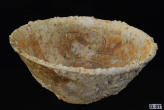
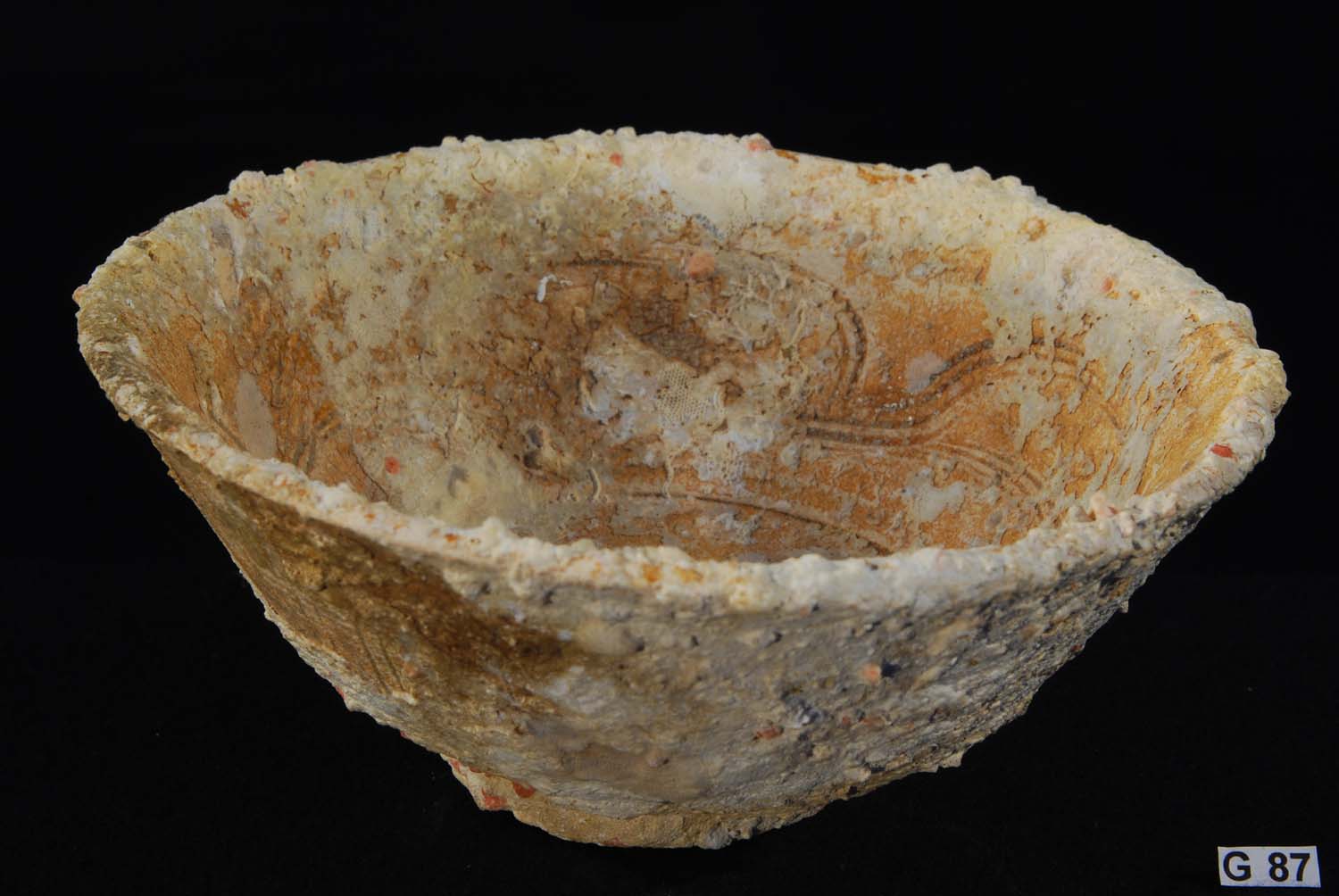
Image Code G87 |
Catalogue No.: G87
Description: Sung Dynasty Shipwreck Pottery. As
recovered from the wreck of a Chinese merchant junk sunk in the South China
Sea west of Palawan Island in the Philippines during the Northern Sung
Dynasty (960 - 1127 AD). During the Sung Dynasty Chinese merchant vessels
had begun carrying goods from China to the Philippine Islands and south-east
Asia were Chinese colonies had been established. These pieces retain traces
of coral encrustation, evidence of their period of exposure on the sea floor
for nearly 1000 years.
Size: 125 x 55mm. |

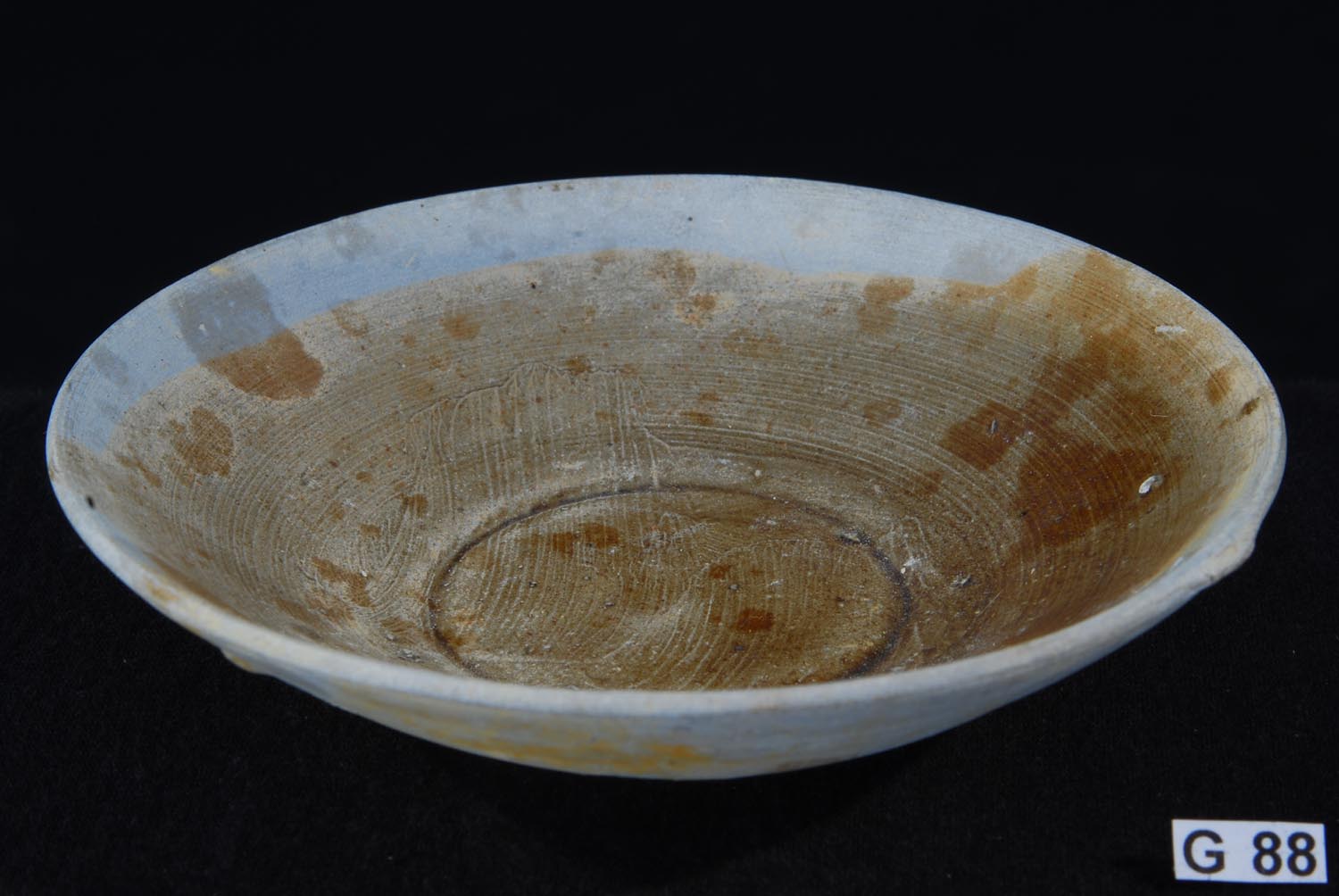
Image Code G88 |
Catalogue No.: G88
Description: Sung Dynasty Shipwreck Pottery. As
recovered from the wreck of a Chinese merchant junk sunk in the South China
Sea west of Palawan Island in the Philippines during the Northern Sung
Dynasty (960 - 1127 AD). During the Sung Dynasty Chinese merchant vessels
had begun carrying goods from China to the Philippine Islands and south-east
Asia were Chinese colonies had been established. These pieces retain traces
of coral encrustation, evidence of their period of exposure on the sea floor
for nearly 1000 years.
Size: 90 x 20mm. |

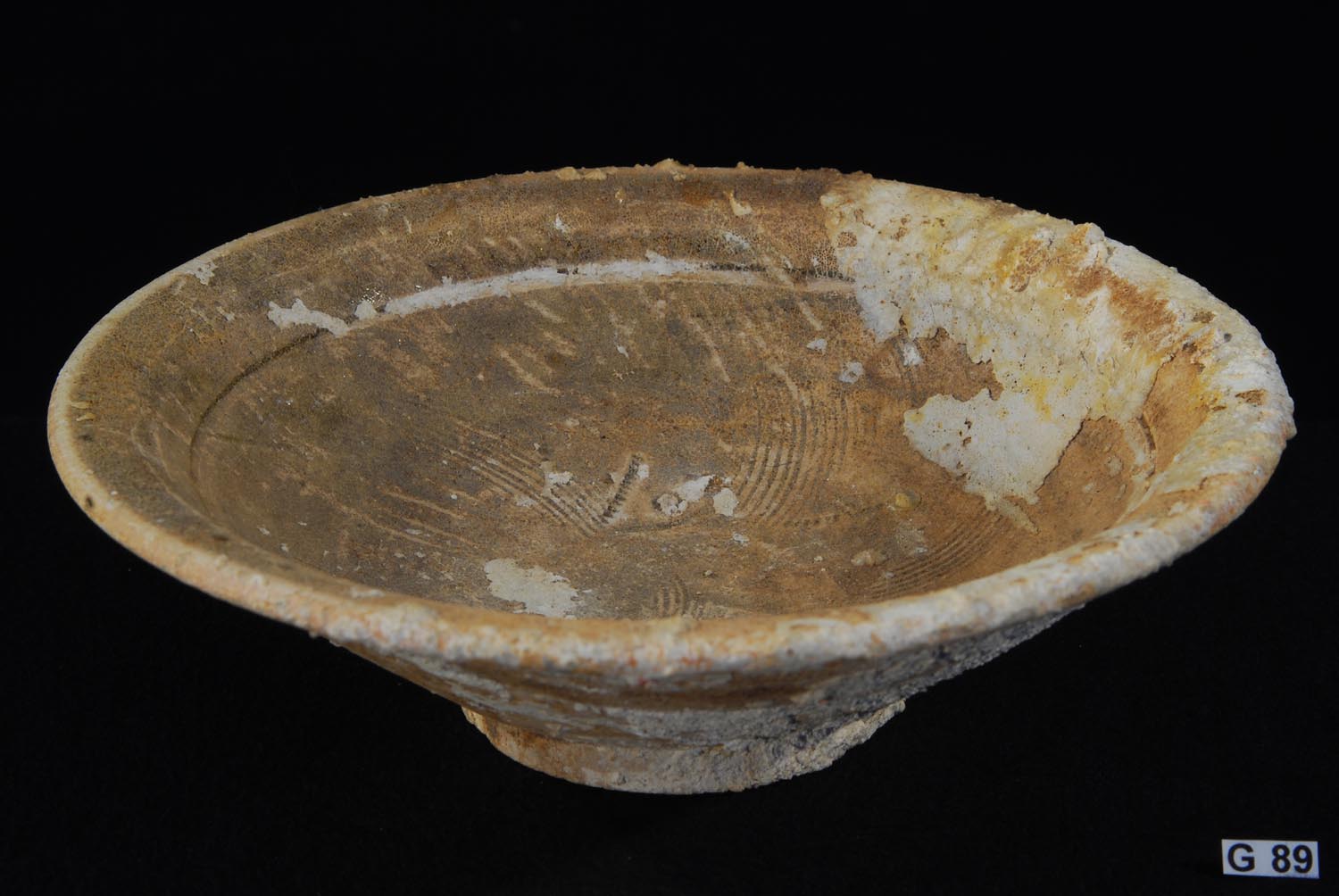
Image Code G89 |
Catalogue No.: G89
Description: Sung Dynasty Shipwreck Pottery. As
recovered from the wreck of a Chinese merchant junk sunk in the South China
Sea west of Palawan Island in the Philippines during the Northern Sung
Dynasty (960 - 1127 AD). During the Sung Dynasty Chinese merchant vessels
had begun carrying goods from China to the Philippine Islands and south-east
Asia were Chinese colonies had been established. These pieces retain traces
of coral encrustation, evidence of their period of exposure on the sea floor
for nearly 1000 years.
Size: 145 x 45mm. |

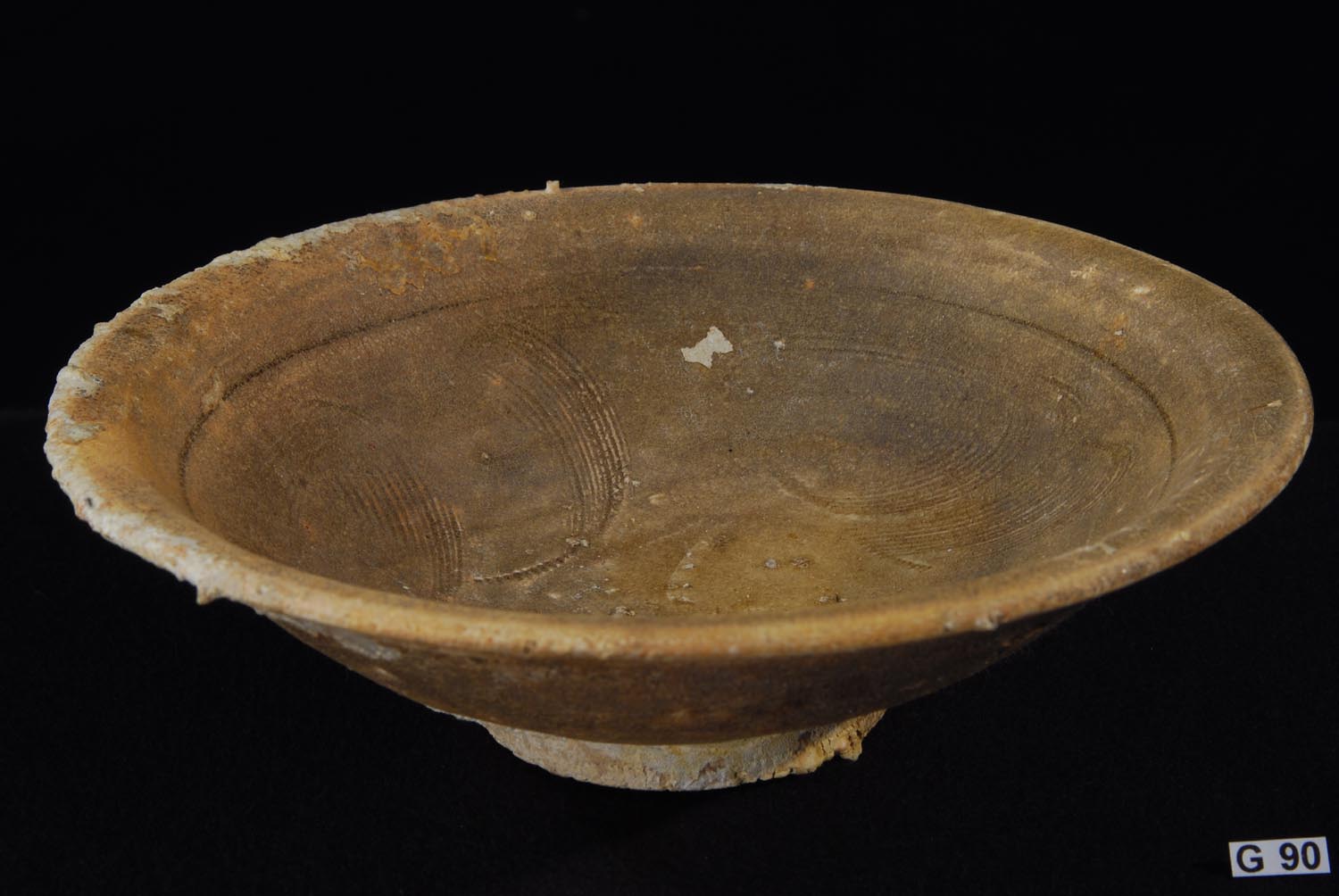
Image Code G90 |
Catalogue No.: G90
Description: Sung Dynasty Shipwreck Pottery. As
recovered from the wreck of a Chinese merchant junk sunk in the South China
Sea west of Palawan Island in the Philippines during the Northern Sung
Dynasty (960 - 1127 AD). During the Sung Dynasty Chinese merchant vessels
had begun carrying goods from China to the Philippine Islands and south-east
Asia were Chinese colonies had been established. These pieces retain traces
of coral encrustation, evidence of their period of exposure on the sea floor
for nearly 1000 years.
Size: 150 x 45mm. |

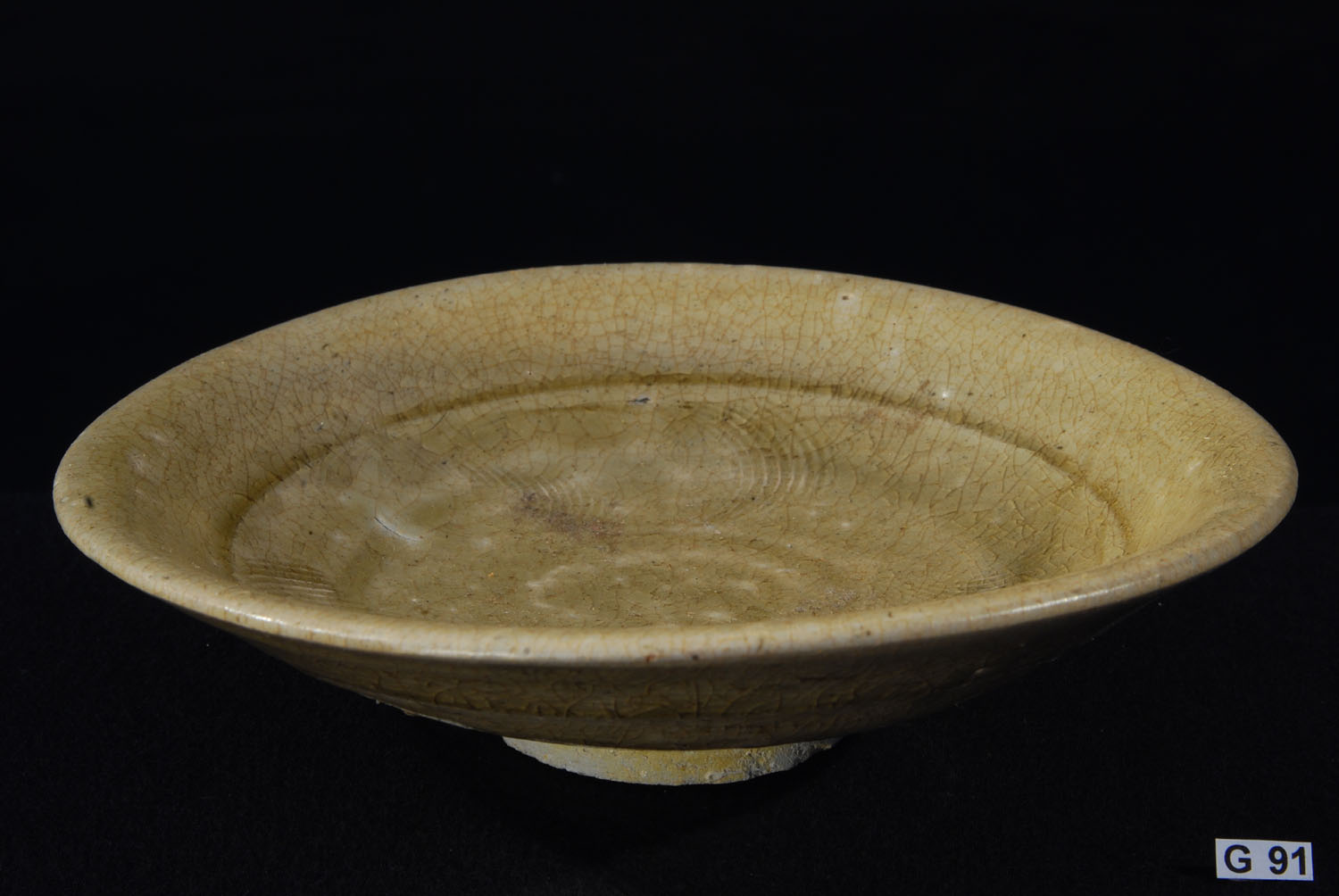
Image Code G91 |
Catalogue No.: G91
Description: Sung Dynasty Shipwreck Pottery. As
recovered from the wreck of a Chinese merchant junk sunk in the South China
Sea west of Palawan Island in the Philippines during the Northern Sung
Dynasty (960 - 1127 AD). During the Sung Dynasty Chinese merchant vessels
had begun carrying goods from China to the Philippine Islands and south-east
Asia were Chinese colonies had been established. These pieces retain traces
of coral encrustation, evidence of their period of exposure on the sea floor
for nearly 1000 years.
Size: 146 x 40mm. |

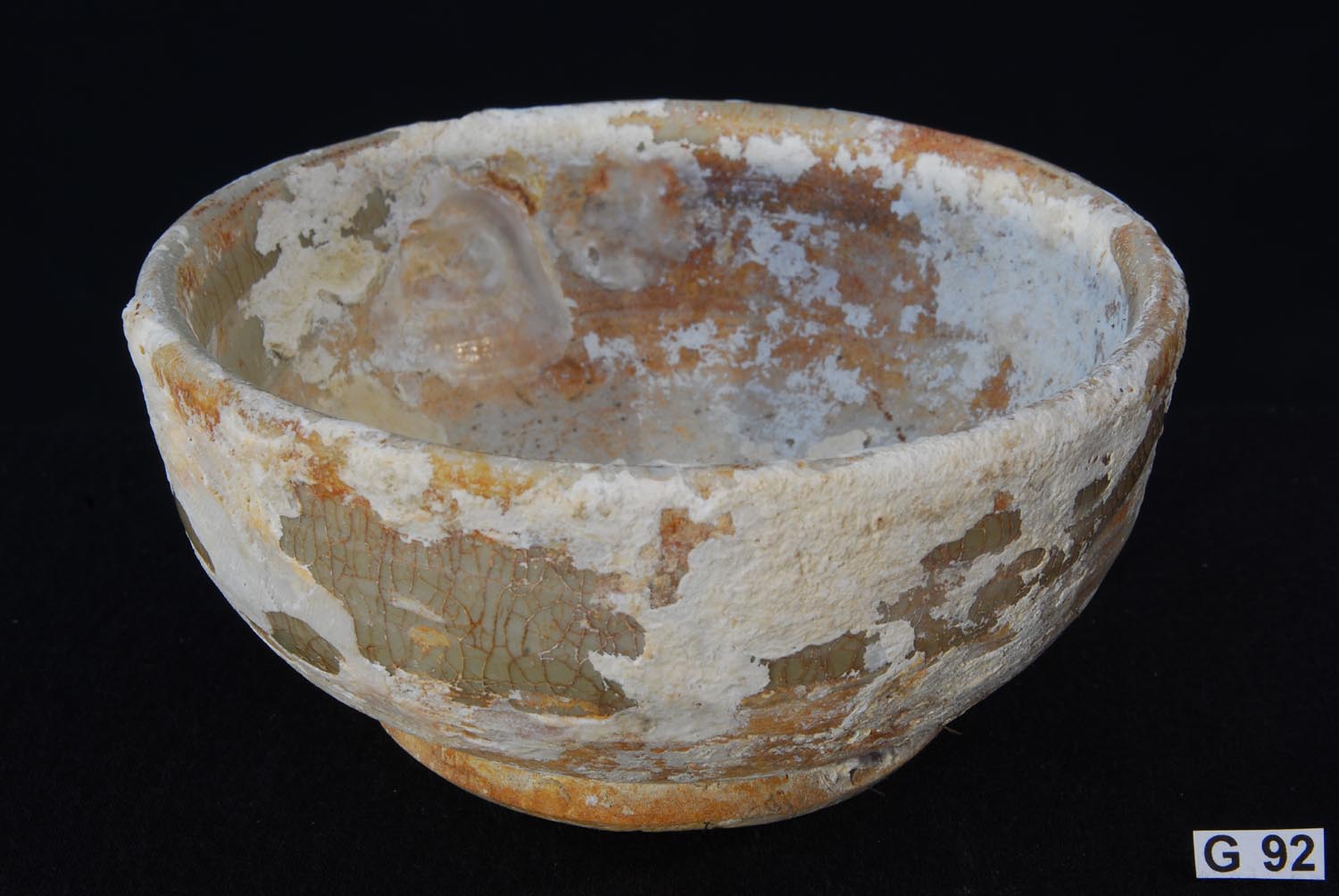
Image Code G92 |
Catalogue No.: G92
Description: Sung Dynasty Shipwreck Pottery. As
recovered from the wreck of a Chinese merchant junk sunk in the South China
Sea west of Palawan Island in the Philippines during the Northern Sung
Dynasty (960 - 1127 AD). During the Sung Dynasty Chinese merchant vessels
had begun carrying goods from China to the Philippine Islands and south-east
Asia were Chinese colonies had been established. These pieces retain traces
of coral encrustation, evidence of their period of exposure on the sea floor
for nearly 1000 years.
Size: 92 x 45mm. |
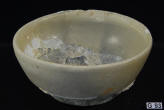
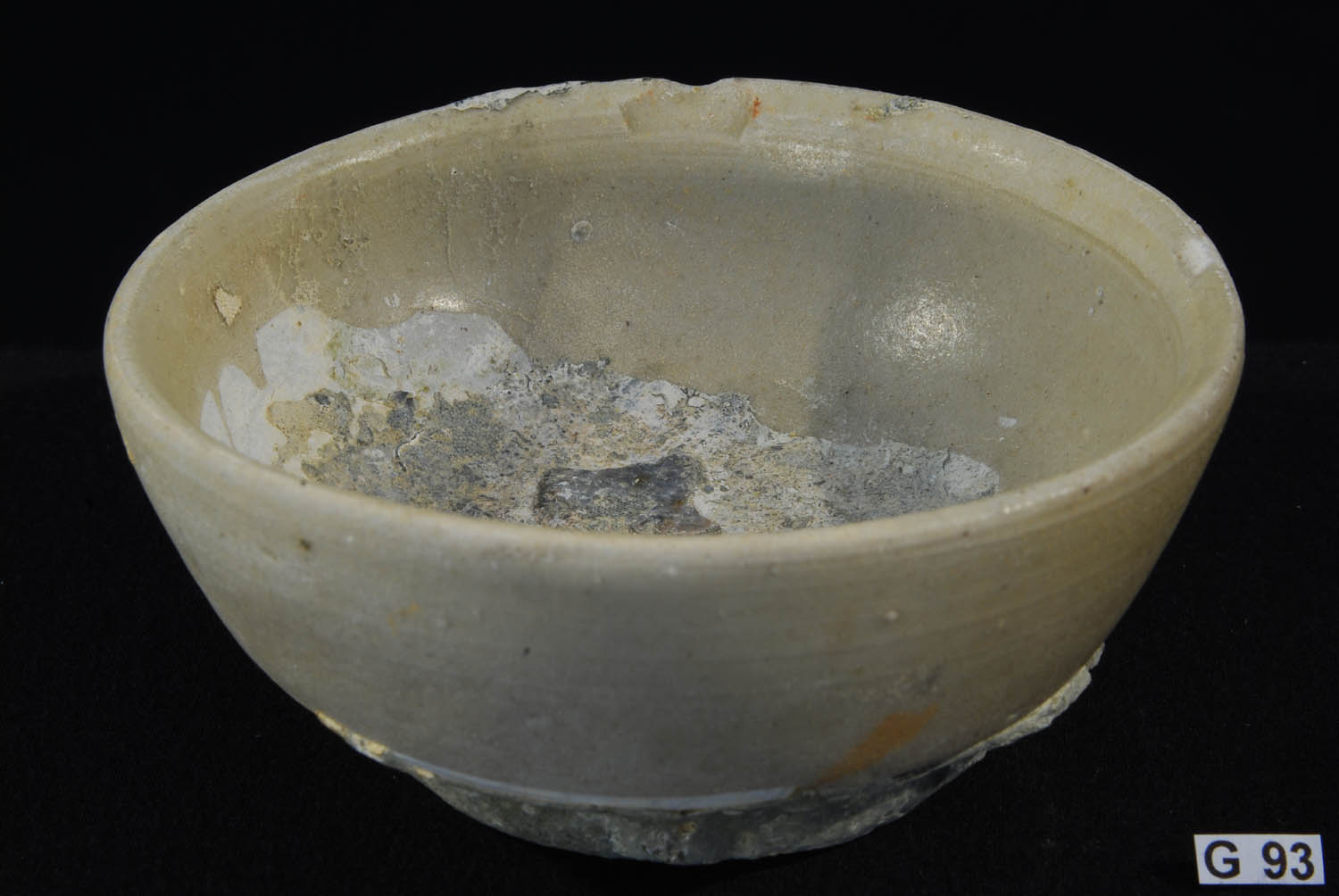
Image Code G93 |
Catalogue No.: G93
Description: Sung Dynasty Shipwreck Pottery. As
recovered from the wreck of a Chinese merchant junk sunk in the South China
Sea west of Palawan Island in the Philippines during the Northern Sung
Dynasty (960 - 1127 AD). During the Sung Dynasty Chinese merchant vessels
had begun carrying goods from China to the Philippine Islands and south-east
Asia were Chinese colonies had been established. These pieces retain traces
of coral encrustation, evidence of their period of exposure on the sea floor
for nearly 1000 years.
Size: 92 x 40mm. |

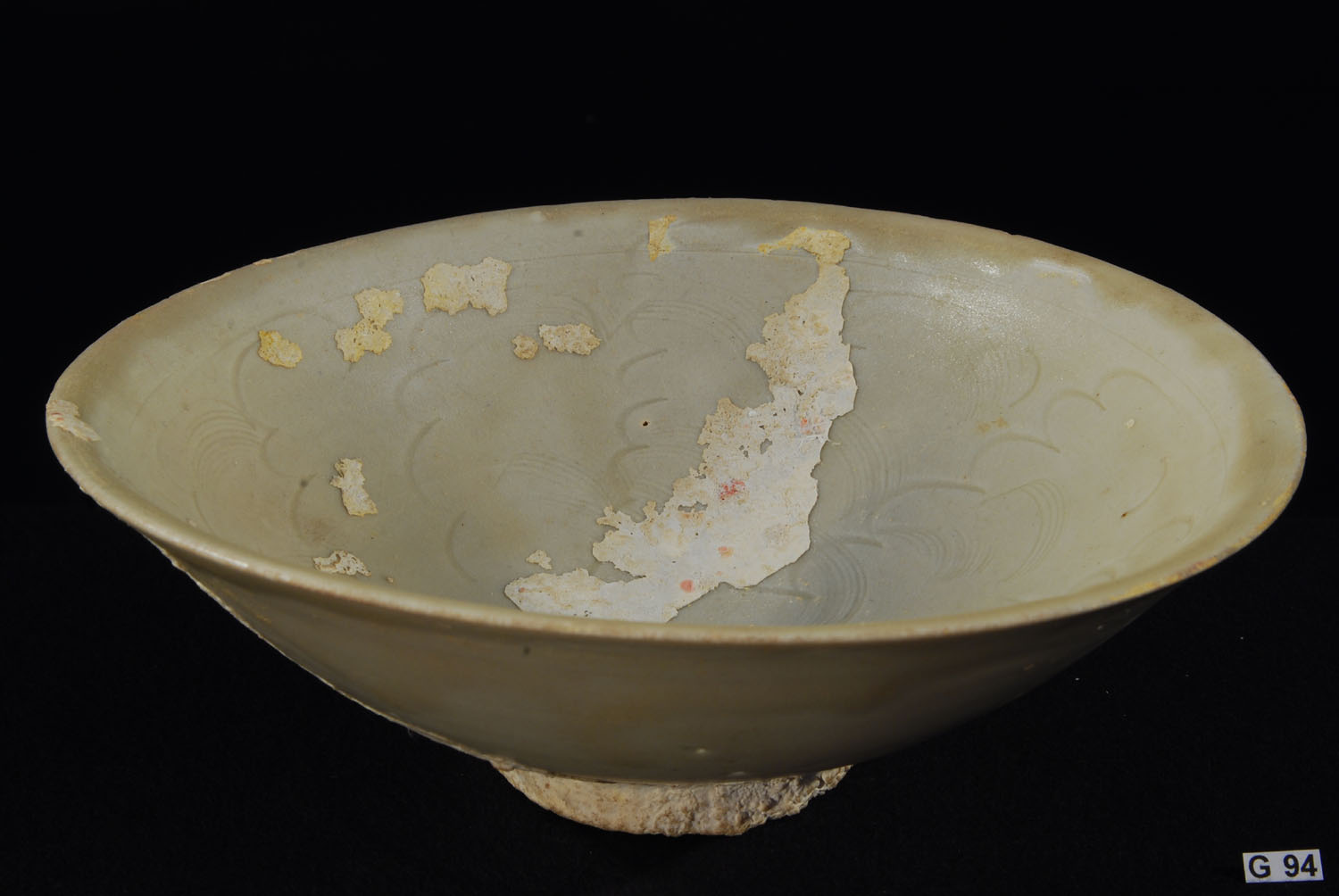
Image Code G94 |
Catalogue No.: G94
Description: Sung Dynasty Shipwreck Pottery. As
recovered from the wreck of a Chinese merchant junk sunk in the South China
Sea west of Palawan Island in the Philippines during the Northern Sung
Dynasty (960 - 1127 AD). During the Sung Dynasty Chinese merchant vessels
had begun carrying goods from China to the Philippine Islands and south-east
Asia were Chinese colonies had been established. These pieces retain traces
of coral encrustation, evidence of their period of exposure on the sea floor
for nearly 1000 years.
Size: 171 x 60mm. |

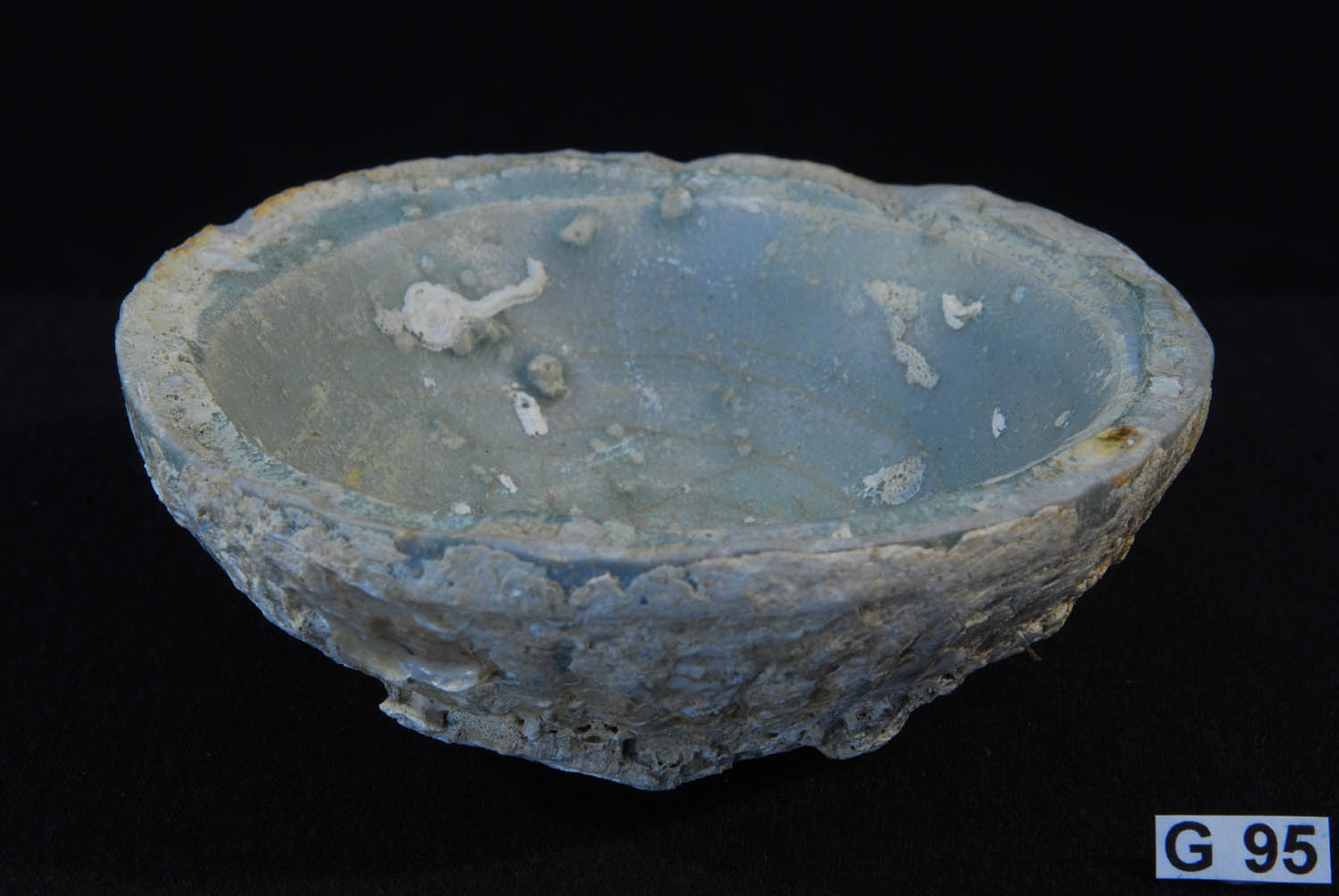
Image Code G95 |
Catalogue No.: G95
Description: Sung Dynasty Shipwreck Pottery. As
recovered from the wreck of a Chinese merchant junk sunk in the South China
Sea west of Palawan Island in the Philippines during the Northern Sung
Dynasty (960 - 1127 AD). During the Sung Dynasty Chinese merchant vessels
had begun carrying goods from China to the Philippine Islands and south-east
Asia were Chinese colonies had been established. These pieces retain traces
of coral encrustation, evidence of their period of exposure on the sea floor
for nearly 1000 years.
Size: 72 x 20mm. |
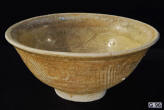
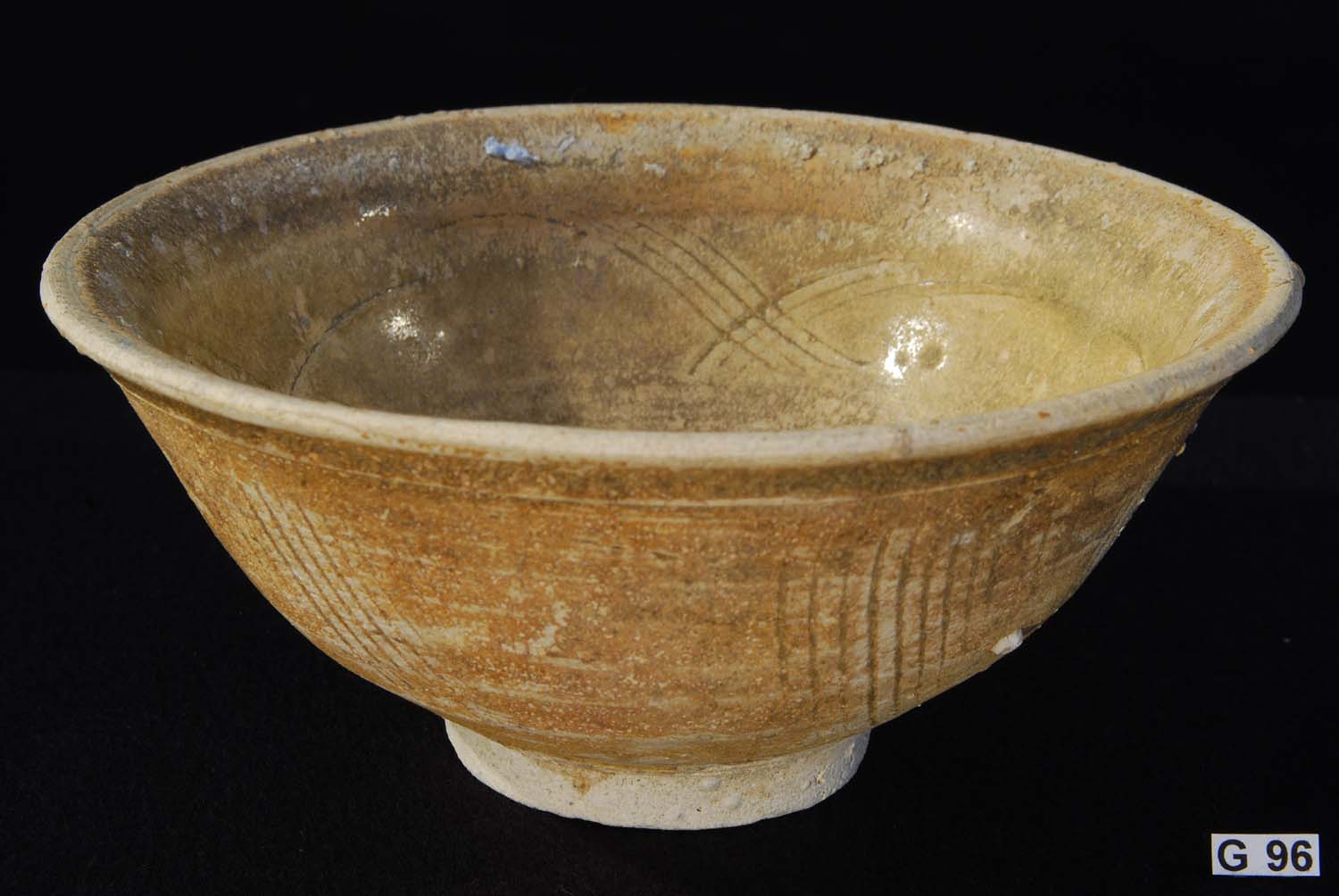
Image Code G96 |
Catalogue No.: G96
Description: Sung Dynasty Shipwreck Pottery. As
recovered from the wreck of a Chinese merchant junk sunk in the South China
Sea west of Palawan Island in the Philippines during the Northern Sung
Dynasty (960 - 1127 AD). During the Sung Dynasty Chinese merchant vessels
had begun carrying goods from China to the Philippine Islands and south-east
Asia were Chinese colonies had been established. These pieces retain traces
of coral encrustation, evidence of their period of exposure on the sea floor
for nearly 1000 years.
Size: 122 x 60mm. |
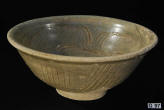
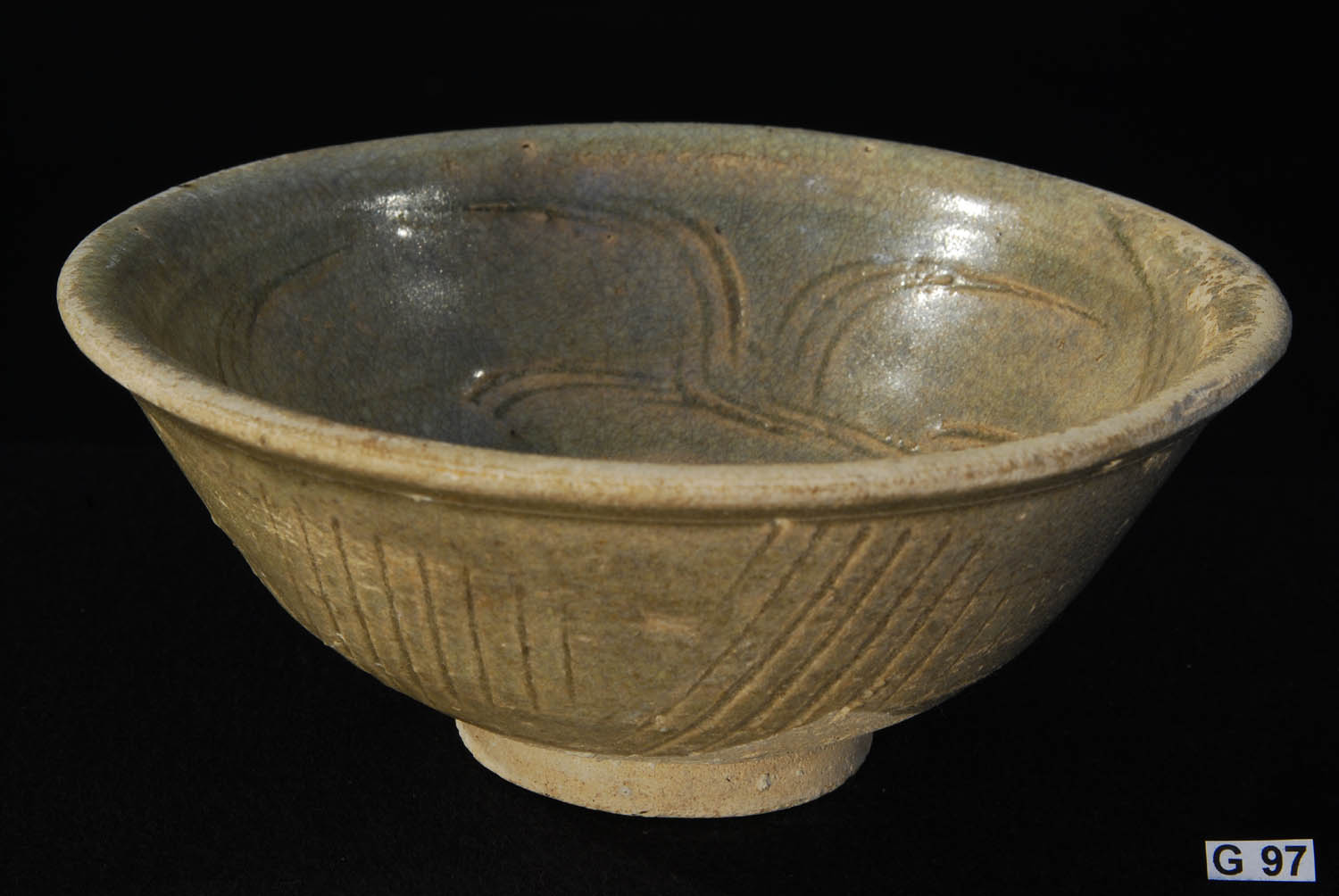
Image Code G97 |
Catalogue No.: G97
Description: Sung Dynasty Shipwreck Pottery. As
recovered from the wreck of a Chinese merchant junk sunk in the South China
Sea west of Palawan Island in the Philippines during the Northern Sung
Dynasty (960 - 1127 AD). During the Sung Dynasty Chinese merchant vessels
had begun carrying goods from China to the Philippine Islands and south-east
Asia were Chinese colonies had been established. These pieces retain traces
of coral encrustation, evidence of their period of exposure on the sea floor
for nearly 1000 years.
Size: 130 x 55mm. |

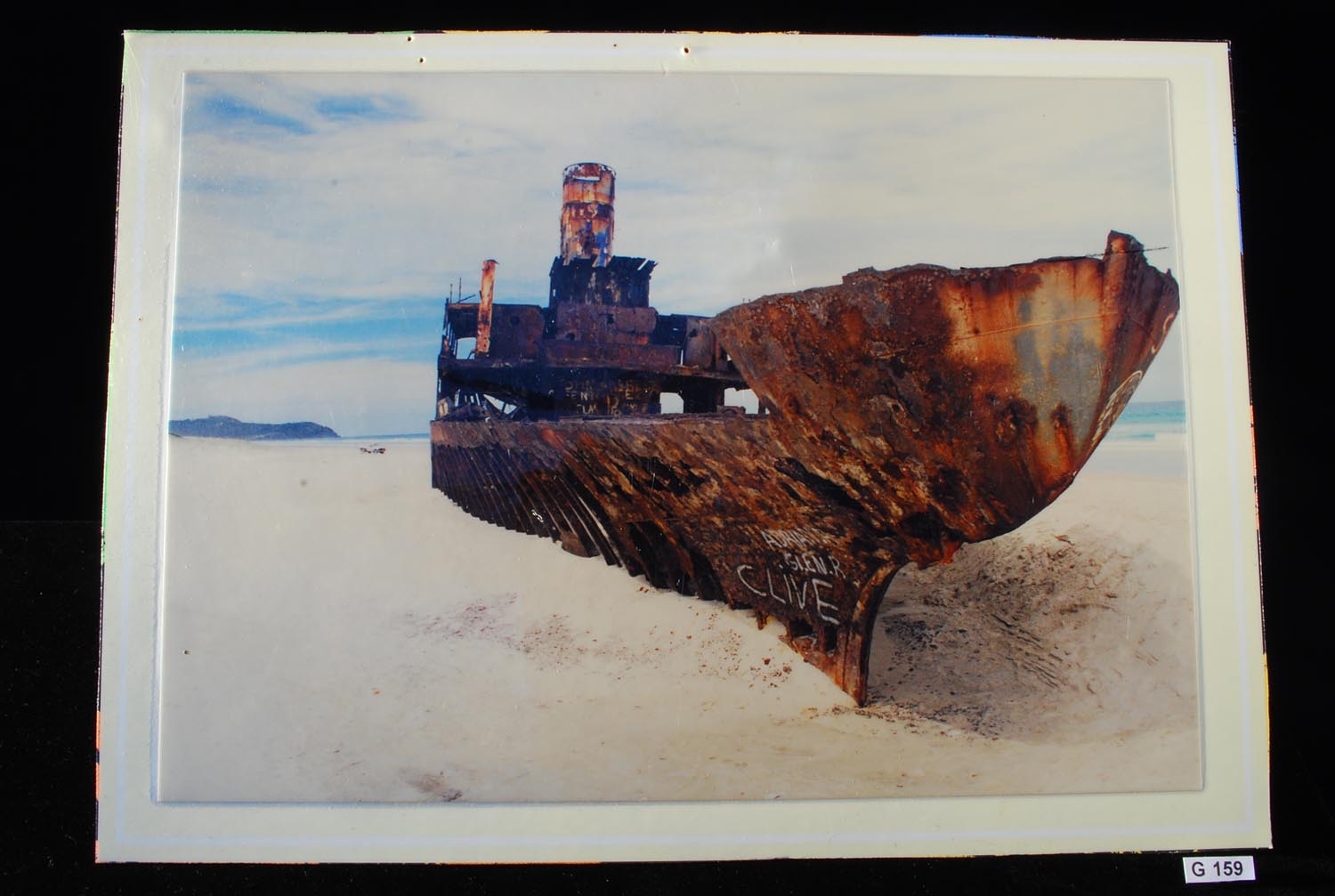
Image Code G159 |
Catalogue No.: G159
Description: Old Photo of a Shipwreck.
Size: 172 X 240mm. |

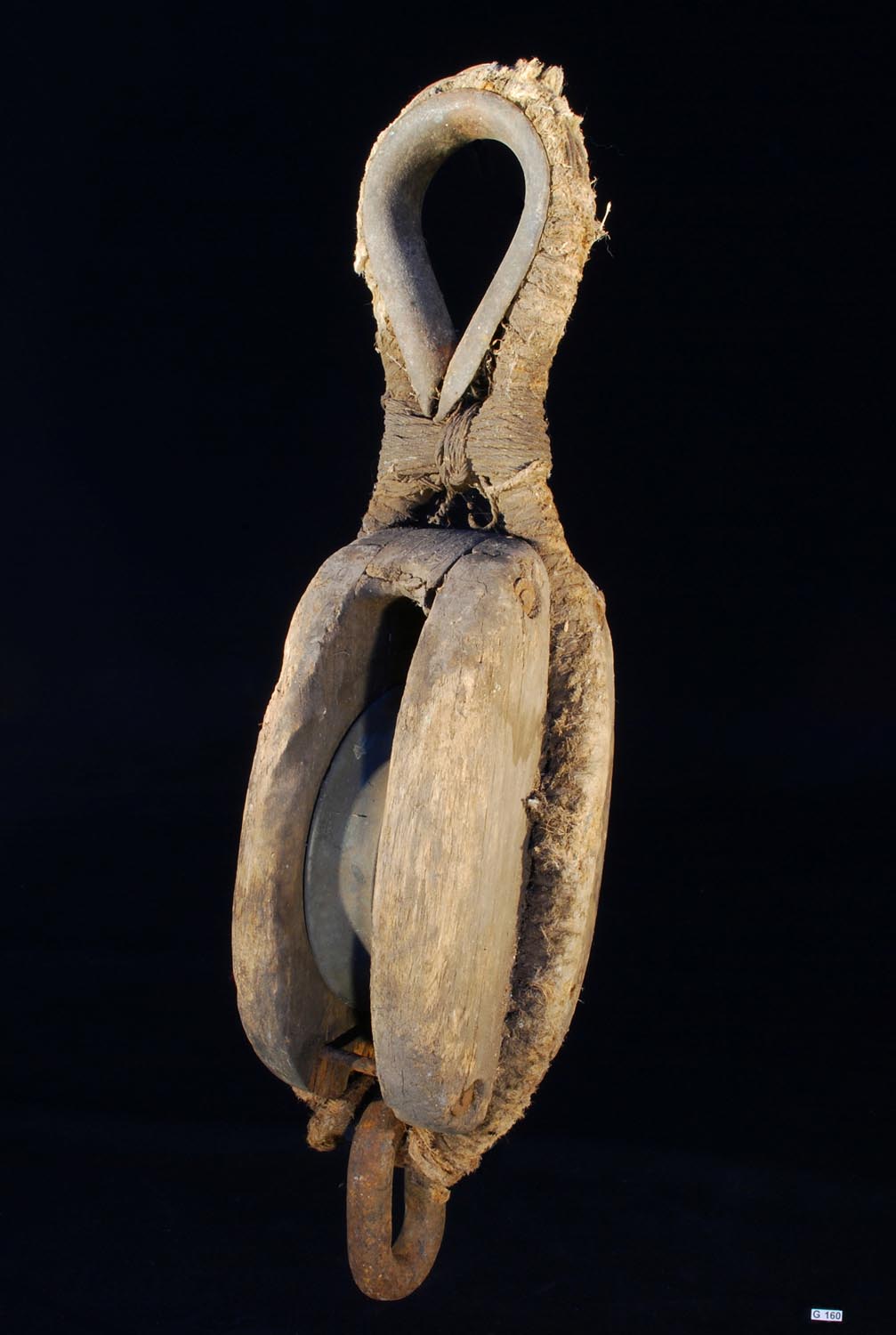
Image Code G160 |
Catalogue No.: G160
Description: Shipwreck Item. Single-sheave pulley.
Ex-Western Australian
Coast, 19th century.
Size: 435 X 133mm. |

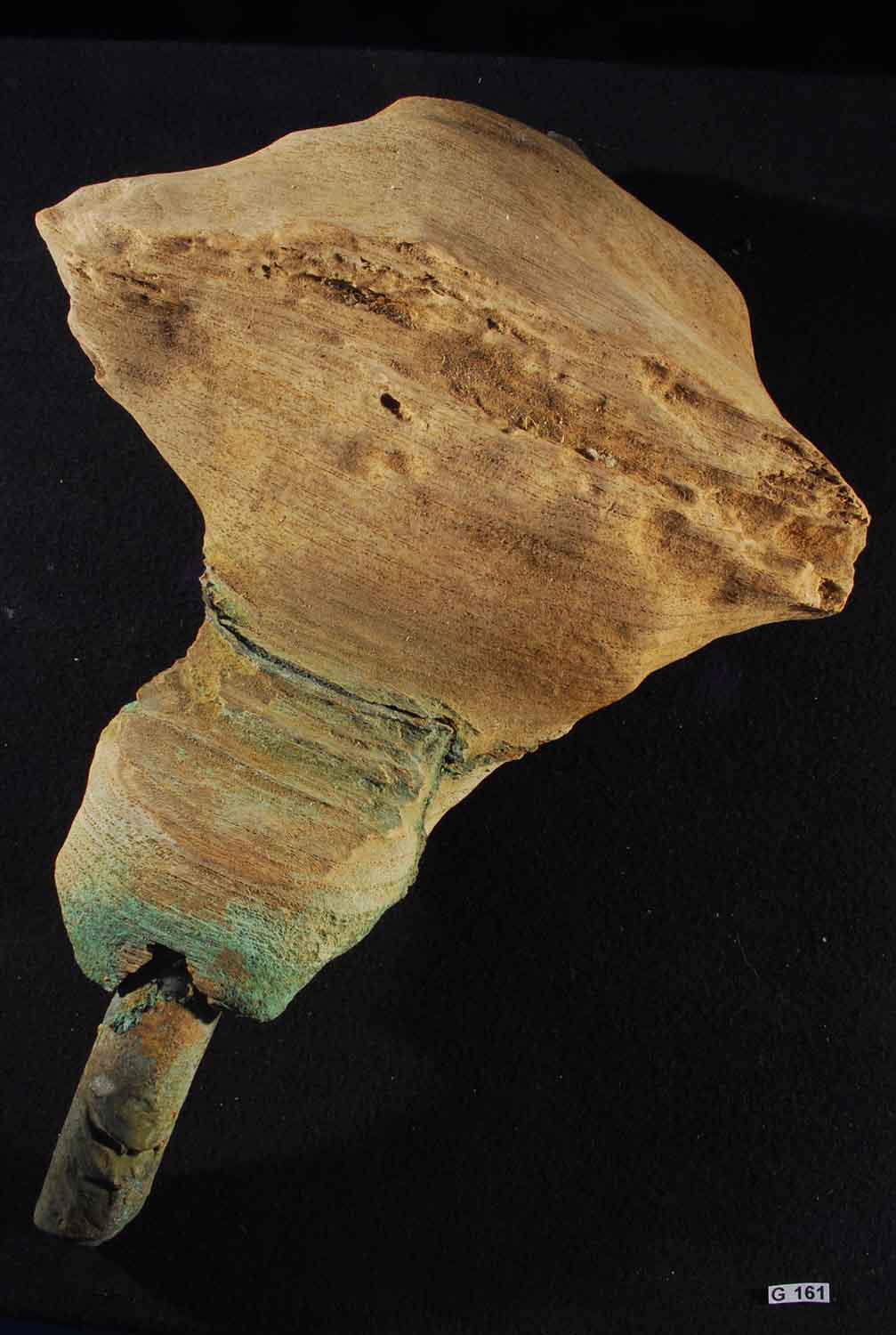
Image Code G161 |
Catalogue No.: G161
Description: Shipwreck Item, ex-Western Australian
Coast, 19th century.
Size: 280 X 190mm. |

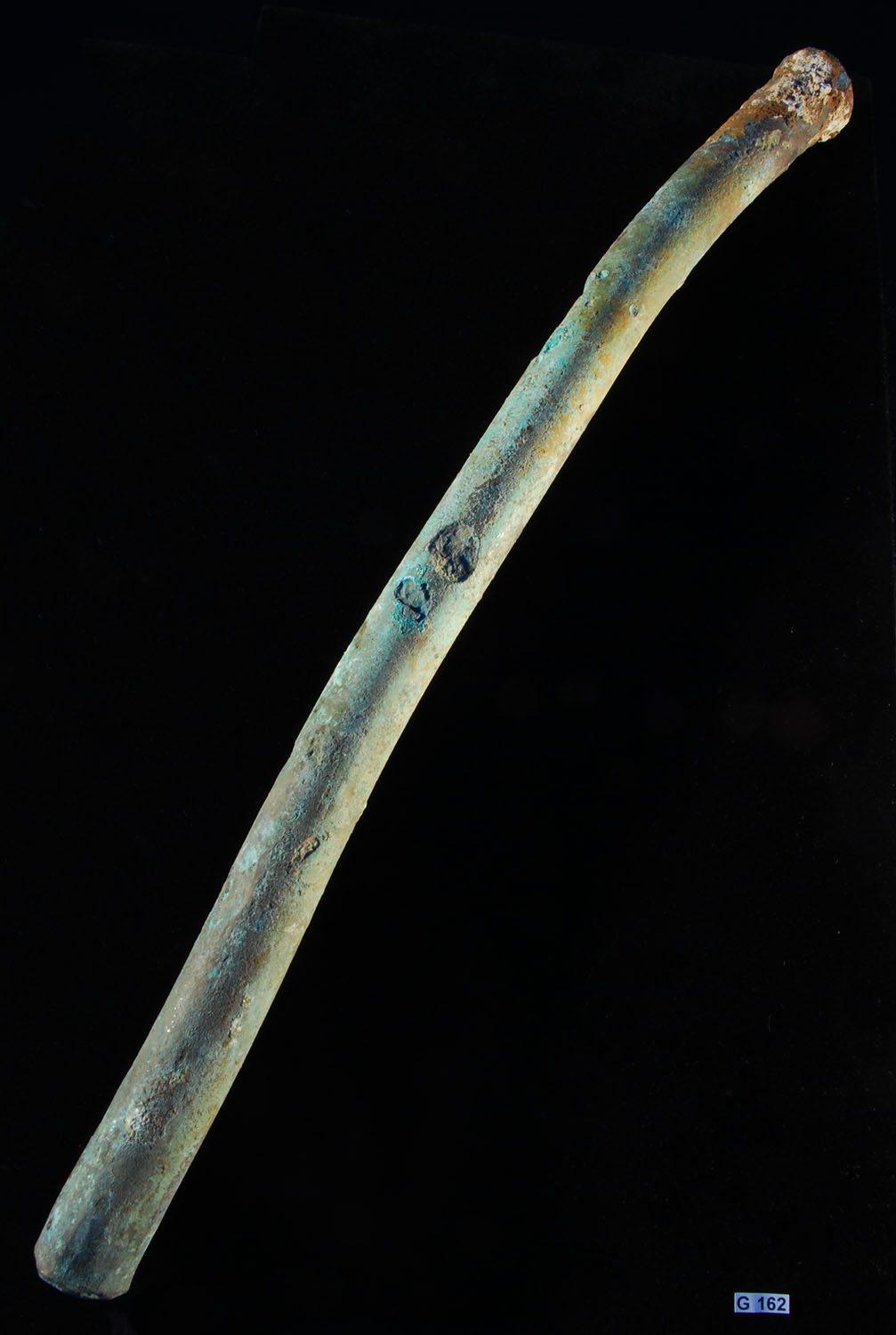
Image Code G162 |
Catalogue No.: G162
Description: Shipwreck Item, ex-Western Australian
Coast, 19th century.
Size: 360 X 21mm. |
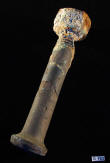
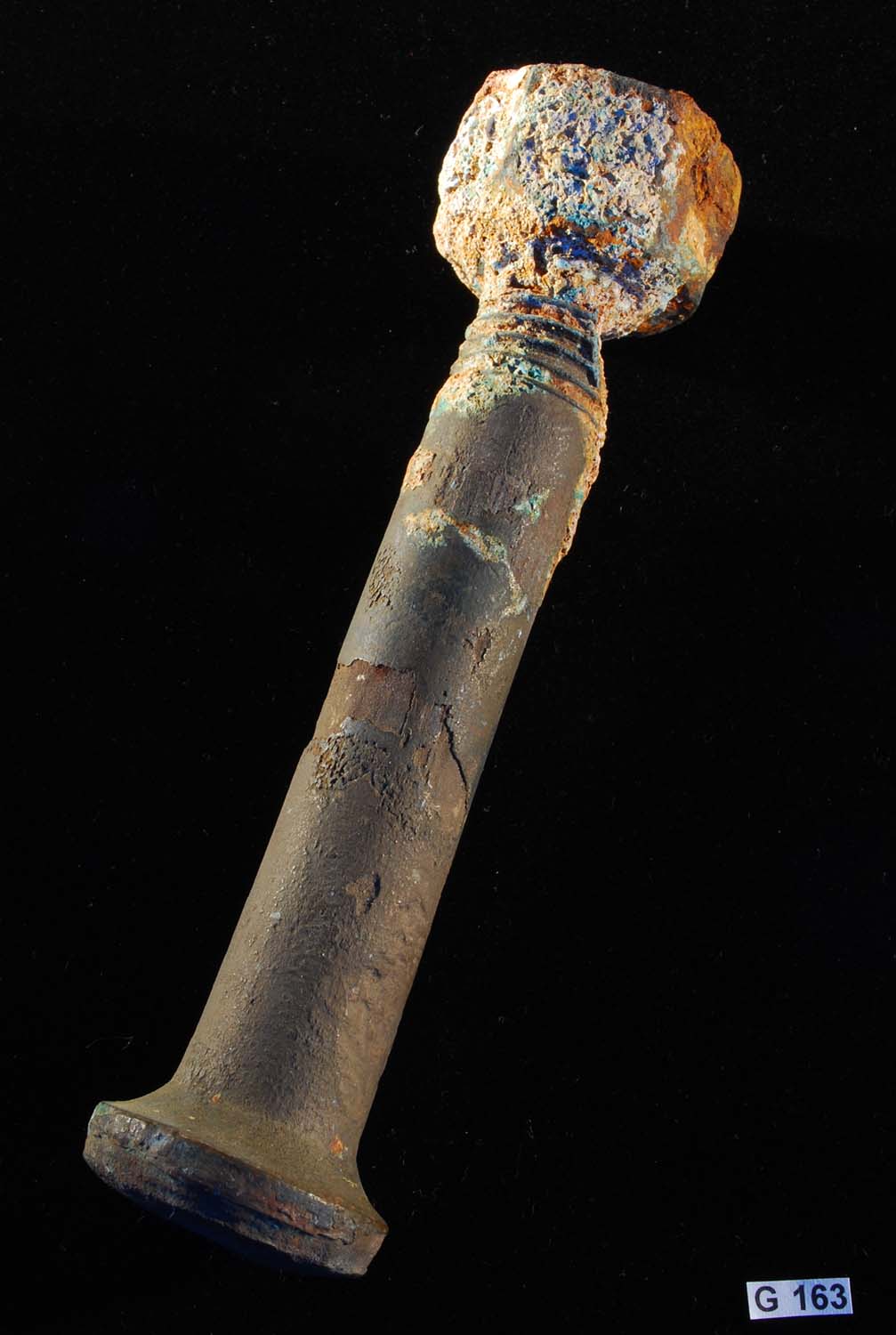
Image Code G163 |
Catalogue No.: G163
Description: Shipwreck Item, ex-Western Australian
Coast, 19th century.
Size: 150 X 38mm. |

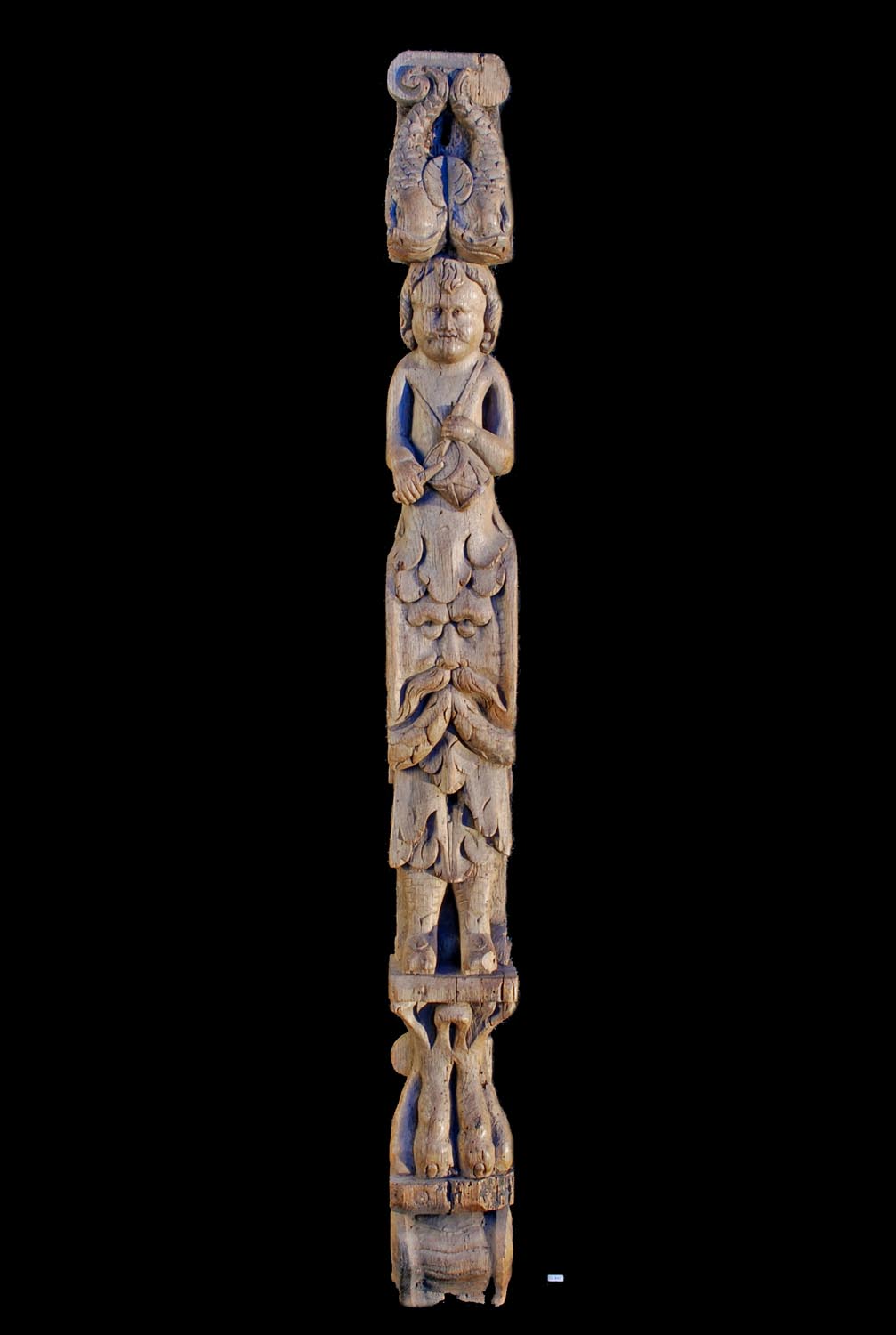
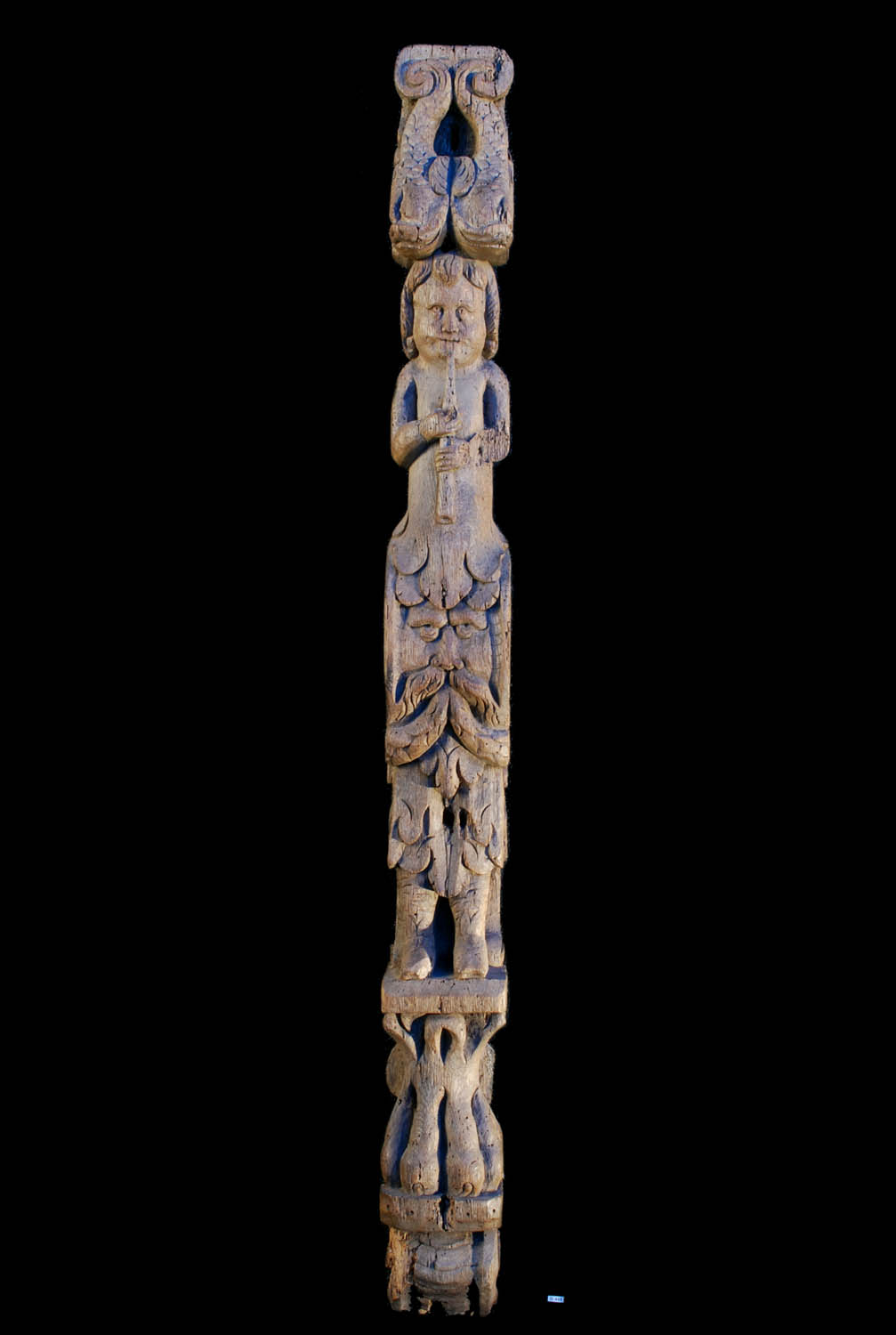
Image Code G447 |
Catalogue No.: G447
Description: Early Dutch oak carving from a ship.
Impressive large Flemish style Dutch carving in the form of a straight edged
plinth. This and a further three pieces depicting mythical putties playing
musical instruments with elaborate and ornate scrolled carving and acanthus
leaves. These pieces were recovered from a wreck of a Dutch ship (believed
to be the Zuytdorp), wrecked off the coast of Western Australia in 1712.
These elaborate and well preserved oak carvings closely resemble similar
pieces known to have been recovered from the sister ships Padmos and Blydorp.
It was not until 1927 that a stockman from Murchison House Station in
Western Australia discovered the wreckage of the ship at the foot of the
cliffs some 40 miles north of the mouth of the Murchison River. He
recognised at that time, that the wreckage must have been that of a large
wooden ship which had struck the reef in front of the cliffs many years
prior. It was not until late 1957 that confirmation was obtained proving
conclusively that the wreck was that of the Zuytdorp, a ship owned by the
Dutch East India Company, which had been lost without trace between the Cape
of Good Hope and Batavia in the winter of 1712. The golden years of the
Dutch East India Company, when it returned enormous profits, were during the
17th century and the early part of the 18th century. During these years the
company was the greatest monopolistic trading concern in the world, and it
exerted unprecedented power in the far east. However, by 1740 it was clear
the company was in a state of decline. Profits diminished, due largely to
widespread corruption, and over the succeeding years the position steadily
worsened, so that the company had become quite bankrupt by the time of its
final dissolution on 31st December 1799. This and the accompanying 3
carved consoles were, up until approximately 1990, in the collection of Mr
Lou Whiteman, who is known to have had significant pastoral interests in the
Murchison region of Western Australia. Of immense historical significance
and rarely encountered in this condition, as a shipwreck relic.
Size: 1020 X 100mm. |

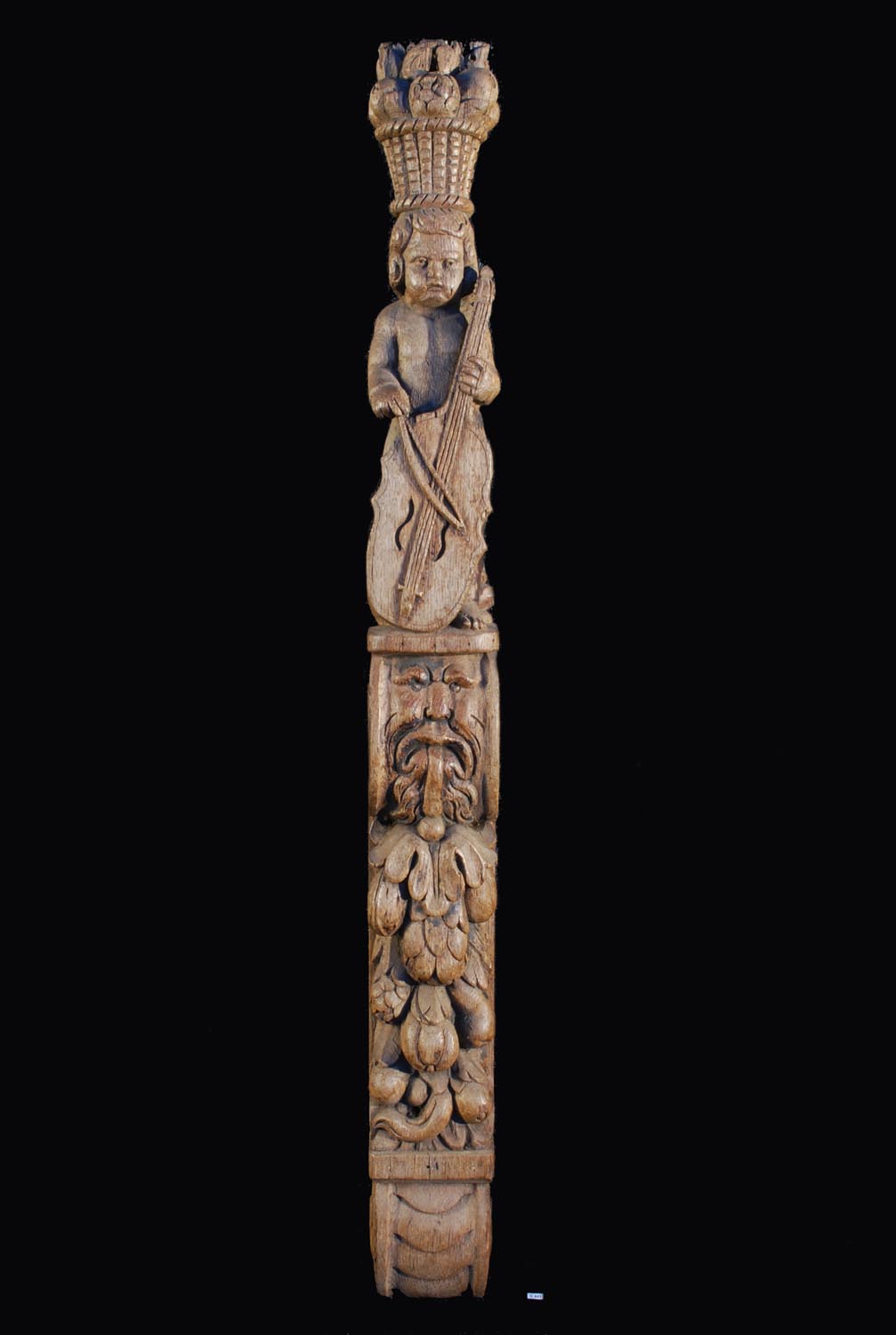
Image Code G448 |
Catalogue No.: G448
Description: Early Dutch oak carving from a ship.
Impressive large Flemish style Dutch carving in the form of a straight edged
plinth. This and a further three pieces depicting mythical putties playing
musical instruments with elaborate and ornate scrolled carving and acanthus
leaves. These pieces were recovered from a wreck of a Dutch ship (believed
to be the Zuytdorp), wrecked off the coast of Western Australia in 1712.
These elaborate and well preserved oak carvings closely resemble similar
pieces known to have been recovered from the sister ships Padmos and Blydorp.
It was not until 1927 that a stockman from Murchison House Station in
Western Australia discovered the wreckage of the ship at the foot of the
cliffs some 40 miles north of the mouth of the Murchison River. He
recognised at that time, that the wreckage must have been that of a large
wooden ship which had struck the reef in front of the cliffs many years
prior. It was not until late 1957 that confirmation was obtained proving
conclusively that the wreck was that of the Zuytdorp, a ship owned by the
Dutch East India Company, which had been lost without trace between the Cape
of Good Hope and Batavia in the winter of 1712. The golden years of the
Dutch East India Company, when it returned enormous profits, were during the
17th century and the early part of the 18th century. During these years the
company was the greatest monopolistic trading concern in the world, and it
exerted unprecedented power in the far east. However, by 1740 it was clear
the company was in a state of decline. Profits diminished, due largely to
widespread corruption, and over the succeeding years the position steadily
worsened, so that the company had become quite bankrupt by the time of its
final dissolution on 31st December 1799. This and the accompanying 3
carved consoles were, up until approximately 1990, in the collection of Mr
Lou Whiteman, who is known to have had significant pastoral interests in the
Murchison region of Western Australia. Of immense historical significance
and rarely encountered in this condition, as a shipwreck relic.
Size: 1010 X 97mm. |

Image Code G449 |
Catalogue No.: G449
Description: Early Dutch oak carving from a ship.
Impressive large Flemish style Dutch carving in the form of a straight edged
plinth. This and a further three pieces depicting mythical putties playing
musical instruments with elaborate and ornate scrolled carving and acanthus
leaves. These pieces were recovered from a wreck of a Dutch ship (believed
to be the Zuytdorp), wrecked off the coast of Western Australia in 1712.
These elaborate and well preserved oak carvings closely resemble similar
pieces known to have been recovered from the sister ships Padmos and Blydorp.
It was not until 1927 that a stockman from Murchison House Station in
Western Australia discovered the wreckage of the ship at the foot of the
cliffs some 40 miles north of the mouth of the Murchison River. He
recognised at that time, that the wreckage must have been that of a large
wooden ship which had struck the reef in front of the cliffs many years
prior. It was not until late 1957 that confirmation was obtained proving
conclusively that the wreck was that of the Zuytdorp, a ship owned by the
Dutch East India Company, which had been lost without trace between the Cape
of Good Hope and Batavia in the winter of 1712. The golden years of the
Dutch East India Company, when it returned enormous profits, were during the
17th century and the early part of the 18th century. During these years the
company was the greatest monopolistic trading concern in the world, and it
exerted unprecedented power in the far east. However, by 1740 it was clear
the company was in a state of decline. Profits diminished, due largely to
widespread corruption, and over the succeeding years the position steadily
worsened, so that the company had become quite bankrupt by the time of its
final dissolution on 31st December 1799. This and the accompanying 3
carved consoles were, up until approximately 1990, in the collection of Mr
Lou Whiteman, who is known to have had significant pastoral interests in the
Murchison region of Western Australia. Of immense historical significance
and rarely encountered in this condition, as a shipwreck relic.
Size: 990 X 105mm. |

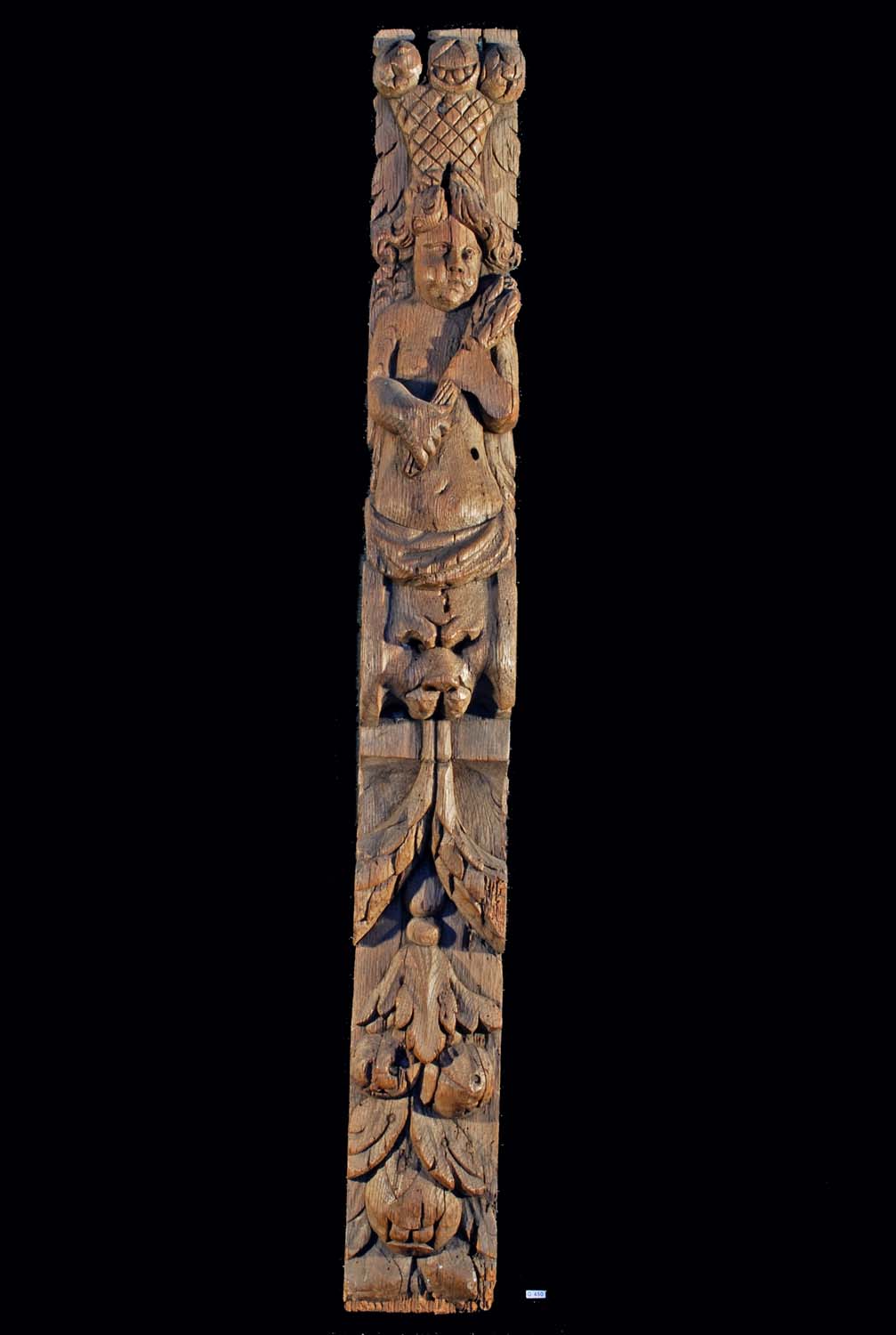
Image Code G450 |
Catalogue No.: G450
Description: Early Dutch oak carving from a ship.
Impressive large Flemish style Dutch carving in the form of a straight edged
plinth. This and a further three pieces depicting mythical putties playing
musical instruments with elaborate and ornate scrolled carving and acanthus
leaves. These pieces were recovered from a wreck of a Dutch ship (believed
to be the Zuytdorp), wrecked off the coast of Western Australia in 1712.
These elaborate and well preserved oak carvings closely resemble similar
pieces known to have been recovered from the sister ships Padmos and Blydorp.
It was not until 1927 that a stockman from Murchison House Station in
Western Australia discovered the wreckage of the ship at the foot of the
cliffs some 40 miles north of the mouth of the Murchison River. He
recognised at that time, that the wreckage must have been that of a large
wooden ship which had struck the reef in front of the cliffs many years
prior. It was not until late 1957 that confirmation was obtained proving
conclusively that the wreck was that of the Zuytdorp, a ship owned by the
Dutch East India Company, which had been lost without trace between the Cape
of Good Hope and Batavia in the winter of 1712. The golden years of the
Dutch East India Company, when it returned enormous profits, were during the
17th century and the early part of the 18th century. During these years the
company was the greatest monopolistic trading concern in the world, and it
exerted unprecedented power in the far east. However, by 1740 it was clear
the company was in a state of decline. Profits diminished, due largely to
widespread corruption, and over the succeeding years the position steadily
worsened, so that the company had become quite bankrupt by the time of its
final dissolution on 31st December 1799. This and the accompanying 3
carved consoles were, up until approximately 1990, in the collection of Mr
Lou Whiteman, who is known to have had significant pastoral interests in the
Murchison region of Western Australia. Of immense historical significance
and rarely encountered in this condition, as a shipwreck relic.
Size: 685 X 90mm. |
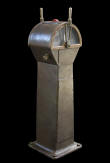
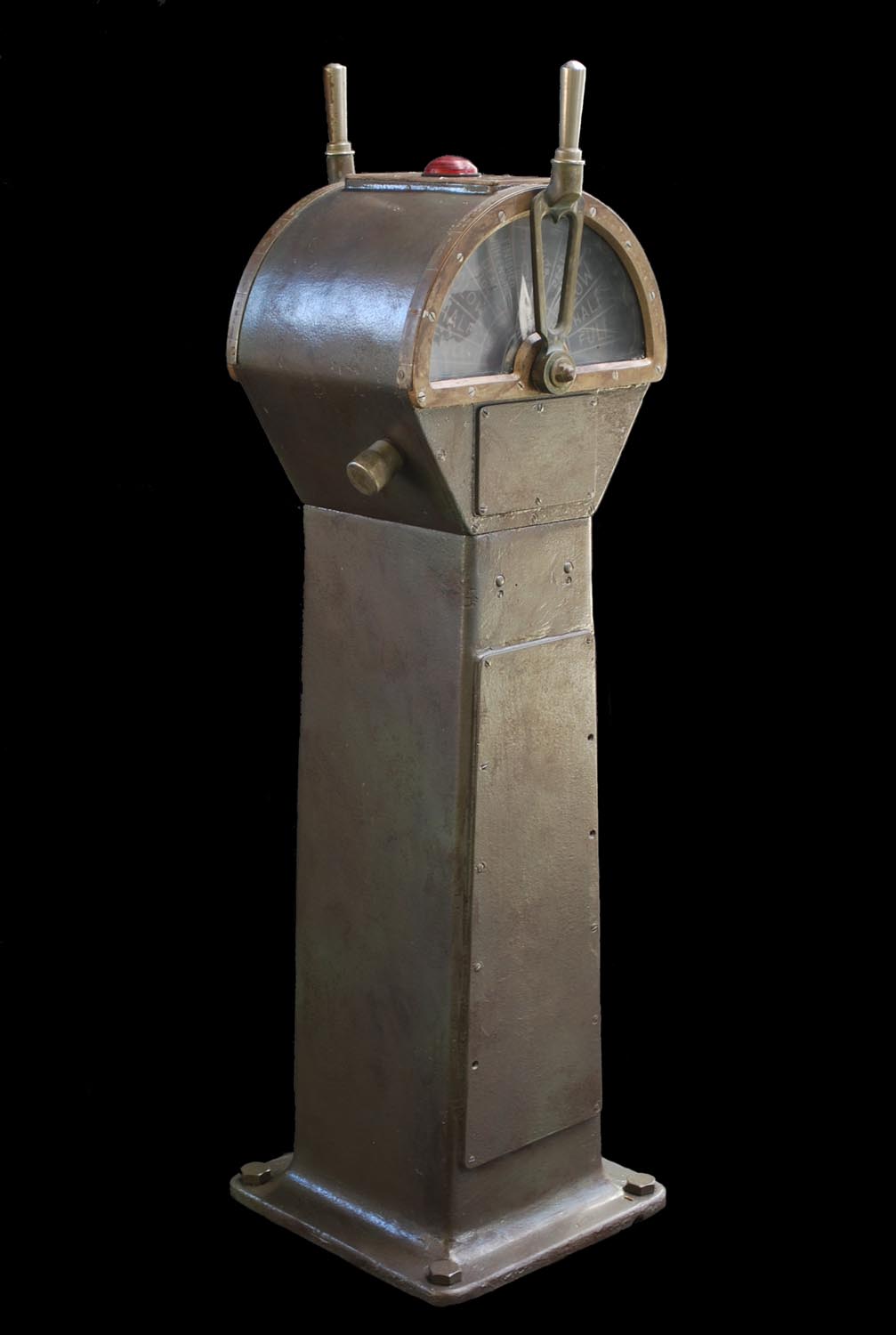
Image Code G484 |
Catalogue No.: G484
Description:
Ship’s Telegraph. 20th century
ship’s telegraph of solid construction in brass and nickel with grey
overpaint, the cables and wiring intact and the top designed to accommodate
a light.
Size: mm. |
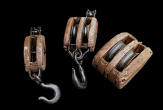
Image Code G485 |
Catalogue No.: G485
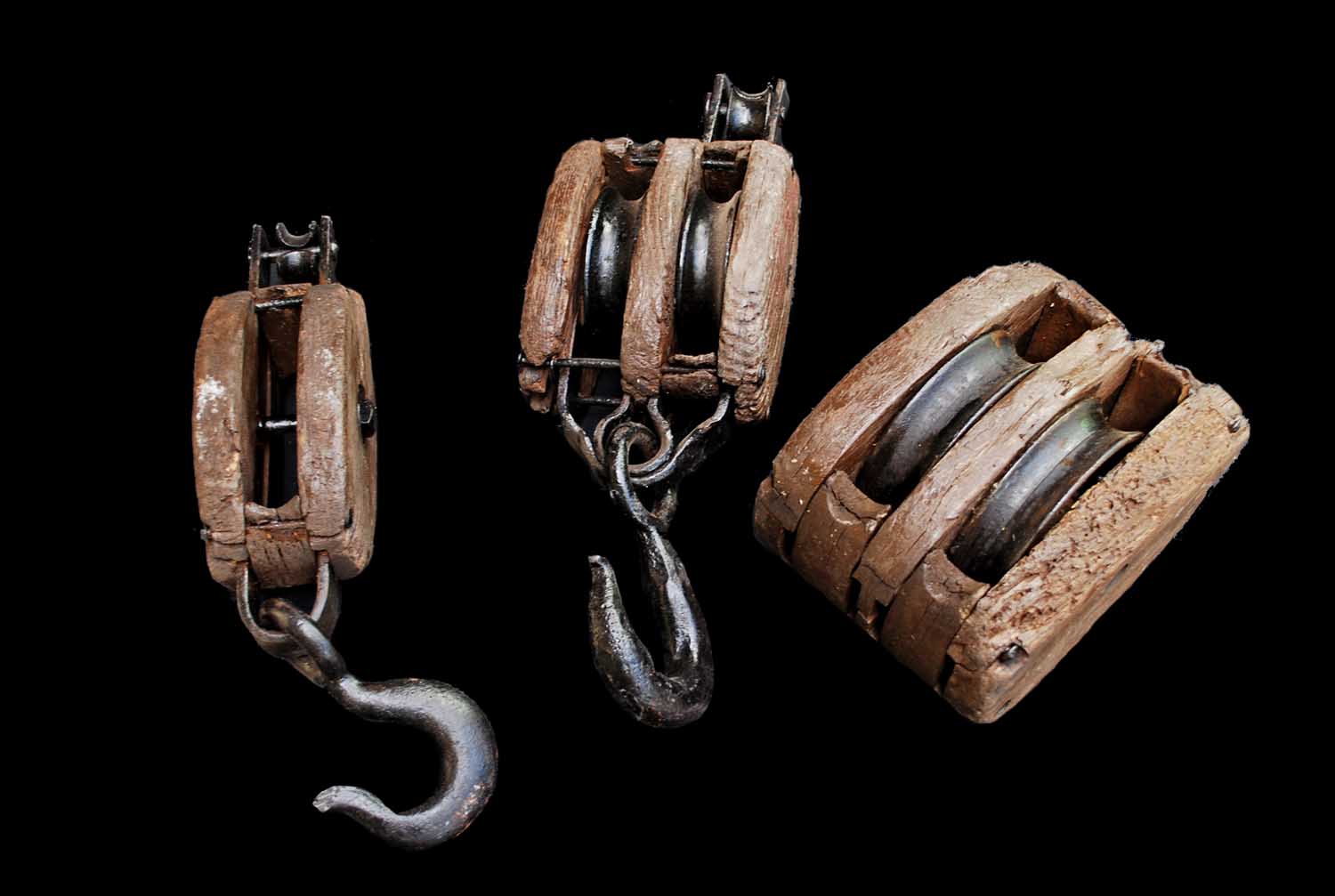
Description: Three Pulleys. One single sheave and
two double sheave pulleys.
Size: mm. |

Image Code F3184 |
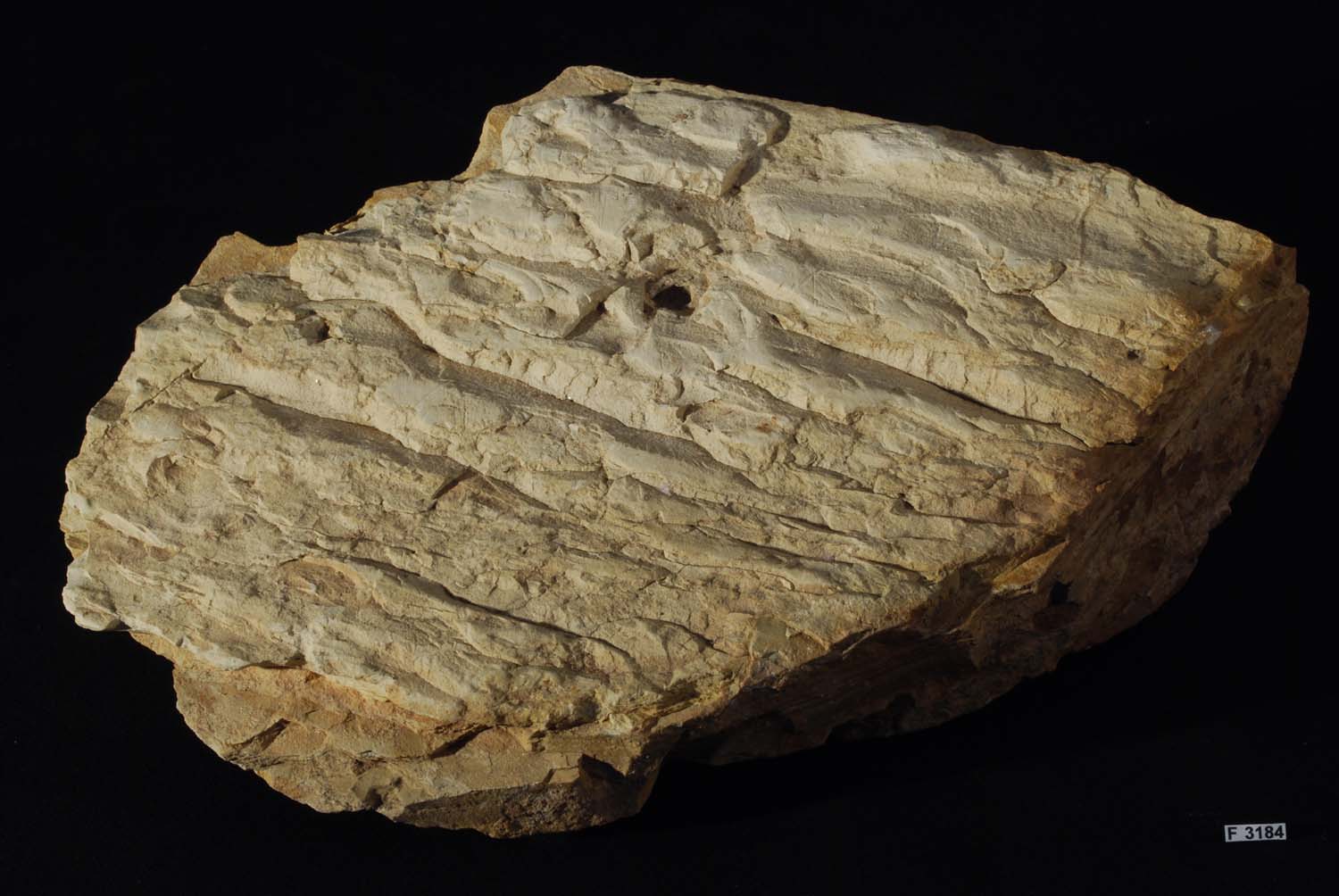
Catalogue No.: F3184
Description: Wave Ripple Marks in Sandstone.
Stirling Ranges, Western Australia.
Size: 301 x 202mm. |
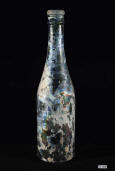
Image Code W409 |
Catalogue No.: W409
Description: Shipwreck Bottle.
Size: 250 X 67mm. |
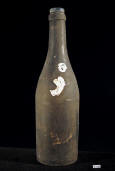
Image Code W445 |
Catalogue No.: W445
Description: Pre American Civil War Wine Bottles.
Possibly French, salvaged from a shipwreck in 1998.
Size: 305 X 87mm. |
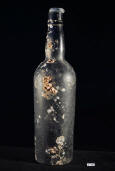
Image Code W450 |
Catalogue No.: W450
Description: Pre American Civil War Wine Bottles.
Possibly French, salvaged from a shipwreck in 1998.
Size: 302 X 84mm. |
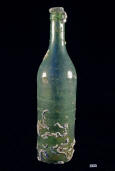
Image Code W452 |
Catalogue No.: W452
Description: Pre American Civil War Wine Bottles.
Possibly French, salvaged from a shipwreck in 1998.
Size: 310 X 80mm. |

Image Code W550 |
Catalogue No.: W550
Description: Shipwreck Antique Bottles. c. 1870.
Green glass liquor bottles. Mouth blown, turn mould, applied lip. Recovered
from deep water in the Southern Caribbean. 8 pieces.
Size: 235 x 65mm. |
Return to Top
|