|
| |
Amphibians Division
Amphibians (class Amphibia), such as frogs, toads, salamanders, newts, and
gymnophiona, are cold-blooded animals that metamorphose from a juvenile,
water-breathing form to an adult, air-breathing form. Typically, amphibians have
four limbs. Unlike other land animals (amniotes), amphibians lay eggs in water,
as their fish ancestors did. Amphibians are superficially similar to reptiles.
Amphibian populations around the globe are threatened or extinct, and
scientists do not agree on the reason.
Amphibians evolved in the Devonian Period. They were a top predator in the
Carboniferous Period, but proto-crocodiles evolved and took over that niche.
Traditionally, amphibians have included all tetrapods that are not amniotes .
They are divided into three subclasses, of which two are only known as extinct
subclasses:
- Subclass Labyrinthodontia (diverse Paleozoic and early Mesozoic group)
- Subclass Lepospondyli (small Paleozoic group)
- Subclass Lissamphibia (frogs, toads, salamanders, newts, etc.)
Class:
Amphibia
Order:
Ichthyostegalia
Genus:
Ichthyostega

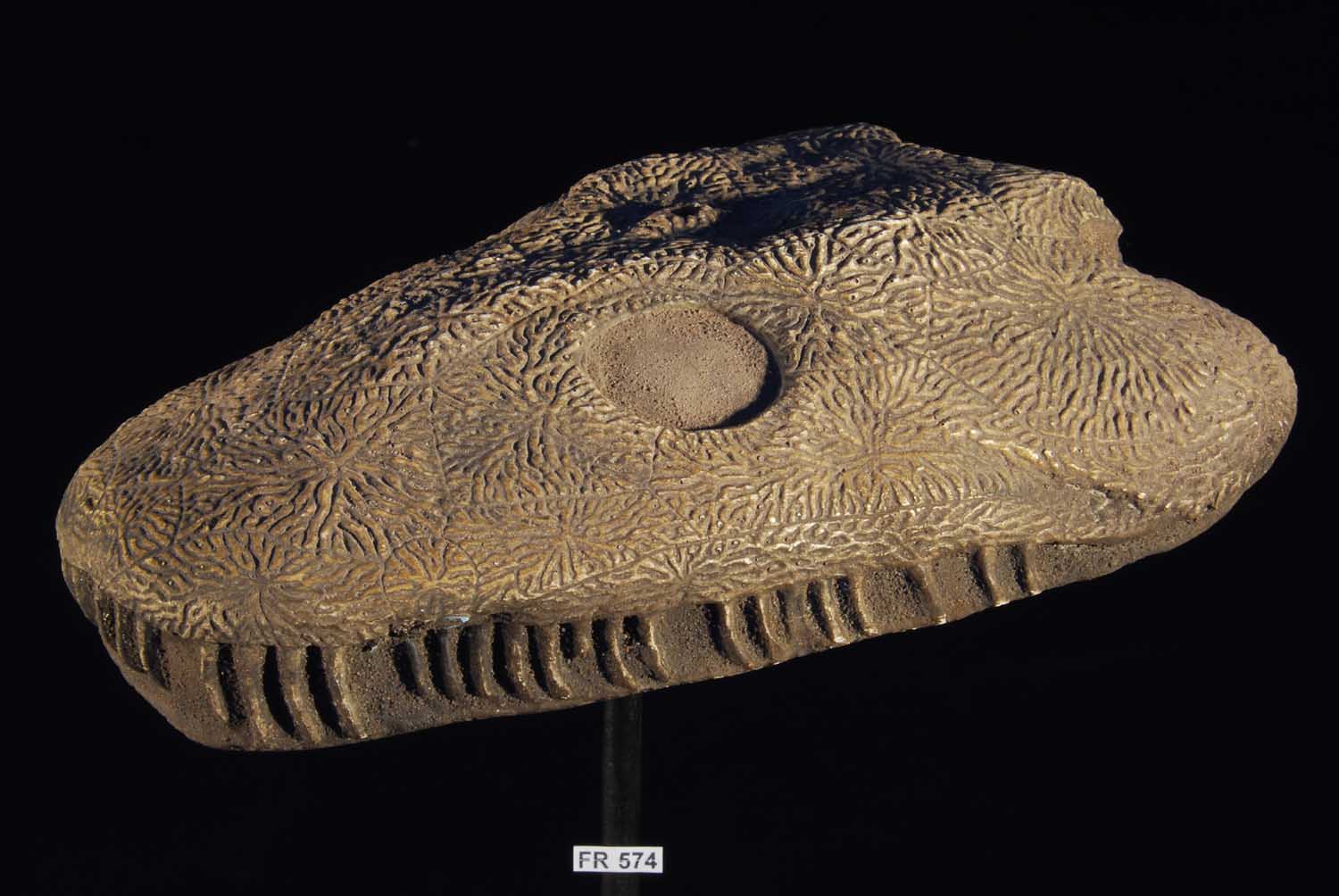
Image Code FR574 |
Catalogue No.: FR574
Description:
Ichthyostega Skull.
Early amphibian. A
primitive labyrinthodont from the upper Devonian Period of East Greenland.
VAP.
Size: 150 X 175mm. |
Subclass:
Lissamphibia
(The subclass
Lissamphibia includes all recent amphibians.)
Order:
Anura (frogs)
Suborder: Neobatrachia
Family: Leptodactylidae
Subfamily: Ceratophryinae
Genus:
Ceratophrys

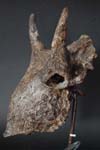
Image Code FR142 |
Catalogue No.: FR142
Description:
Brazilian Horned Frog Skull,
Ceratophrys comuta. Central and South America. VAP Replica R S358.
Size: W80mm. |
Family:
Bufonidae
Genus: Bufo

Image Code F4265 |
Catalogue No.: F4265
Description:
Toad skeleton,
Bufo
bufo.
Size: 90 X 80mm. |
Family:
Ranidae
Genus:
Conraua

Image Code FR151 |
Catalogue No.: FR151
Description:
Goliath Frog skeleton,
Conraua goliath. From West Africa, this is the largest
frog in the world weighing over 7 pounds. With a body length of 12½ inches,
it can stretch to 2½ feet. Bone Clones.
Size: 350 X 360mm. |
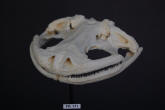
Image Code FR171 |
Catalogue No.: FR171
Description:
Conraua. Goliath Frog Skull.
Size: L300mm. |
Order:
Labyrinthodontia
Genus:
Benthosuchus

Image Code FR345 |
Catalogue No.: FR345
Description:
Labyrinthodont Skull,
Benthosuchus sushkini.Triassic.
Size: 740 X 670mm. |
Genus:
Hadrokkosaurus
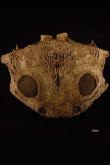
Image Code FR341 |
Catalogue No.: FR341
Description:
Hadrokkosaurus Skull,
Hadrokkosaurus radii (Welles). Moenkoepi
Formation, Arizona. UC Berkeley Specimens. Collected near meteor crater by
Charles Camp, Samuel Welles & Frank Peabody in 1938. VAP Replica S017.
Amphibian. Early Triassic.
Size: 290 X 310mm. |
Genus:
Rhadalognathus
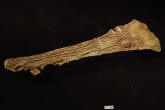
Image Code FR340 |
Catalogue No.: FR340
Description:
Rhadalognathus
Skull. Thin crocodile. Triassic
amphibian of the Moenkoepi formation of Arizona. VAP Replica
S041.
Size: 400 X 100mm. |
Order:
Temnospondyli
Genus:
Cyclotosaurus

Image Code FR296 |
Catalogue No.: FR296
Description:
Fossil Skull,
Cyclotosaurus sp. Moenkoepi Formation, Arizona, UC
Berkeley Specimens. Collected near Meteor crater by Charles Camp, Samuel
Welles & Frank Peabody in 1938. VAP Replica S012.
Cyclotosaurus was one of the largest amphibians ever to live, growing to 15
feet. They were still very dependent on water. Late Triassic.
Size: 370 X 300mm. |
Genus:
Eryops

Image Code FR339 |
Catalogue No.: FR339
Description: Fossil Amphibian Skull. Eryops megacephalus. Skull from the
giant primitive amphibian. A land-dwelling vertebrate that lacked the
amniote egg. It's inner membranes are like that of birds, mammals and other
reptiles. Lower Permian (270 million years). Wichita Basin, Texas. VAP
Replica SO55.
Size: 300 X 270mm. |
Family
Branchiosauridae
Genus:
Apateon

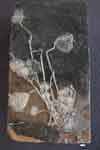
Image Code F4242
Image Code F4242a |
Catalogue No.: F4242
Description:
Fossil amphibian skeleton,
Apateon pedestris.
Positive and negative impressions.
This fossil is a
choice grade specimen of Apateon pedestris, a type of branchiosaur that once
inhabited the Permian swamps of what is now Kusel, Germany, in the
Lower Permian (Asselian
Age - 290 million years ago).
It is natural with no
restoration of any body parts. Much of the original skeleton including the
skull is still present in the rock. A dark region that follows the lines of
the original body can be seen just behind the head and running all the way
just posterior to the pelvis with scattered areas that follow the tail.
This slightly darker area is original soft body parts that have left an
impression in the rock. Such a feature is extremely rare and highly valued
in fossils as original soft tissue is seldom seen preserved in any
specimen. This example represents a fantastic 'top down' view of the
creature and exhibits wonderful articulation.
This small
prehistoric amphibian had a long tail that was very deep and laterally
compressed like an exaggerated tadpole tail. Also, to aid in the
hydrodynamics of the creature's build, the head was very wide and flat. On
each side of the head, external gills, like miniature peacock feathers,
protruded and enabled the amphibian to breathe under water indefinitely.
Beyond that, very little is known in science regarding these creatures.
SPECIAL NOTE: The current laws in this region of Germany now forbid the
collection of these remarkable fossils. Such legislation has permanently
ended the supply of such magnificent specimens such as this one being
offered here. This rare example comes from an old German private collection
and was collected long ago before the ban was enacted. With digging in the
formation now off-limits, these German Permian fossils are sure to
appreciate in value and become increasingly difficult to acquire.
Size: 135 x 162mm, A. 130 X 162mm.
|
Suborder:
Stereospondyli
Genus:
Aphanerama

Image Code FR295 |
Catalogue No.: FR295
Description:
Aphanerama
Skull. Moenkoepi Formation,
Arizona, UC Berkeley Specimens. Collected near meteor crater by Charles
Camp, Samuel Welles & Frank Peabody in 1938. VAP Replica S003.
Amphibian from the late Triassic .
Size: L288mm. |
Return to Top
|