|
| |
Crocodilians Division
The Crocodylomorpha are an important group of archosaurs that include
the crocodilians and their extinct relatives.
During Mesozoic and early Tertiary times the Crocodylomorpha were far more
diverse than they are now. Triassic forms were small, lightly built, active
terrestrial animals. These were supplanted during the early Jurassic by various
aquatic and marine forms. The Later Jurassic, Cretaceous, and Tertiary saw a
wide diversity of terrestrial and semi-aquatic lineages. "Modern" crocodilians
do not appear until the Late Cretaceous.
Class:
Sauropsida
Subclass:
Diapsida
Infraclass:
Archosauromorpha
(unranked):
Crurotarsi
Superorder:
Crocodylomorpha
(unranked):
Neosuchia
Family:
Dyrosauridae

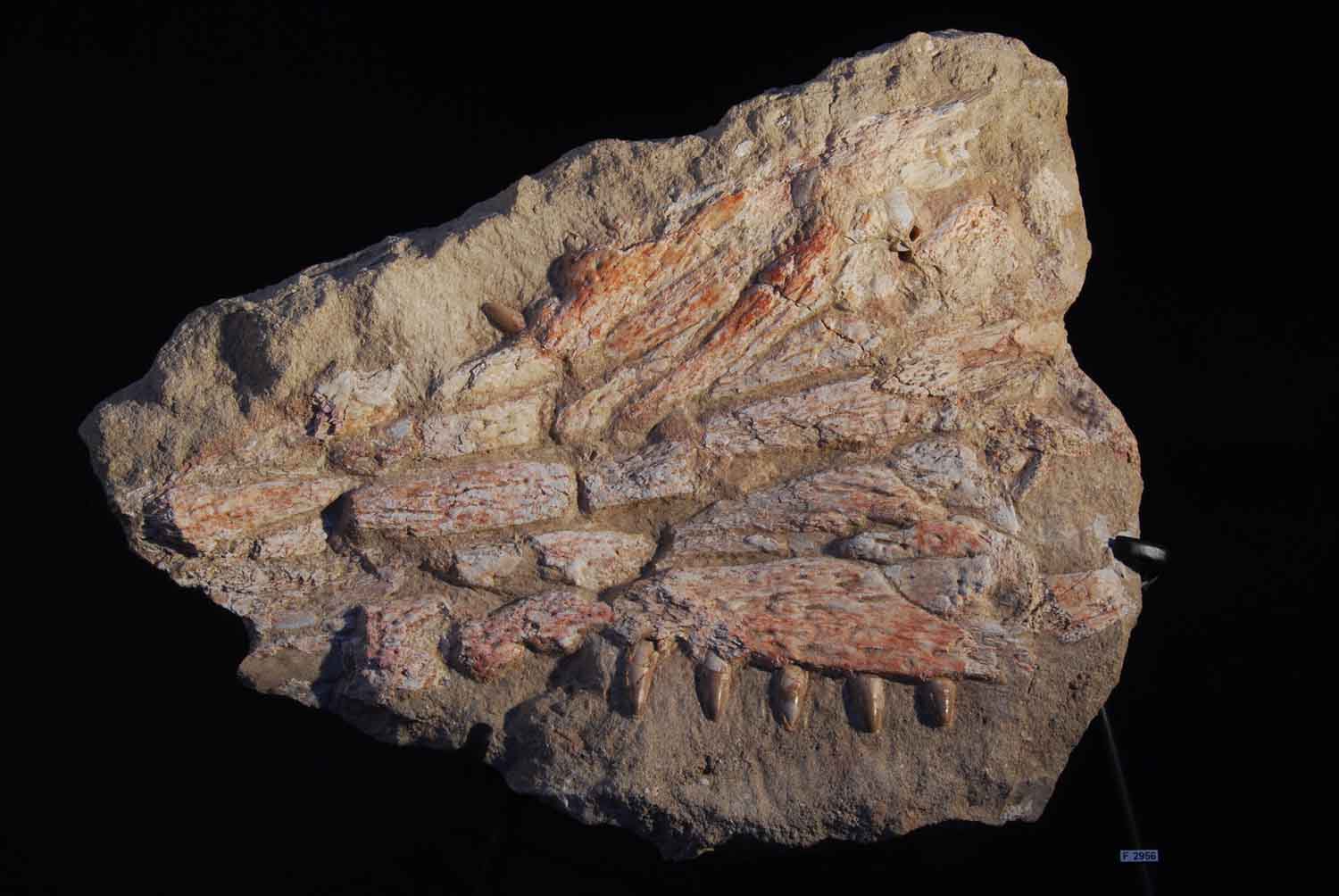
Image Code F2956 |
Catalogue No.: F2956
Description:
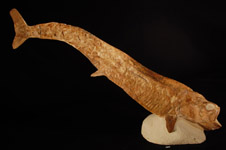
Dyrosaurus phosphaticus. Morocco.
Cretaceous Period. Dyrosaurus was an extinct genus of dyrosaurid crocodilian
from the Eocene of North Africa. Having not been well-studied, little is
known for sure about Dyrosaurus phosphaticus, though the skeletal remains of
this fossil alone are tangible proof that it was a fierce predator. One
cannot even be sure of its age, but it is likely to date to just before or
just after the great dinosaur extinction of 65 million years ago. Some
authorities believe them to be Paleocene, making them one of the largest
reptiles to have survived the Cretaceous extinction.
Size: 400 x 330mm. |
Order: Crocodylia
Family:
Teleosauridae
The teleosaurids were marine crocodyliforms similar
to the modern gharial that lived during the Early Jurassic to the Early Cretaceous.

Image Code FR214 |
Catalogue No.: FR214
Description:
Teleosaurus
mandelslohi. Jurassic Age.
Location, Holzmaden, Germany.
Size: 2140 X 760mm. |

Image Code FR892 |
Catalogue No.: FR892
Description:
Teleosaurid crocodylian, Peipehsuchus
sp. Early Jurassic (Toarcian). China.
Size: 540X1250mm. |

Image Code F2660 |
Catalogue No.: F2660
Description:
Fossil Crocodilian
skull, Steneosaurus sp. Morocco.
The top section of the skull and upper jaw of a Steneosaurus embedded
in the original hard stone matrix make up this fine and rare specimen.
Steneosaurus is an extinct genus of teleosaurid crocodyliform from the Early
Jurassic to Early Cretaceous (Toarcian to Berriasian).
Size: 810 X 380mm. |

Image Code FR211 |
Catalogue No.: FR211
Description:
Crocodilian Fossil
plate (similar to a false gavial or
Steneosaurus).
Size: 840 X 600mm. |
Suborder:
Eusuchia
Family:
Gavialidae
Genus:
Gavialosuchus

Image Code F4448 |
Catalogue No.: F4448
Description:
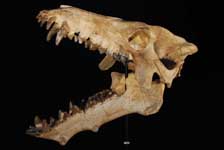
Giant Fossil Crocodile skull, Gavialosuchus
sp. Early
Paleocene.
Phosphate
mine, Polk County, Florida, Total body length is estimated to have been
between 7.5 and 9.0 metres.
Gavialosuchus is an
extinct
genus of
gavialid
from the late
Oligocene
and
Miocene of
eastern
North America.
Size: 650 X 300mm. |

Image Code FR1029 |
Catalogue No.: FR1029
Description:
Giant Fossil Crocodile skull, Gavialosuchus
sp. Early
Paleocene.
Phosphate
mine, Polk County, Florida, Total body length is estimated to have been
between 7.5 and 9.0 metres.
Gavialosuchus is an
extinct
genus of
gavialid
from the late
Oligocene
and
Miocene of
eastern
North America.
Size: L1260mm.
|
Genus:
Tomistoma

Image Code FR361 |
Catalogue No.: FR361
Description: False Gharial skull,
Tomistoma schlegelii.
The false gharial, also known as the Malayan gharial or false gavial, (Tomistoma
schlegelii) is a fresh-water reptile, resembling a crocodile with a very
thin and elongated snout resembling that of the gharial, hence its name.
Size: 740 X 670mm.
|
Family:
Alligatoridae
Genus:
Diplocynodon

Image Code FR246 |
Catalogue No.: FR246
Description: Juvenile Diplocynodon sp. Middle Eocene Epoch.
Approximately 49 million years ago. Messel Formation, Germany. Diplocynodon
is an extinct 49 MYA crocodile from the Messel Formation of Germany. The
Order Crocodilia has existed for about 200 million years. It is believed
that crocodiles originated from bipedal reptiles that lived during the Late
Triassic Period. Crocodiles are the only surviving members of the Superorder Archosauria which included dinosaurs and pterasaurs. Crocodiles have changed
very little throughout their history. There are eight surviving genera of
Crocodilians alive today. At the Messel quarry in Germany, six distinct
genera of Crocodilians can be recognised. This replica represents the genus Diplocynodon. There were two species of Diplocynodon at Messel (D. darwini,
and D. ebertsi) but this individual was a juvenile making species
identification nearly impossible. Diplocynodon was very similar to the
modern Caiman. It had bony armour scutes covering it's neck, back, belly and
part of the tail.The largest Diplocynodon specimens
recovered at Messel reach lengths of about 4 feet. Diplocynodon fed on
fish and animal flesh, but probably took smaller prey such as insects as a
juvenile.
Size: 385 X 180mm. |
Genus:
Paleosuchus

Image Code FR131 |
Catalogue No.: FR131
Description:
Dwarf Caiman Skull,
Paleosuchus
palpebrosus. Replica.
Central to South
America. The
Cuvier's Dwarf Caiman (Paleosuchus palpebrosus) is a crocodilian reptile
from northern South America. It is found in Bolivia, Brazil, Colombia,
Ecuador, French Guiana, Guyana, Paraguay, Peru, Surinam and Venezuela. It
lives primarily near fast stretches of stream, but also lives in
nutrient-deficient waters.
It is also the smallest species of the alligatoridae family reaching up to
1.5 meters of length.
Size: L90mm. |

Image Code FR362 |
Catalogue No.: FR362
Description:
Dwarf Caiman Skull,
Paleosuchus
palpebrosus. Replica.
Central to South
America. The
Cuvier's Dwarf Caiman (Paleosuchus palpebrosus) is a crocodilian reptile
from northern South America. It is found in Bolivia, Brazil, Colombia,
Ecuador, French Guiana, Guyana, Paraguay, Peru, Surinam and Venezuela. It
lives primarily near fast stretches of stream, but also lives in
nutrient-deficient waters.
It is also the smallest species of the alligatoridae family reaching up to
1.5 meters of length.
Size: 200 X 110mm. |

Image Code FR363 |
Catalogue No.: FR363
Description:
Smooth Front Caiman
Skull, Paleosuchus trigonatus. Central America to Central South America. VAP Replica R S04. The
Smooth-fronted Caiman (Paleosuchus trigonatus), also known as Schneider's
Smooth-fronted Caiman, is a crocodilian reptile from South America. It is
found in the Amazon Basin of Bolivia, Brazil, Colombia, Ecuador, French
Guiana, Guyana, Peru, Suriname and Venezuela.
It is also the second smallest species of the alligatoridae family reaching
up to 2.3 meters of length.
Size: 260 X 150mm. |

Image Code FR524 |
Catalogue No.: FR524
Description:
Smooth Front Caiman
Skull, Paleosuchus trigonatus. Central America to Central South America.
Replica. The
Smooth-fronted Caiman (Paleosuchus trigonatus), also known as Schneider's
Smooth-fronted Caiman, is a crocodilian reptile from South America. It is
found in the Amazon Basin of Bolivia, Brazil, Colombia, Ecuador, French
Guiana, Guyana, Peru, Suriname and Venezuela.
It is also the second smallest species of the alligatoridae family reaching
up to 2.3 meters of length.
Size: 120 x 56mm. |
Genus:
Melanosuchus

Image Code FR556 |
Catalogue No.: FR556
Description:
Black Caiman Skull,
Melanosuchus niger. Lake and
riverine areas of the Amazon Basin and coastal rivers of North East South
America.
Size: 570 X 300mm. |
Genus:
Alligator

Image Code F3450 |
Catalogue No.: F3450
Description:
Fossil Alligator jaw,
Alligator
sp. Charlotte , Florida, USA. X 2 pieces.
Size: 127 x 52mm. |

Image Code F3451 |
Catalogue No.: F3451
Description:
Fossil Alligator jaw,
Alligator
sp. Charlotte ,
Florida, USA.
Size: 155 x 78mm. |

Image Code F3459 |
Catalogue No.: F3459
Description:
Fossil Alligator lower
jaw,
Alligator
sp.
South eastern U.S.A.
Size: 71 x 36mm. |

Image Code F3481 |
Catalogue No.: F3481
Description:
Fossil Alligator
Teeth, Alligator sp.
Pleistocene.
South
eastern U.S.A.
98
pieces.
Size: Average of 19 x 12mm. |

Image Code F3832 |
Catalogue No.: F3832
Description:
Fossil Alligator Jaw
and osteoderms, Alligator sp.
Charlotte County, Florida. Pleistocene
Epoch. 5 pieces.
Size: 99 X 91mm. |
Alligator
mississippiensis

Image Code F16 |
Catalogue No.: F16
Description: American alligator
taxidermy mount, Alligator
mississippiensis. South eastern U.S.A.
The American Alligator, Alligator mississippiensis, (known
colloquially as simply gator).
This superb and large specimen from the swamps of Florida has been expertly
prepared by a taxidermist. It is in premium condition.
The Alligator mississippiensis is one of the two living species of
Alligator, a genus within the family Alligatoridae. The American Alligator
is native only to the Southeastern United States, where it inhabits wetlands
that frequently overlap with human-populated areas. The tail can also be
used as a weapon of defense when an alligator feels threatened. Alligators
travel very quickly in water and while they are generally slow-moving on
land, alligators can lunge short distances very quickly.
Size: 3600 x 420mm. |

Image Code F2662 |
Catalogue No.: F2662
Description:
Alligator Skull,
Alligator mississippiensis.
Size: 560 x 270mm. |

Image Code F3916 |
Catalogue No.: F3916
Description:
Alligator Skull,
Alligator mississippiensis.
Mississippi River,
USA.
Size: 510 X 260mm. |

Image Code F4108 |
Catalogue No.: F4108
Description:
Alligator Skull, Alligator
mississippiensis. South
eastern U.S.A.
Size: 450 X 210mm. |

Image Code FR65 |
Catalogue No.: FR65
Description:
Alligator Skull, Alligator
mississippiensis. South
eastern U.S.A. A very abundant reptile in South Eastern parts of the
United States. It was recently taken off the endangered species list due to
its increased numbers.
Size: L210mm. |

Image Code FR280 |
Catalogue No.: FR280
Description:
Alligator Skull, Alligator
mississippiensis. South
eastern U.S.A. 20". BC-129. Bone Clones presents a
series of skulls and skeletons skilfully cast from the best originals
available. Made from the highest quality resins, they are durable and resist
breakage. Great care was taken to achieve the best possible replicas with
emphasis on the nuances and details of nature's work. Made in the USA.
Size: 500 X 200mm. |

Image Code FR374 |
Catalogue No.: FR374
Description:
Alligator Skull, Alligator
mississippiensis. South
eastern U.S.A.
Size: 600 X 300mm. |
Genus:
Caiman

Image Code FR360 |
Catalogue No.: FR360
Description:
Broad Nosed Caiman
Skull, Caiman latirostris. Central
America to Central South America.The broad-snouted
caiman is a crocodilian reptile found in parts of South
America. It is found mostly in freshwater marshes, swamps, and mangroves.
Its notable physical characteristic is its broad snout from which its name
is derived.
Size: 230 X 150mm. |
Family:
Crocodylidae
Genus:
Sarcosuchus

Image Code FR692 |
Catalogue No.: FR692
Description:
"SuperCroc".
Sarcosuchus imperator.
Gadoufaoua, Niger.
Size: 124 X 36mm. |
Genus:
Gavialis

Image Code FR562 |
Catalogue No.: FR562
Description:
Gavial Skull.
Gavialis gangeticus. Also known as the Gharial, this
giant, crocodilian primarily eats fish and grows up to 6m long.
Size: 770 X 225mm. |

Image Code FR563 |
Catalogue No.: FR563
Description:
Gavial Skull.
Gavialis gangeticus. Also known as the Gharial, this
giant, crocodilian primarily eats fish and grows up to 6m long.
Size: 770 X 250mm. |
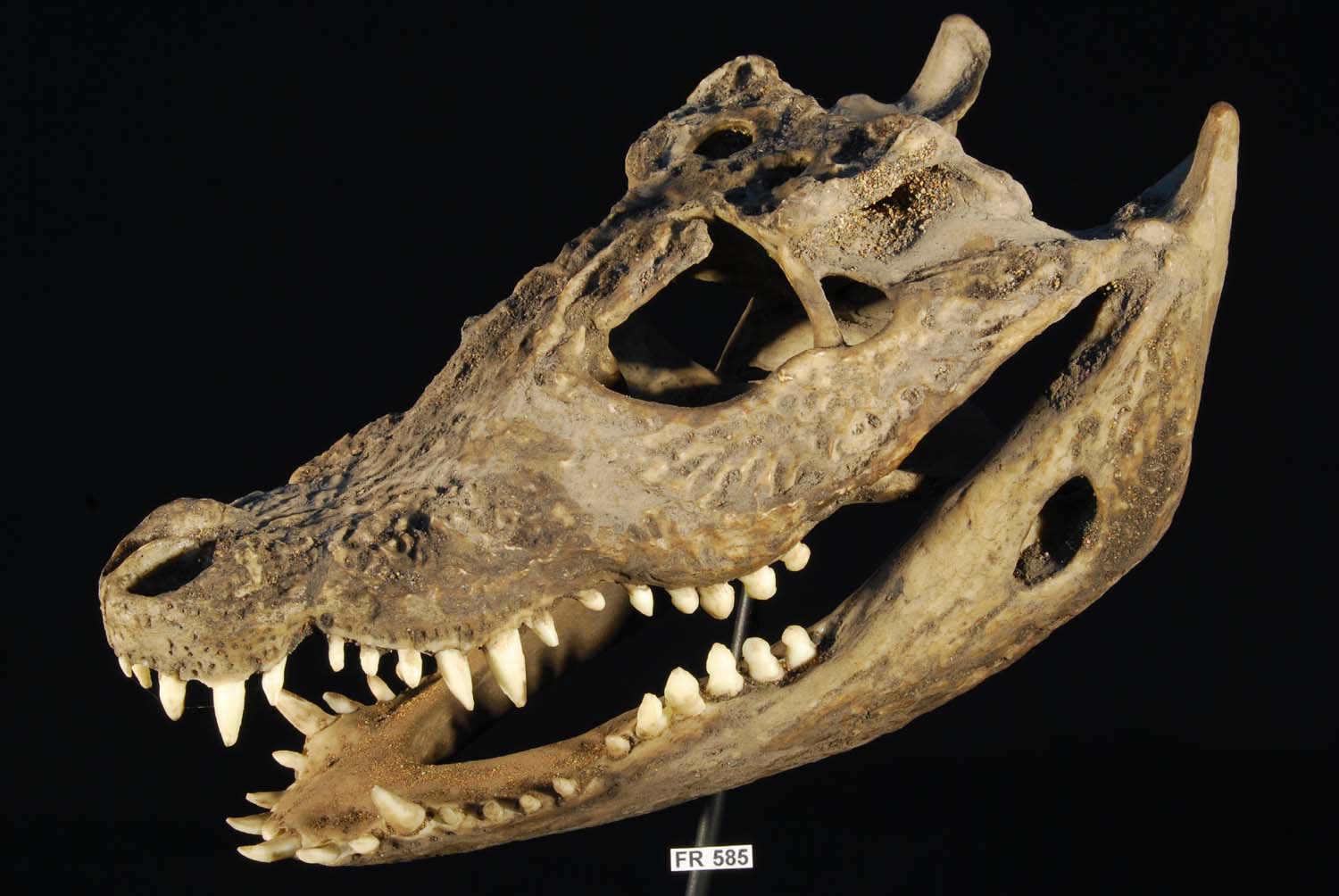
Genus: Osteolaemus

Image Code FR585 |
Catalogue No.: FR585
Description:
Dwarf Crocodile. Osteolaemus tetraspis. Male. Though the smallest of crocodilians, the Dwarf Crocodile
may grow to lengths of up to 2m. It's skulls interesting bony texture
inspired this species scientific name. Living as long as 100 years, this
nocturnal reptile is found only in the rivers of West African forests.
Possessing the most developed of reptilian brains, crocodiles are both the
last living link to dinosaur like reptiles of the prehistoric era and the
closest extant relative of birds.
Size: 185 X 100mm. |
Genus:
Crocodylus

Image Code FR669 |
Catalogue No.: FR669
Description:
Johnston's
crocodile,
Crocodylus
johnsoni. The Freshwater
Crocodile, also known as the Australian Freshwater Crocodile, Johnston's
Crocodile or colloquially as Freshie, is a species of
reptile
endemic to
Australia.
Found in the northern regions of Australia, it is much smaller than the
other Australian species, the
Saltwater Crocodile,
which is responsible for attacks on people.
Size: 520 X 260mm. |

Image Code F739 |
Catalogue No.: F739
Description:
Australian saltwater Crocodile (taxidermy
mount), Crocodylus porosus. Australia.
Size: 1390 X 260mm. |

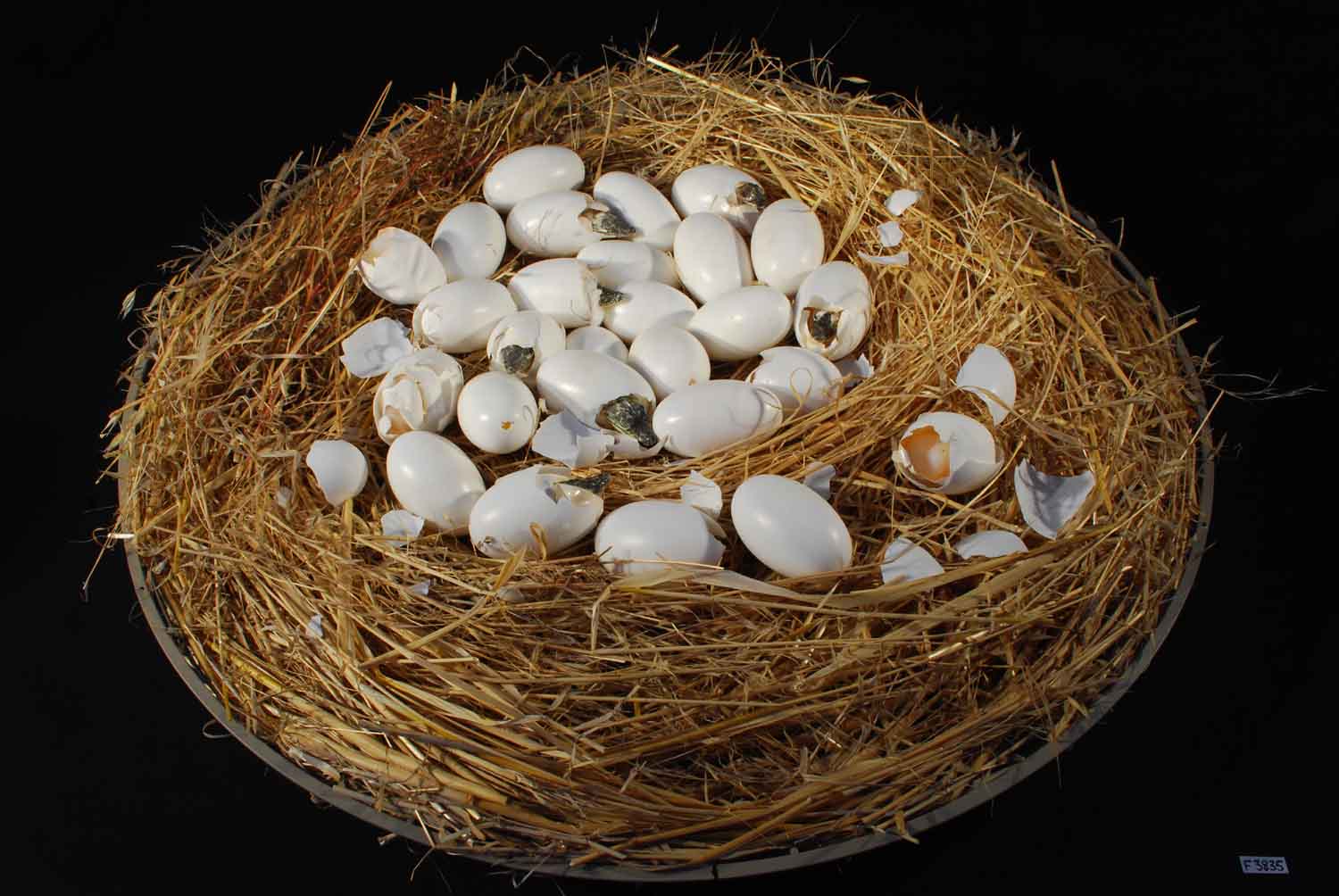
Image Code F3835 |
Catalogue No.: F3835
Description:
Australian saltwater Crocodile
nest (taxidermy),
Crocodylus porosus. Modern,
Australia.
Size: 700Ømm. |

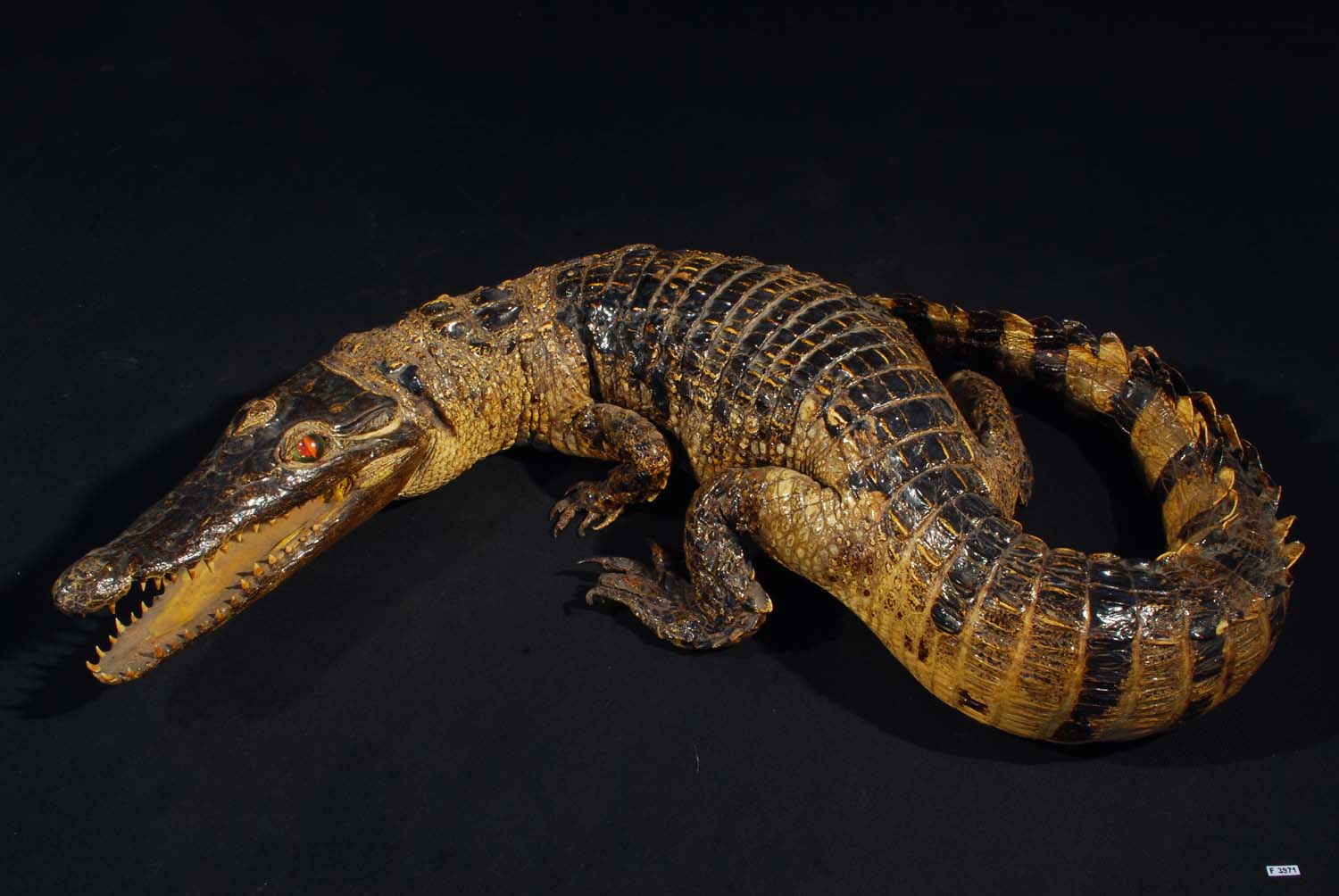
Image Code F3971 |
Catalogue No.: F3971
Description:
Australian saltwater Crocodile (taxidermy
mount), Crocodylus porosus. Modern,
Australia.
Size: 550X330mm. |

Image Code F3972 |
Catalogue No.: F3972
Description: Juvenile
Australian saltwater Crocodile (taxidermy
mount), Crocodylus porosus. Modern,
Australia.
Size: 235X60mm. |
Image Code F4439
Image Code F4439a |
Catalogue No.: F4439
Description:
Prehistoric Crocodile Fossil,
Crocodylus
sp. Part of the upper skull and a large number of bony skin
plates embedded in the original matrix. Supported by a custom-made metal
stand.
Size: mm. |

Image Code FR219 |
Catalogue No.: FR219
Description: American Crocodile
Skull, Crocodylus acutus.
Size: 740 X 670mm. |

Image Code FR364 |
Catalogue No.: FR364
Description:
African Narrow Snout
Crocodile Skull, Crocodylus cataphractus. VAP Replica R S34.The slender-snouted crocodile (Crocodylus
cataphractus) is a species of crocodile. It is currently in the genus
Crocodylus but recent studies in DNA and morphology suggest that it may
belong in its own genus, Mecistops.
Slender-snouted crocodiles are native to freshwater habitats in central and
western Africa. They are a medium sized crocodile and grow to about three to
four meters long. They have a slender snout used for catching prey, hence
their name. Their diet consists of mainly fish, amphibians and crustaceans.
Size: 400 X 130mm. |
Transitional Species

Image Code F2661 |
Catalogue No.: F2661
Description:
Suborder:
Eusuchia.
Crocodile skull fossil, between
sarcosuchus and alligator. Transitional family between
Crocodylidae,
and
Alligatoridae.
North Africa.
Size: 520 X 290mm. |
Return to Top
|