|
| |
Cerapoda Category
Cerapoda Classes
Cerapoda is a suborder of the order
Ornithischia. They are the sister group of the Thyreophora. They are divided
into three groups. The first of these groups were Ornithopoda ("bird-foot"). Cerapods are united by having a thicker layer of enamel on the
inside of their lower teeth. The teeth wore unevenly with chewing and developed
sharp ridges that allowed cerapods to break down tougher plant food than other
dinosaurs. The other two groups were the Pachycephalosauria
("thick-headed lizards") and Ceratopsia ("horned-face").
Ceratopsia Class
Ceratopsia or Ceratopia ( "horned faces") is a group of herbivorous, beaked
dinosaurs which thrived in what are now North America and Asia, during the
Cretaceous Period, although ancestral forms lived earlier, in the Jurassic.
Early members such as Psittacosaurus were small and bipedal. Later
members, including ceratopsids like Centrosaurus and Triceratops,
became very large quadrupeds and developed elaborate facial horns and a neck
frill.
Infraorder:
Ceratopsia
Family:
Psittacosauridae
Genus: Psittacosaurus
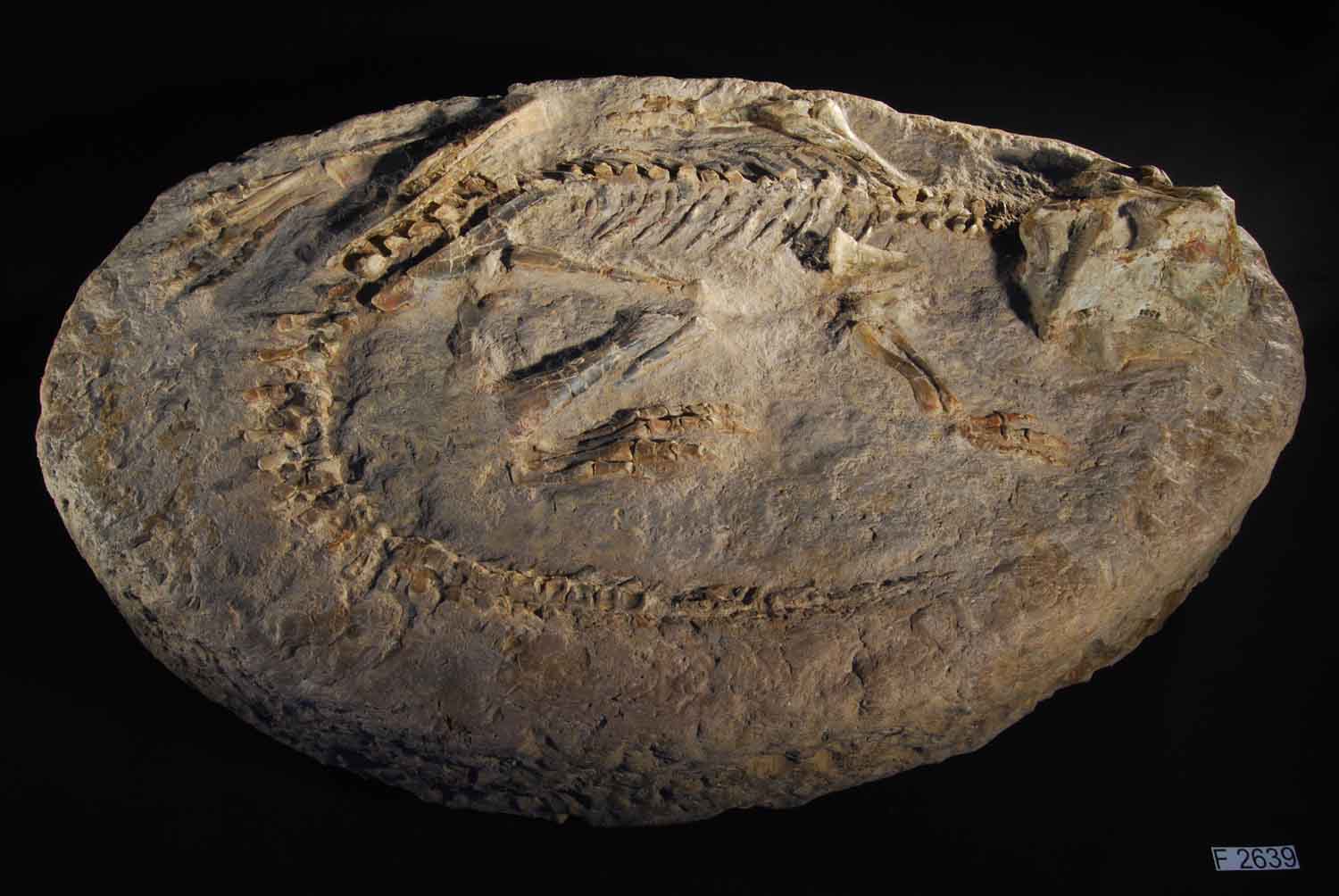
Image Code F2639 |
Catalogue No.: F2639
Description: Psittacosaurus Skeleton. Mid. Cretaceous. Asia.
A 3 –dimensional, essentially complete,
skeleton of a Psittacosaurus embedded in the original matrix. A spectacular
museum piece.
All species of Psittacosaurus were gazelle-sized bipedal herbivores
characterized by a high, powerful beak on the upper jaw. At least one
species had long, quill-like structures on its tail and lower back, possibly
serving a display function. Psittacosaurs were extremely early ceratopsians
and, while they developed many novel adaptations of their own, they also
shared many anatomical features with later ceratopsians, such as
Protoceratops and the elephant-sized Triceratops.
Size: 580 X 850mm. |
Genus: Psittacosaurus
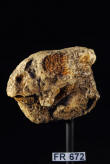
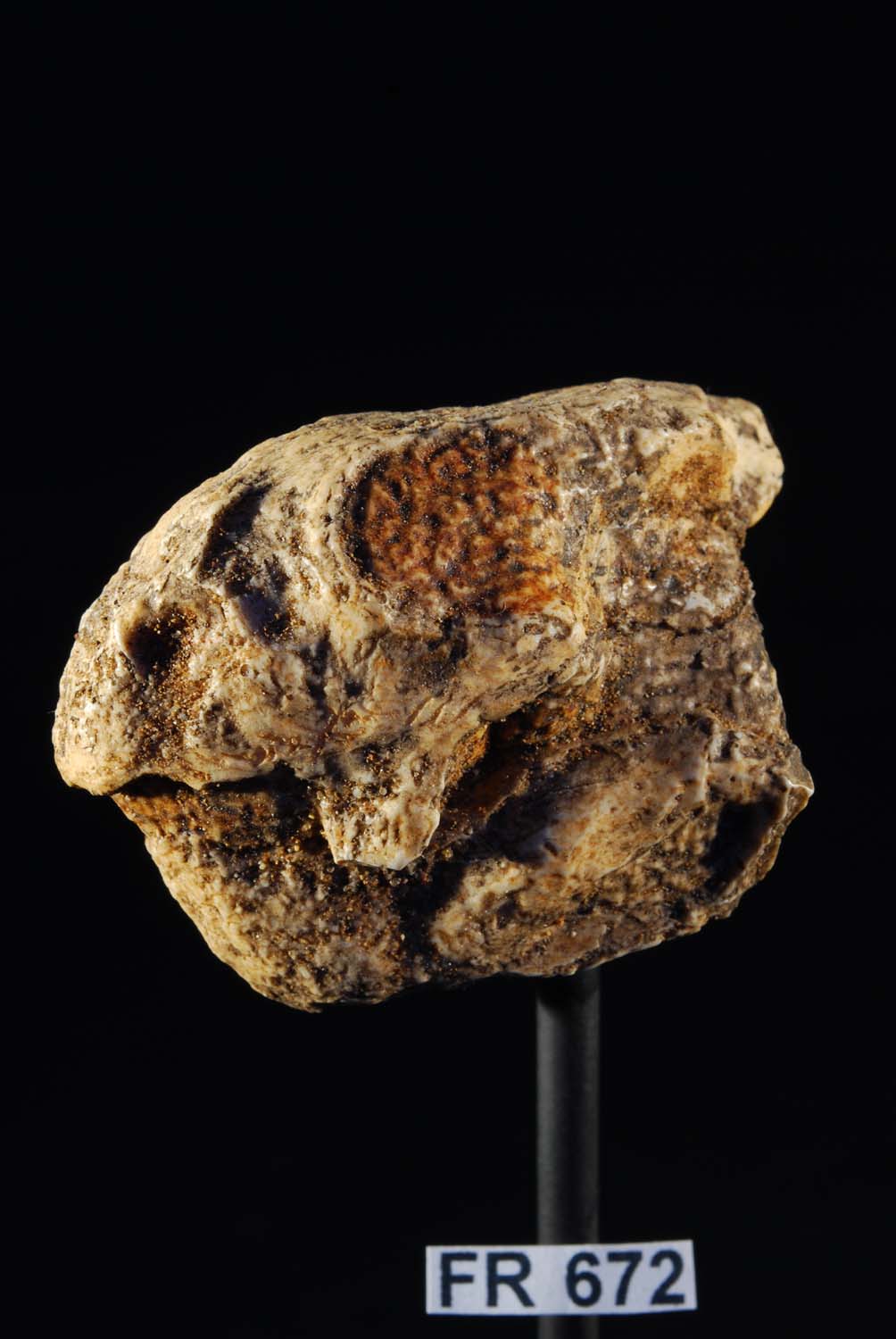
Image Code FR672 |
Catalogue No.: FR672
Description:
Skull Juvenile Psittacosaurus.
All species of Psittacosaurus were gazelle-sized bipedal herbivores
characterized by a high, powerful beak on the upper jaw. At least one
species had long, quill-like structures on its tail and lower back, possibly
serving a display function. Psittacosaurs were extremely early ceratopsians
and, while they developed many novel adaptations of their own, they also
shared many anatomical features with later ceratopsians, such as
Protoceratops and the elephant-sized Triceratops.
Size: 47 X 29mm. |
Family:
Protoceratopsidae
Genus: Protoceratops
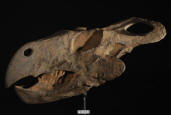
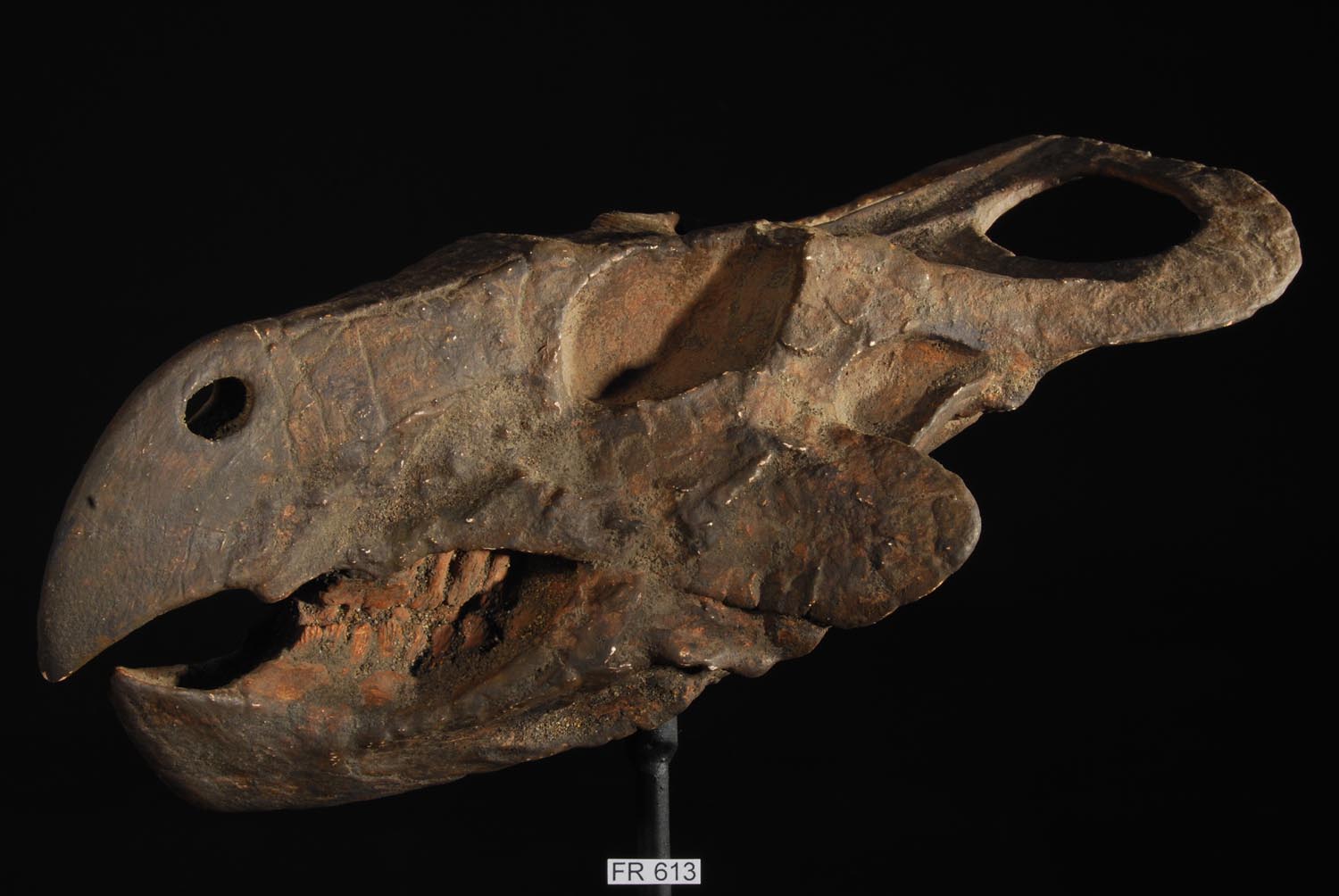
Image Code FR613 |
Catalogue No.: FR613
Description:
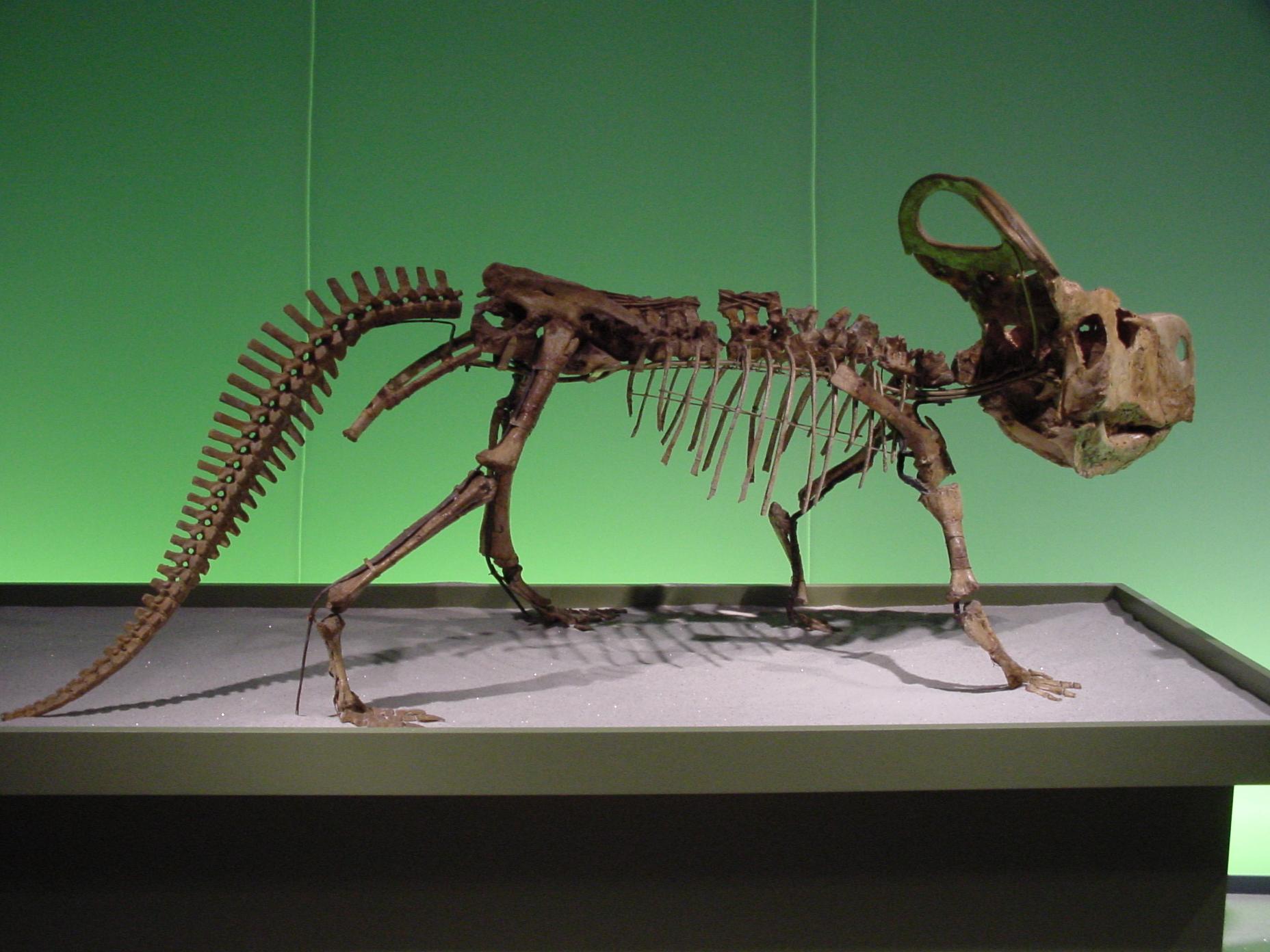
Protoceratops Skull. Protoceratops andrewsi. Djadochta Formation. Mongolia. Late Cretaceous Period. 83MYA.
Size: 250 X 160mm. |
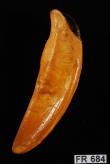
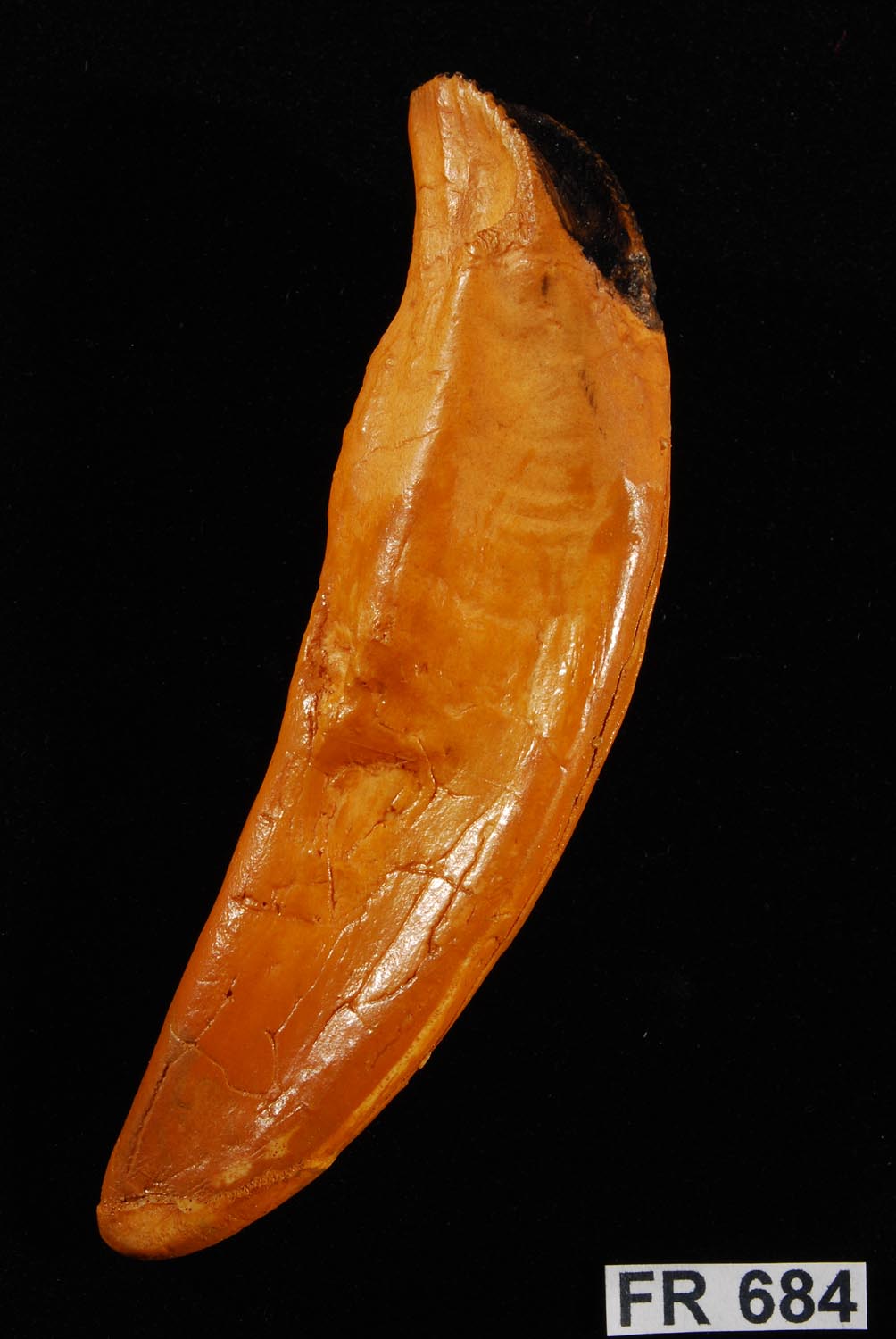
Image Code FR684 |
Catalogue No.: FR684
Description:
Protoceratops Skull Tooth, Protoceratops andrewsi. 72
Million Years BP. Late Cretaceous Period. Late Campanian. Nemegt Formation.
Omnogov, Mongolia. This tooth is from an unusually large Protoceratopsid,
found in the region of Mongolia known for Leptoceratops sp. However, this
tooth's large size suggests that it may be from an as yet unidentified and
undescribed species of Protoceratopsid or a newly emerging species of
Ceratopsid.
Size: 80 X 23mm. |
Family:
Ceratopsidae
Subfamily:
Ceratopsinae
Genus: Triceratops
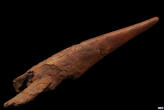
Image Code F47 |
Catalogue No.: F47
Description: Triceratops
Horn Fossil,
Triceratops horridus. Late Cretaceous. North America.
These horned dinosaurs
were the largest and heaviest of their group. Each was thought to weigh up to 10
tonnes. The skull alone with the complete neck frill was over 2 metres in
length.
Size: L760mm. |
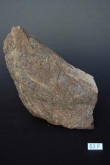
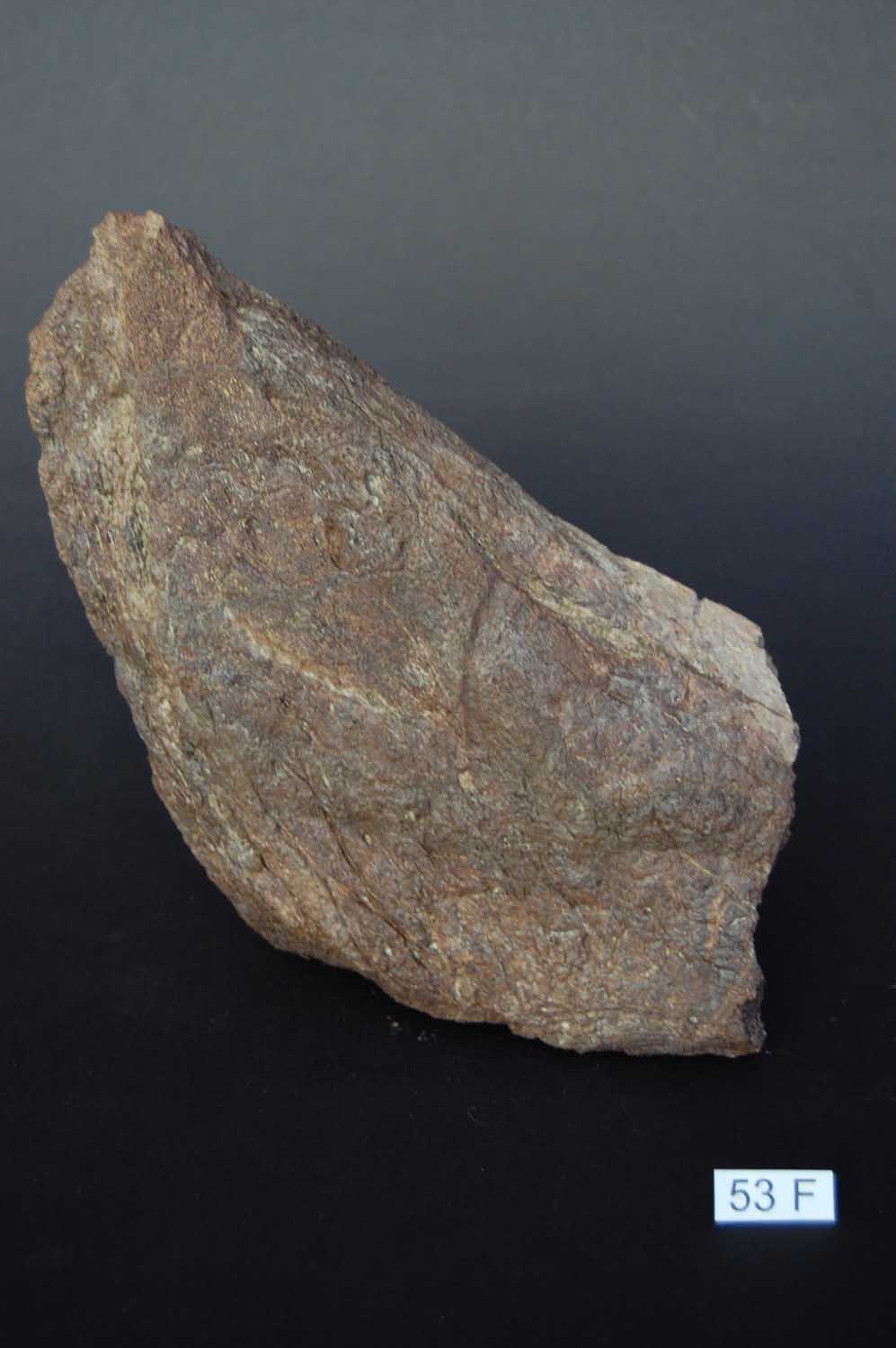
Image Code F53 |
Catalogue No.: F53
Description: Triceratops nasal horn
fossil, Triceratops horridus. Late Cretaceous. North America.
These horned dinosaurs
were the largest and heaviest of its group. It was thought to weigh up to 10
tonnes. The skull alone with the complete neck frill was over 2 metres in
length.
Size: 200 x 160mm. |
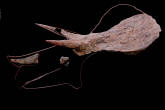
Image Code F735
Image Code F735a
|
Catalogue No.: F735
Description: Triceratops fossil
(cranial elements), Triceratops horridus. Late Cretaceous. North America.
The upper cranium and three horns of a
triceratops are artistically arranged on a metal rod frame which outlines
the shape of the complete skull. This priceless specimen would be the pride
of any major museum.
These horned dinosaurs
were the largest and heaviest of their group. Each was thought to weigh up to 10
tonnes. The skull alone with the complete neck frill was over 2 metres in
length.
Size: 1400 X 935mm. |
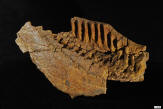
Image Code F4546
Image
Code F4546a
|
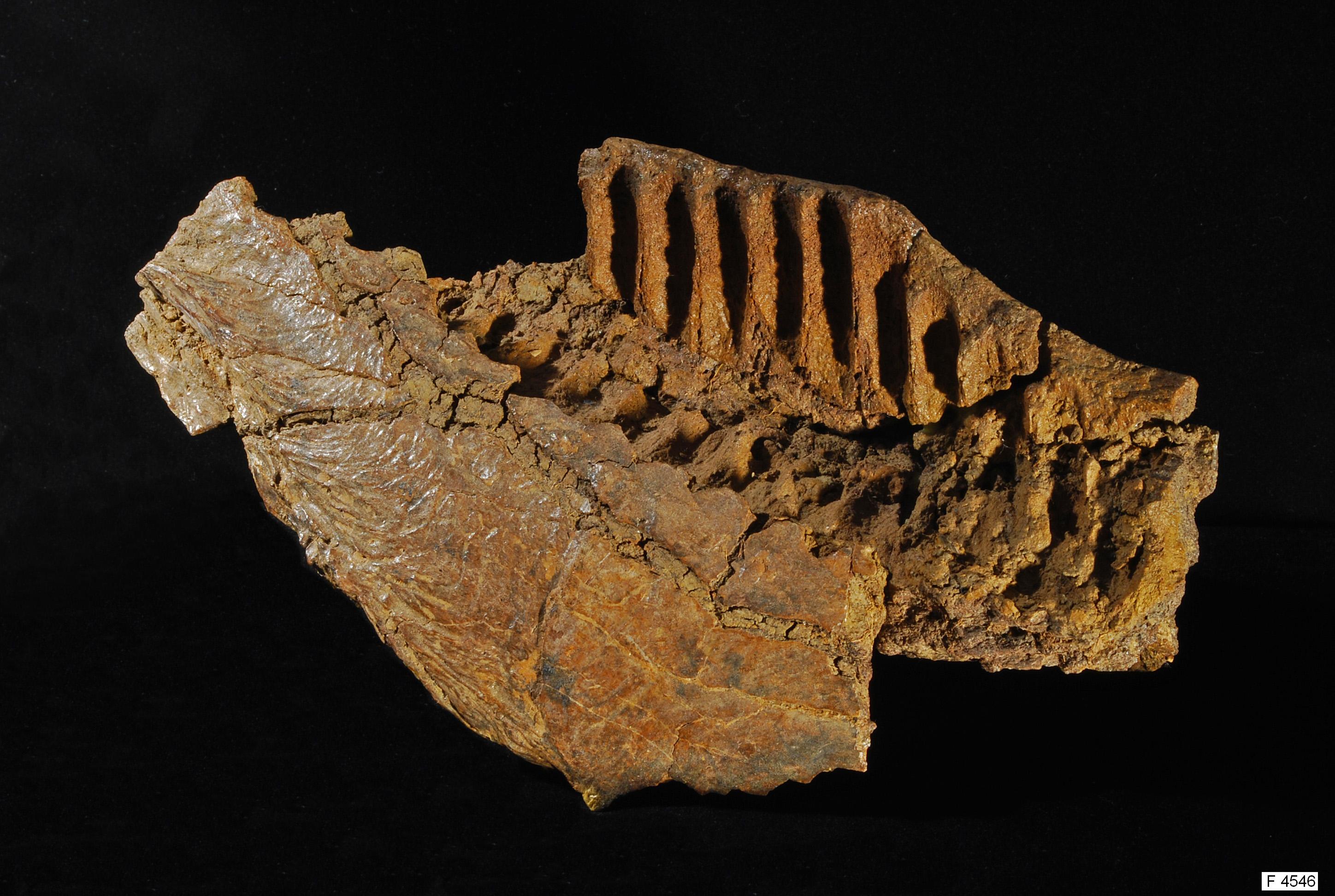
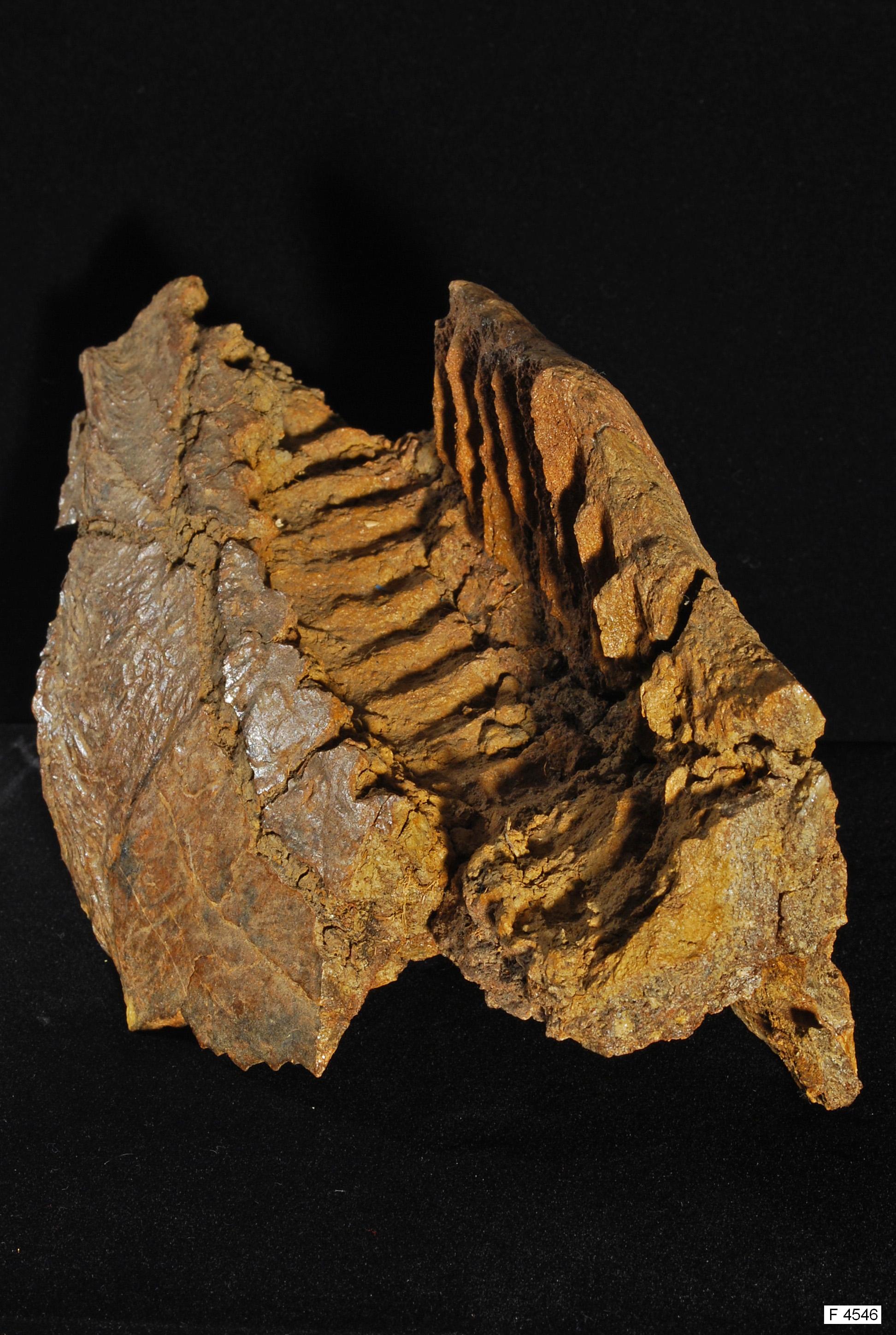
Catalogue No.: F4546
Description: Triceratops fossil
(jaw elements), Triceratops horridus. Late Cretaceous. North America.
An extremely rare large lower jaw segment. This specimen makes a very
impressive display of immense educational value.
These horned dinosaurs
were the largest and heaviest of their group. Each was thought to weigh up to 10
tonnes. The skull alone with the complete neck frill was over 2 metres in
length.
Size: 200 X 110mm. |

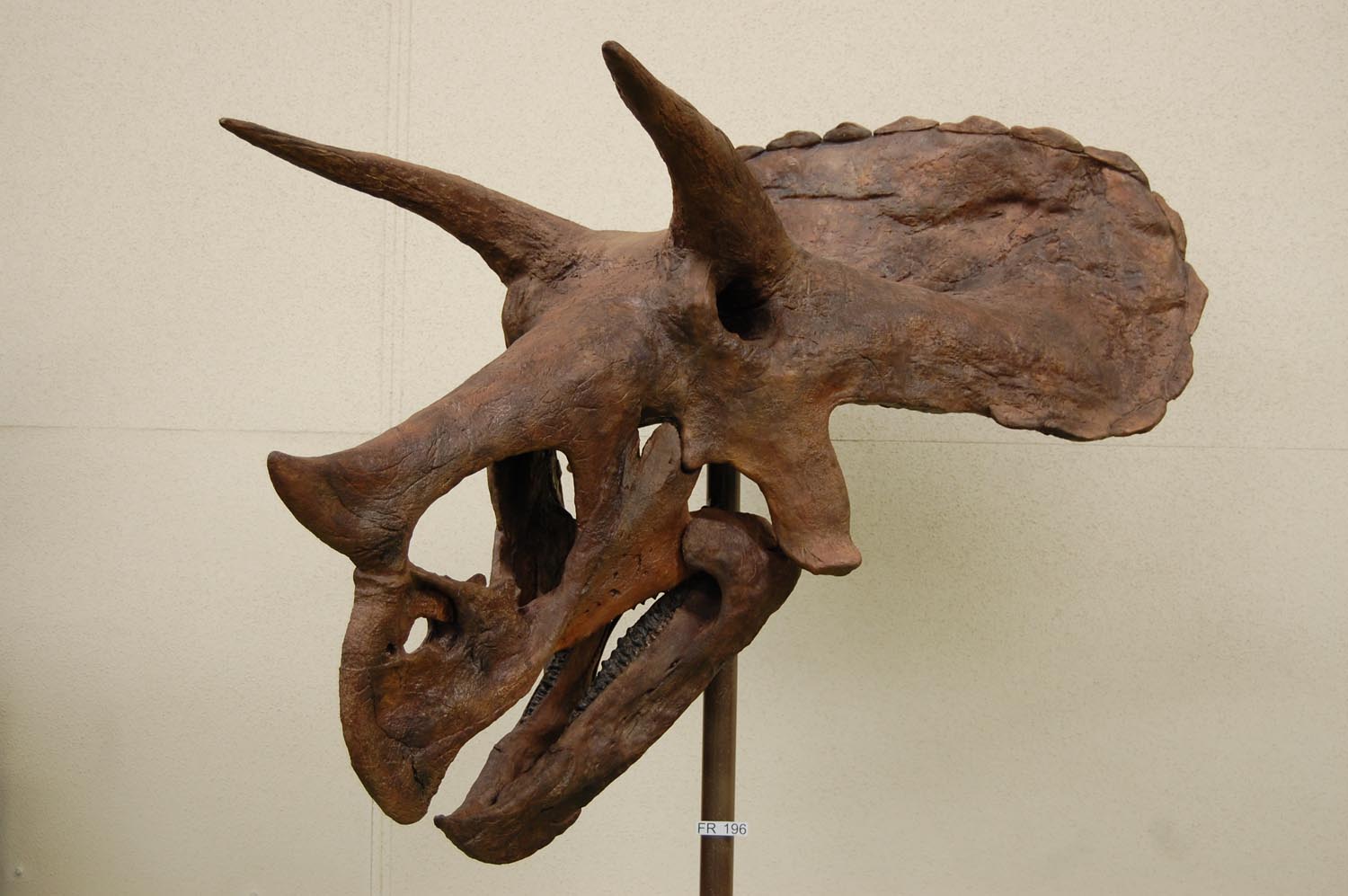
Image Code FR196 |
Catalogue No.: FR196
Description: Triceratops
replica skull.
These horned dinosaurs were the largest and heaviest of their group. Each was
thought to weigh up to 10 tonnes. The skull alone with the complete neck
frill was over 2 metres in length.
Size: 1870 X 1200mm. |
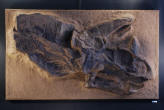
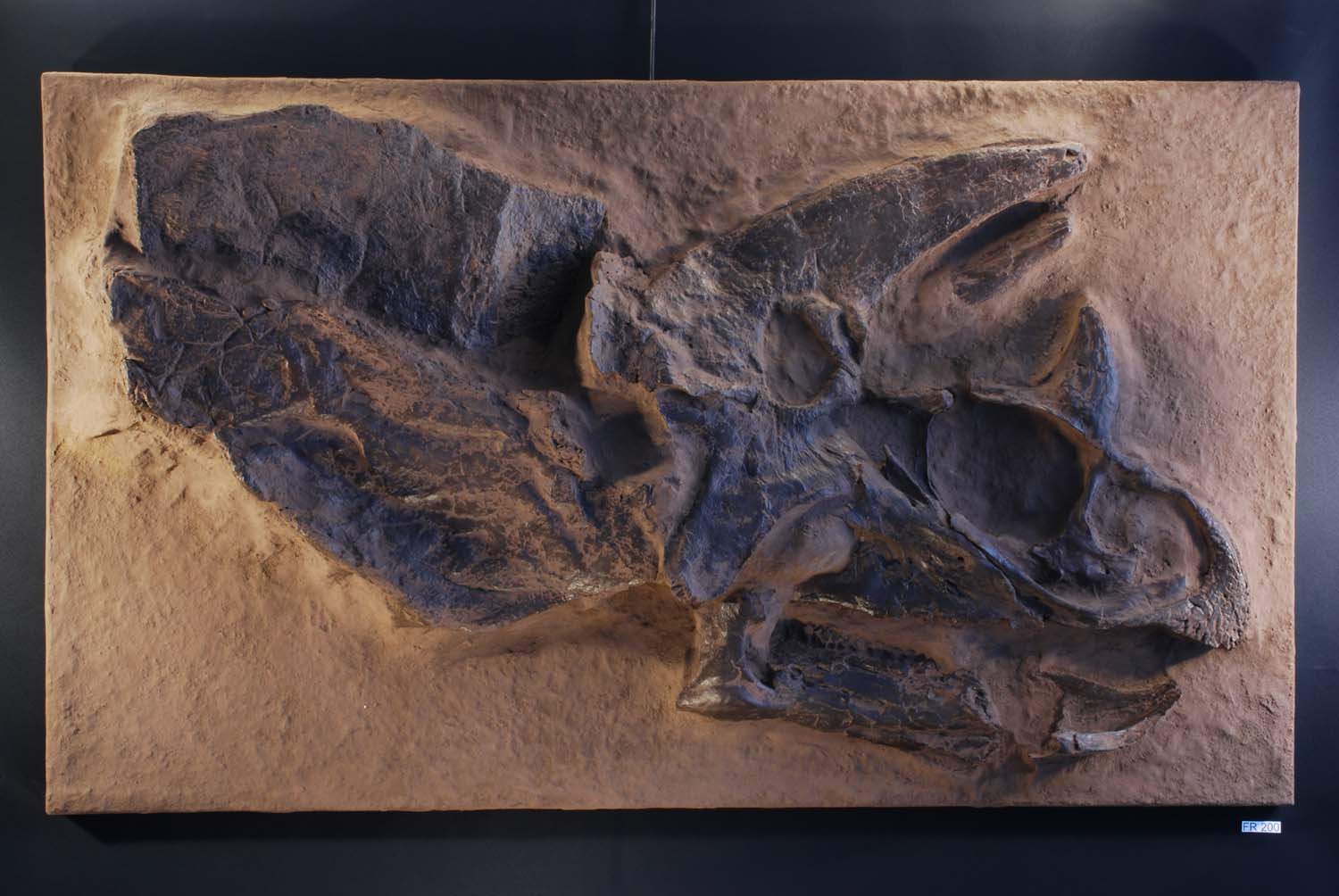
Image Code FR200 |
Catalogue No.: FR200
Description:
Large Triceratops Skull Plate, Triceratops horridus. Cretaceous
Age. Location, Wyoming, USA. Large Plate.
These horned dinosaurs
were the largest and heaviest of their group. Each was thought to weigh up to 10
tonnes. The skull alone with the complete neck frill was over 2 metres in
length.
Size: 1830 X 1070mm. |
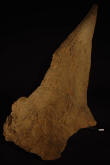
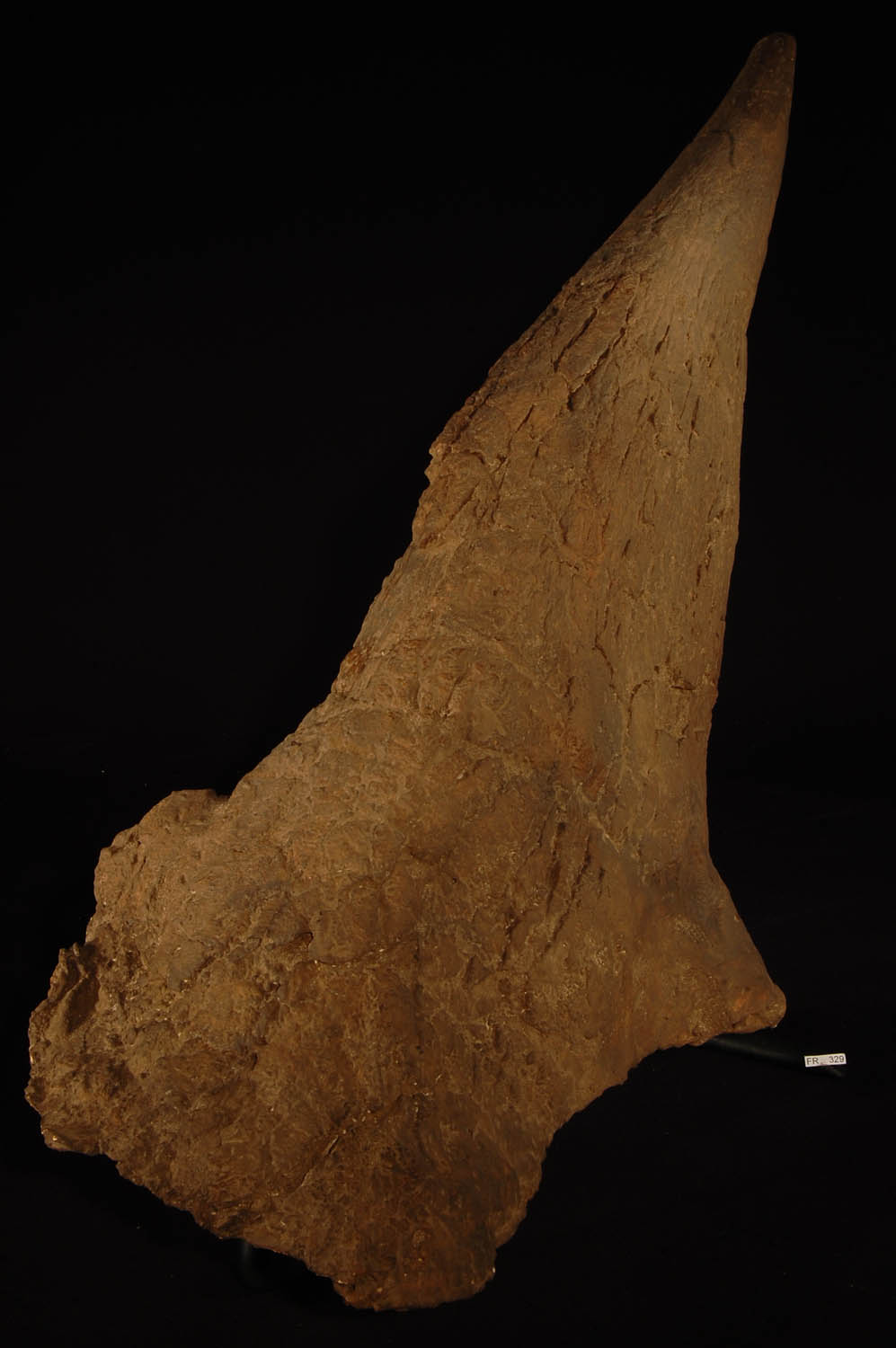
Image Code FR329 |
Catalogue No.: FR329
Description:
Triceratop Horn. Triceratops - horridus? Cast. Rhame N. Dakota. Private lands
excavated by Adventure Safaris of Minnesota Brow horn & partial skull.
Triceratops - horridus? Partial Skull with skeletal fragments badly eroded
from grey-brown clay at surface, from an area with triceratops and
hadrosaurs. This restoration by Mt. Blanco Fossil Museum is unique in that
most of the missing parts were restored from the flinty hard rock which was
a mould of the missing bone. Mt. Blanco Fossil Museum.
Size: 700 X 370mm. |
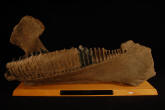
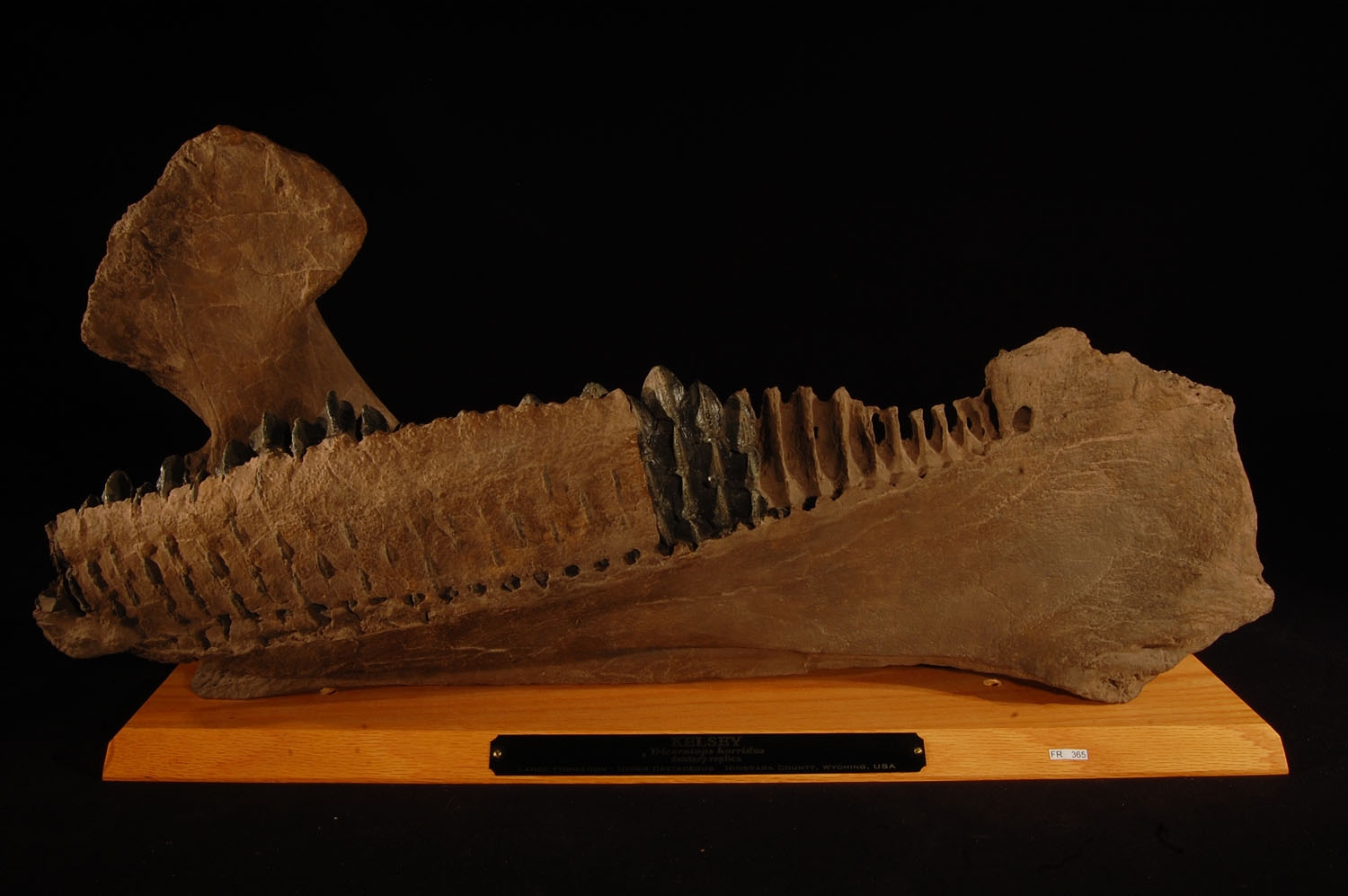
Image Code FR365 |
Catalogue No.: FR365
Description:
Triceratops Jaw.
Size: 600 X 160mm. |
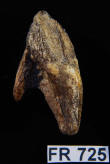
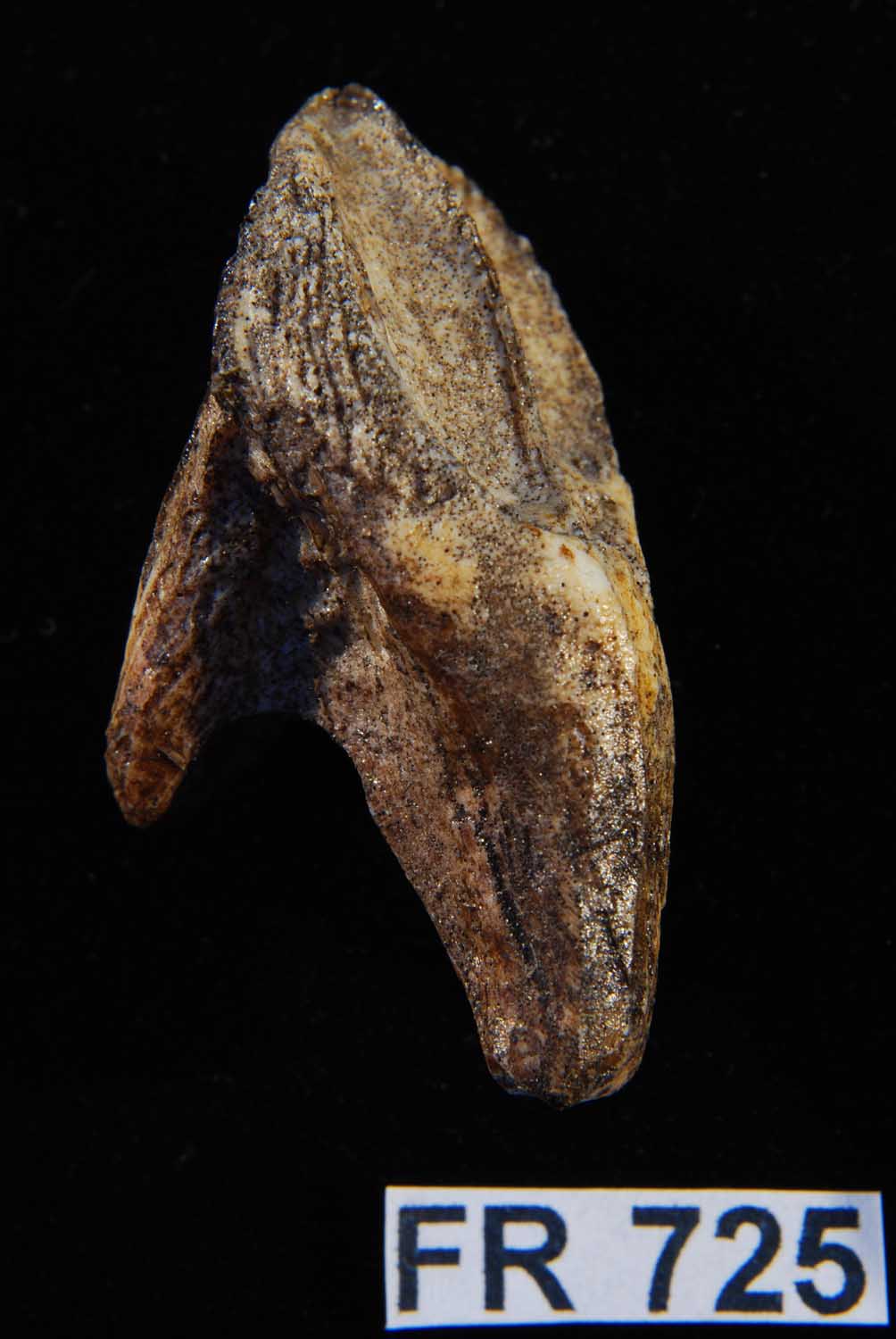
Image Code FR725 |
Catalogue No.: FR725
Description: Dinosaur Tooth. Triceratops.
Unbelievably tiny tooth of this tank-sized herbivore. The ridged crown of
each tooth was placed at an angle to its unusual double root. Browsed on
low-growing herbs of the late Cretaceous Period. VAP Replica T34.
Size: 23 X 20mm. |
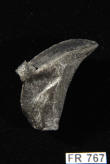
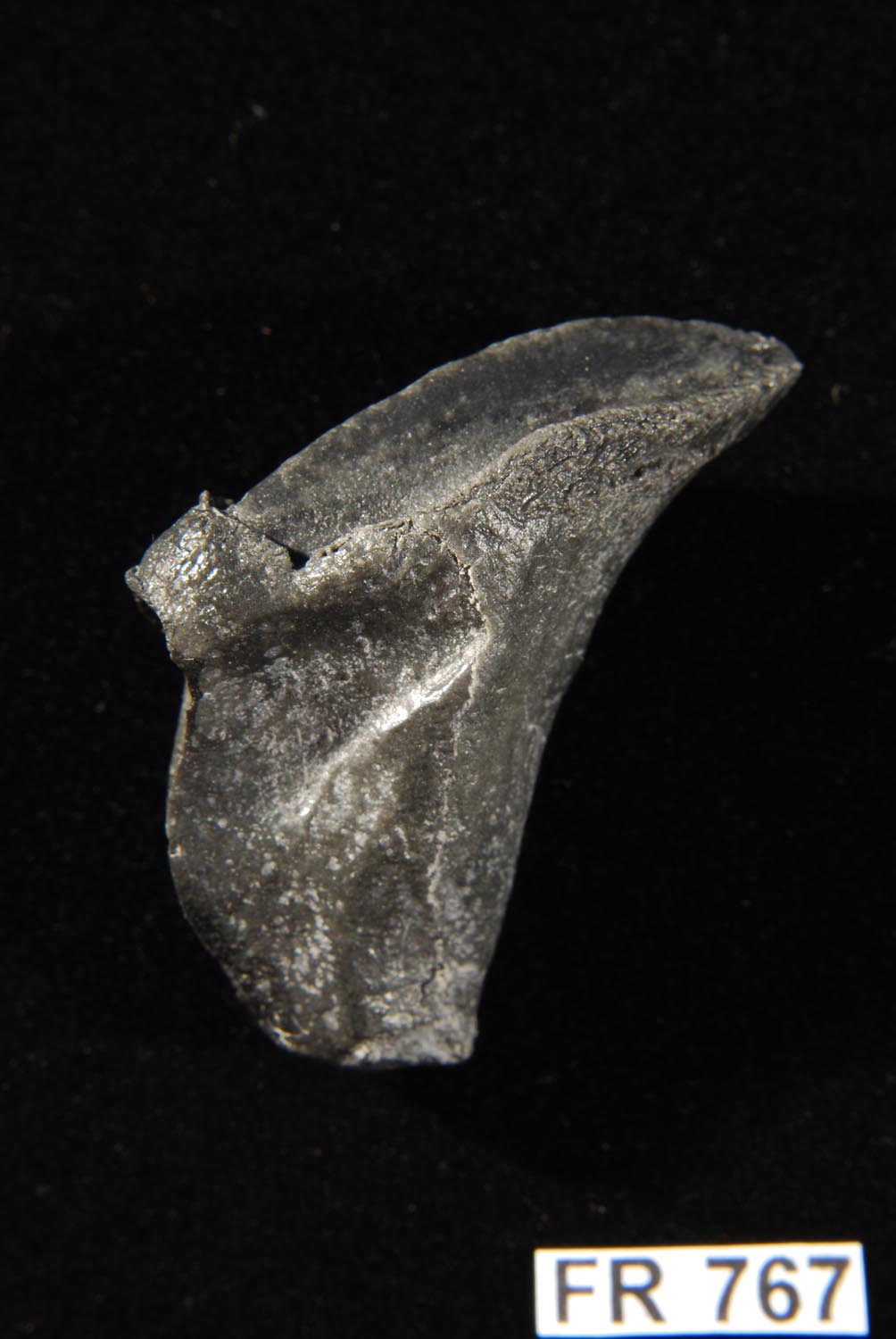
Image Code FR767 |
Catalogue No.: FR767
Description: Dinosaur Tooth. Triceratops sp. Hell Creek Formation.
Harding Co., South Dakota, USA. Cretaceous Period. Paleo-Ed Resources.
Size: 29 X 27mm. |
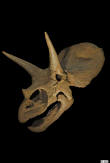
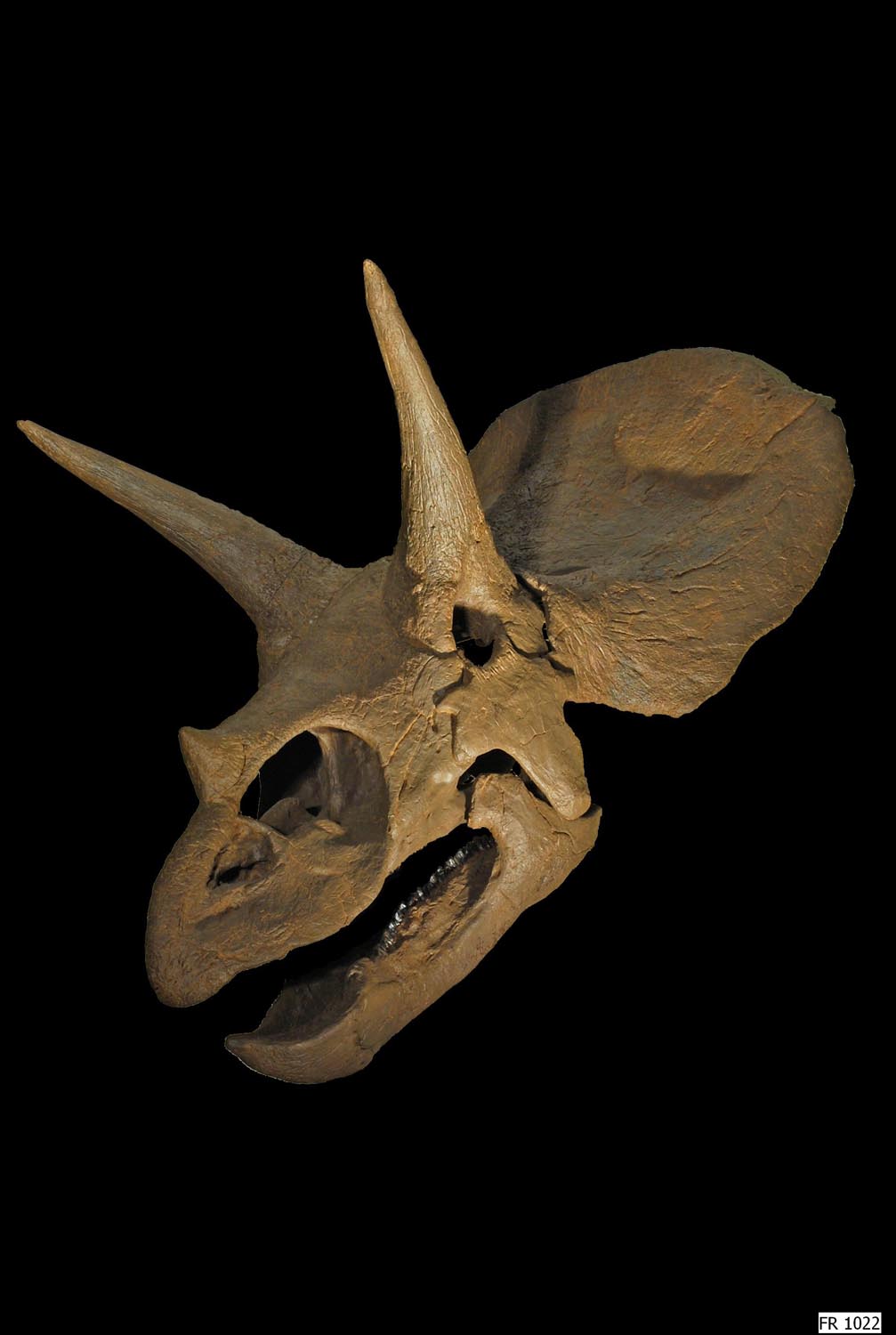
Image Code FR1022 |
Catalogue No.: FR1022
Description:
Triceratops Skull, Triceratops horridus. Cretaceous Age. These
horned dinosaurs were the largest and heaviest of their group. Each was thought
to weigh up to 10 tonnes. The skull alone with the complete neck frill was
over 2 metres in length.
Size: H1750 X W1480mm. |
Infraorder: Ceratopsia
Family: Protoceratopsidae
Genus:
Protoceratops
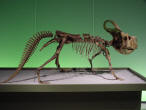
Image Code FR1046 |
Catalogue No.: FR1046
Description: Protoceratops andrewsi is one
of the best known dinosaurs.
All stages of growth are known from unhatched eggs containing embryos to
hatchlings to 'teenagers' to male and female adults. Because so many stages
of life of this sheep-sized dinosaur are known, palaeontologists have been
able to understand how the skeleton changed throughout the life of the
individual (something quite rare to know about fossil animals).
Size: L2000mm. |
Return to Top
Ornithopoda
Class
Infraorder:
Ornithopoda
Ornithopods are a group of bird-hipped dinosaurs that
started out as small, bipedal running grazers, and grew in size and numbers
until they became one of the most successful groups of herbivores in the
Cretaceous world, and dominated the North American landscape. Their major
evolutionary advantage was the progressive development of a chewing apparatus
that became the most sophisticated ever developed by a reptile, rivaling that of
modern mammals like the domestic cow. They reached their apex in the duck-bills,
before they were wiped out by the Cretaceous-Tertiary extinction event along
with all other non-avian dinosaurs.
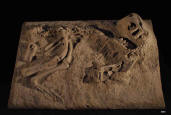
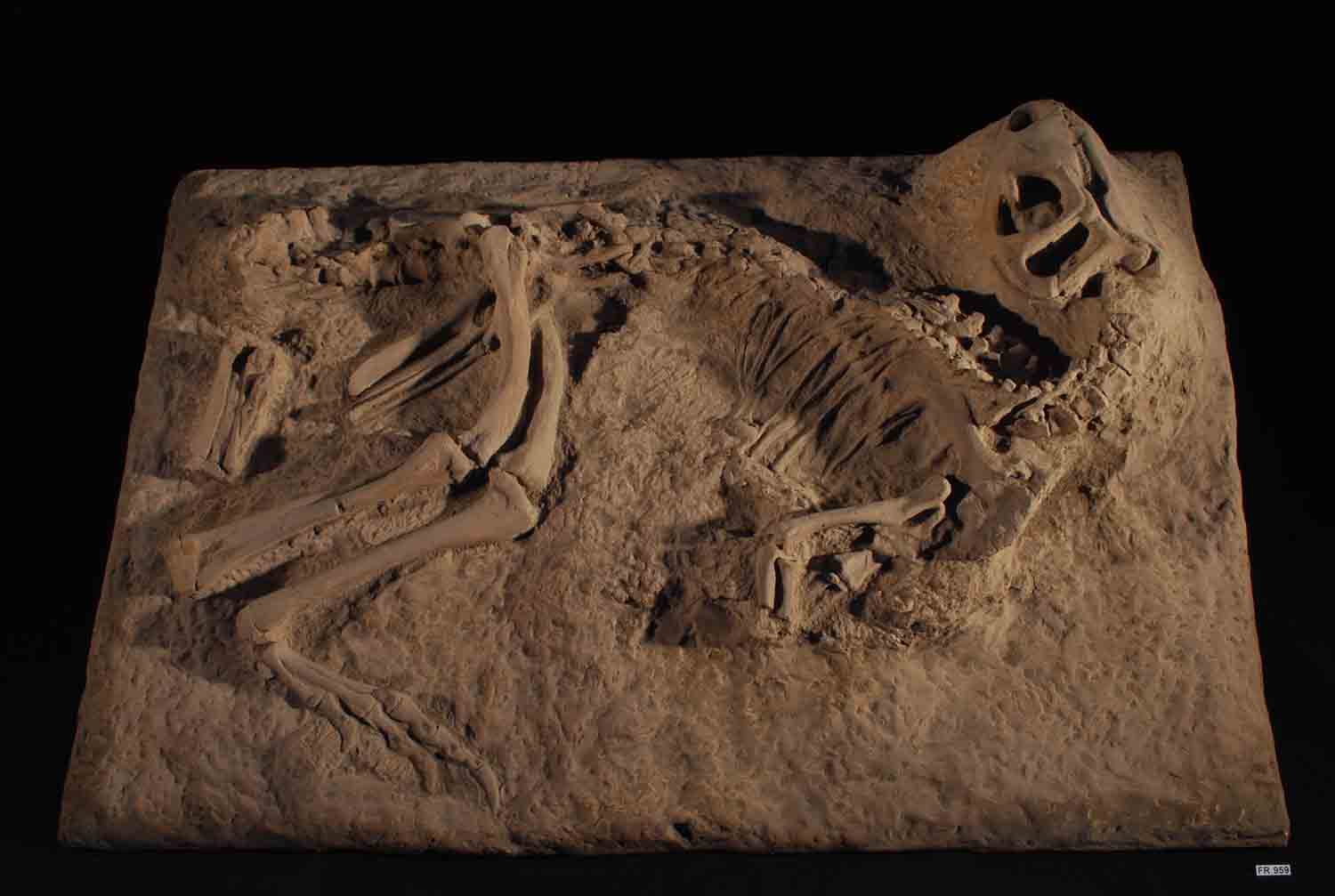
Image Code FR959 |
Catalogue No.: FR959
Description:
Small Ornithopod, possibly a
Hypsilophodontid.
Size: 360 X 415mm. |
Family:
Hypsilophodontidae
Genus: Othnielia
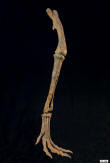
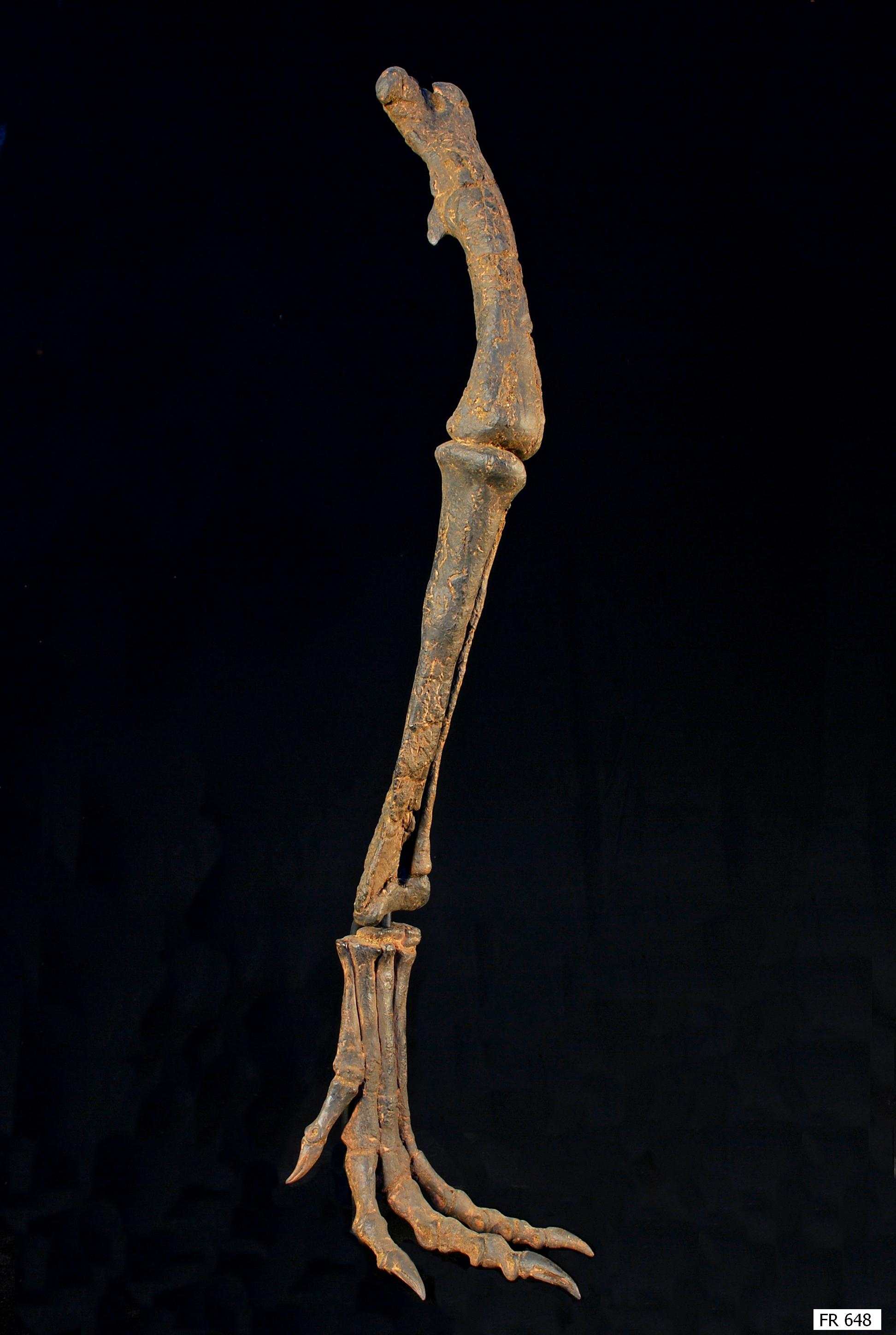
Image Code FR648 |
Catalogue No.: FR648
Description:
Othnielia rex.
Dinosaur Leg.
Witherell Quarry, Moffat County, Colorado, USA. Morrison Formation. Jurassic
Period. 145 MYA. This cast of a dinosaur leg is from an adult dinosaur
ornithipod known as Othnielia rex. Principally a bipedal animal it could
also have used its hands for walking in quadrupedal stance. The
proportionately short upper leg bone, or the femur and long lower leg bones
that is the tibia, fibula & metatasals tell us that Orthnielia was probably
swift and agile. Although Orthnielia is generally considered an herbivore,
in comparing Othnielia's teeth to the teeth of mammals, its tooth structure
includes features very similar to the teeth of insect-eating mammals. It is
therefore probable that this creature fed upon insects as well as plants.
The remains of smaller dinosaurs are disproportionately rare in the fossil
record, but close relatives of Othnielia have been found in several places,
such as the Drinker, found in Woming & the Yandusaurus in China. These
small Jurassic Dinosaurs are probably the ancestors of later and much larger
herbivores like iguanadons. Fossil Cast by Gaston Design.
Size: 600 X 105mm. |
Family:
Hypsilophodontidae
Subfamily:
Thescelosaurinae
Genus: Thescelosaurus
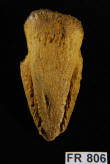
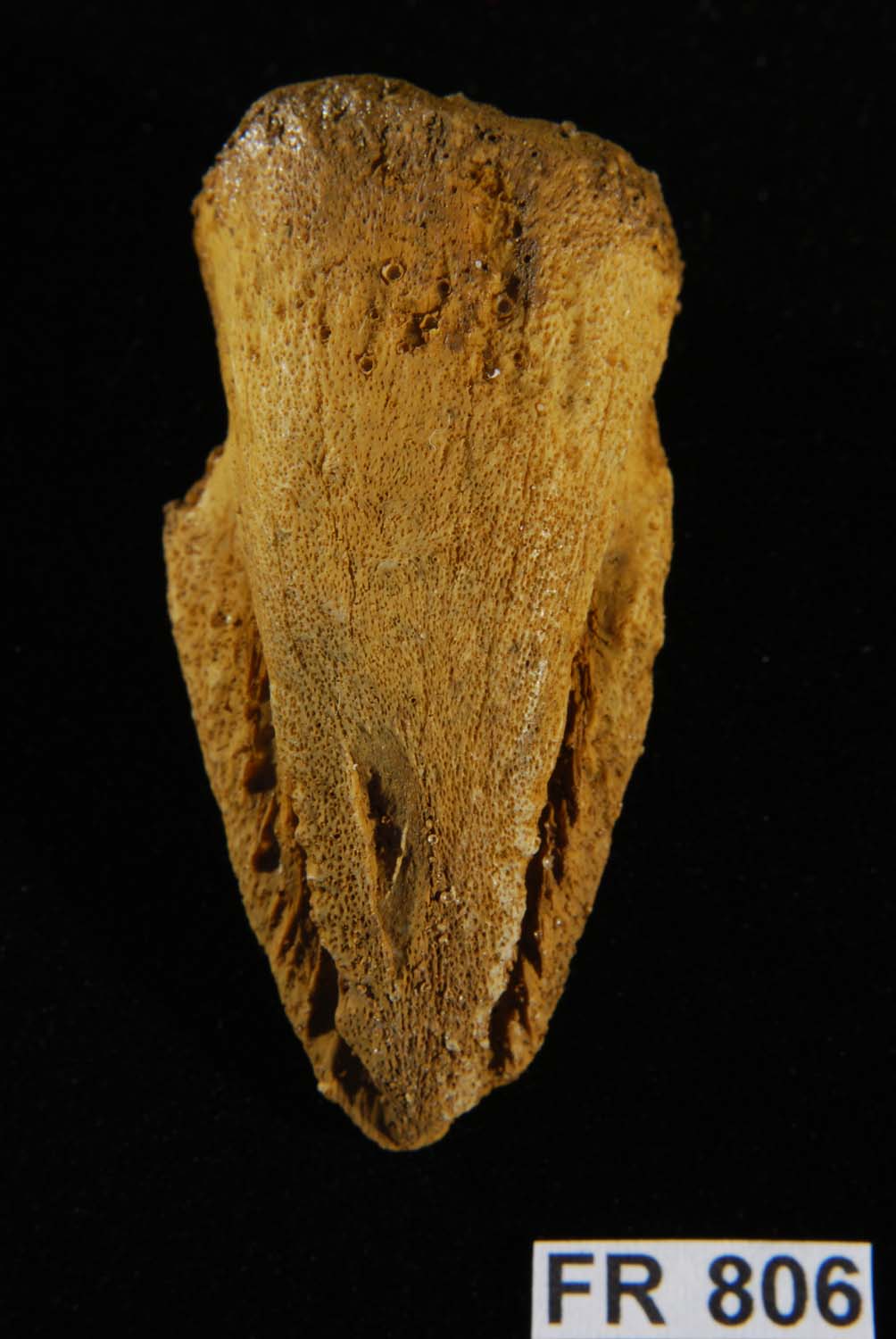
Image Code FR806 |
Catalogue No.: FR806
Description: Thescelosaurus sp. Toe. 75 MYA. Cretaceous Period. Hell Creek Formation. Harding Co., South
Dakota, USA. Thescelosaurus sp. Was a small plant eater from the cretaceous
period. It was from the Hell Creek area, an area abundant with many forms of
dinosaur life. Thescelosaurus was probably prey for Dromaeosaurus sp. and
Tyrannosaurus rex, to mention a few.
Size: 39 X 21mm. |
Family:
Tenontosauridae
Genus:
Tenontosaurus
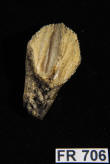
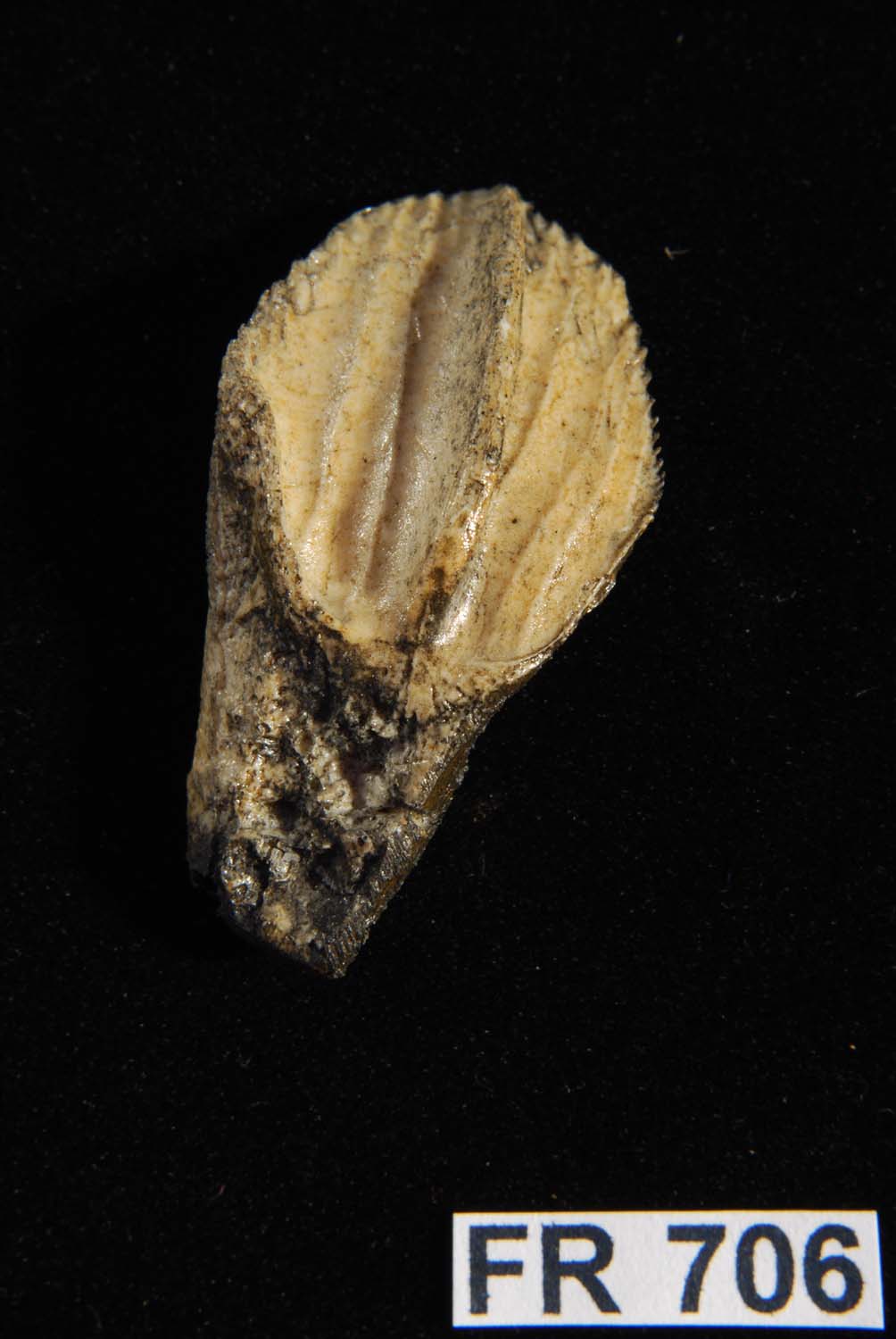
Image Code FR706 |
Catalogue No.: FR706
Description: Dinosaur Tooth. Tenontosaurus. An
ornithopod and large relative of the hypsiolophodon. Measuring one ton and
15-21 feet / 4.5 to 6.5 metres in length. Early North American Cretaceous.
VAP Replica T32.
Size: 31 X 18mm. |
Family:
Camptosauridae
Genus: Camptosaurus
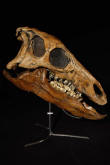
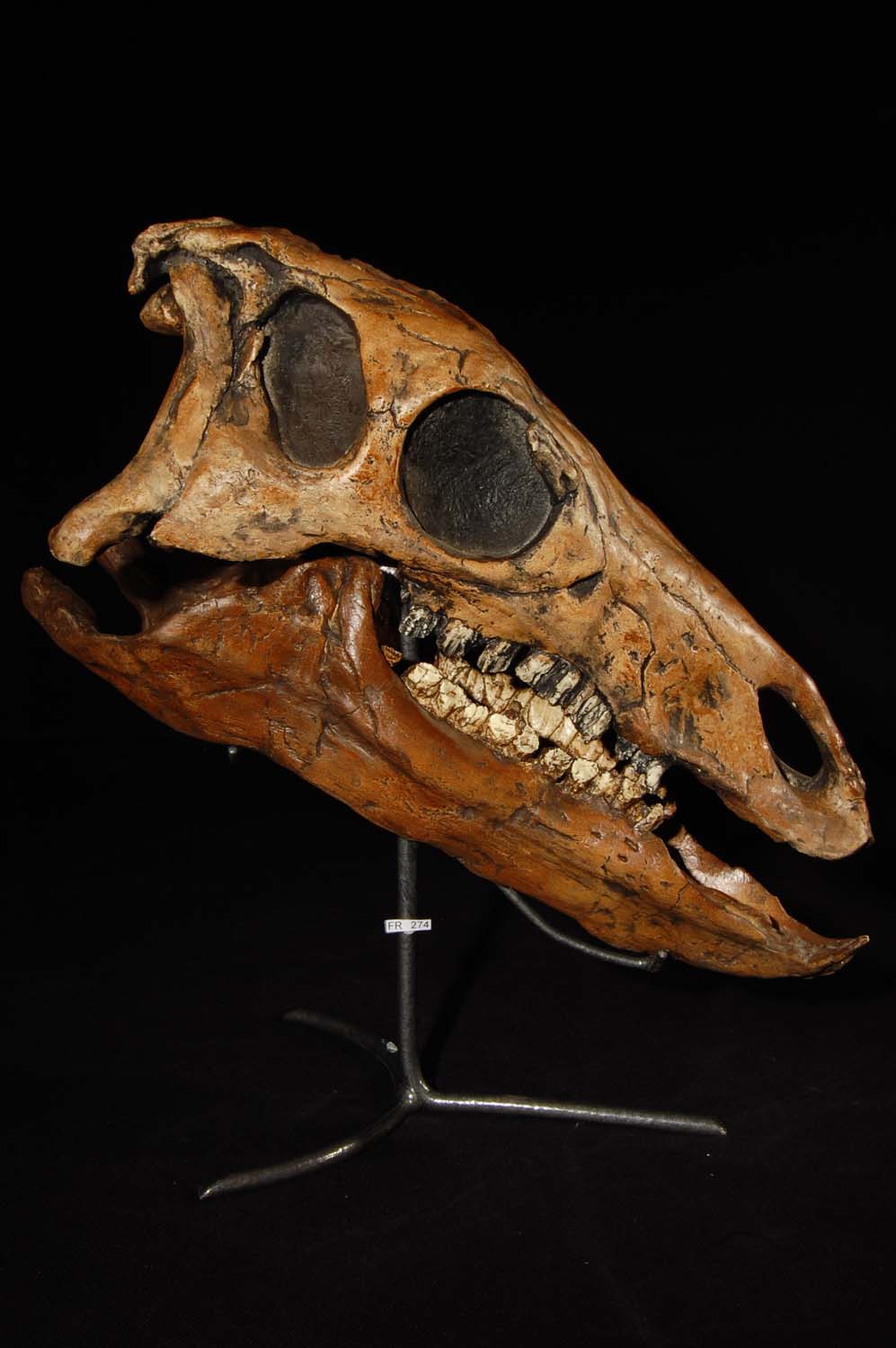
Image Code FR274 |
Catalogue No.: FR274
Description: Skull. Camptosaurus. A large bipedal herbivore of the
late Jurassic to Early Cretaceous. Western US, England and Portugal. Fossil
original from the Morrison Formation of Cleveland-Lloyd Quarry, Utah. VAP
Replica S005.
Size: L360mm. |
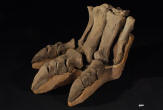
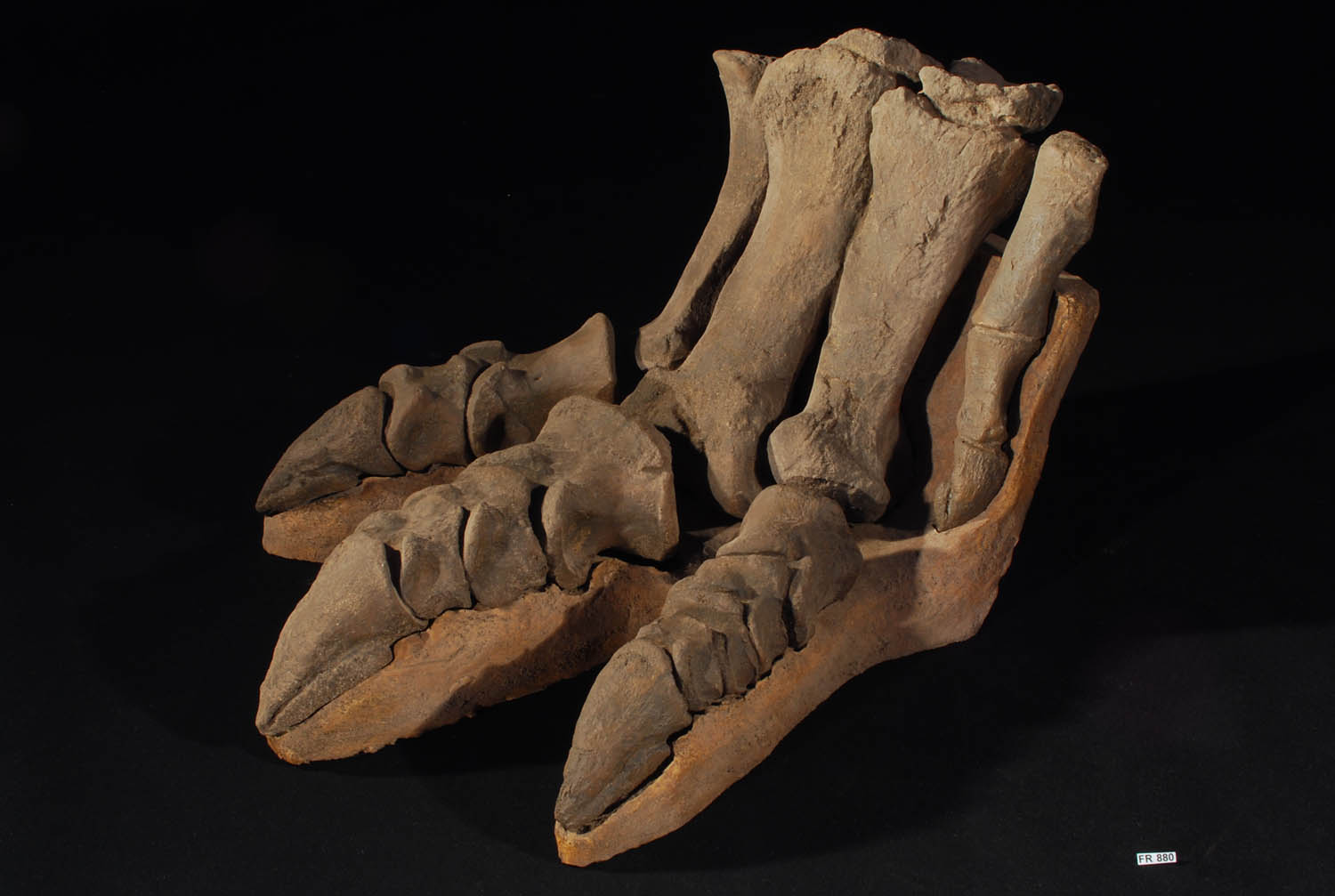
Image Code FR880 |
Catalogue No.: FR880
Description: Camptosaur Foot. KO-014.
Size: 230X235mm. |
Family:
Iguanodontia
Genus: Iguanodon
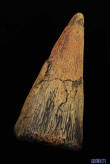
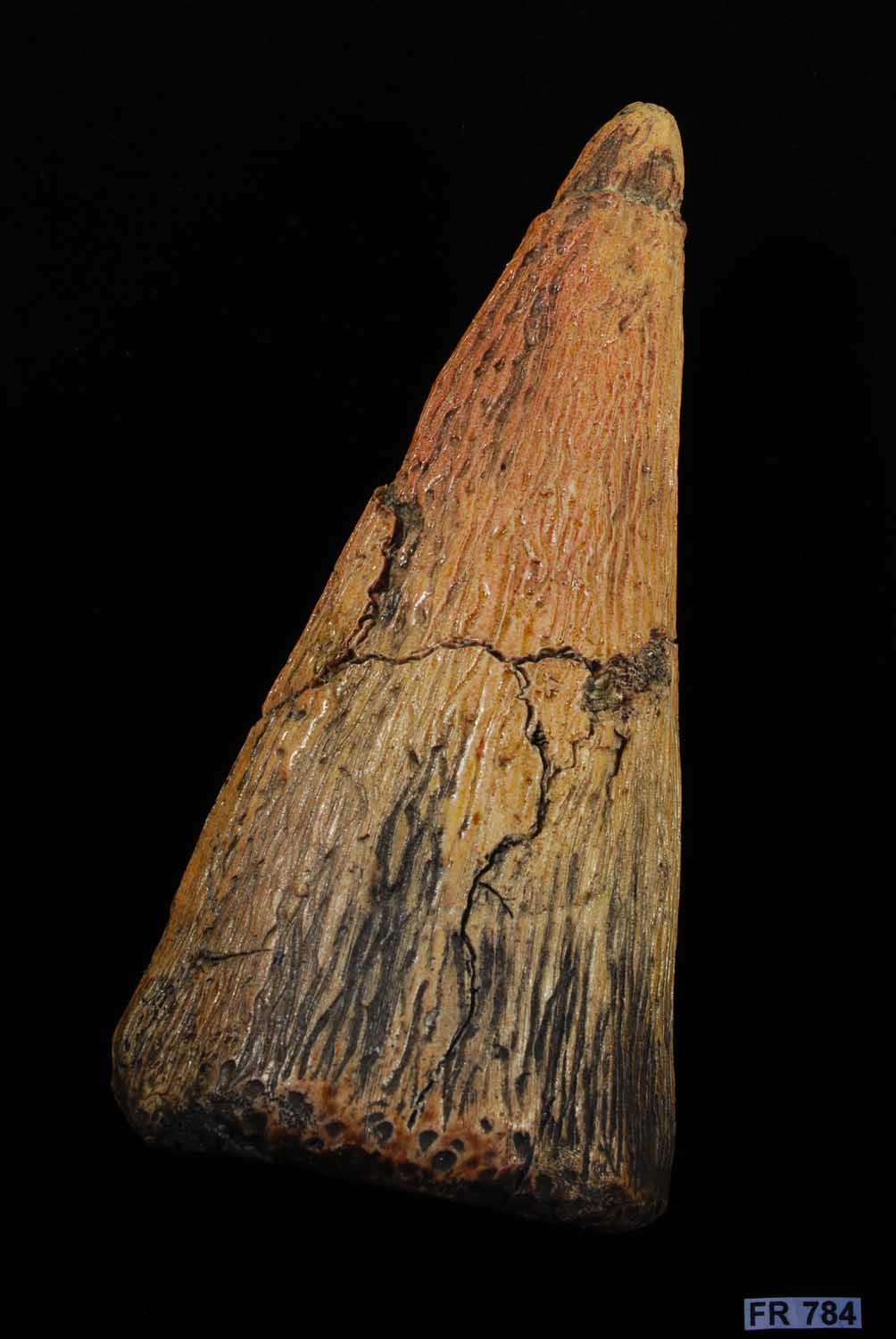
Image Code FR784 |
Catalogue No.: FR784
Description: Iguanodon thumb Spike. Stiletto-like
cartilaginous thumb nail. Only defensive weapon against attacking predators
of the Cretaceous Period. Steve Hoeger Model SH04.
Size: 130 X 60mm. |
Family: Hadrosauridae
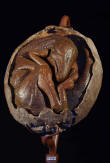
Image Code F4103 |
Catalogue No.: F4103
Description: An
actual
Hadrosaur dinosaur egg. with an
Hadrosaur embryo carved into the natural matrix material inside.
Size: 160 X 135mm. |
Family:
Hadrosauridae
Subfamily:
Hadrosaurinae
Genus: Edmontosaurus
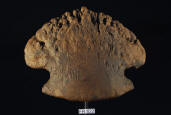
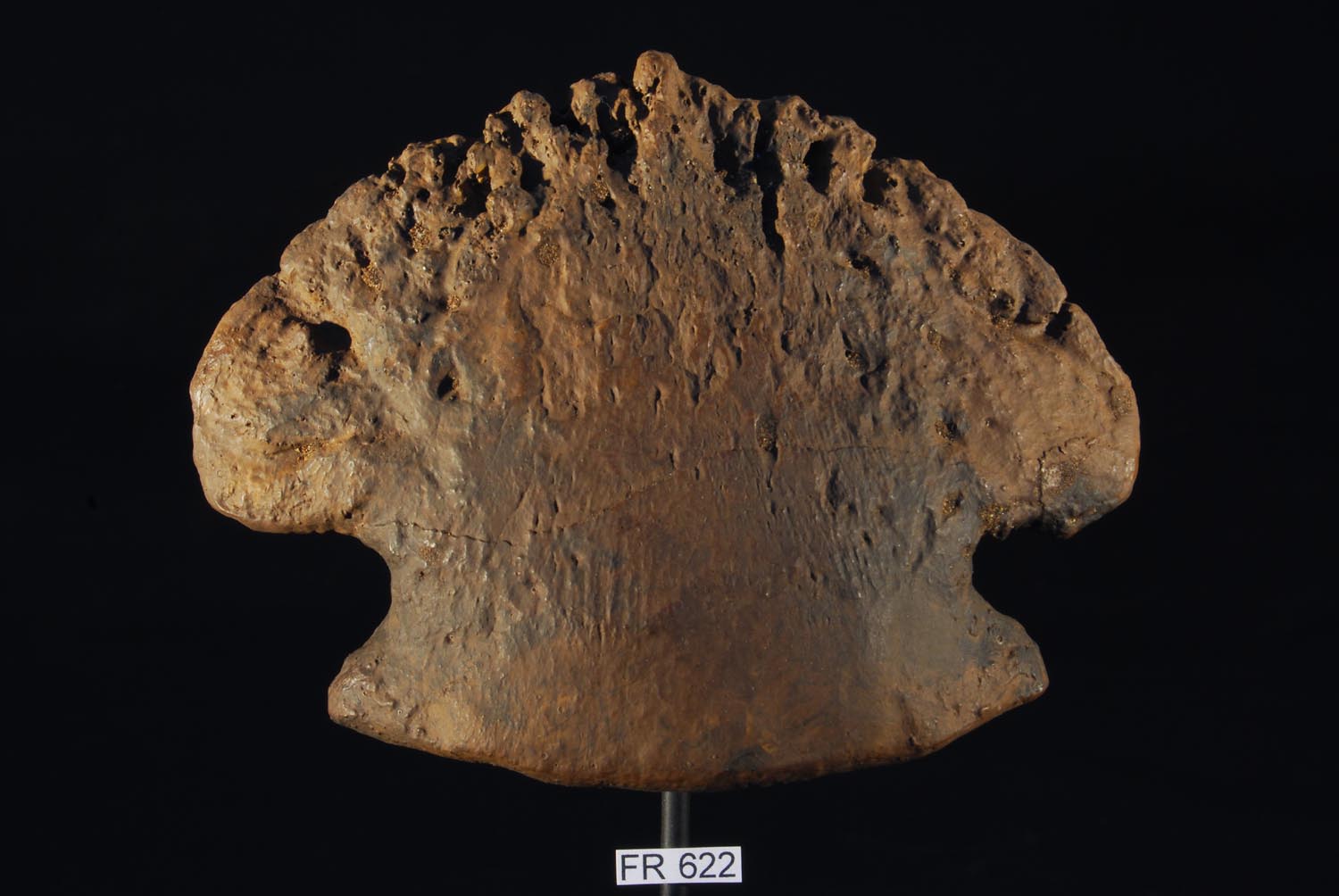
Image Code FR622 |
Catalogue No.: FR622
Description: Edmontosaurus annectens pes (foot)
ungual. Hell Creek Formation, Maastrichtian South Dakota, USA. Research
quality cast replica. Black Hills Institute of Geological Research Inc. The
terminal phalange on each toe is an ungual, a spade shaped bone, which
probably would have had a keratin sheath.
Size: 135 X 105mm. |
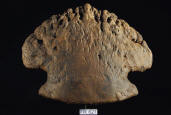
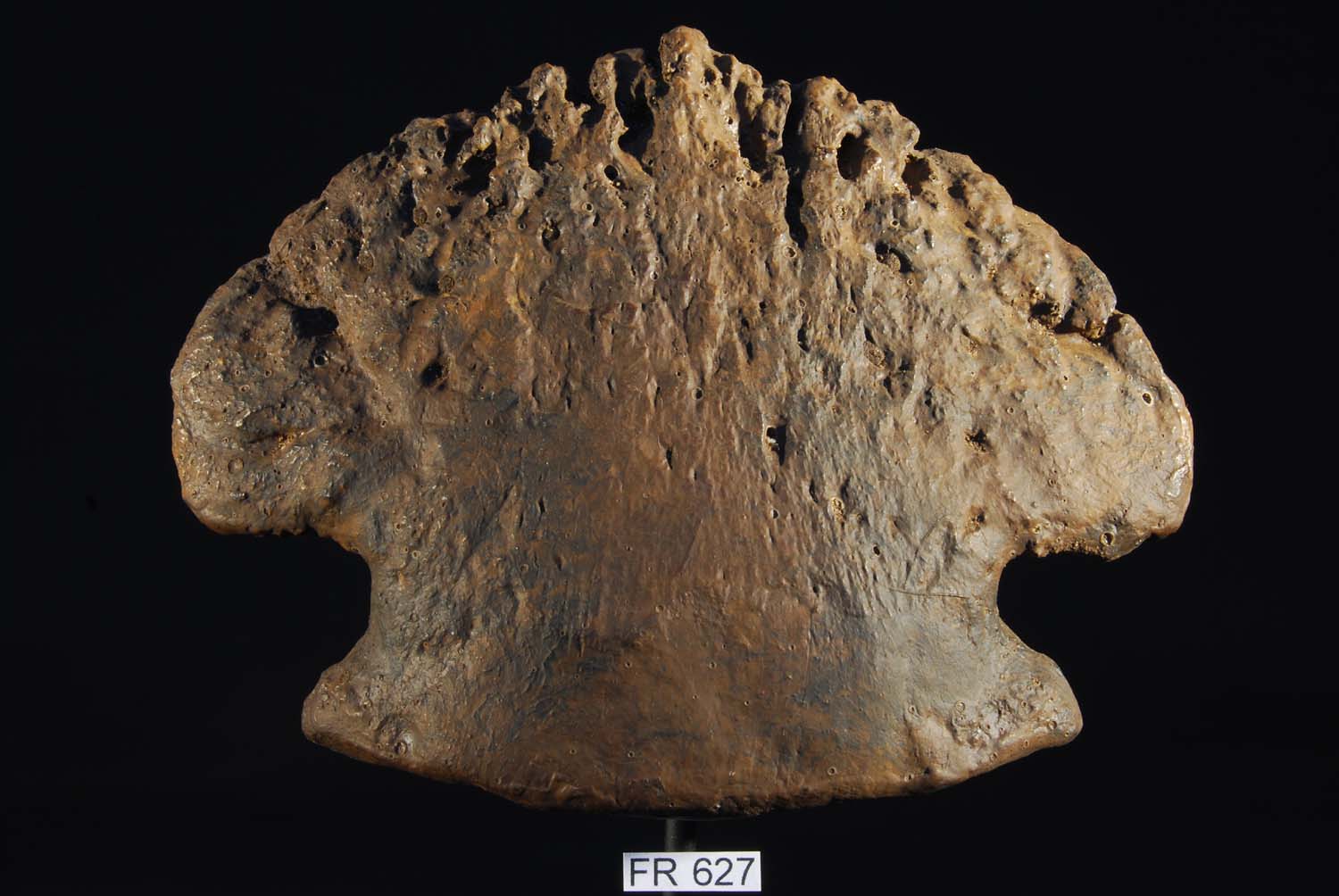
Image Code FR627 |
Catalogue No.: FR627
Description:
Edmontosaurus annectens
pes (foot) ungual. Hell Creek Formation, Maastrichtian South Dakota, USA. Research quality cast
replica. Black Hills Institute of Geological Research Inc.
Size: 135 X 105mm. |
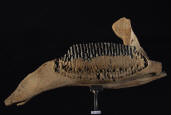
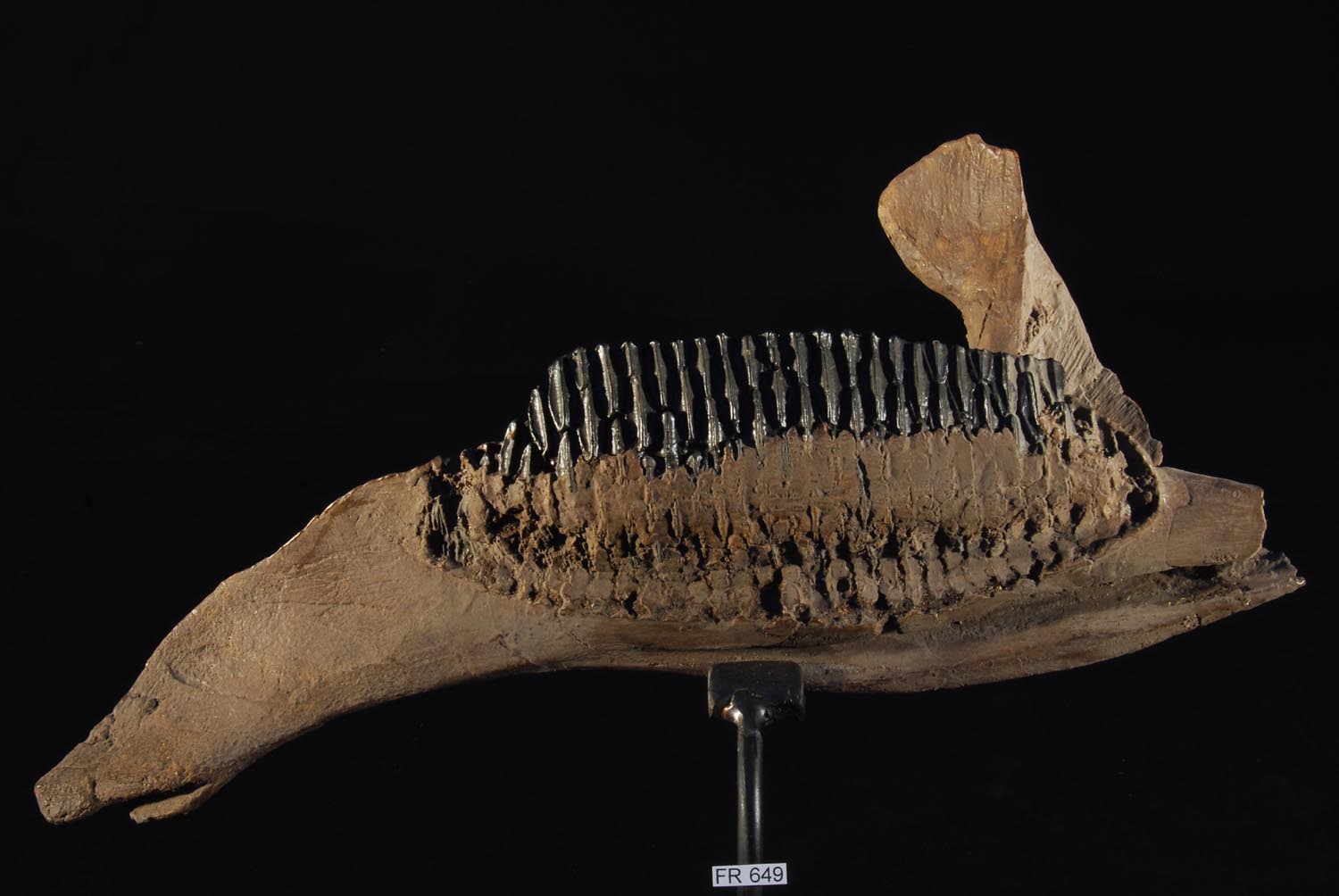
Image Code FR649 |
Catalogue No.: FR649
Description:
Edmontosaurus annectens
Juvenile jaw. Hell Creek Formation. Upper Cretaceous Period. Maastrichtian
South Dakota, USA. Black Hills Institute of Geological Research Inc.
Size: 340 X 150mm. |
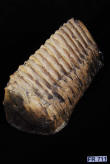
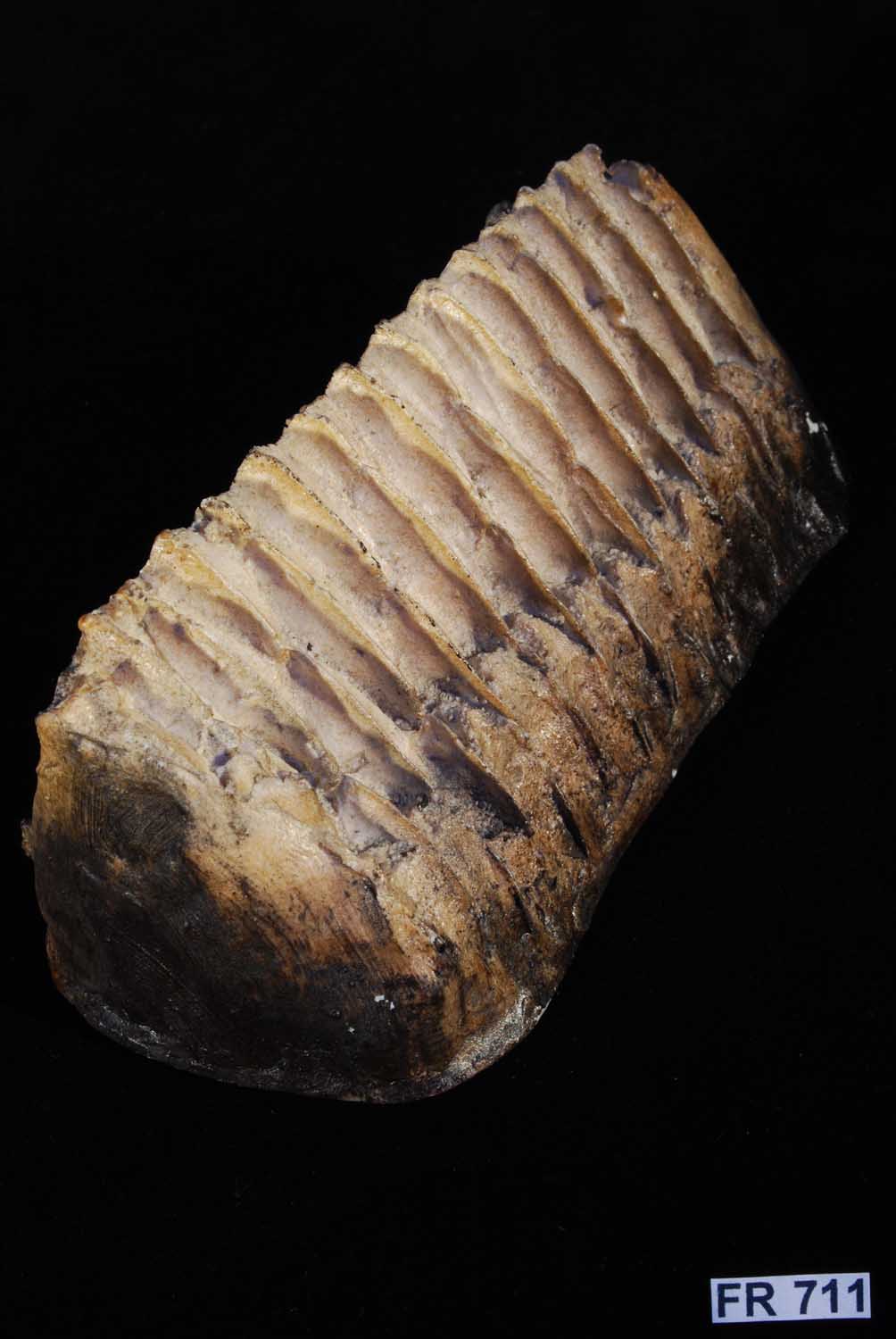
Image Code FR711 |
Catalogue No.: FR711
Description: Herbivorous Dinosaur Toothrow.
Edmontosaurus annectens. Dental pavement of closely packed rows of self sharpening
teeth. Cast from the largest of the duckbill dinosaurs. They inhabited the
Cretaceous Dakotas and adjoining regions of the USA and Canada. VAP Replica
T05.
Size: 62 X 141mm. |
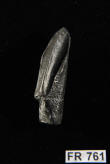
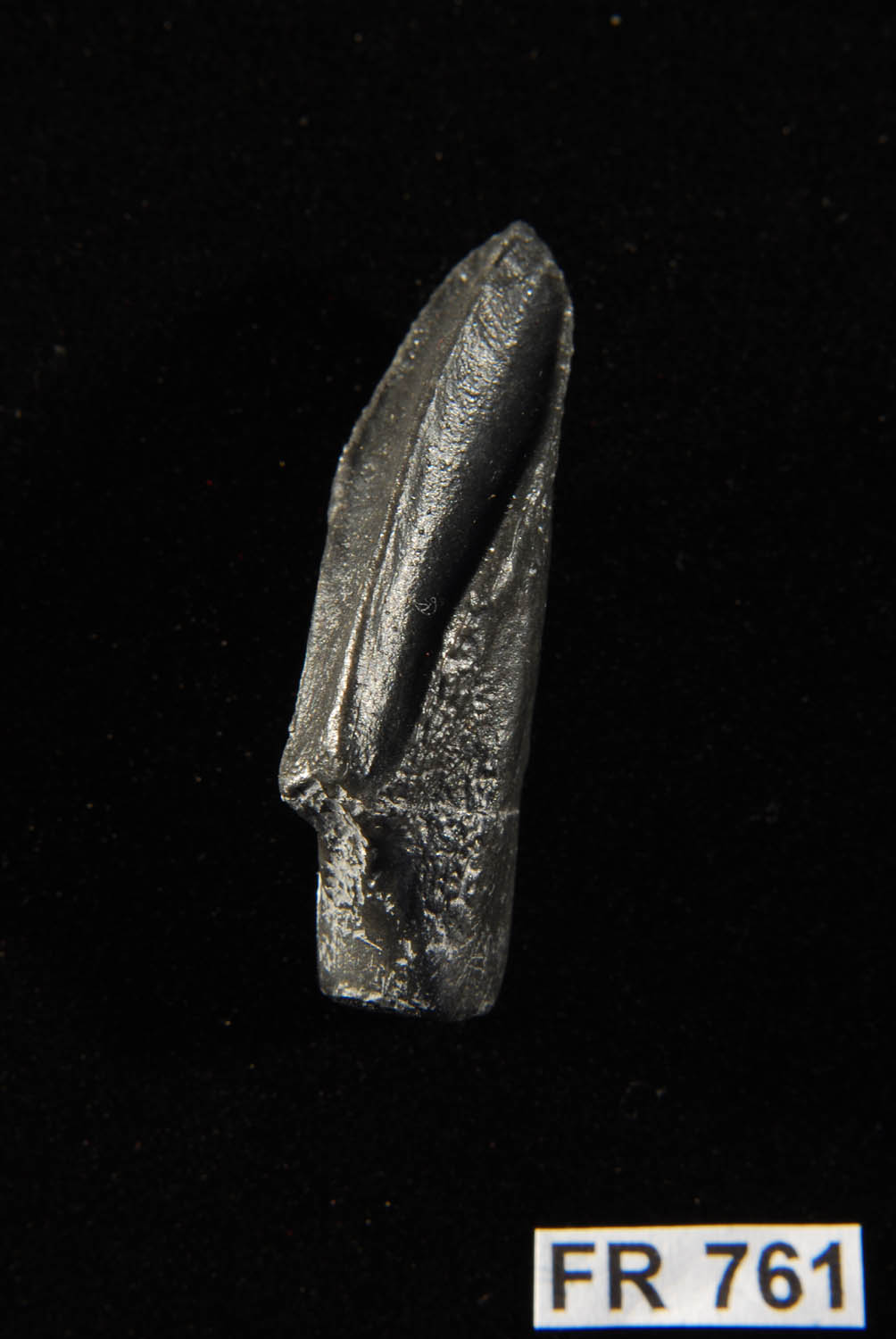
Image Code FR761 |
Catalogue No.: FR761
Description: Edmontosaurus annec Tooth. Hell Creek
Formation. Harding Co., South Dakota, USA. Late Cretaceous Period. Paleo-Ed
Resources.
Size: 33 X 12mm. |
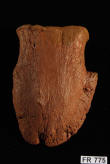
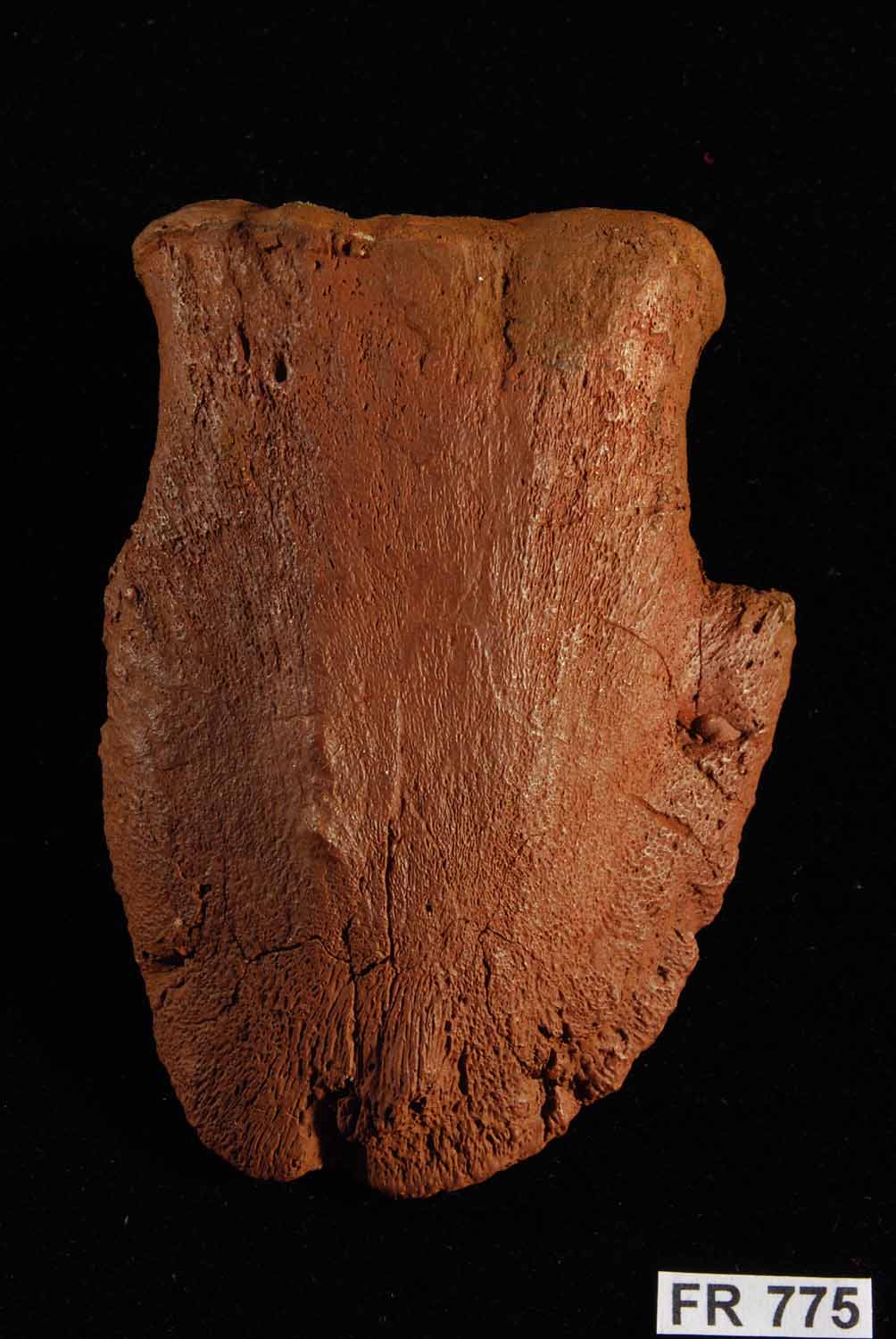
Image Code FR775 |
Catalogue No.: FR775
Description:
Edmontosaurus annectens
Terminal Phalange. 72 Million Years BP. Cretaceous Period. Lance Creek Formation. Niobrara Co.,
Wyoming, USA. Edmontosaurus sp. Was one of the crested hadrosaurs and is the
most common dinosaur found. They had a range from Alberta, Canada to New
Jersey, and there have been finds even in Antarctica. In fact, the most
complete dinosaur found to date was a mummified hadrosaur.
Size: 66 X 47mm. |
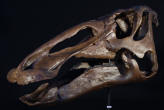
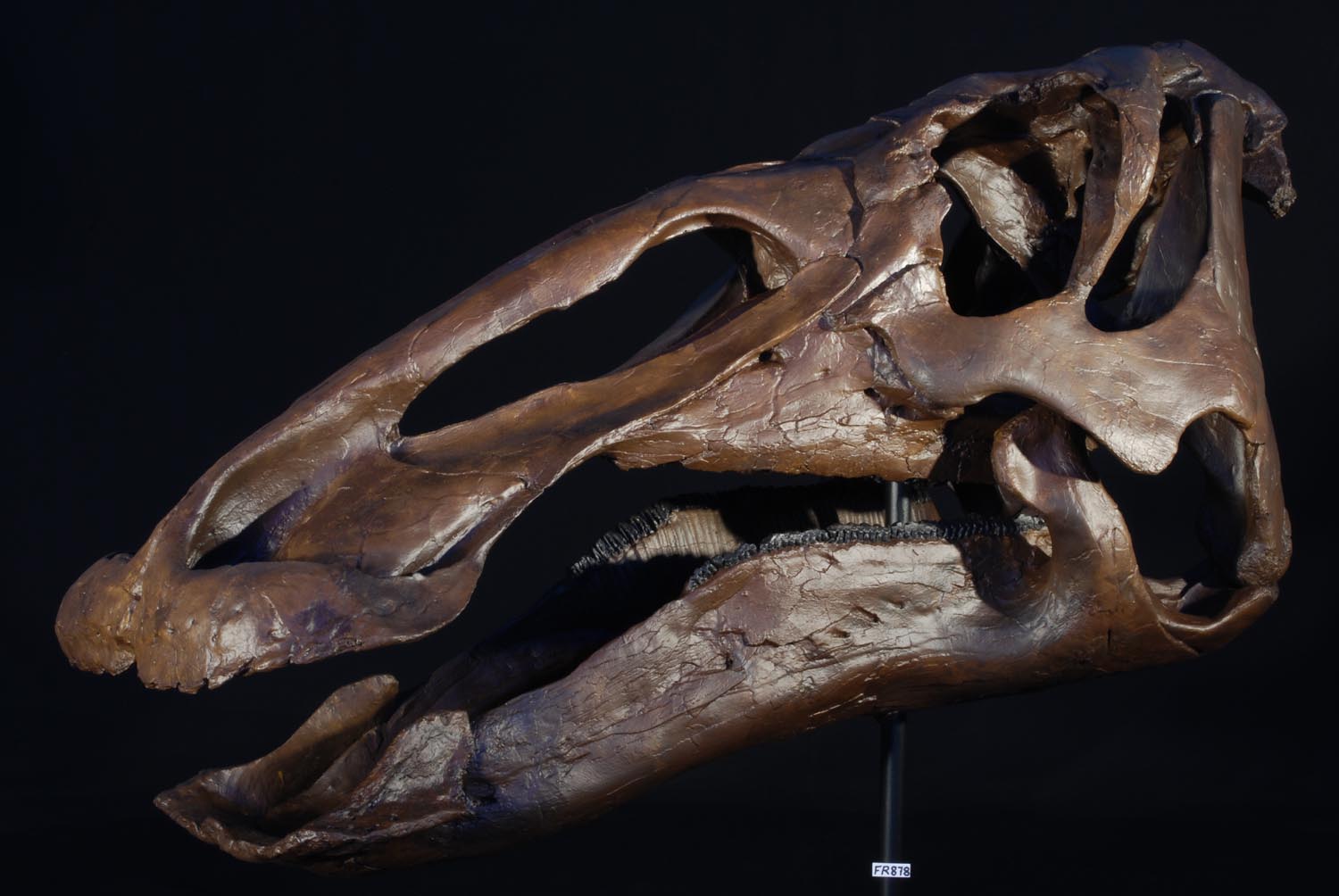
Image Code FR878 |
Catalogue No.: FR878
Description:
Edmontosaurus annectens
Skull.
Size: 930X490mm. |
Family: Hadrosauridae
Subfamily:
Lambeosaurinae
Genus: Parasaurolophus

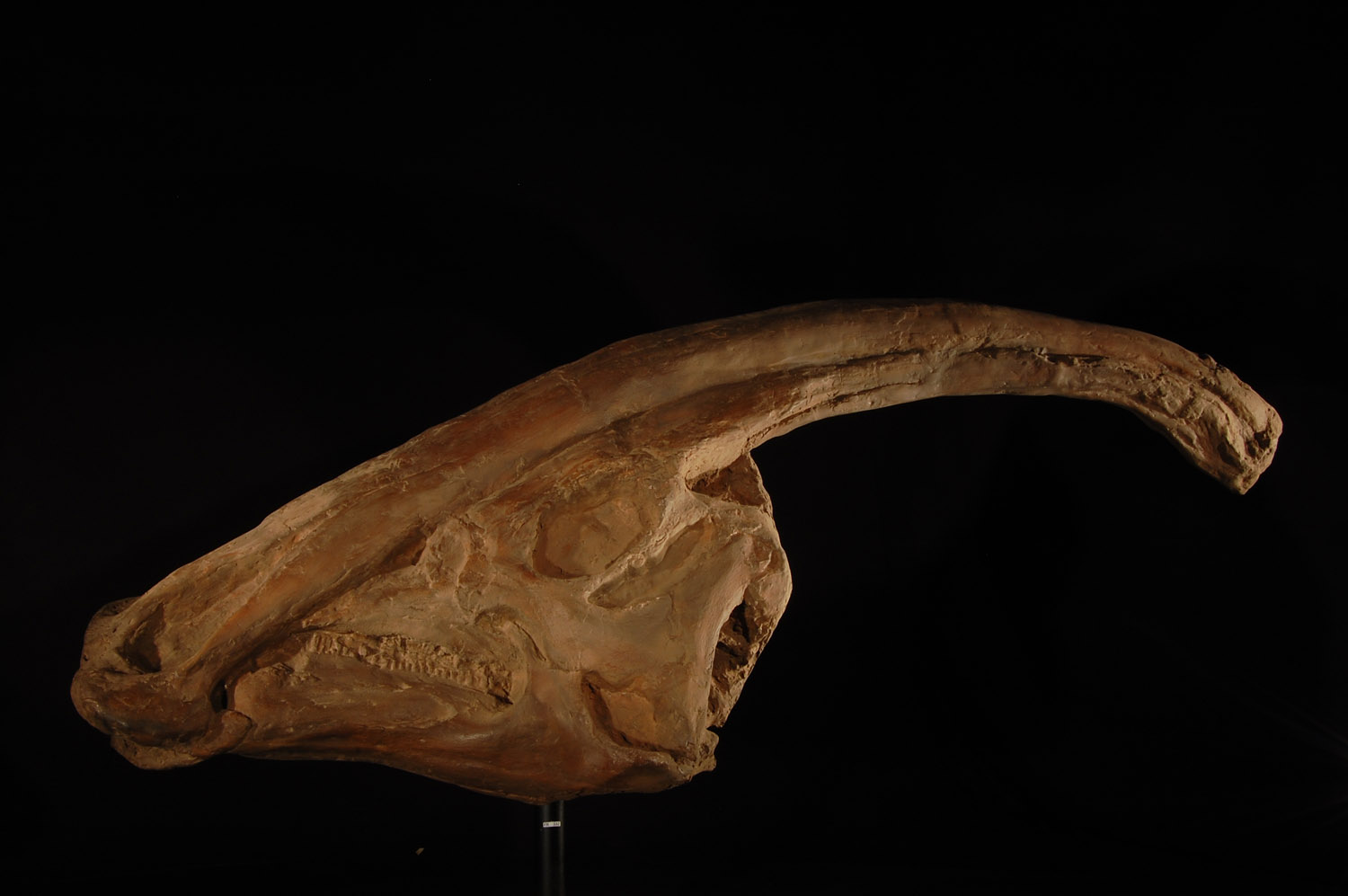
Image Code FR332 |
Catalogue No.: FR332
Description:
Parasaurolophus Skull.
Size: 1700 X 300mm. |
Return to Top
Pachycephalosauria Class
Infraorder:
Pachycephalosauria
Pachycephalosauria ( for 'thick headed lizards') is a clade
of ornithischian dinosaurs. Well-known genera include Pachycephalosaurus,
Stegoceras, Stygimoloch, and Dracorex. Most lived during
the Late Cretaceous Period, in what is now North America and Asia. They were all
bipedal, herbivorous/omnivorous animals with thick skulls. In some species the
skull roof is domed and several inches thick; in others it is flat or
wedge-shaped. The dome may be surrounded by nodes (for instance,
Pachycephalosaurus), spikes (Stygimoloch), or both (Dracorex).
Family:
Pachycephalosauridae
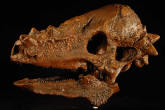
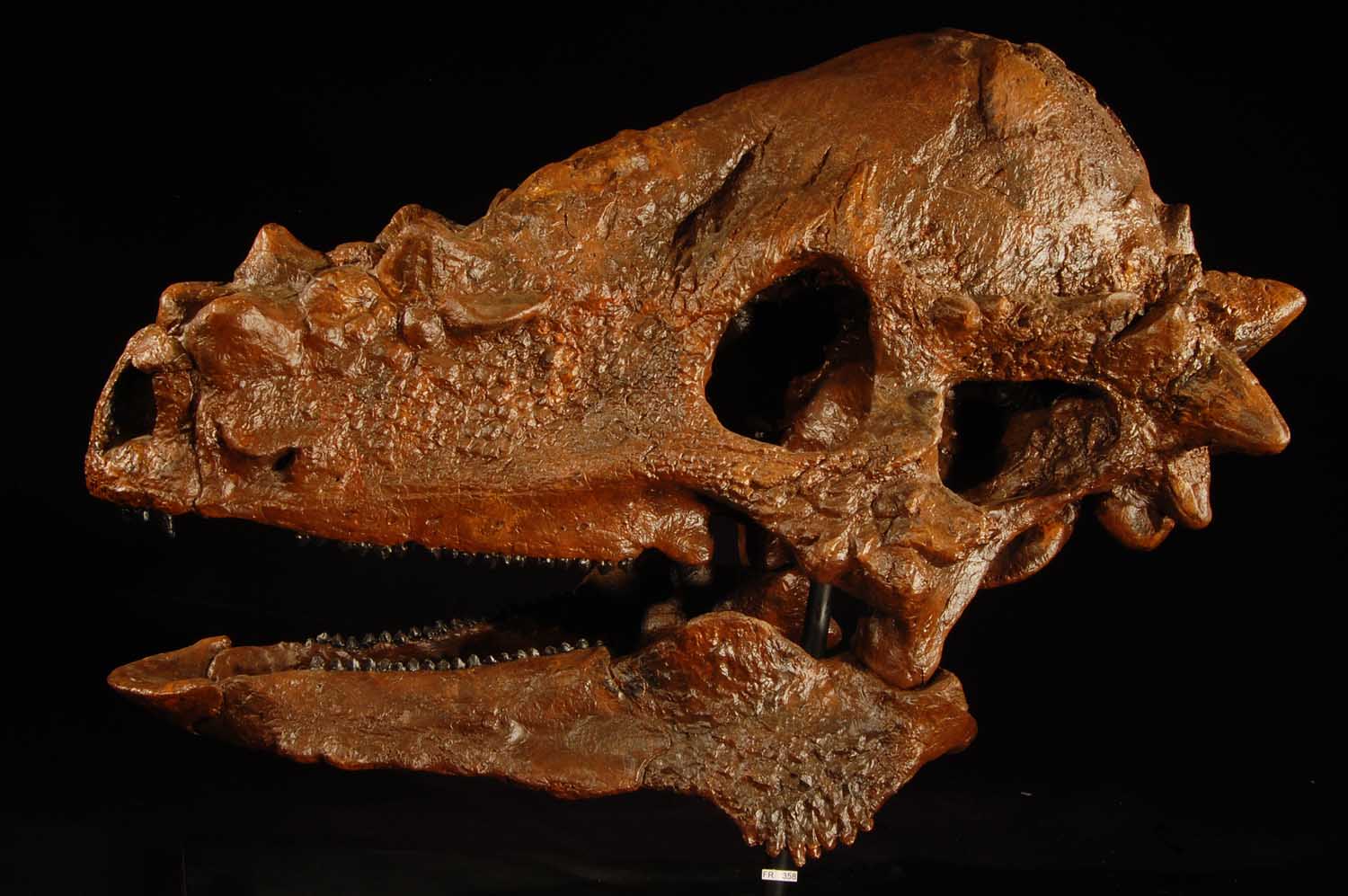
Image Code FR358 |
Catalogue No.: FR358
Description:
Pachycephalosaurid
Skull. Metalurus minor.
Location: Gansu Province China. Formation: Guanghe. Age: Late Miocene 4.5-5
MYA. Fossil Cast. Hand Cast & Coloured by Gaston Design.
Size: 530 X 330mm. |
Return to Top
|