|
| |
General Dinosauria Division
Class:
Sauropsida
Superorder:
Dinosauria

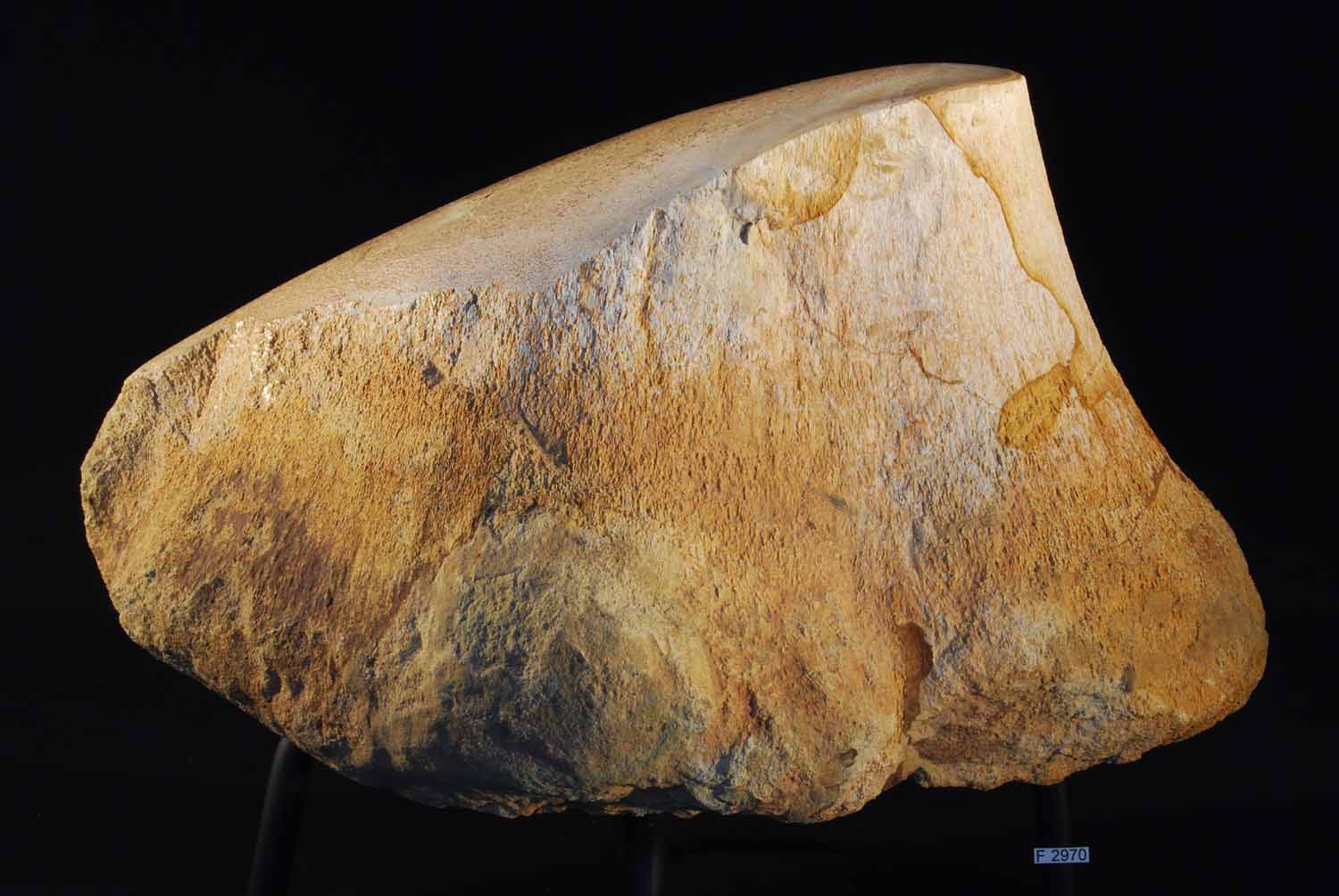
Image Code F2970 |
Catalogue No.: F2970
Description: Dinosaur Bone. Large Piece.
Size: 410 X 310mm. |

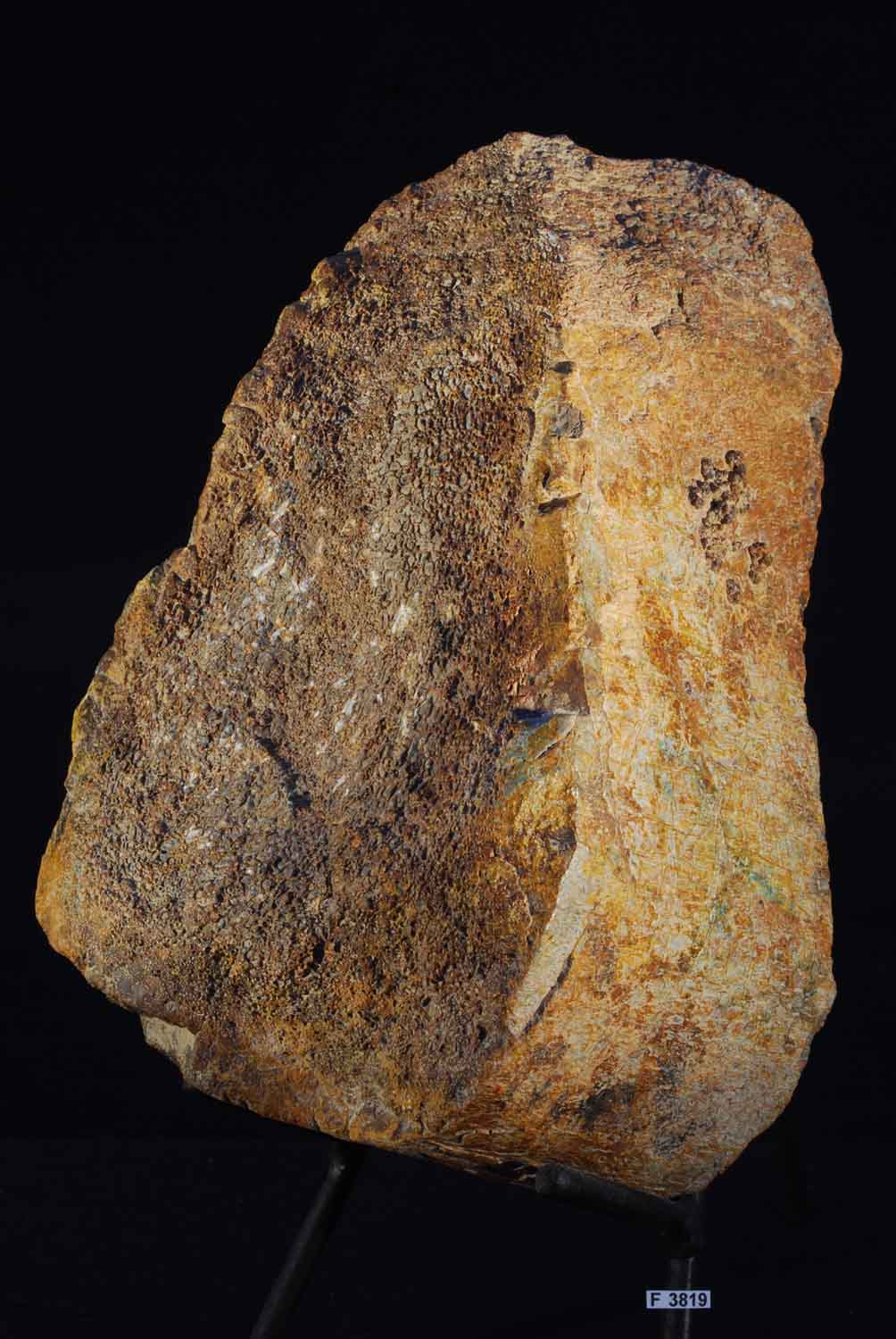
Image Code F3819 |
Catalogue No.: F3819
Description:
Partial Dinosaur Bone.
Size: 210 X 122mm. |

Image Code F4128 |
Catalogue No.: F4128
Description: New Zealand dinosaur. Although the
evidence is rare, fossils reveal that there were dinosaurs in New Zealand.
Possibly because it lacks the right conditions for fossilisation, only
fragments of bone and a few vertebrae have been found there. Because these
fossils are only a single bone or a piece of a bone, we cannot identify the
dinosaur's species, but by comparing the fossils with others we can see
which family or order it belonged to. We have recognised that these bone
pieces are from a Plesiosaur (large, long-necked marine reptile).
Size: 104 X 64 (av.) mm. |

Image Code F4309 |
Catalogue No.: F4309
Description: Dinosaur bone.
Size: 395 X 55mm. |

Image Code F4314 |
Catalogue No.: F4314
Description: Dinosaur bone.
Size: 340 X 100mm. |

Image Code F4315 |
Catalogue No.: F4315
Description: Dinosaur bone.
Size: 260 X 95mm. |

Image Code F4370 |
Catalogue No.: F4370
Description: Sliced Dinosaur Bone.
Size: 122 X 224mm. |

Image Code F4371 |
Catalogue No.: F4371
Description: Sliced Dinosaur Bone.
Size: 99 X 233mm. |

Image Code F4372 |
Catalogue No.: F4372
Description: Sliced Dinosaur Bone.
Size: 140 X 293mm. |

Image Code F4373 |
Catalogue No.: F4373
Description: Sliced Dinosaur Bone.
Size: 130 X 276mm. |

Image Code F4443 |
Catalogue No.: F4443
Description:
Gastroliths ('stomach
stones' or 'gizzard
stones'). Cloverly Formation, Montana. Early Cretaceous, 110MYA. 13 pieces. Gastroliths are
rocks,
which are or have been held inside the
digestive tract
of an animal. Some extinct animals, such as sauropod dinosaurs, appear to
have used stones to grind tough plant matter. Gastroliths associated with
dinosaur
fossils can be several kilograms in weight.
Size: 50 X 40mm average. |

Image Code F4482 |
Catalogue No.: F4482
Description:
Dinosaur Bone. Possibly from
an Alamosaurus as it was found in New Mexico, USA.
Extremely heavy and densely mineralised, this bone is an impressive display
item which comes with a custom-made steel stand. Bones such as this are very
rare and highly sought after by museums.
Living in Late Cretaceous times, Alamosaurus was among the last sauropods to
live before the mass extinction of the dinosaurs.
Size: 885mm. |
Return to Top
|