|
|
Ray-Finned Fish Division
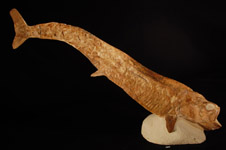
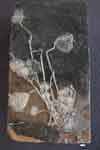
The Actinopterygii comprise the class of the ray-finned fishes. The ray-finned fishes are so called because they possess lepidotrichia or "fin rays", their fins being webs of skin supported by bony or horny spines ("rays"), as opposed to the fleshy, lobed fins that characterize the class Sarcopterygii. These actinopterygian fin rays attach directly to the proximal or basal skeletal elements, the radials, which represent the link or connection between these fins and the internal skeleton (e.g., pelvic and pectoral girdles). In terms of numbers, actinopterygians are the dominant class of vertebrates, with nearly 30,000 species, and they are ubiquitous throughout fresh water and marine environments from the deep sea to the highest mountain streams. The earliest known fossil Actinopterygiian is Andreolepis hedei, dating back 420 million years (Late Silurian). The Actinopterygii Class has two Subclasses: the Chondrostei (sturgeons and paddlefishes - primarily cartiliginous fish showing some ossification) and the Neopterygii (bowfin, gars, and teleosts). In addition Pachycormiformes is an extinct order of ray-finned fish known from Mesozoic deposits from Eurasia and the Americas. Semionotiformes ("flag-back form") is an order of primitive, ray-finned, primarily freshwater fish from the Triassic to the Cretaceous. The most well-known genus is Semionotus of Europe and North America. Finally, Rhacolepis is an extinct genus of fish from the Cretaceous. |
|
__________________________________________________________________________________________________ |