|
| |
Sharks, Rays & Skates Division
Chondrichthyes or
cartilaginous fishes are jawed
fish with paired fins, paired nostrils, scales, two-chambered hearts, and
skeletons made of
cartilage rather than
bone. They are divided into two subclasses: Elasmobranchii (sharks, rays and skates) and
Holocephali (chimaera,
sometimes called ghost sharks).
Members of the elasmobranchii subclass have no swim bladders, five to seven
pairs of gill clefts opening individually to the exterior, rigid dorsal fins,
and small placid scales. The teeth are in several series; the upper jaw is not
fused to the cranium, and the lower jaw is articulated with the upper. The eyes
have a tapetum lucidum. The inner margin of each pelvic fin in the male fish is
grooved to constitute a clasper for the transmission of sperm. These fishes are
widely distributed in tropical and temperate waters.
Rays and Skates Category
Class:
Chondrichthyes
Subclass:
Elasmobranchii
Superorder:
Batoidea (Rays)
Order:
Rajiformes (True Rays)
Family: Dasyatidae
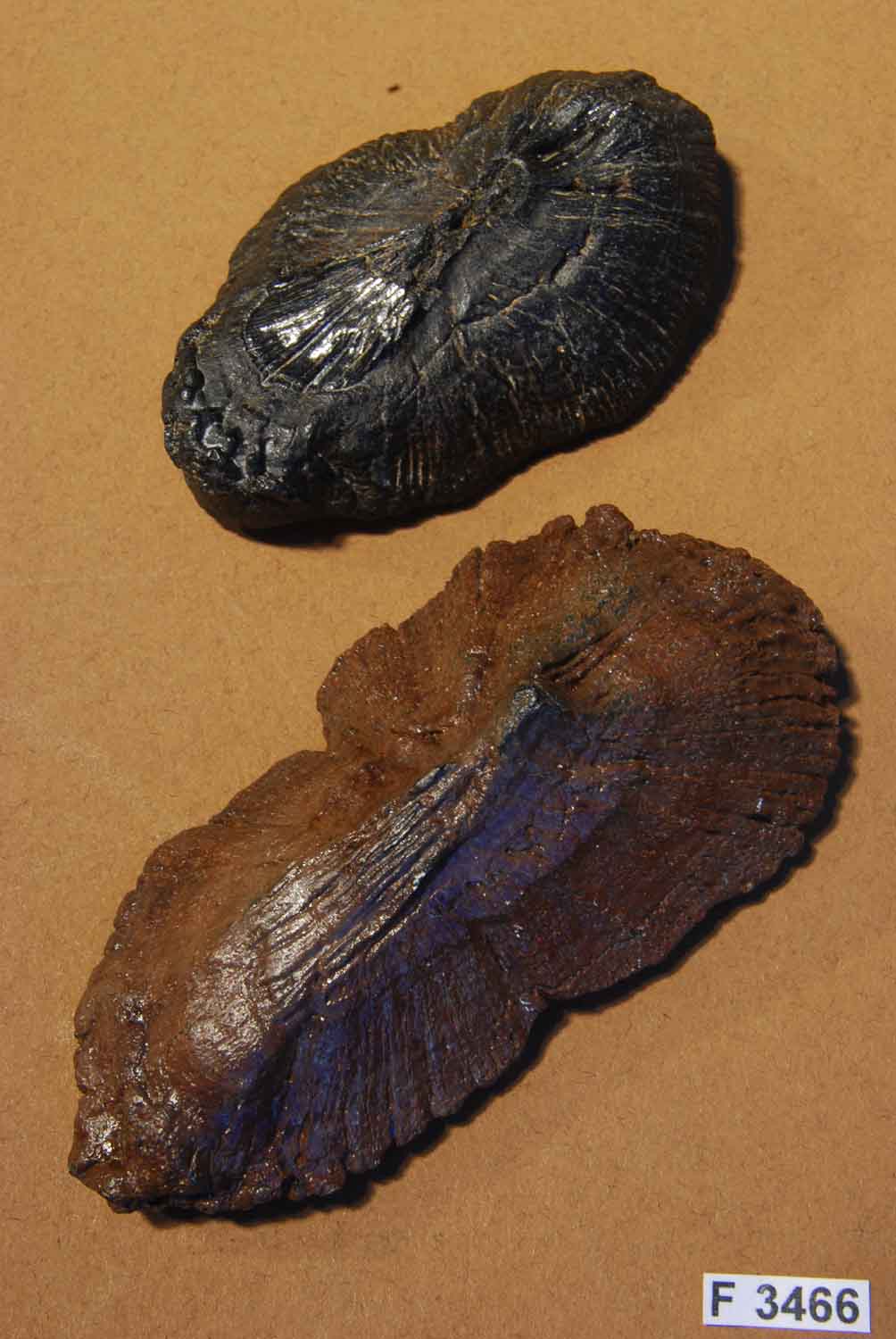
Image Code F3466 |
Catalogue No.: F3466
Description:
Giant Stingray Dermal
Plate. Dasyatidae sp. Miocene Epoch. 5-24.5
MYA. Polk County, Florida. 2 pieces.
Size: 77 x 39mm. |
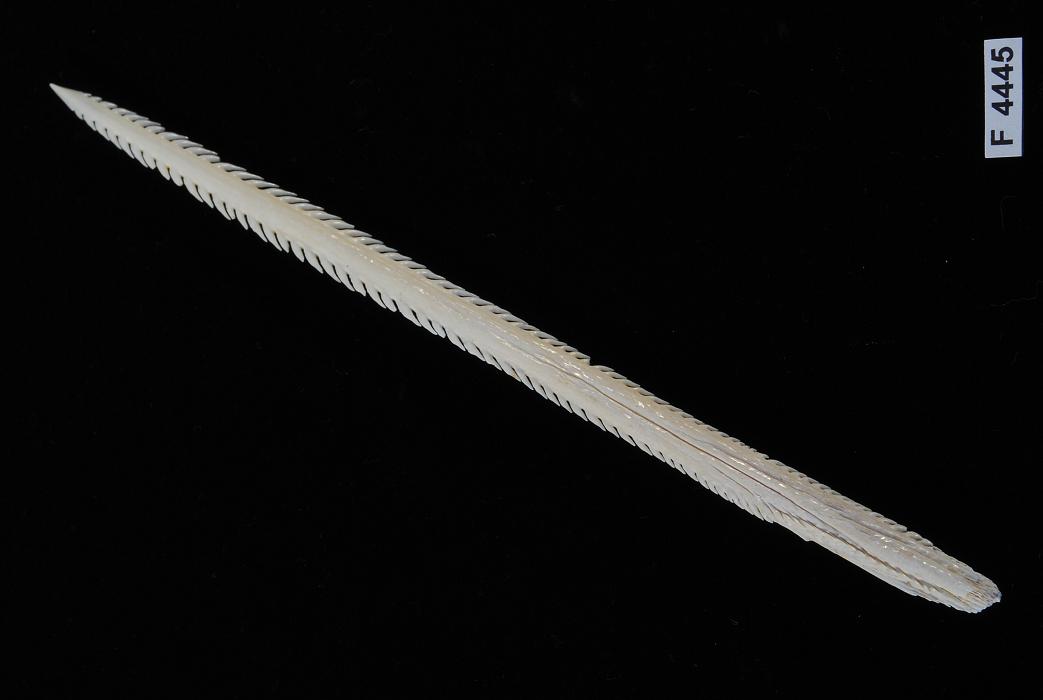
Image Code F4445 |
Catalogue No.: F4445
Description: Stingray Barb.
Size: L160mm. |
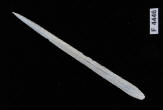
Image Code F4446 |
Catalogue No.: F4446
Description: Stingray Barb.
Size: L105mm. |
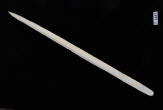
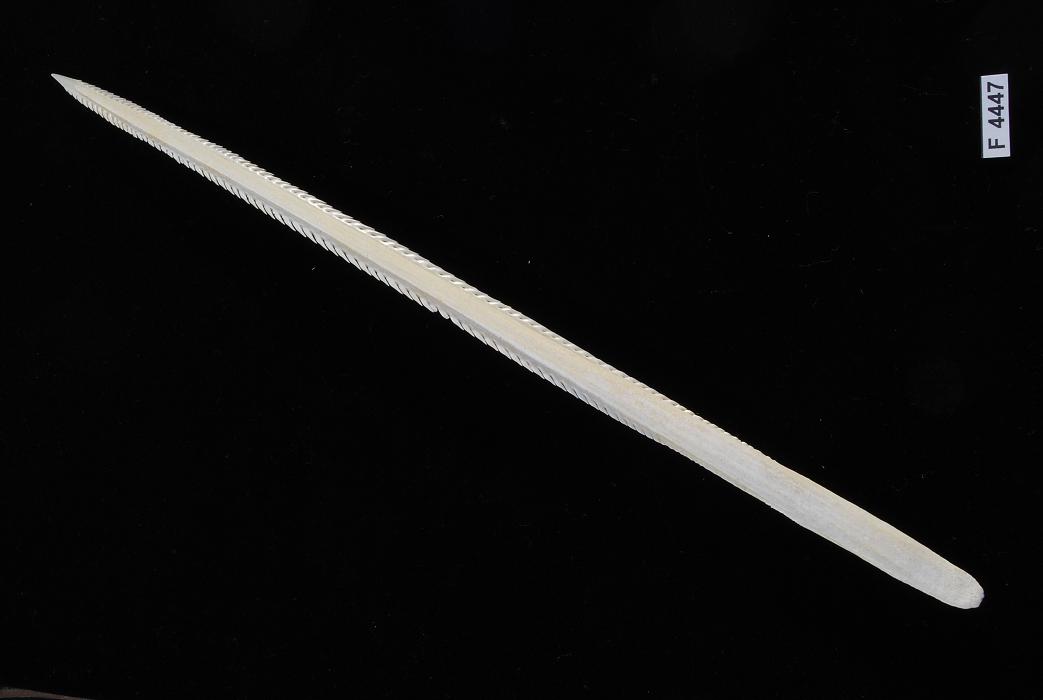
Image Code F4447 |
Catalogue No.: F4447
Description: Stingray Barb.
Size: L220mm. |

Image Code F4456 |
Catalogue No.: F4456
Description: Large Stingray.
Size: L2060 X W1520mm. |
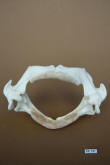
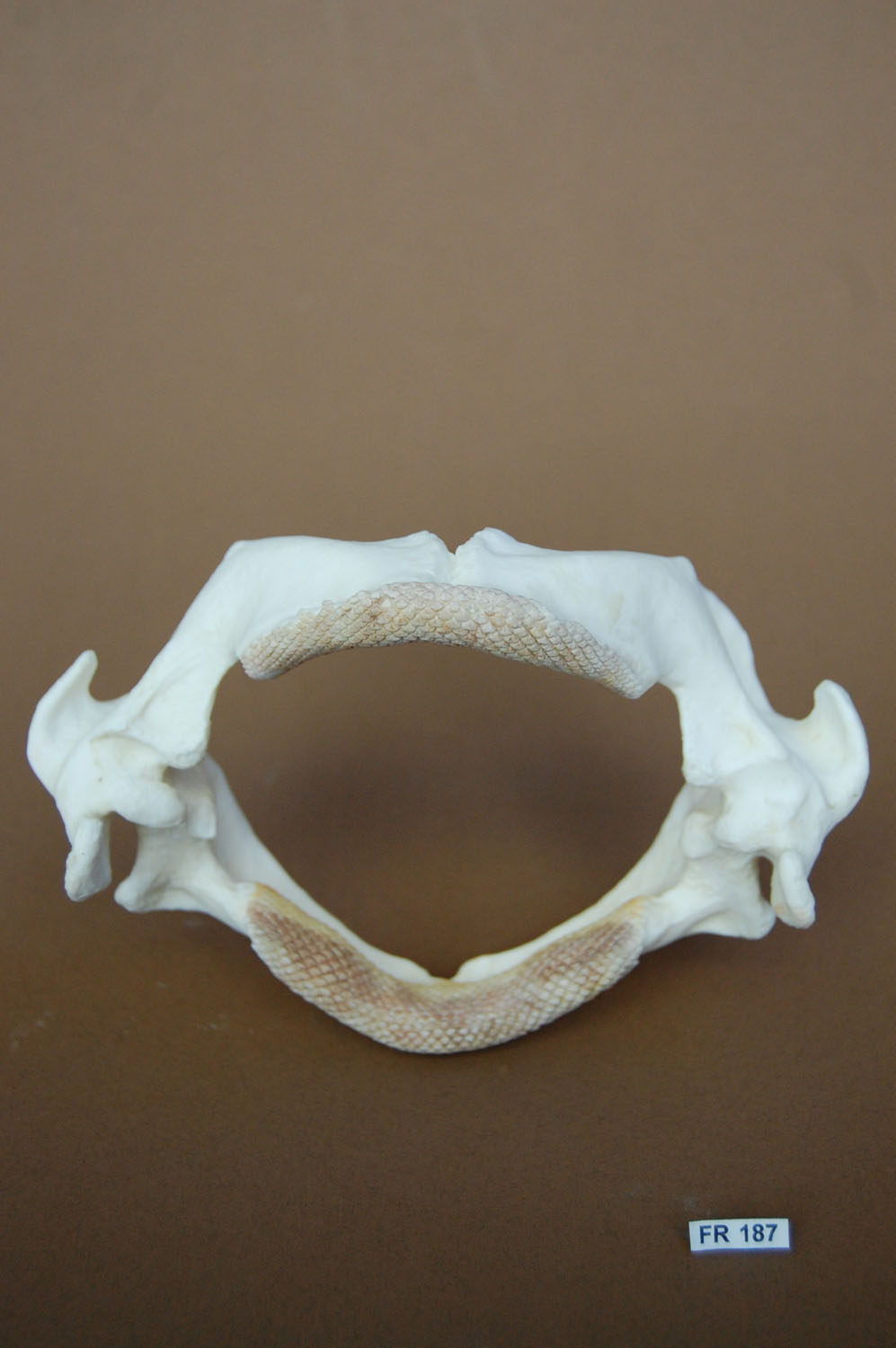
Image Code FR187 |
Catalogue No.: FR187
Description:
Sting Ray Jaw.
Dasyatis sp. Many rays have jaw teeth
that enable them to crush invertebrates such as clams, mussels and oysters.
Like its shark relatives, the stingray is outfitted with electrical sensors
called pullae of Lorezini, located around the stingray's mouth; these
organs sense the natural electrical charges of potential prey. The original
of this specimen is from Thailand. Bone Clones BC-230.
Size: 110 X 165mm. |
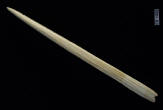
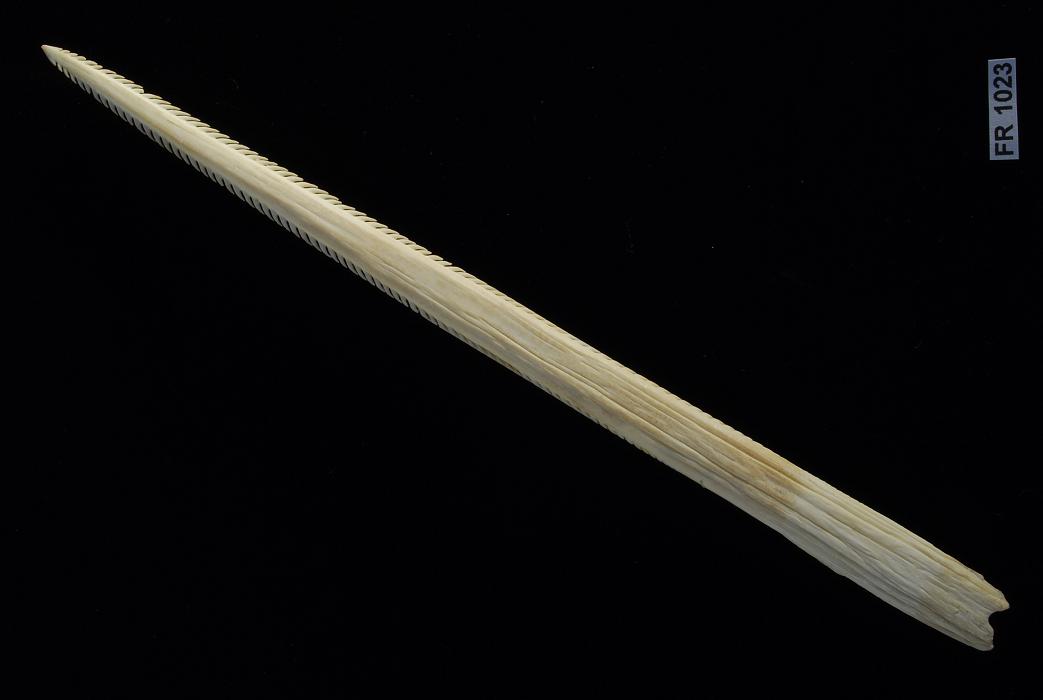
Image Code FR1023 |
Catalogue No.: FR1023
Description:
Stingray barb.
Size: L215mm. |

Image Code F4287 |
Catalogue No.: F4287
Description: Stingray Denture.
Size: 52 X 40mm. |
Family:
Myliobatidae
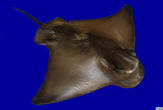
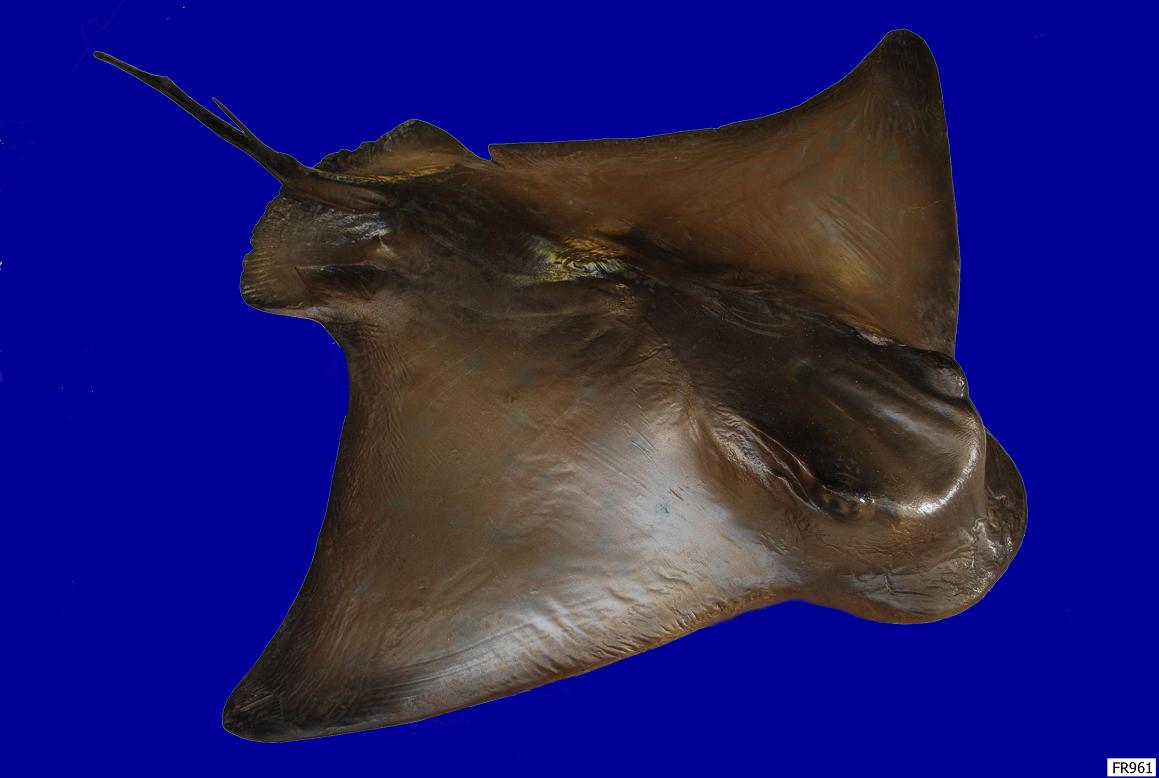
Image Code FR961 |
Catalogue No.: FR961
Description:
Eagle ray mount.
Size: 1201 X 1074mm. |
Genus:
Rhinoptera

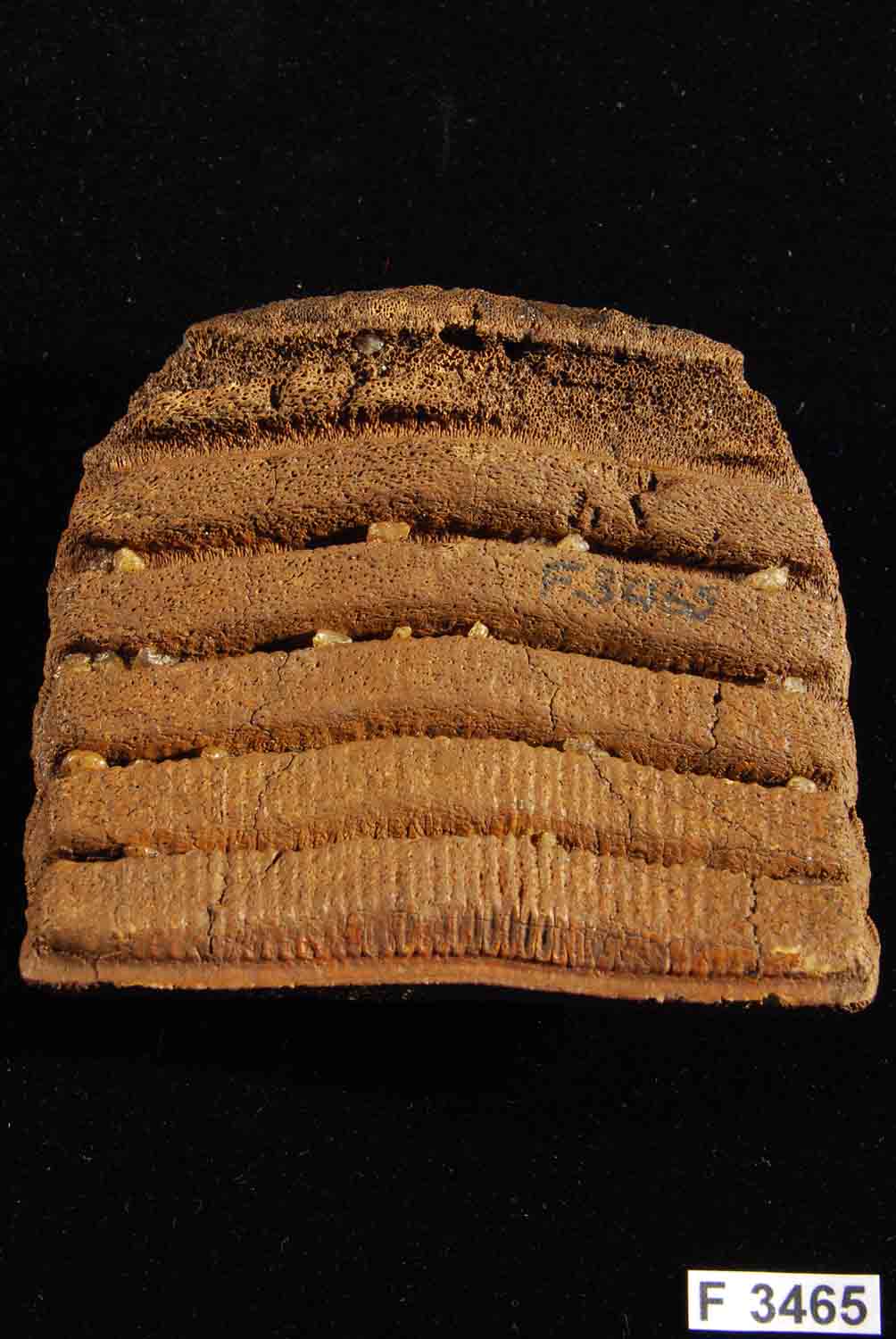
Image Code F3465
Image Code F3465a |
Catalogue No.: F3465
Description:
Upper dental plate of
a Cow-nose Ray,
Rhinoptera bonasus. Miocene Epoch. Suwannee River, Fla.
Size: 51 x 60mm. |
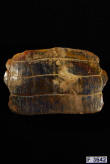
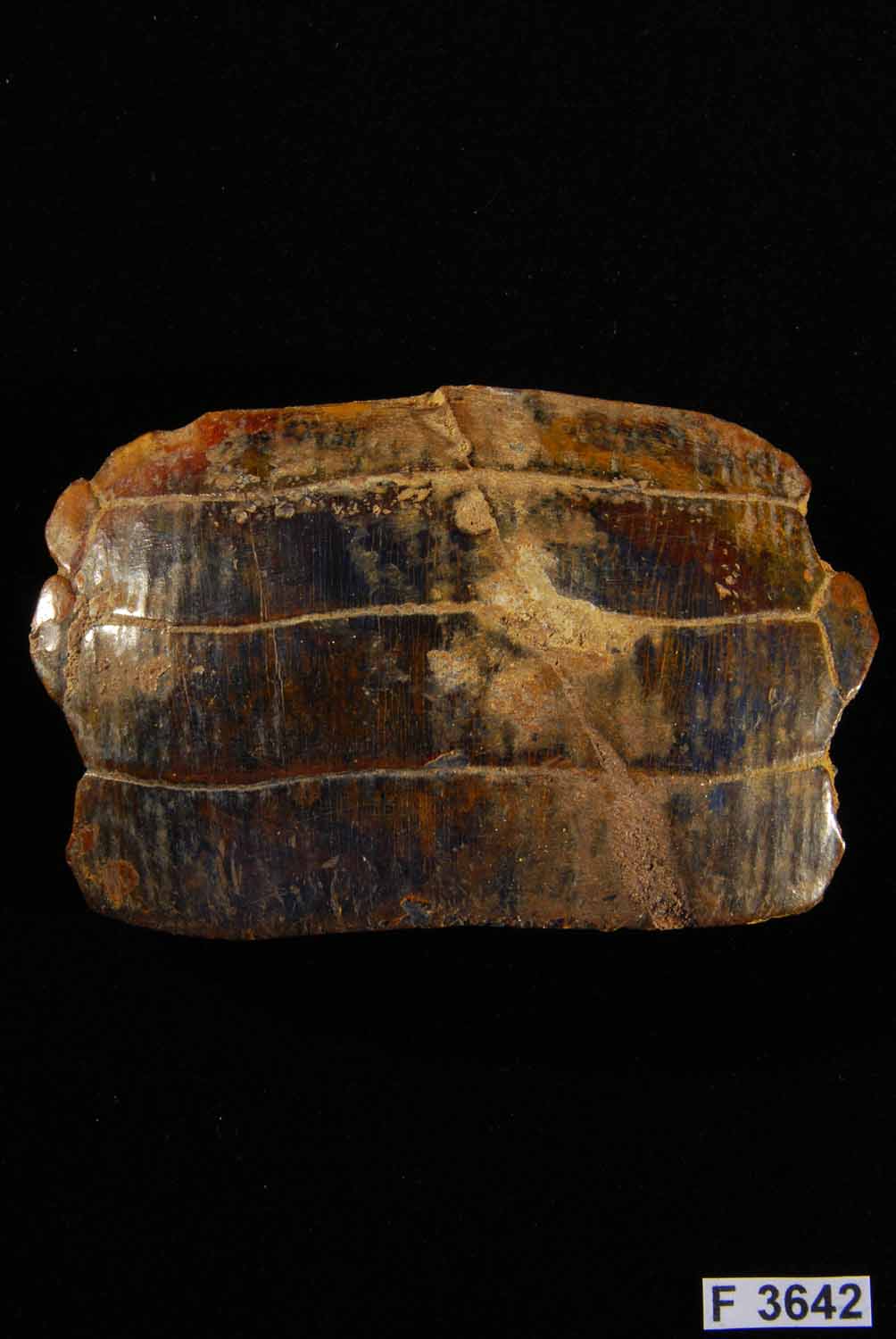
Image Code F3642 |
Catalogue No.: F3642
Description:
Upper dental plate of
a Cow-nose Ray,
Rhinoptera bonasus.
Miocene Epoch.
Size: 71 x 49mm. |
Genus:
Aetobatus

Image Code FR183 |
Catalogue No.: FR183
Description:
Spotted Eagle Ray
Jaw.
Aetobatus narinari. The
elegant, flat-bodied Spotted Eagle Ray seems to soar through the water with
the wavy movement of its wing-like pectoral fins and trailing whip-like tail.
Its coloration is distinctive - dark with lights spots above and all white
below. Its mouth is positioned to conveniently scoop up mollusks and
crustaceans from the ocean floor, crushing them with its power teeth. Bone
Clones BC-238.
Size: 130 X 100mm. |
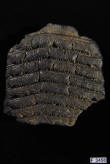
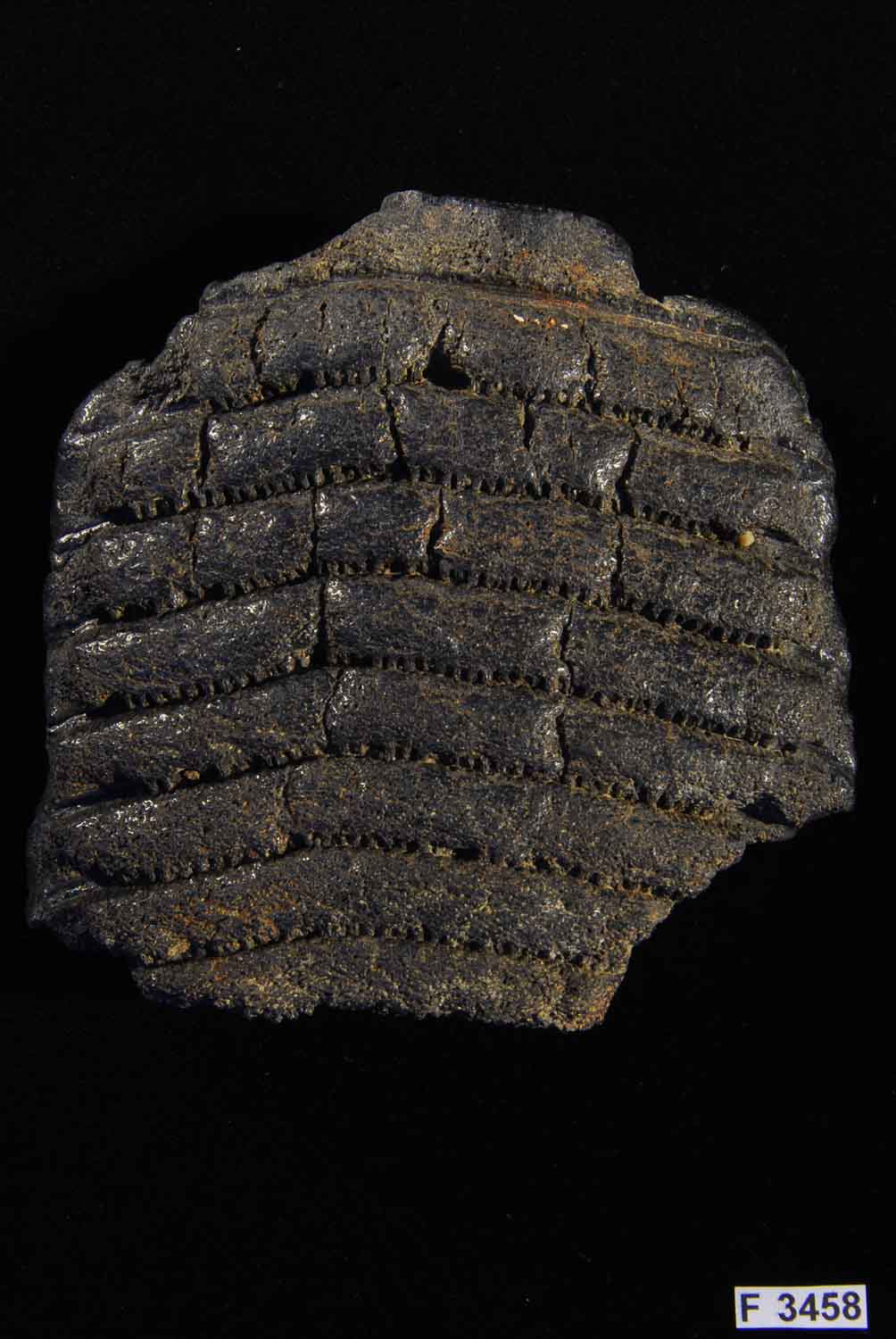
Image Code F3458 |
Catalogue No.: F3458
Description:
Big Ray teeth plate.
Size: 85 x 81mm. |
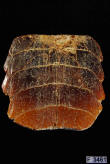
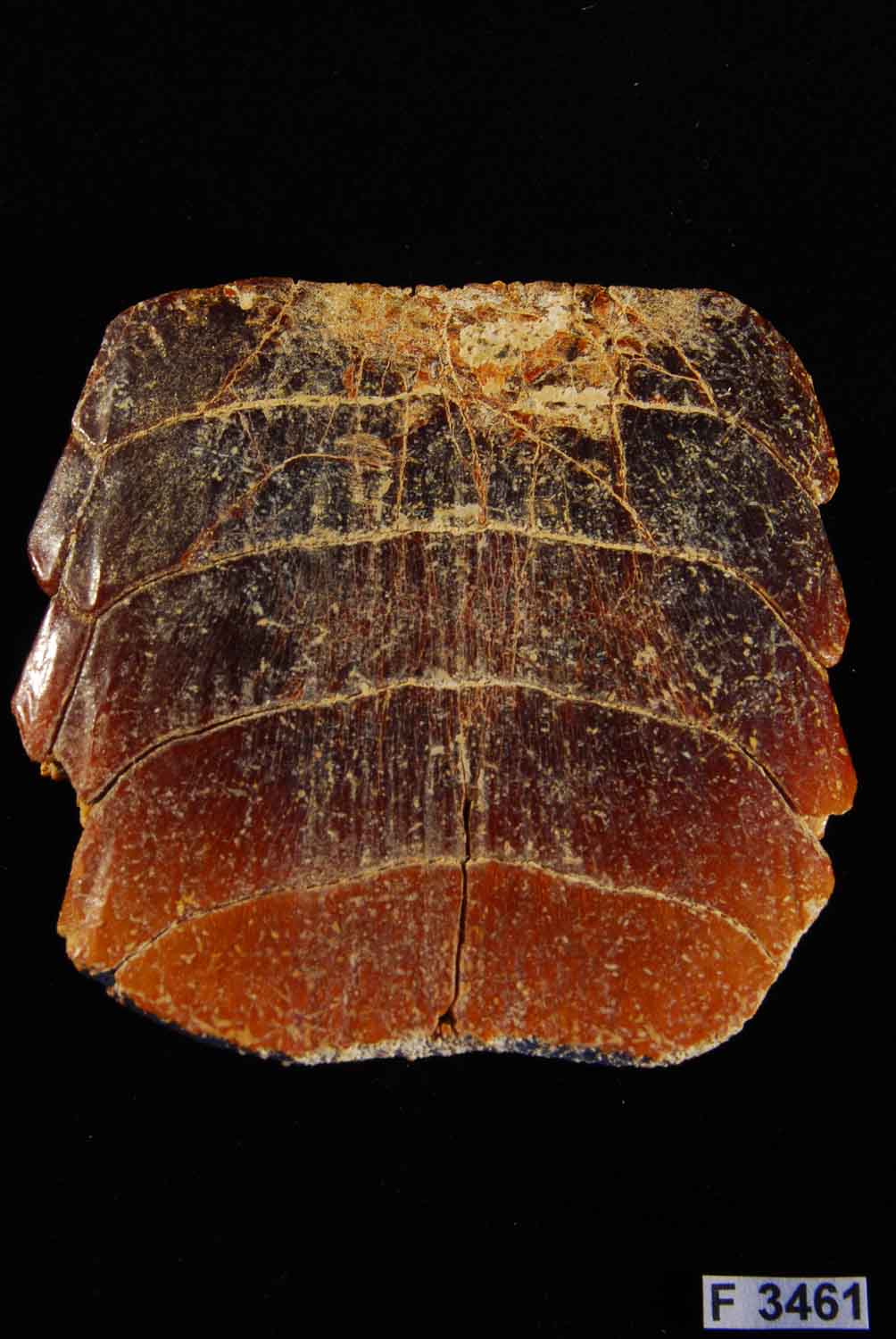
Image Code F3461 |
Catalogue No.: F3461
Description:
Big Ray teeth plate. Pre-historic ray found
in South America, Chile. 3 pieces.
Size: Average of 65 x 62mm. |
Family Rhinobatidae
The bowmouth guitarfish, bowmouth wedgefish, or shark ray (Rhina
ancylostoma) is a member of the order of Rajiformes, being related to skates
and rays. It is the only member of the genus Rhina.
Genus: Rhina

Image Code FR181 |
Catalogue No.: FR181
Description:
Shark Ray Jaw. Rhina
ancylostoma. The Shark Ray, also
called the Bowmouth Guitarfish, has an extremely broad and blunt head,
clearly demarcated from its pectoral fins, and a long tail. Blue-gray with
white spots, the ray has rows of thorn-like spikes above its eyes and along
its back. Widely found in the Indo-Pacific in coastal waters, where it feeds
on crustaceans and mollusks with its powerful flat teeth. Bone Clones
BC-234.
Size: 120 X 200mm. |
Sharks Category
Class:
Chondrichthyes
Order:
Eugeneodontida
Family:
Agassizodontidae
Genus:
Helicoprion
Helicoprion ("Spiral Saw") was a long-lived
genus of
shark-like cartilaginous fish that first arose in the oceans of the late
Carboniferous
280 million years ago, survived the
Permian-Triassic
Extinction
Event, and eventually went extinct during the early
Triassic some
225 million years ago. The only fossils known are the teeth, which
were arranged in a fantastic "tooth-whorl" strongly reminiscent of a
circular saw. It was not until the discovery of the skull of a relative,
Ornithoprion, that it was realized that the tooth-whorl was in the lower
jaw.

Image Code FR23 |
Catalogue No.: FR23
Description:
Fossil tooth whorl replica, Helicoprion bessonovi. Late
Carboniferous
to early
Triassic.
Size: 520 X 250mm. |
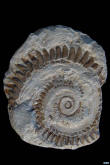
Image Code FR25 |
Catalogue No.: FR25
Description:
Fossil tooth whorl replica, Helicoprion bessonovi. Late
Carboniferous
to early
Triassic.
Size: 740 X 670mm. |
Subclass: Elasmobranchii
Superorder: Selachimorpha
(Sharks)
Order: Hybodontiformes
Superfamily: Hybodontoidea
Family: Hybodontidae
Hybodus ("humped tooth") is an extinct
genus of
once-common, widespread and long lived
sharks, first
appearing towards the end of the
Permian
period, and disappearing at the beginning of the
Cretaceous
(230-90 million years ago). During the Triassic, Jurassic, and Cretaceous
periods the hybodonts were especially successful and could be found in shallow
seas across the world. For reasons that are not fully understood, the hybodonts
became extinct near the end of the Cretaceous period.
Genus: Hybodus
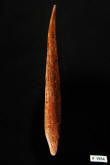
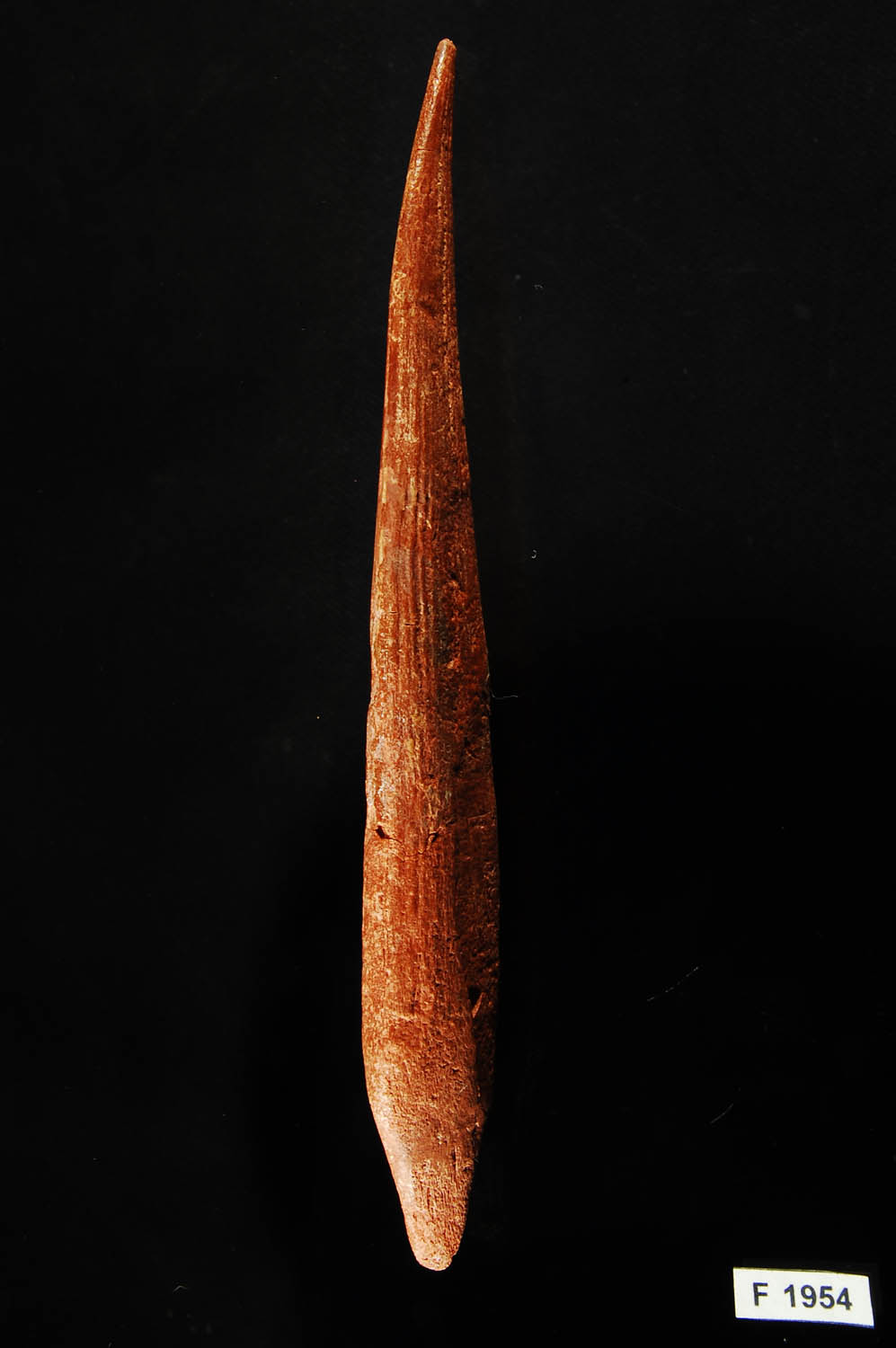
Image Code F1954 |
Catalogue No.: F1954
Description: Complete
dorsal fin spine, Hybodus reticulatus.
Jurassic Period. Complete dorsal fin spine. (Lyme Regis, England).
Size: L154mm. |
Order:
Hexanchiformes
Hexanchiformes is the order consisting of the most
primitive types of sharks, and numbering just five extant species.
Family: Hexanchidae
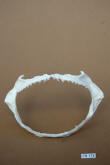
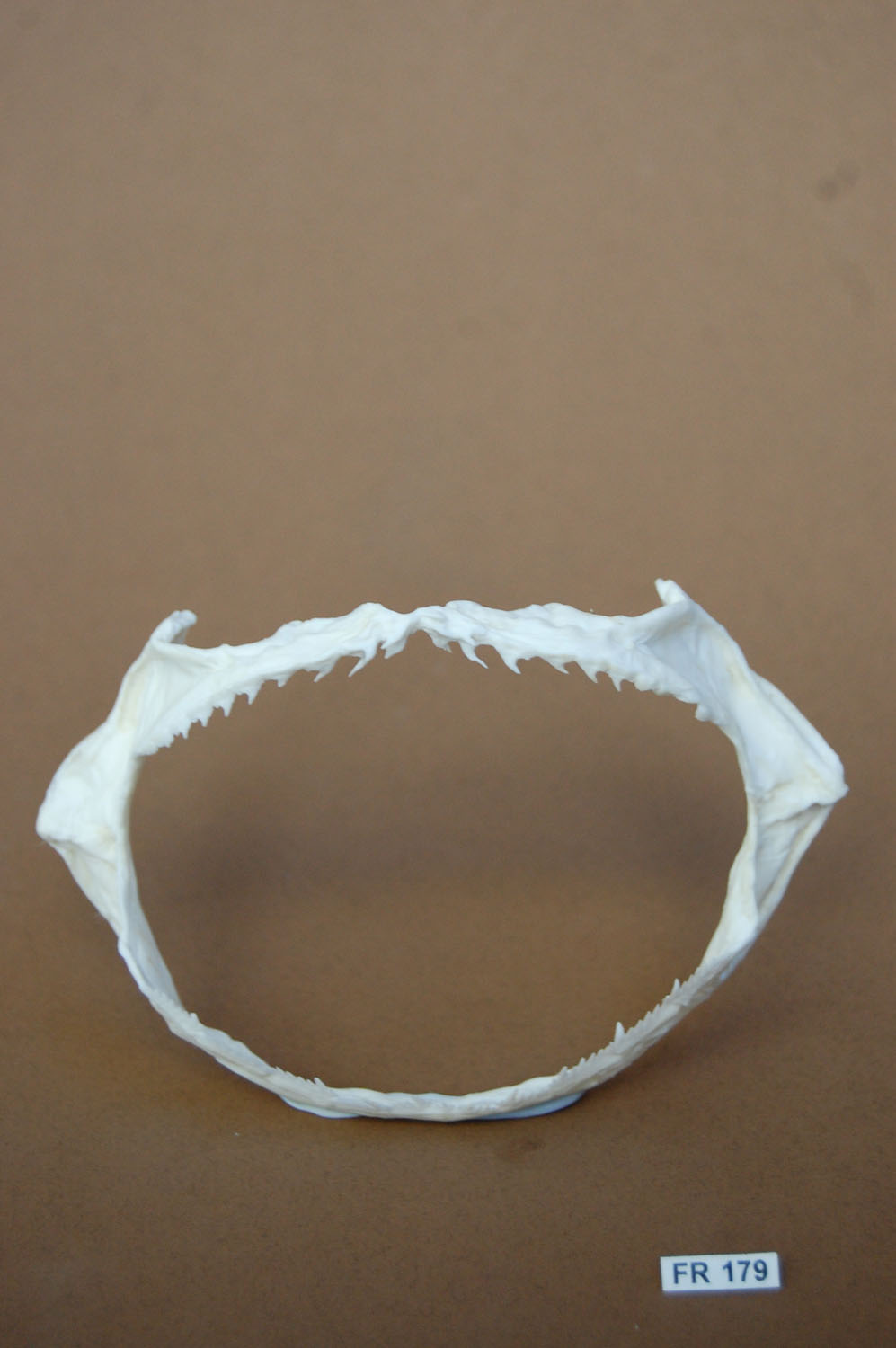
Image Code FR179 |
Catalogue No.: FR179
Description:
Sharpnose Sevengill
Jaw. Heptranchias perlo. The
Sharpnose Sevengill Shark is a slender but strong deepwater shark with only
one dorsal fin. Its seven sets of gills (most sharks have just five) are
behind the green eyes and narrow mouth of its long and pointed snout. The
teeth are small and hook-like in the upper jaw while comb-shaped in the
lower jaw of this rapacious predator of bony fishes and crustaceans. BC-235.
Bone Clones.
Size: H110 X W80mm. |
Order:
Lamniformes
Lamniformes is an order of sharks, also known as mackerel sharks. It
includes some of the most familiar species of sharks, such as the great white
shark, and some extremely rare types, such as the megamouth shark.
Family:
Lamnidae
Lamnidae is a family of sharks, commonly known as mackerel
sharks or white sharks. They are large, fast-swimming sharks, found in oceans
worldwide.
Genus: Carcharodon
The Megalodon Shark became extinct at the end of the
Pliocene Era, 1.5MYA.

Image Code F32 |
Catalogue No.: F32
Description:
Fossil tooth, Carcharocles megalodon.
Mio-Pliocene Period. USA. Tooth embedded in a whale's
vertebrate.
Size: H170mm. |
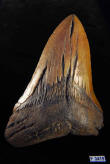
Image Code F3419 |
Catalogue No.: F3419
Description:
Fossil tooth,
Carcharocles megalodon.
Mio-Pliocene Period. Yorktown Formation. South Carolina,
USA.
Size: 105 x 100mm. |
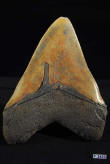
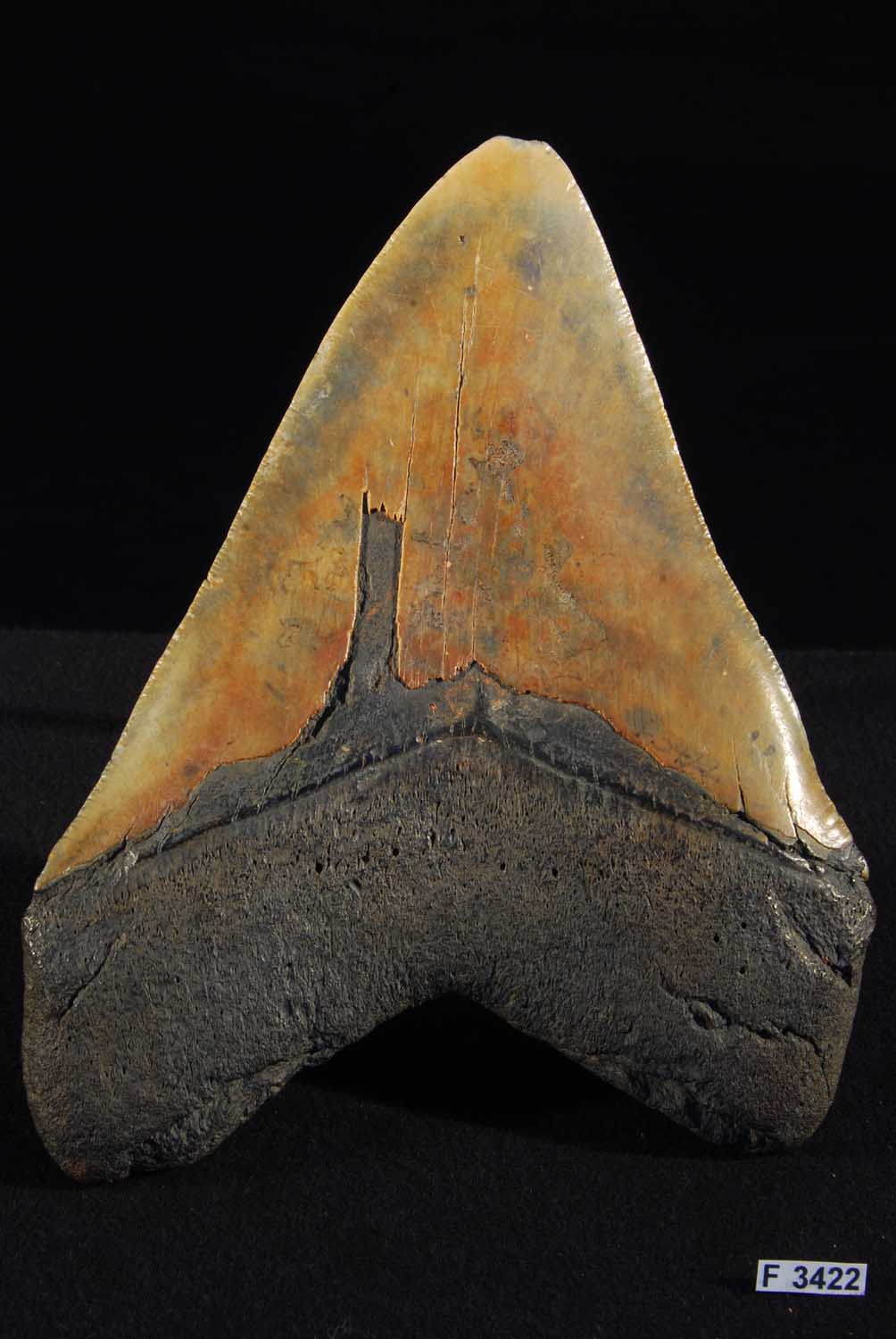
Image Code F3422 |
Catalogue No.: F3422
Description:
Fossil tooth,
Carcharocles megalodon.
Mio-Pliocene Period.
Size: 145 x 109mm. |
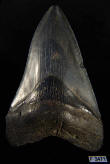
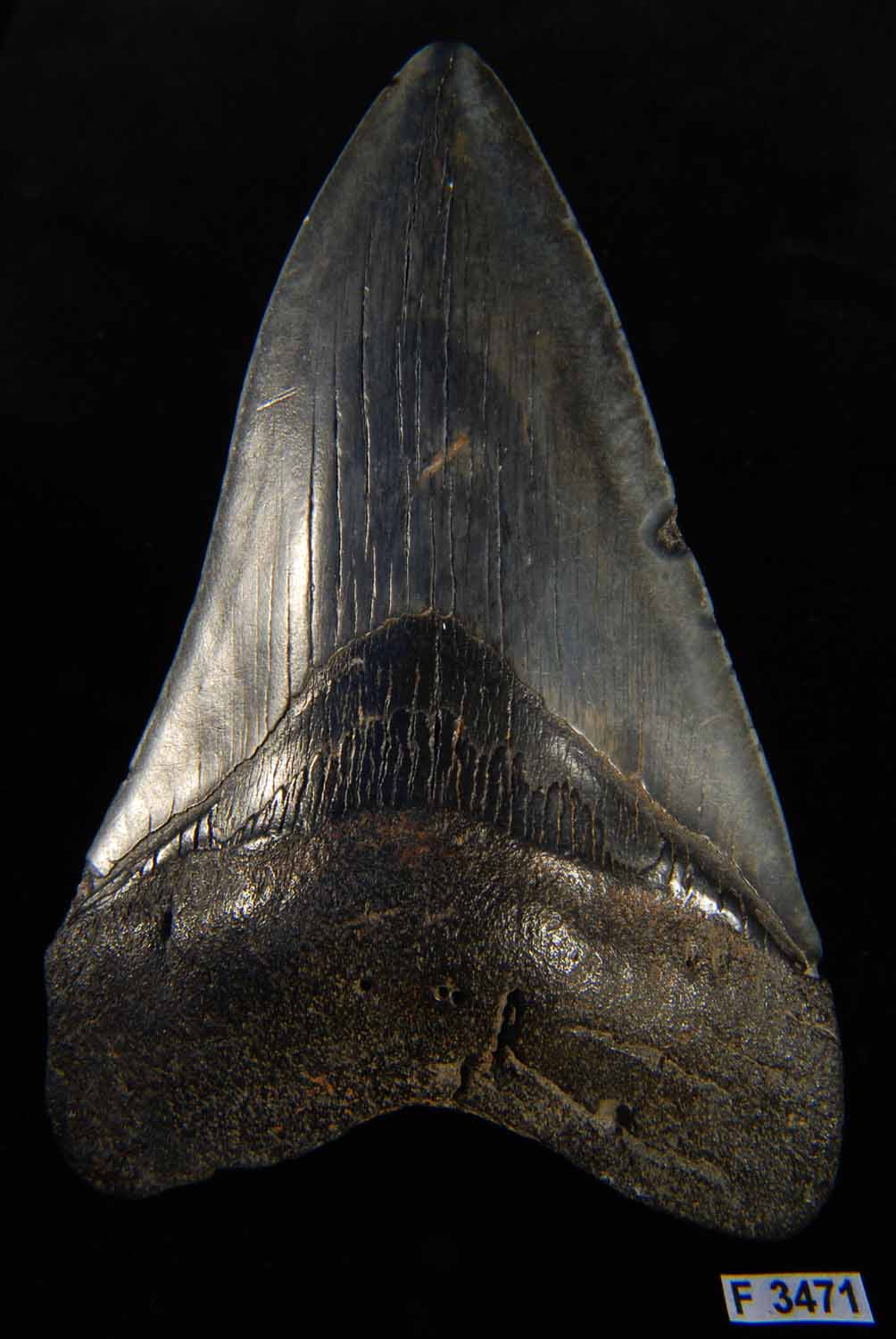
Image Code F3471 |
Catalogue No.: F3471
Description:
Fossil tooth,
Carcharocles megalodon.
Mio-Pliocene Period.
Size: 119 x 81mm. |
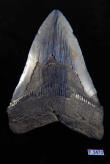
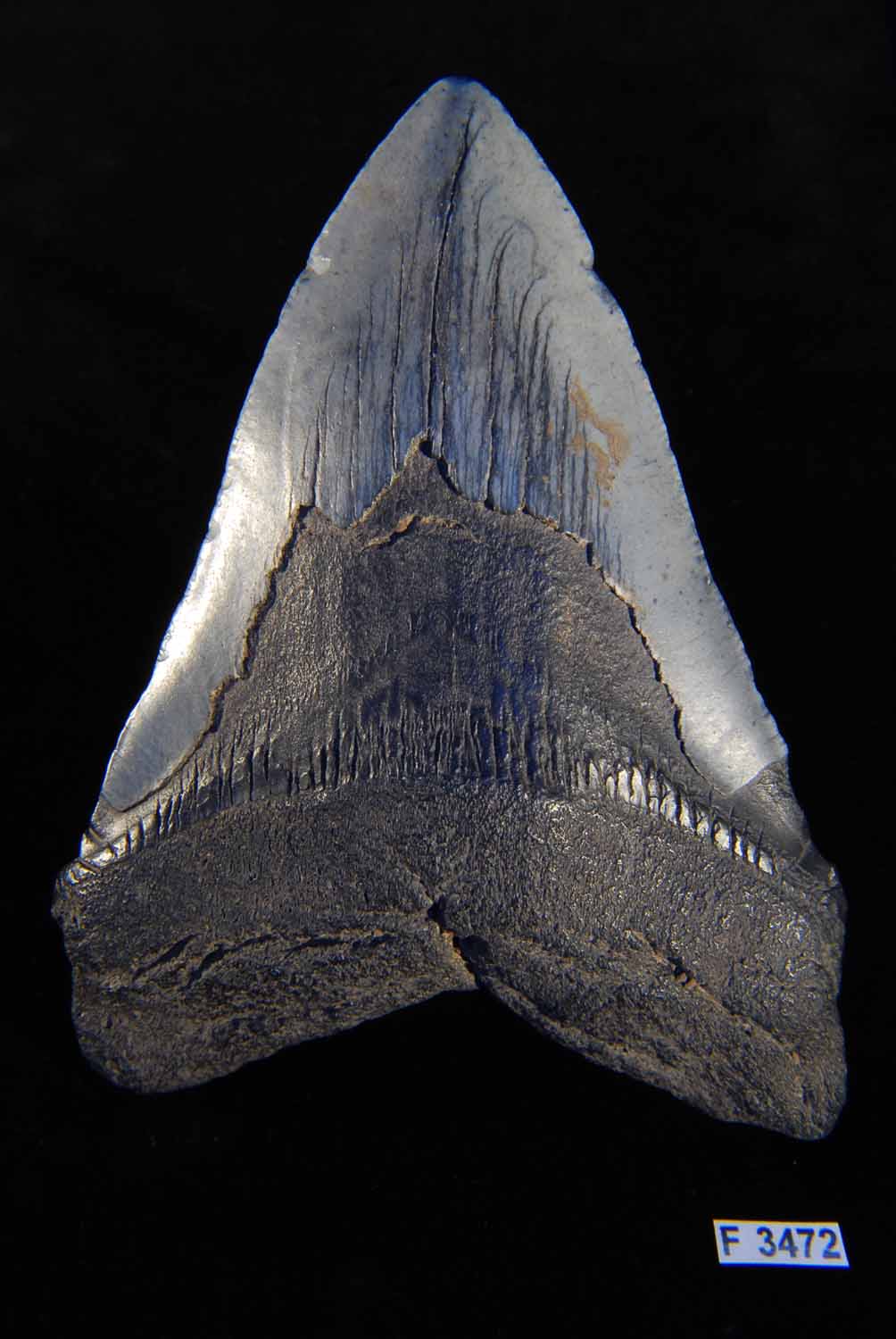
Image Code F3472 |
Catalogue No.: F3472
Description:
Fossil tooth,
Carcharocles megalodon.
Mio-Pliocene Period.
Size: 120 x 87mm. |
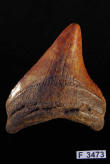
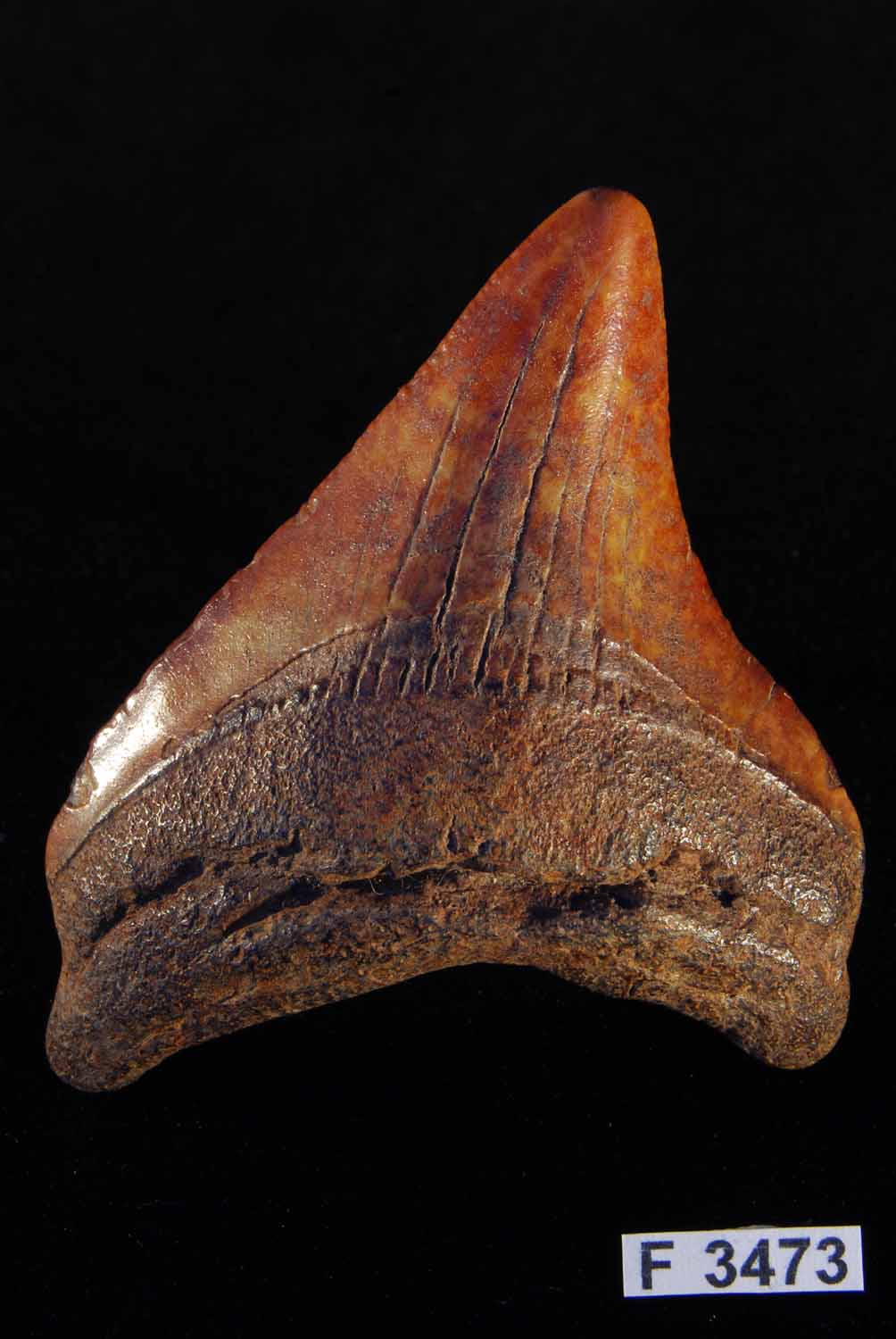
Image Code F3473 |
Catalogue No.: F3473
Description:
Fossil tooth,
Carcharocles megalodon.
Mio-Pliocene Period.
Size: 52 x 64mm. |
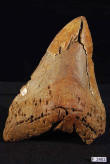
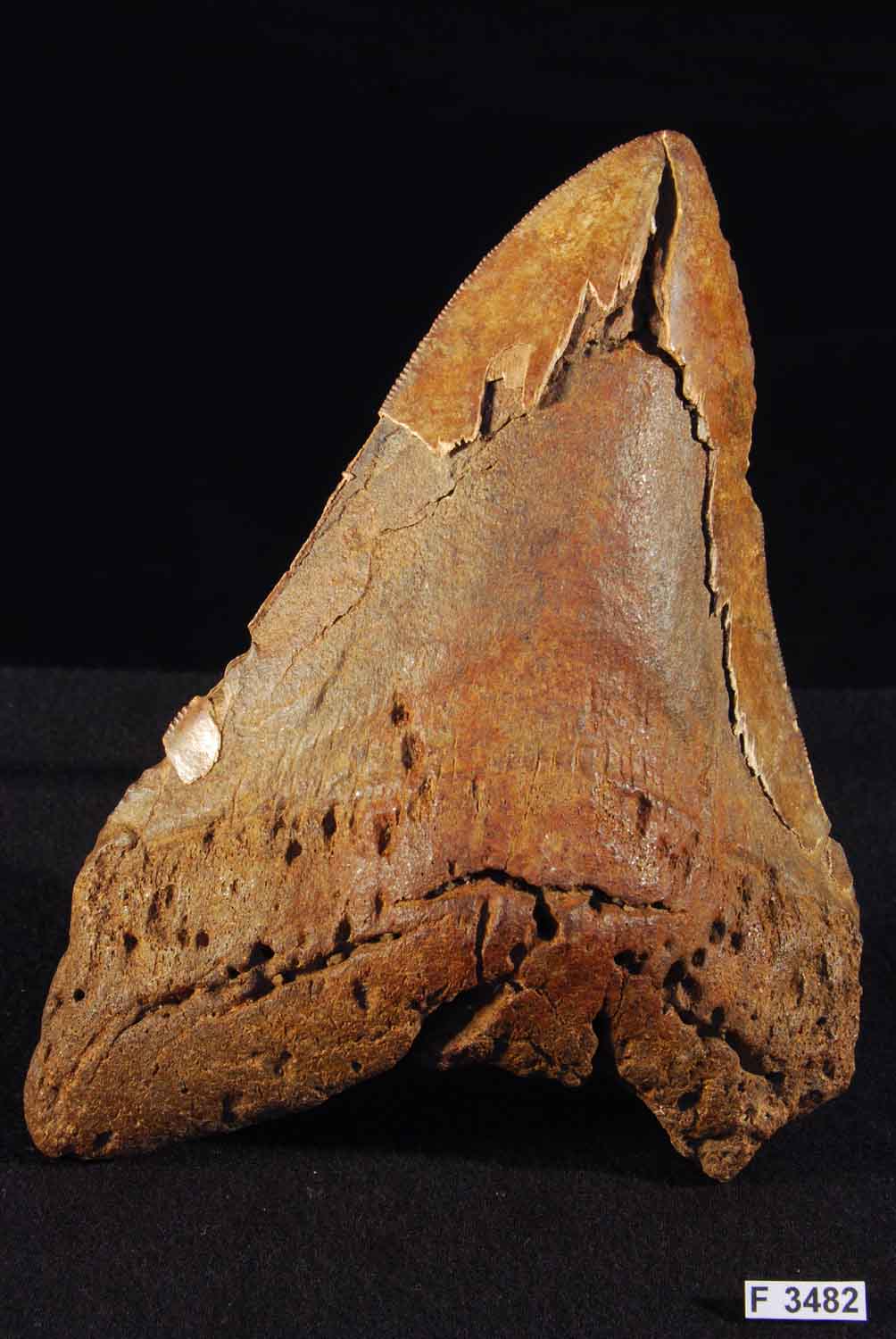
Image Code F3482 |
Catalogue No.: F3482
Description:
Fossil tooth,
Carcharocles megalodon.
Mio-Pliocene Period.
Size: 137 x 100mm. |
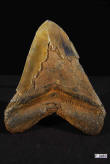
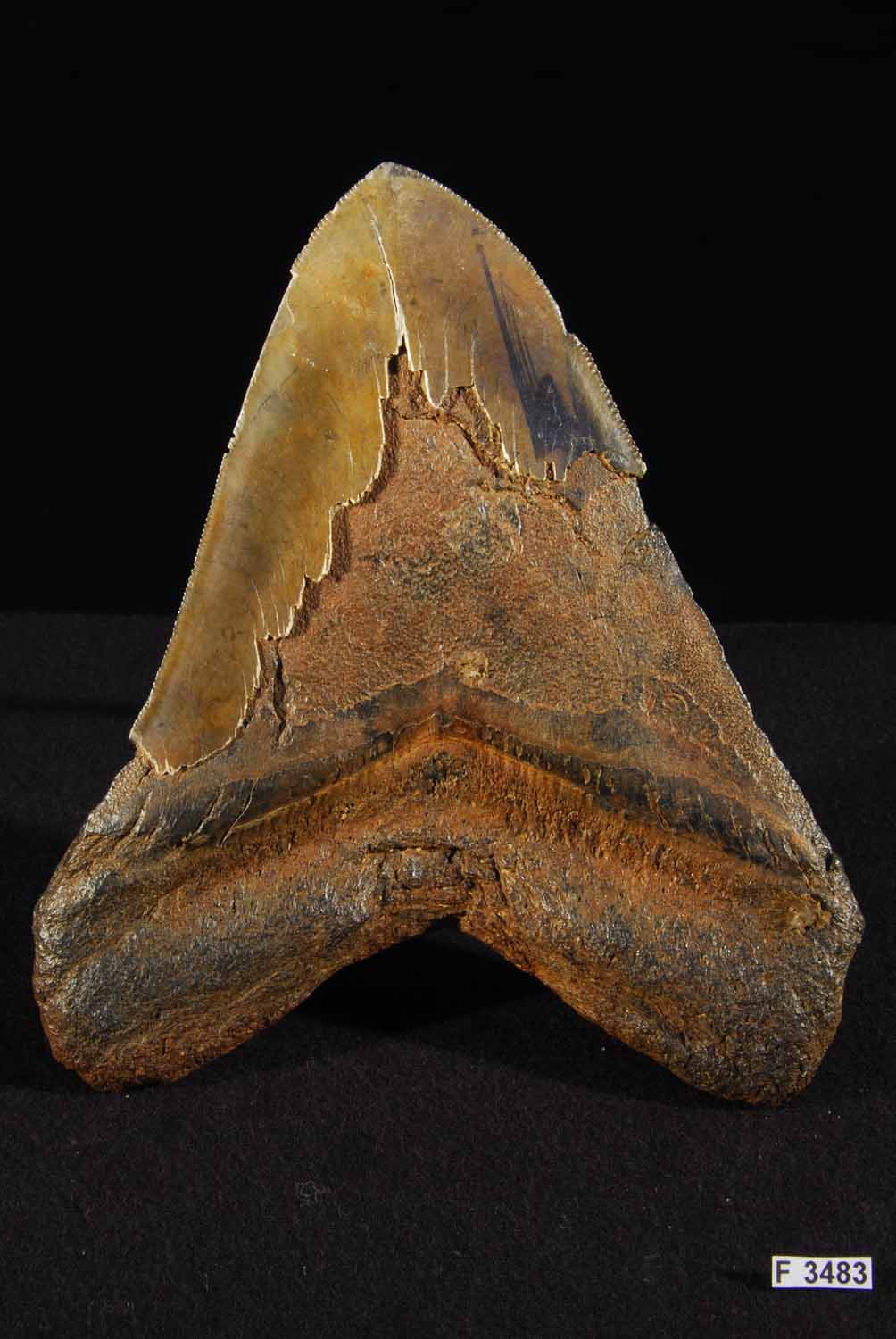
Image Code F3483 |
Catalogue No.: F3483
Description:
Fossil tooth,
Carcharocles megalodon.
Mio-Pliocene Period.
Size: 144 x 119mm. |
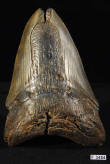
Image Code F3484 |
Catalogue No.: F3484
Description:
Fossil tooth,
Carcharocles megalodon.
Mio-Pliocene Period.
Size: 132 x 91mm. |
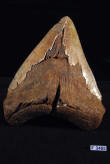
Image Code F3485 |
Catalogue No.: F3485
Description:
Fossil tooth,
Carcharocles megalodon.
Mio-Pliocene Period.
Size: 109 x 95mm. |
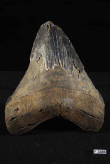
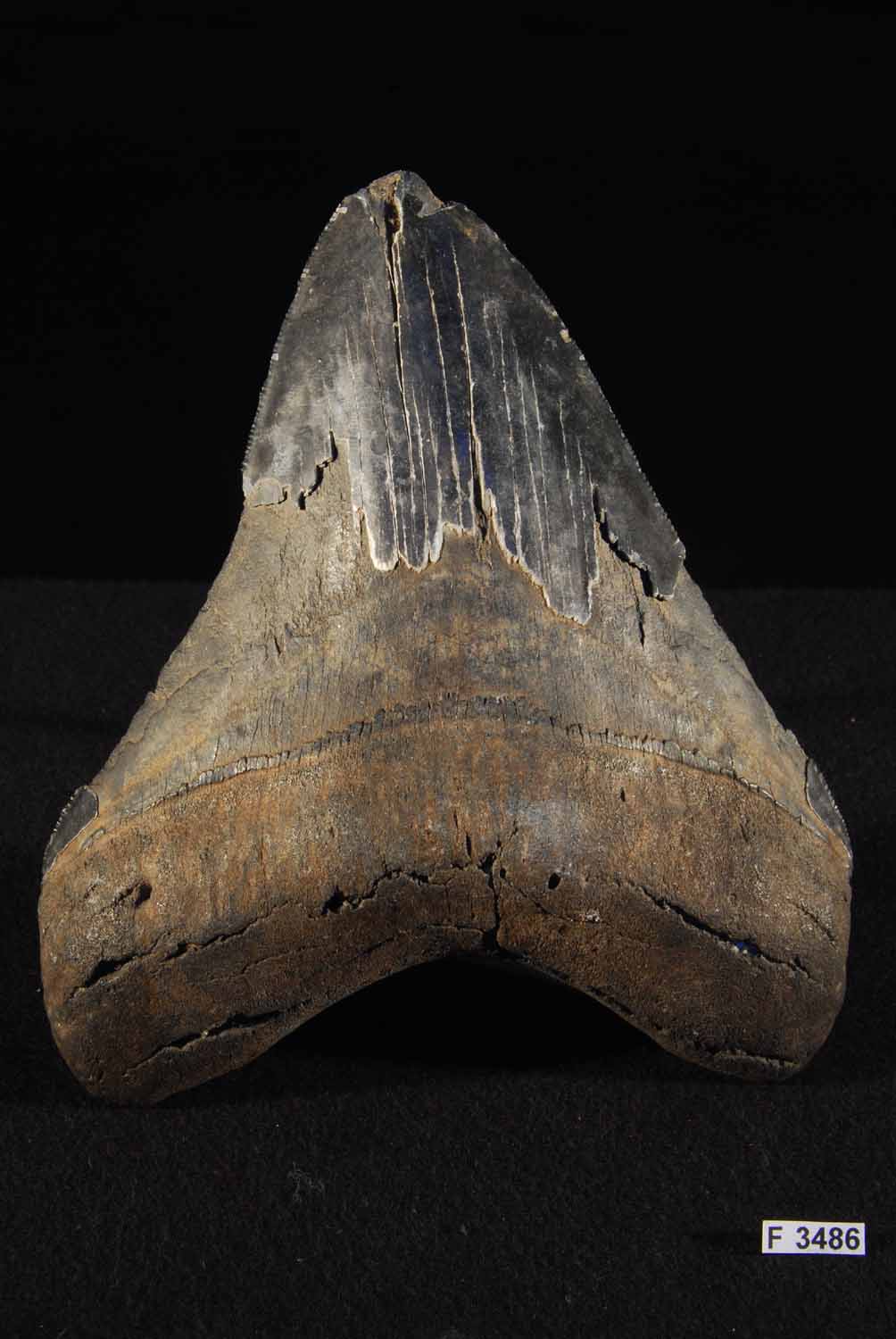
Image Code F3486 |
Catalogue No.: F3486
Description:
Fossil tooth,
Carcharocles megalodon.
Mio-Pliocene Period.
Size: 109 x 95mm. |
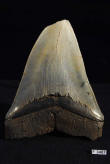
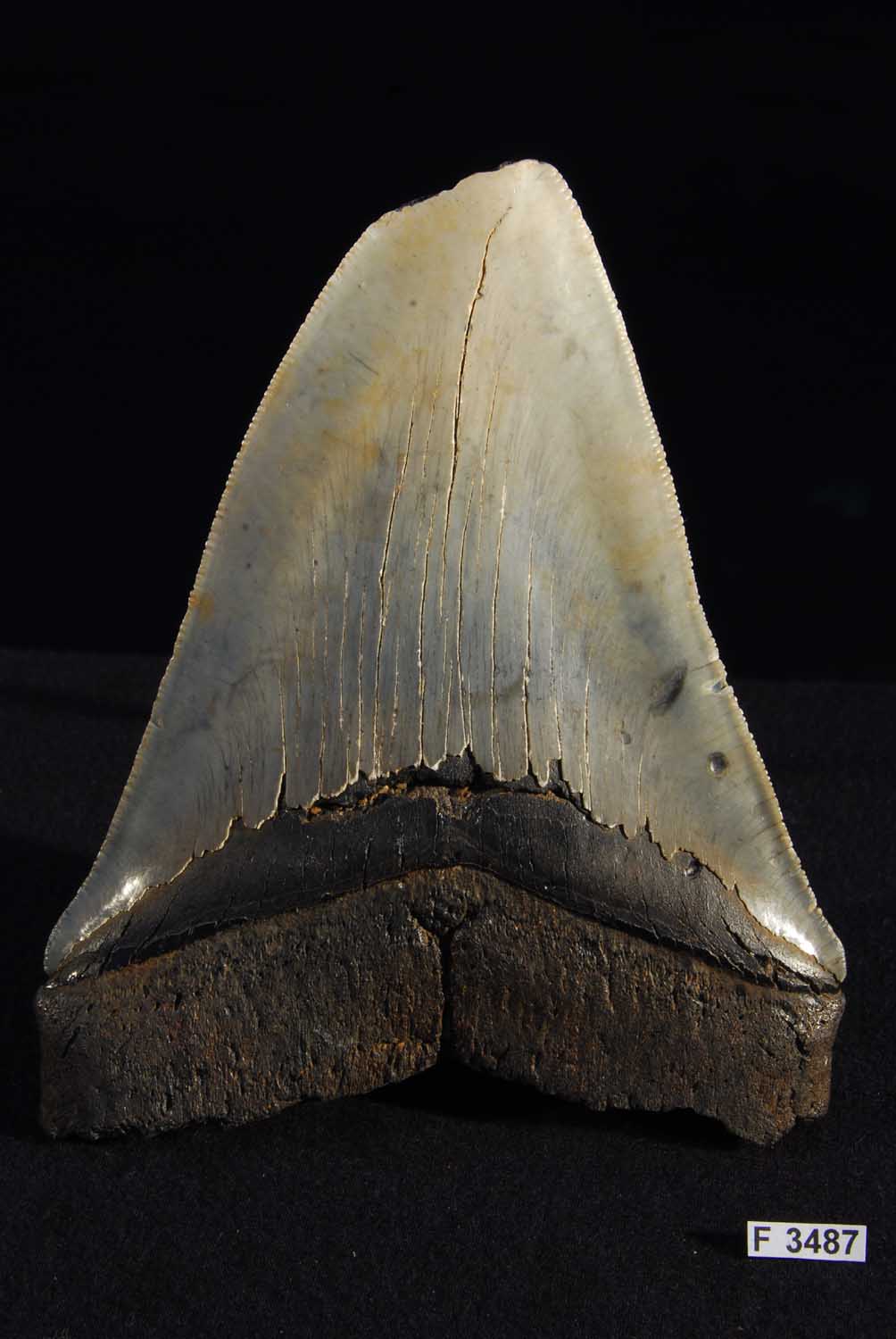
Image Code F3487 |
Catalogue No.: F3487
Description:
Fossil tooth,
Carcharocles megalodon.
Mio-Pliocene Period.
Size: 127 x 103mm. |
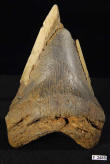
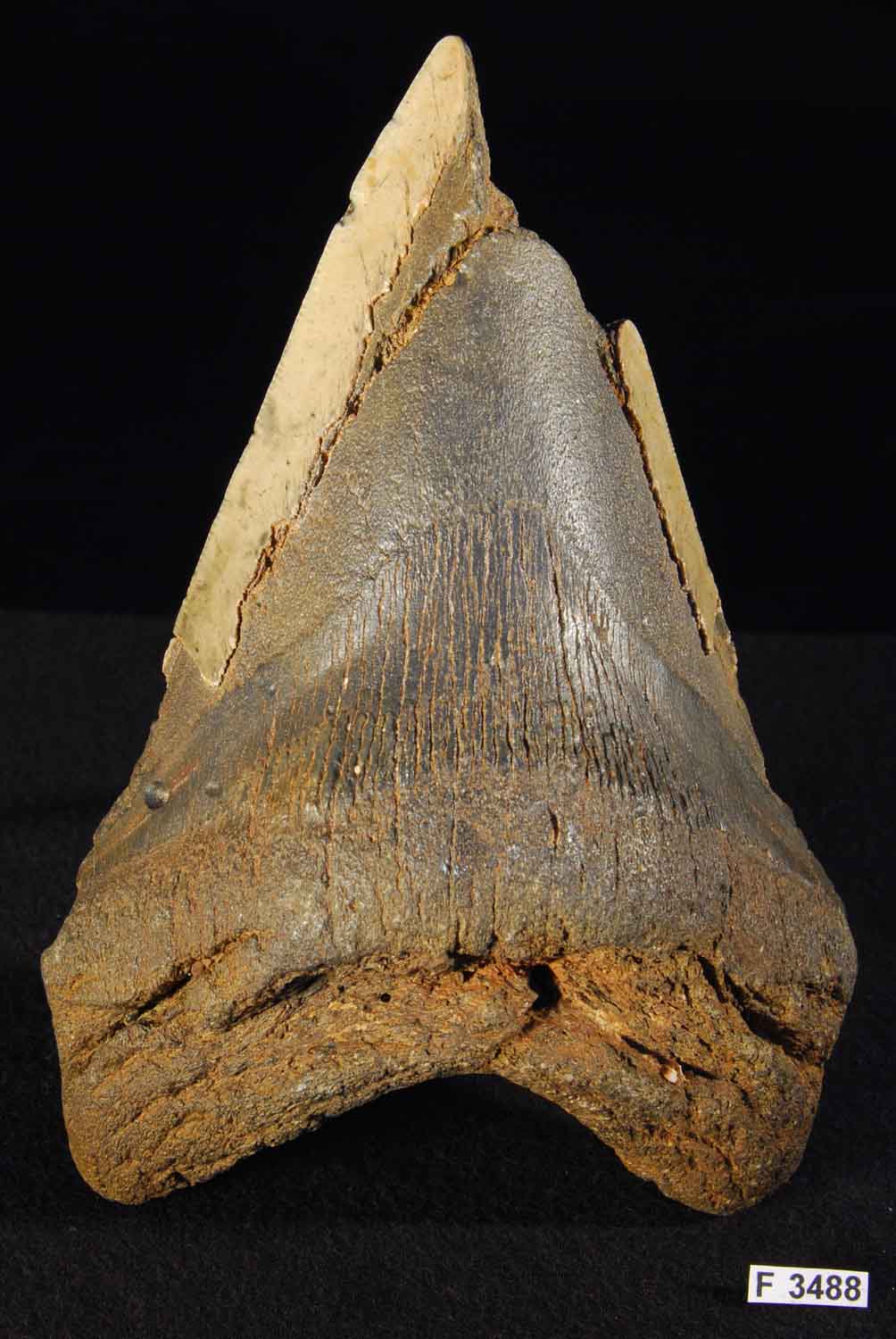
Image Code F3488 |
Catalogue No.: F3488
Description:
Fossil tooth,
Carcharocles megalodon.
Mio-Pliocene Period.
Size: 139 x 93mm. |
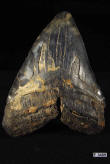
Image Code F3489 |
Catalogue No.: F3489
Description:
Fossil tooth,
Carcharocles megalodon.
Mio-Pliocene Period.
Size: 136 x 108mm. |
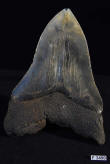
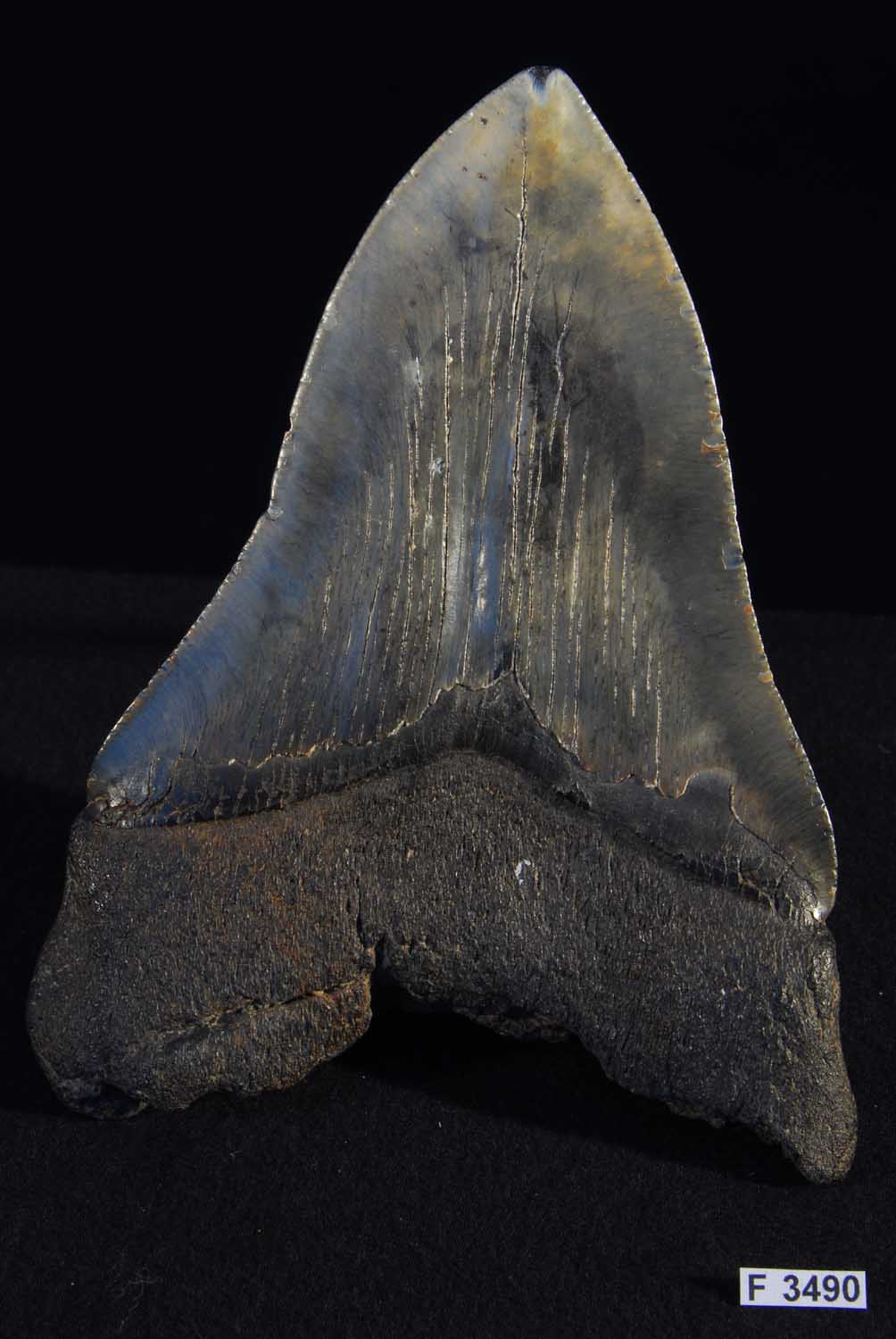
Image Code F3490 |
Catalogue No.: F3490
Description:
Fossil tooth,
Carcharocles megalodon.
Mio-Pliocene Period.
Size: 132 x 100mm. |
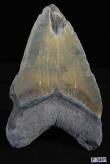
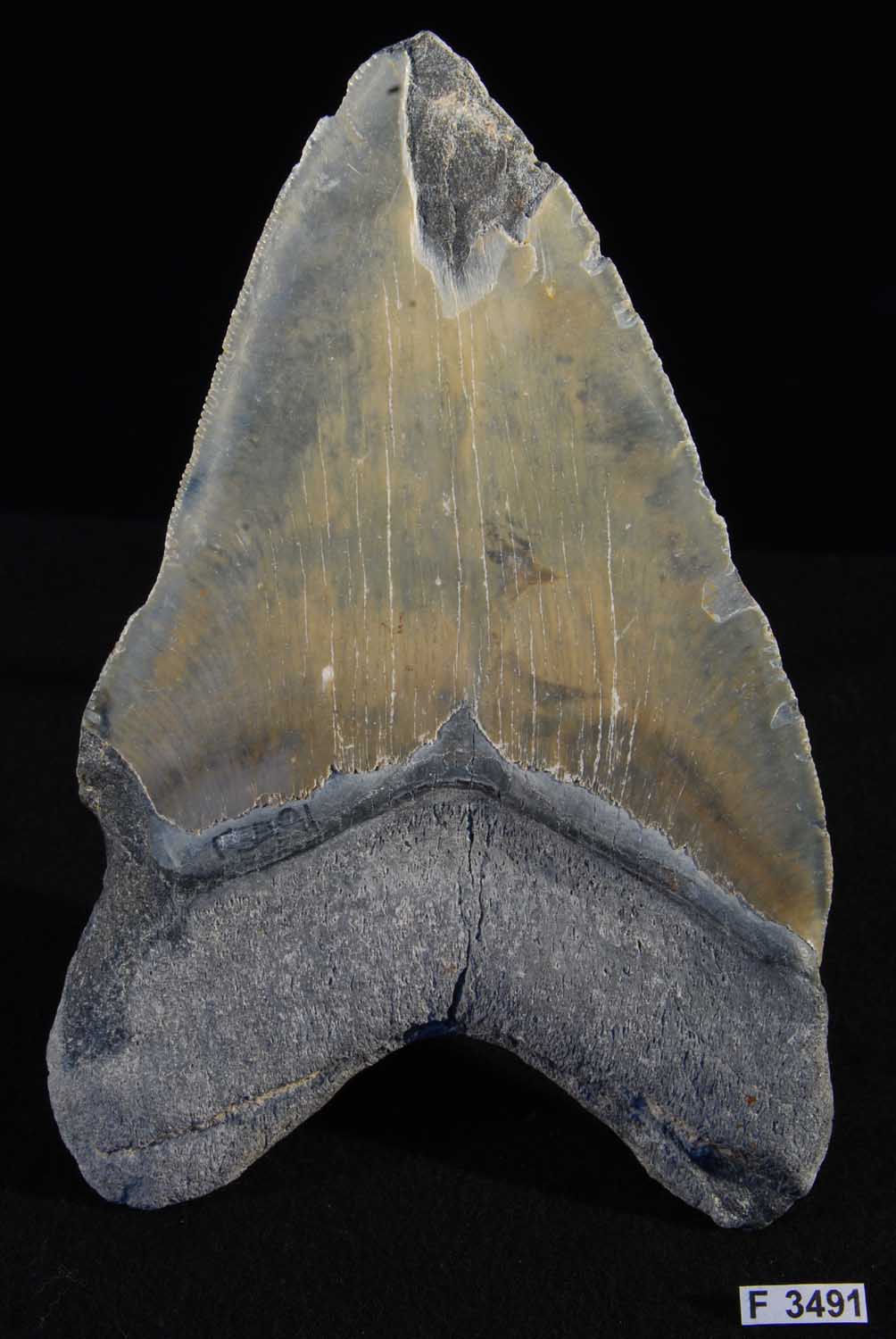
Image Code F3491 |
Catalogue No.: F3491
Description:
Fossil tooth,
Carcharocles megalodon.
Mio-Pliocene Period.
Size: 126 x 85mm. |
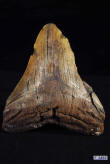
Image Code F3492 |
Catalogue No.: F3492
Description:
Fossil tooth,
Carcharocles megalodon.
Mio-Pliocene Period.
Size: 135 x 116mm. |
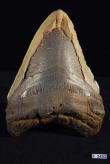
Image Code F3493 |
Catalogue No.: F3493
Description:
Fossil tooth,
Carcharocles megalodon.
Mio-Pliocene Period.
Size: 131 x 110mm. |
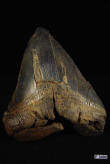
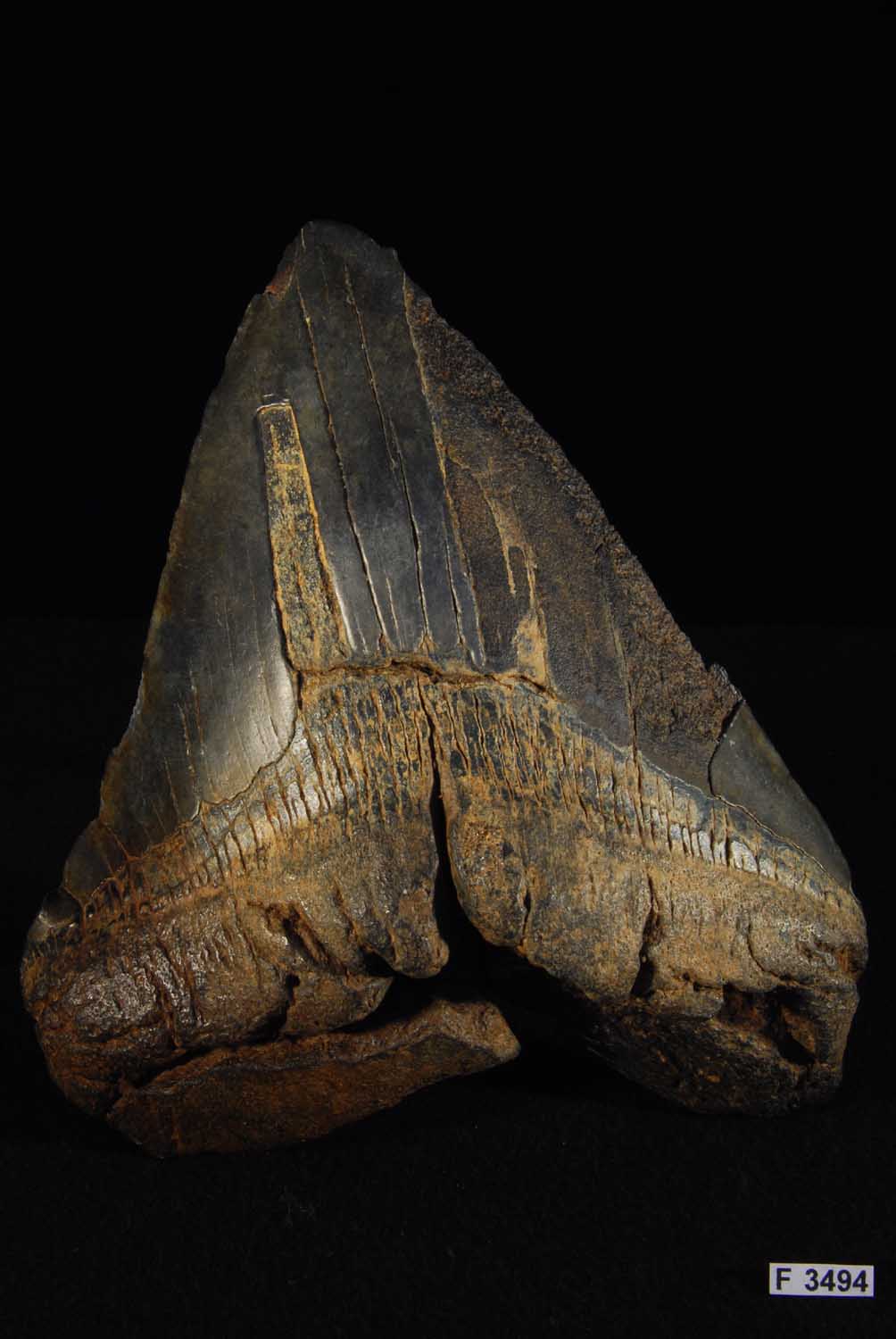
Image Code F3494 |
Catalogue No.: F3494
Description:
Fossil tooth,
Carcharocles megalodon.
Mio-Pliocene Period.
Size: 142 x 116mm. |
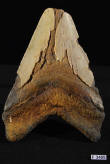
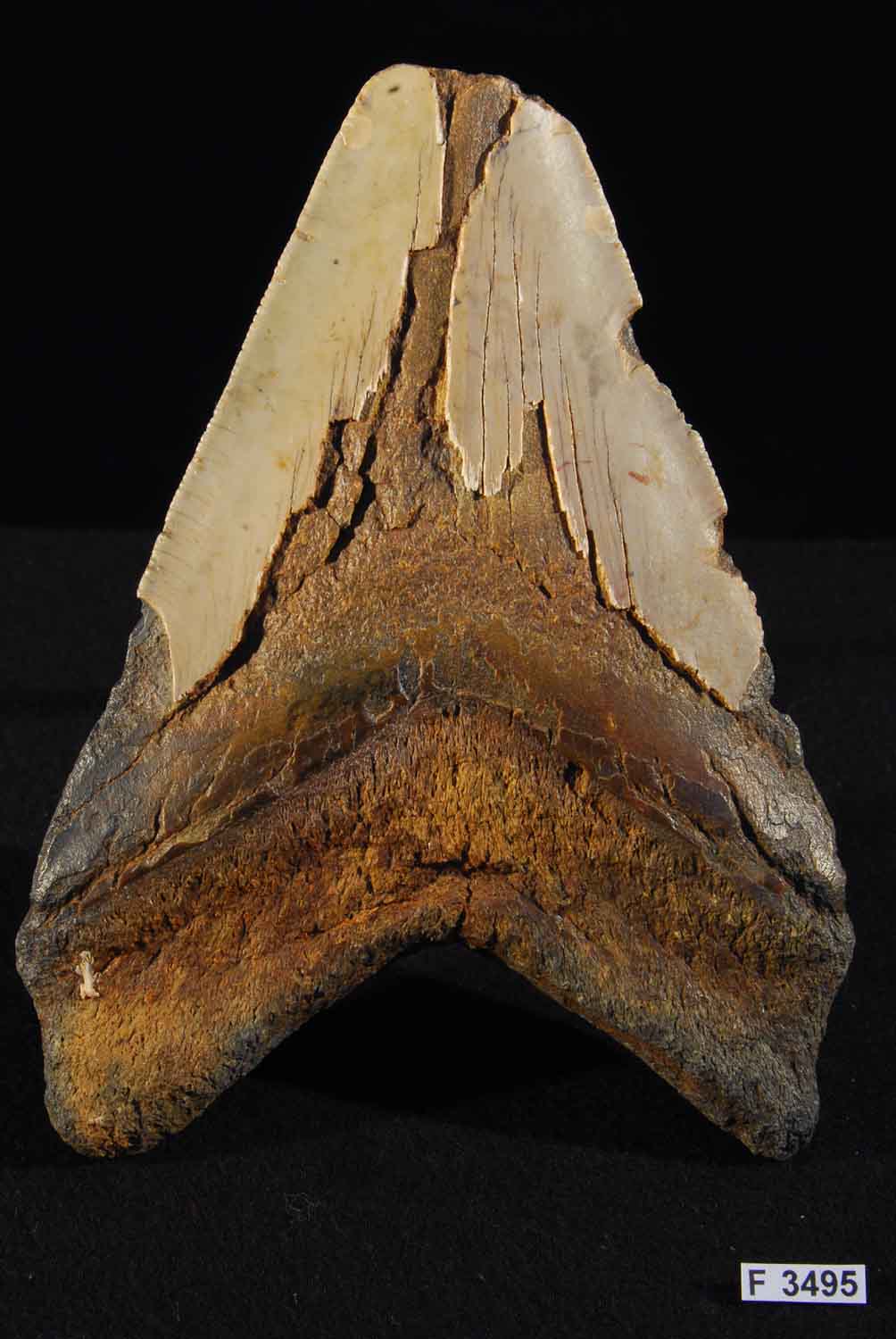
Image Code F3495 |
Catalogue No.: F3495
Description:
Fossil tooth,
Carcharocles megalodon.
Mio-Pliocene Period.
Size: 127 x 97mm. |
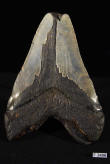
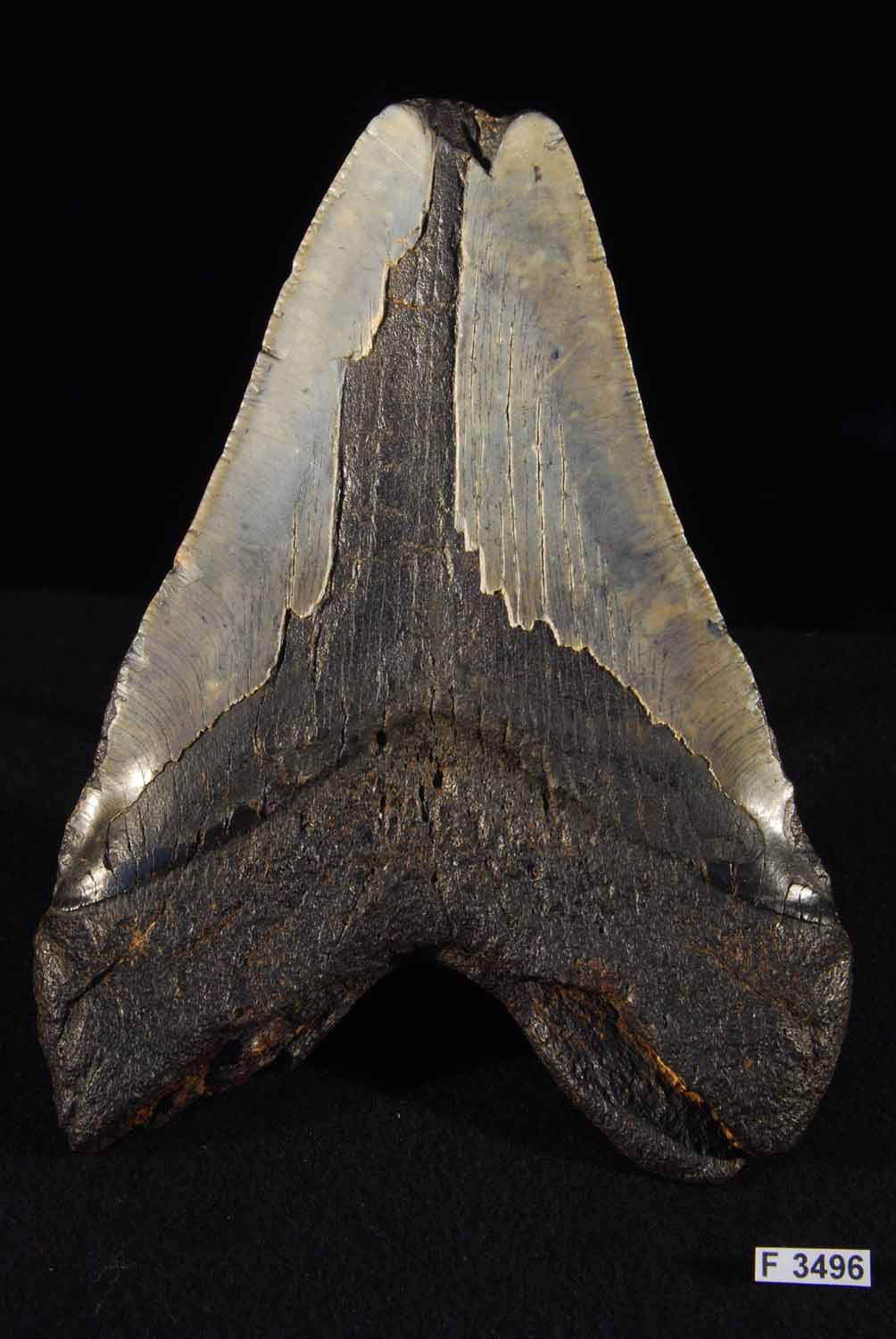
Image Code F3496 |
Catalogue No.: F3496
Description:
Fossil tooth,
Carcharocles megalodon.
Mio-Pliocene Period.
Size: 135 x 101mm. |
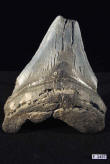
Image Code F3497 |
Catalogue No.: F3497
Description:
Fossil tooth,
Carcharocles megalodon.
Mio-Pliocene Period.
Size: 123 x 104mm. |
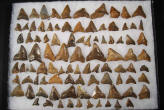
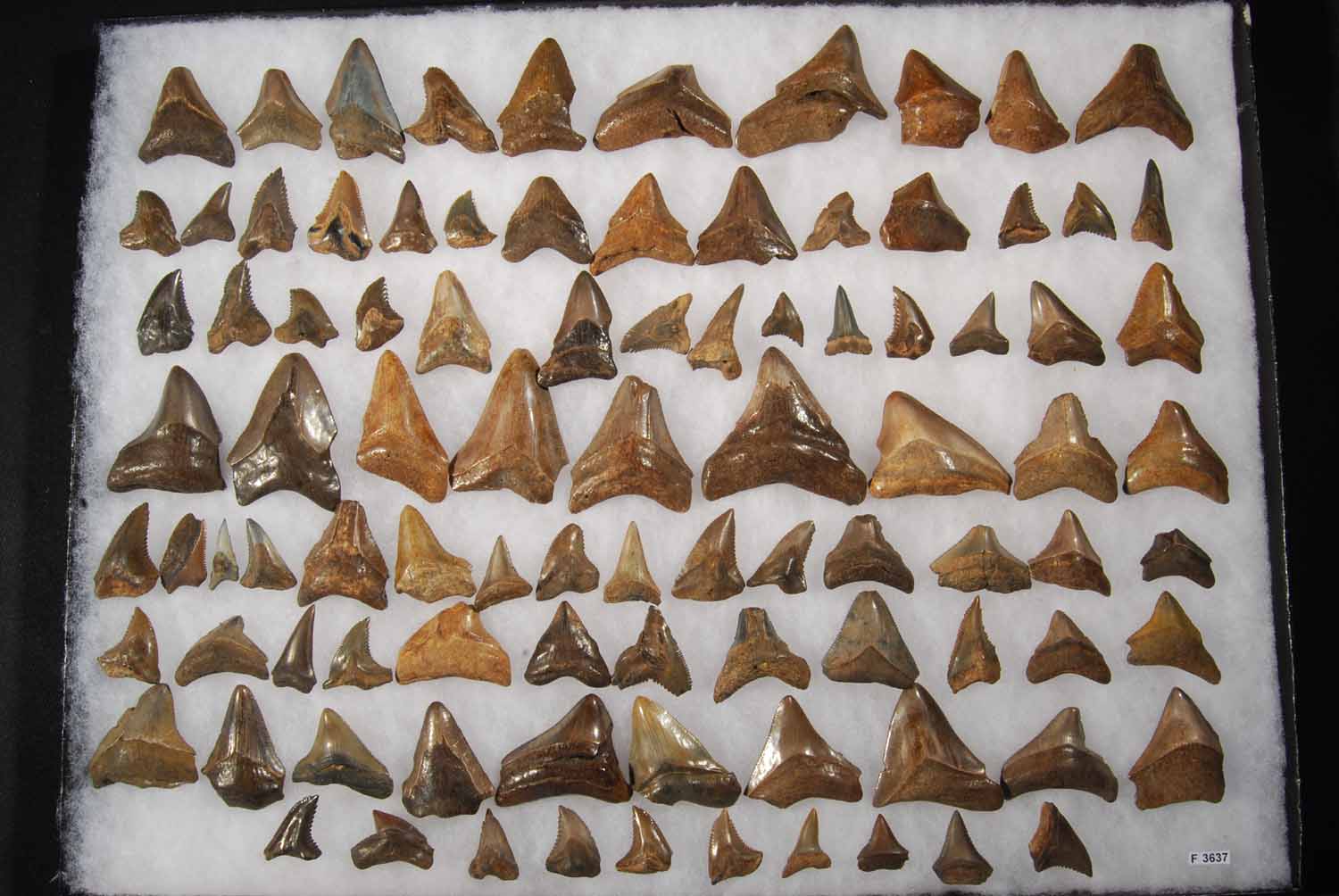
Image Code F3637 |
Catalogue No.: F3637
Description:
Fossil teeth,
Carcharocles megalodon.
Mio-Pliocene Period. 94 pieces.
Size: Average of 55 x 57mm. |
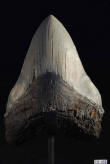
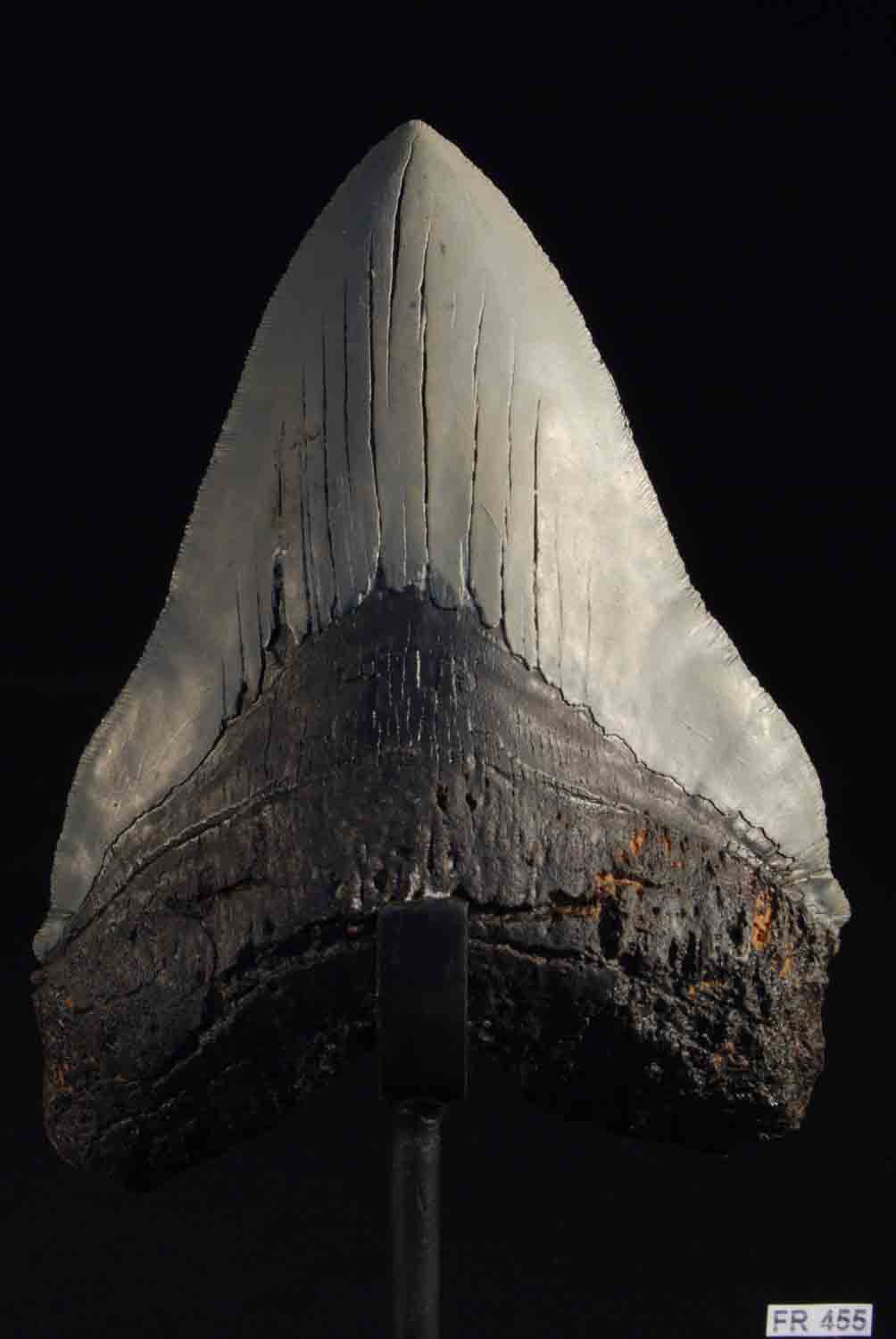
Image Code FR455 |
Catalogue No.: FR455
Description:
Fossil tooth, Carcharocles megalodon.
Mio-Pliocene Period.
Size: H740 X W670mm. |

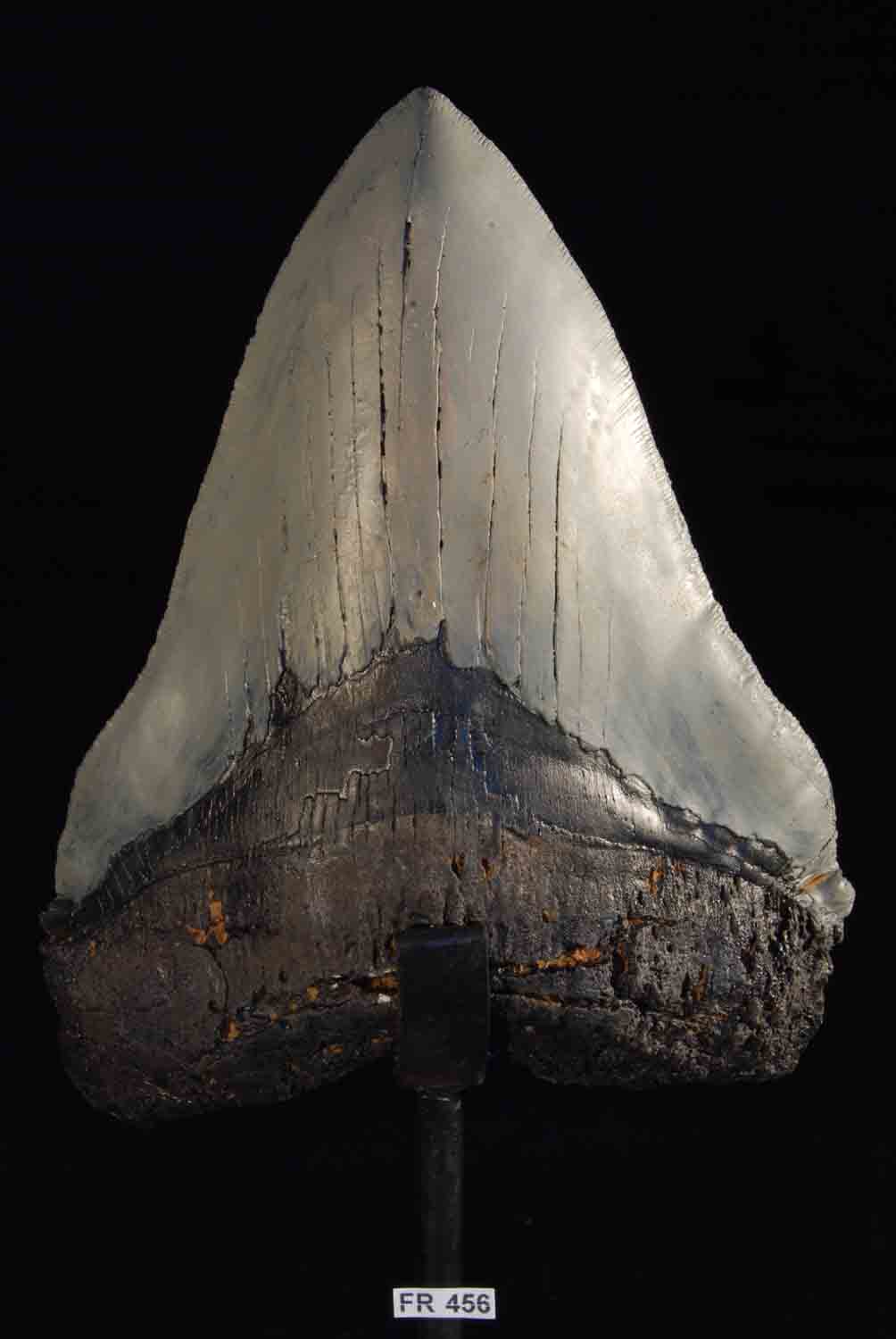
Image Code FR456 |
Catalogue No.: FR456
Description:
Fossil tooth, Carcharocles megalodon.
Mio-Pliocene Period.
Size: H740 X W670mm. |
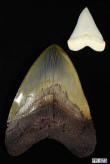
Image Code FR673 |
Catalogue No.: FR673
Description:
Fossil Carcharodon
megalodon
tooth, and a tooth of a
modern great
white shark Carcharodon
carcharias.
Teeth of the Animal Kingdom. Great
White Shark & Prehistoric Megalodon. Museum Quality resin replicas,
skilfully cast from the real teeth. For exhibit and study purposes. Bone
Clones.
Size: 138 X 102mm. |
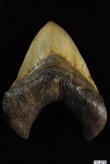
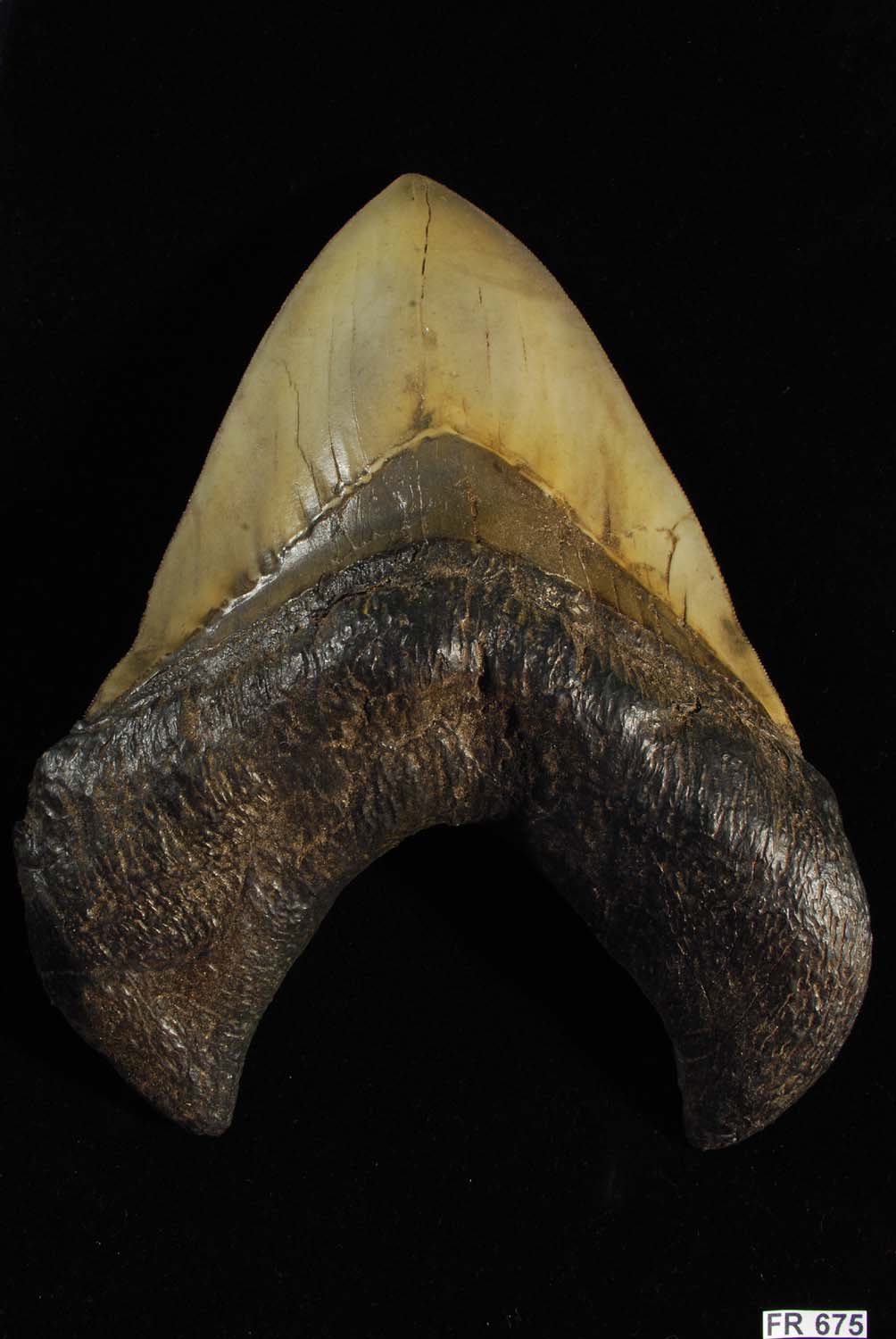
Image Code FR675 |
Catalogue No.: FR675
Description:
Fossil tooth,
Carcharocles megalodon.
Mio-Pliocene Period.
Size: 184 X 130mm. |
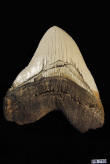
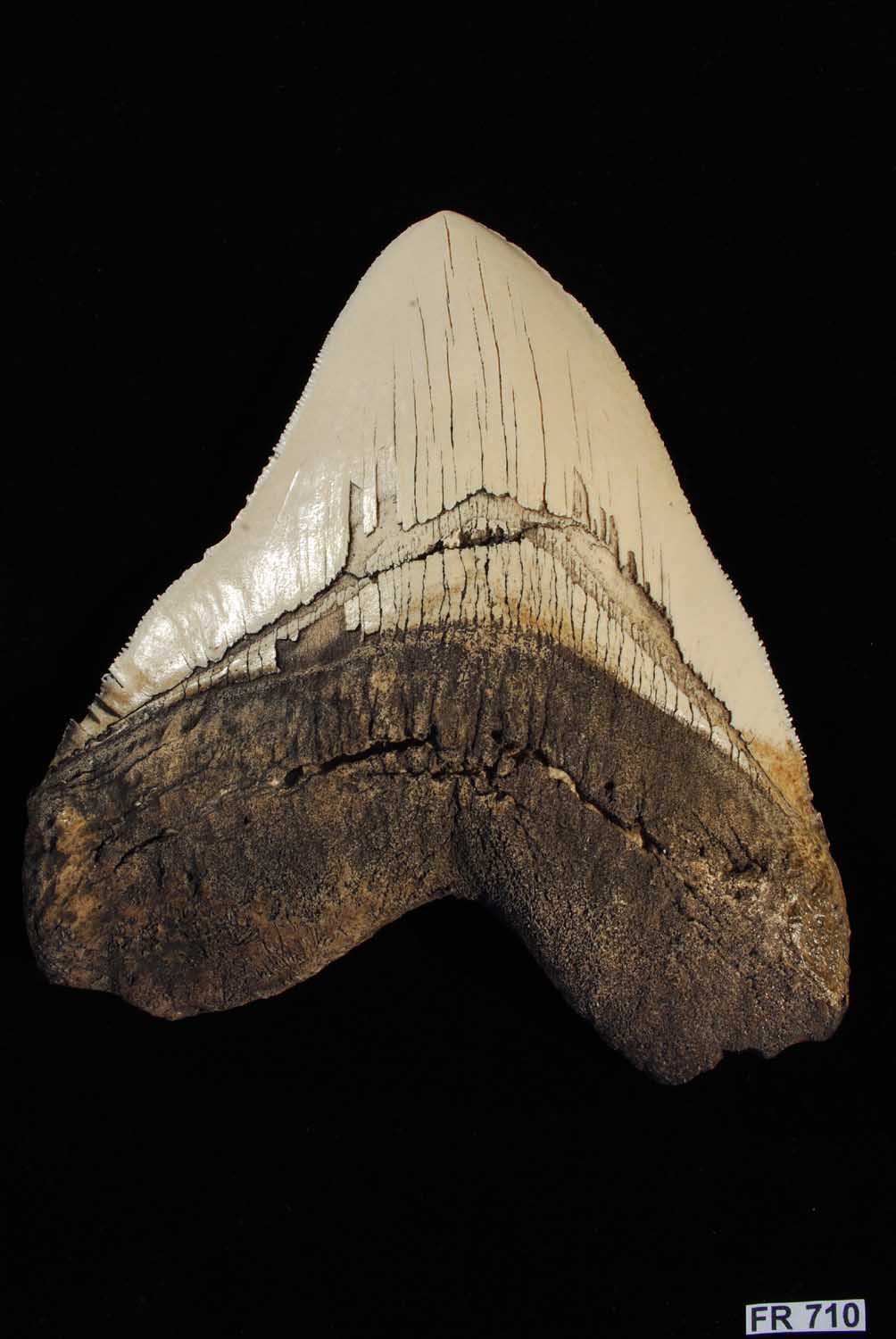
Image Code FR710 |
Catalogue No.: FR710
Description:
Fossil tooth,
Carcharocles megalodon.
Mio-Pliocene Period. From the gigantic 90 foot monster of the ancestor seas off North
America. Ancestor of the notorious Great White Shark. 30-15 MYO. VAP Replica
T04A.
Size: 140 X 116mm. |
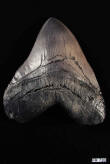
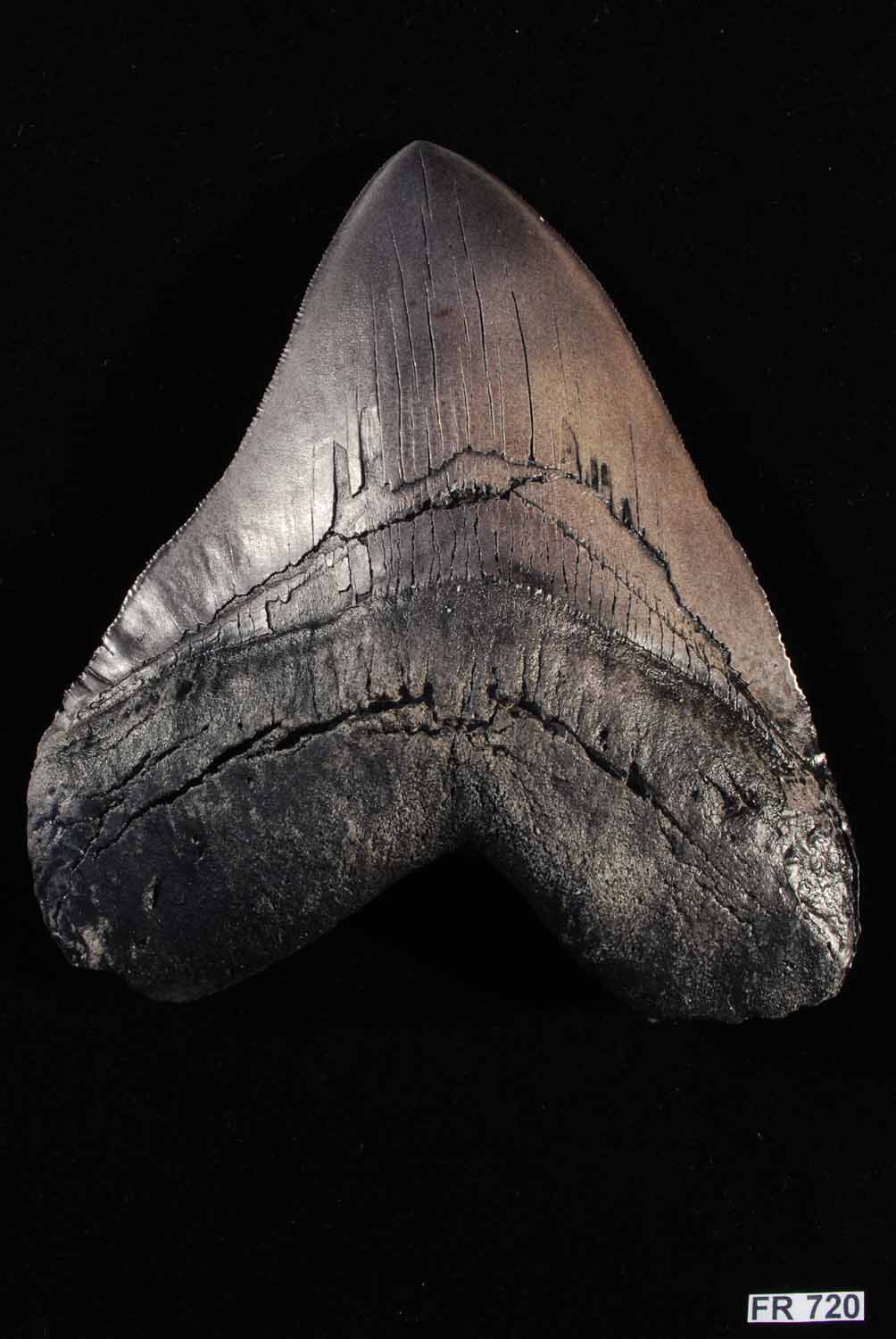
Image Code FR720 |
Catalogue No.: FR720
Description:
Fossil tooth,
Carcharocles megalodon.
Mio-Pliocene Period. From the gigantic 90 foot monster of the ancestor seas off North
America. Ancestor of the notorious Great White Shark. 30-15 MYA.
Size: 143 X 114mm. |
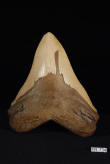
Image Code FR734 |
Catalogue No.: FR734
Description:
Fossil tooth,
Carcharocles megalodon.
Mio-Pliocene Period.
Size: 136 X 110mm. |
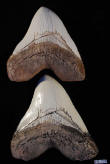
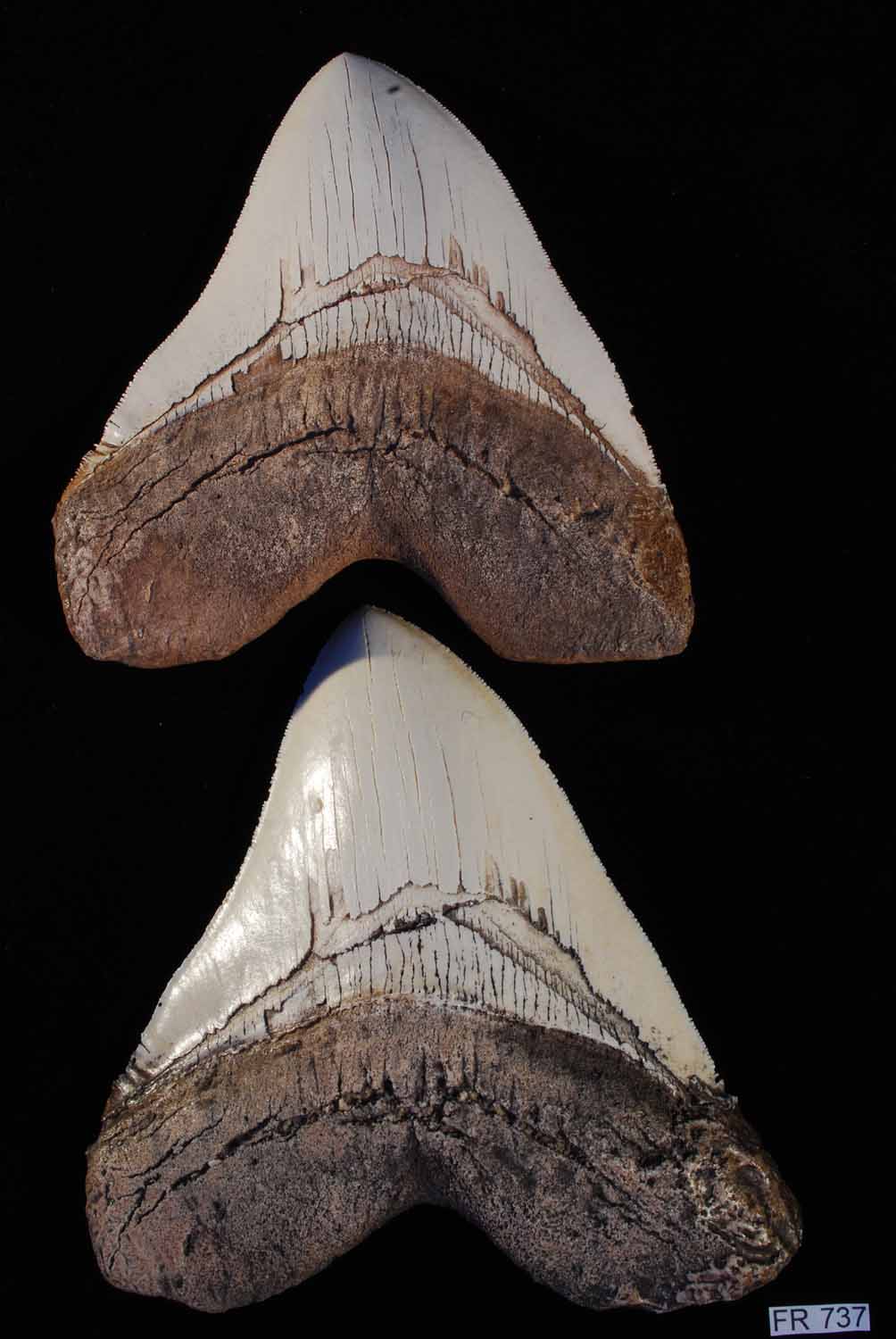
Image Code FR737 |
Catalogue No.: FR737
Description:
Fossil tooth,
Carcharocles megalodon.
Mio-Pliocene Period. From the gigantic 90 foot monster of the ancestor seas off North
America. Ancestor of the notorious great white shark. 30-15 MYA. VAP Replica
T04A.
Size: (2) 140 X 114mm. |
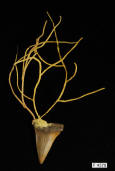
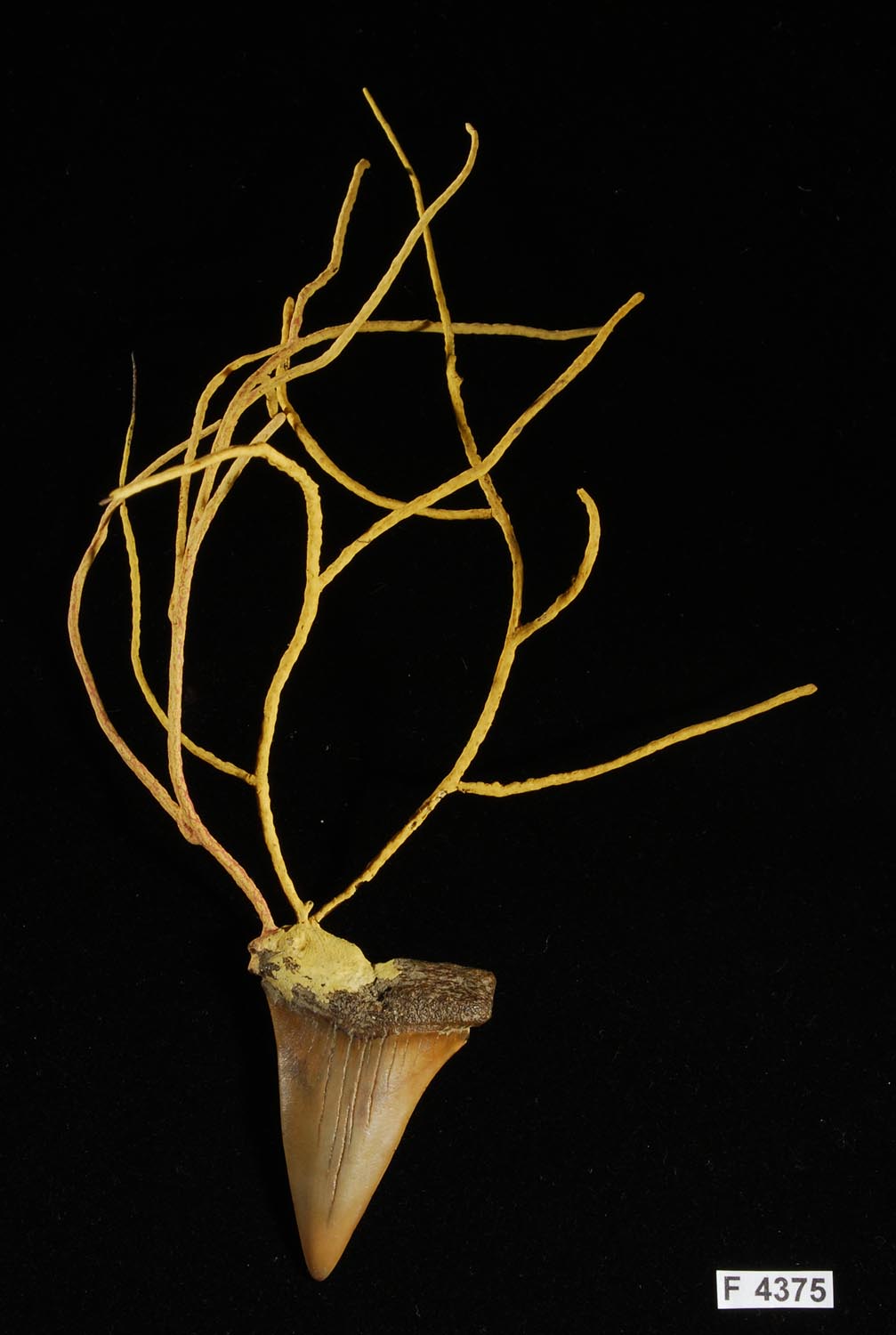
Image Code F4375 |
Catalogue No.: F4375
Description:
Fossil tooth with sea fan,
Carcharocles megalodon.
Mio-Pliocene
Period.
Size: 30 X 39mm. |
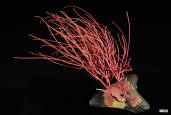
Image Code F4376 |
Catalogue No.: F4376
Description:
Fossil tooth with sea fan,
Carcharocles megalodon.
Mio-Pliocene
Period.
Size: 86 X 112mm. |
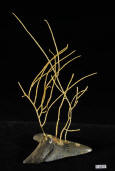
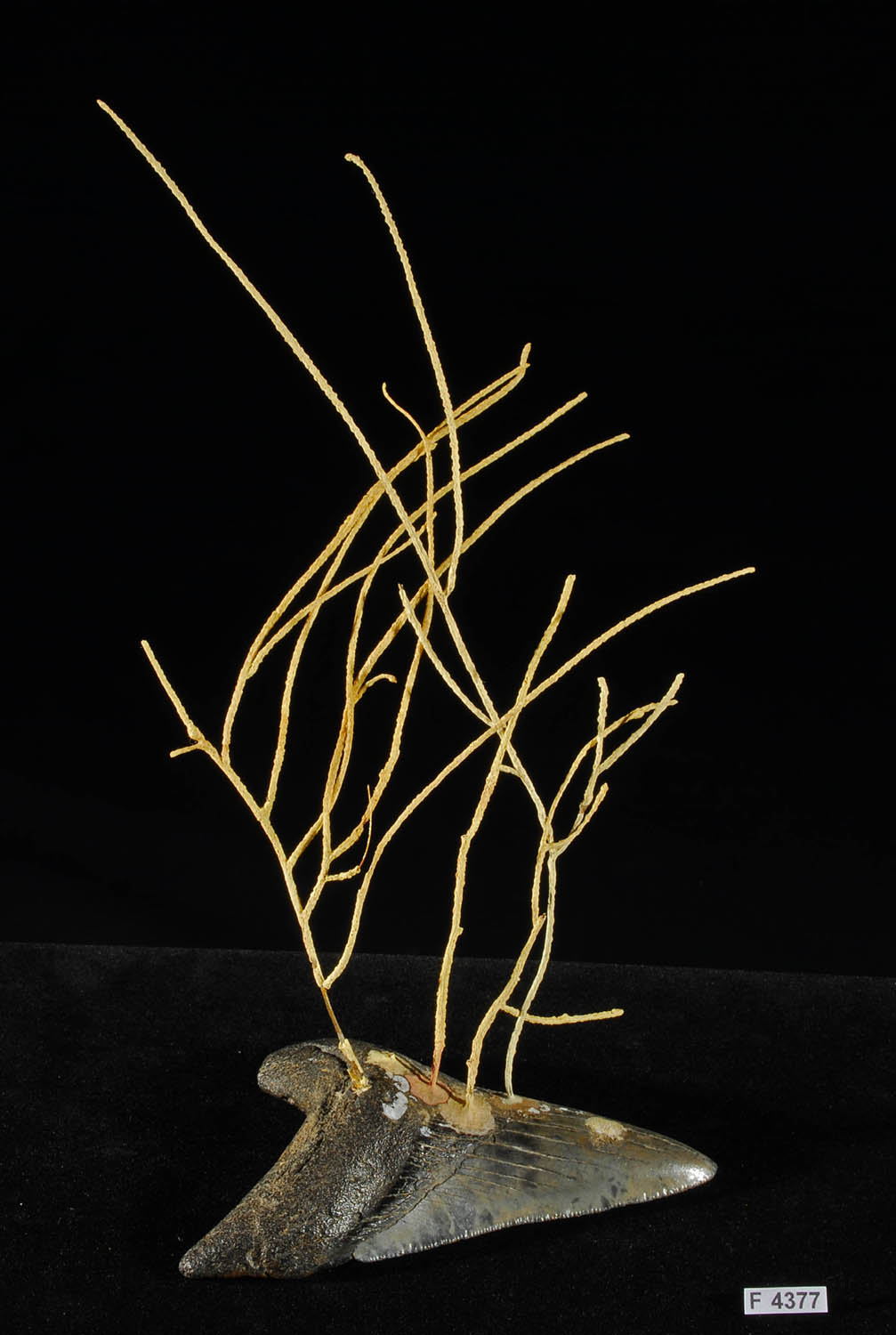
Image Code F4377 |
Catalogue No.: F4377
Description:
Fossil tooth with sea fan,
Carcharocles megalodon.
Mio-Pliocene
Period.
Size: 64 X 100mm. |
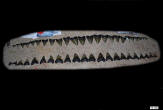
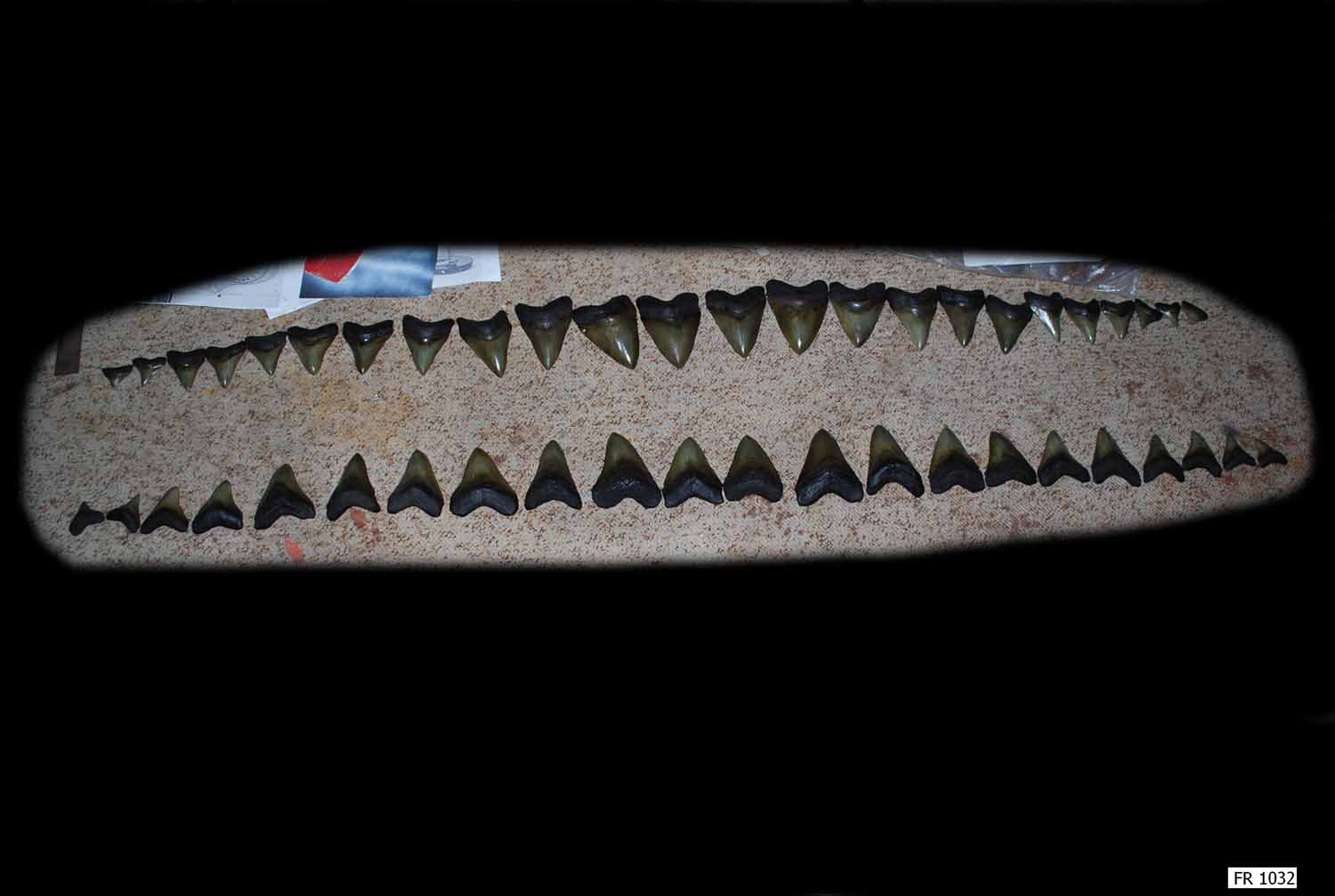
Image Code FR1032
|
Catalogue
No.: FR1032
Description: Set of 46 Megalodon Shark teeth.
Carcharocles megalodon.
This set of 46 teeth is among the largest found and came from a 15 metre
long Megalodon that lived about 20MYA. Will be mounted in a replica
Megalodon jaw prior to sale.
Size: When mounted 1600mm. |
Genus:
Isurus
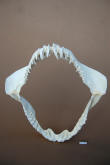
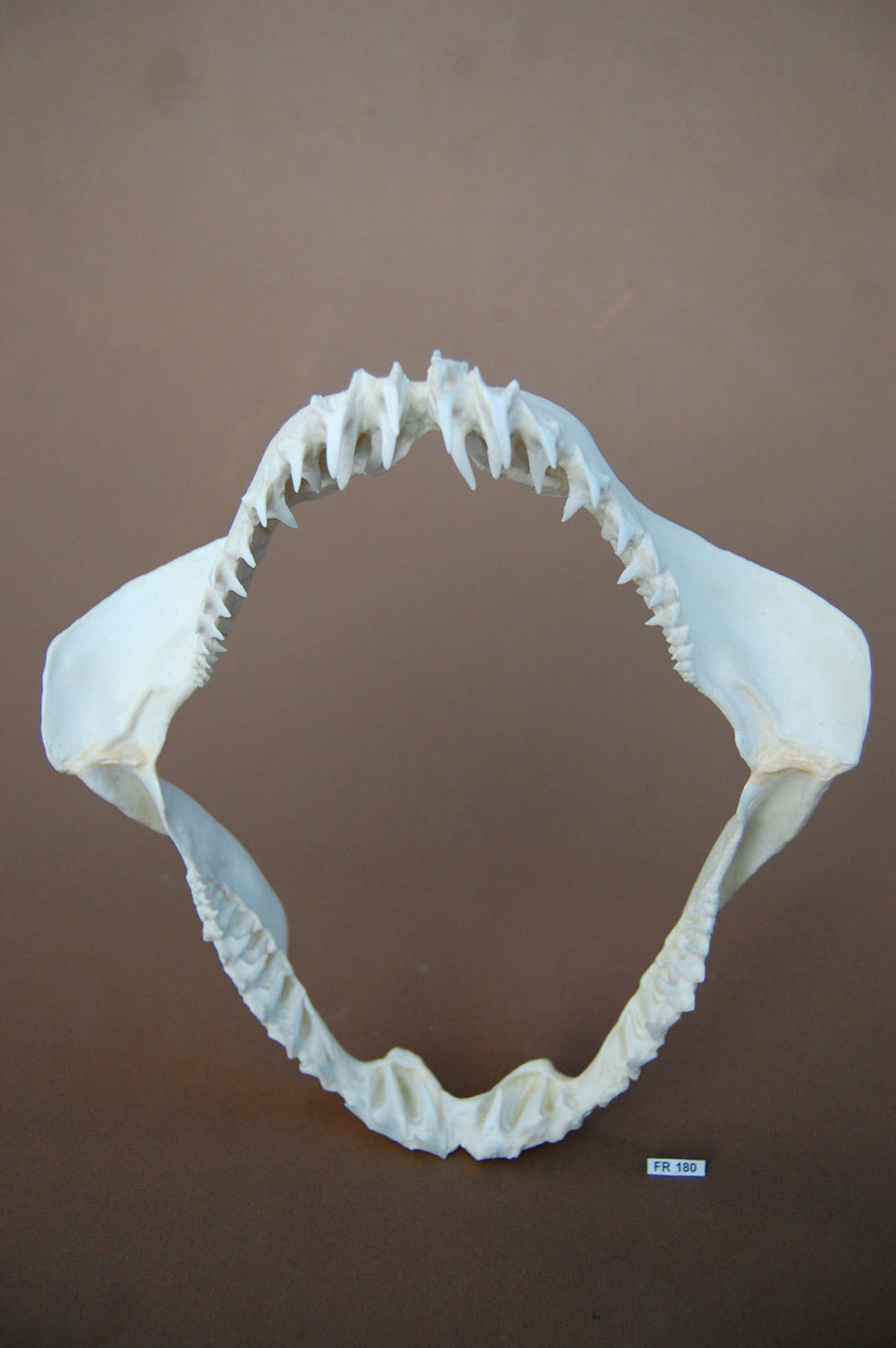
Image Code FR180 |
Catalogue No.: FR180
Description:
Shortfin Mako Shark
Jaw,
Isurus oxyrinchus. The athletic
Shortfin Mako is able to reach speeds of 22 mph and make leaps of 20 feet.
The hydrodynamic body of this desirable game fish is metallic blue on top and
snow white below. Hunted for its high-quality flesh, the female mako can
reach over 12 feet and 1,000 pounds. Its always visible teeth are long
slightly-curved daggers with smooth, razor-sharp cusps. Bone Clones BC-236.
Size: H260 X W200mm. |
Family:
Otodontidae
Genus:
Otodus

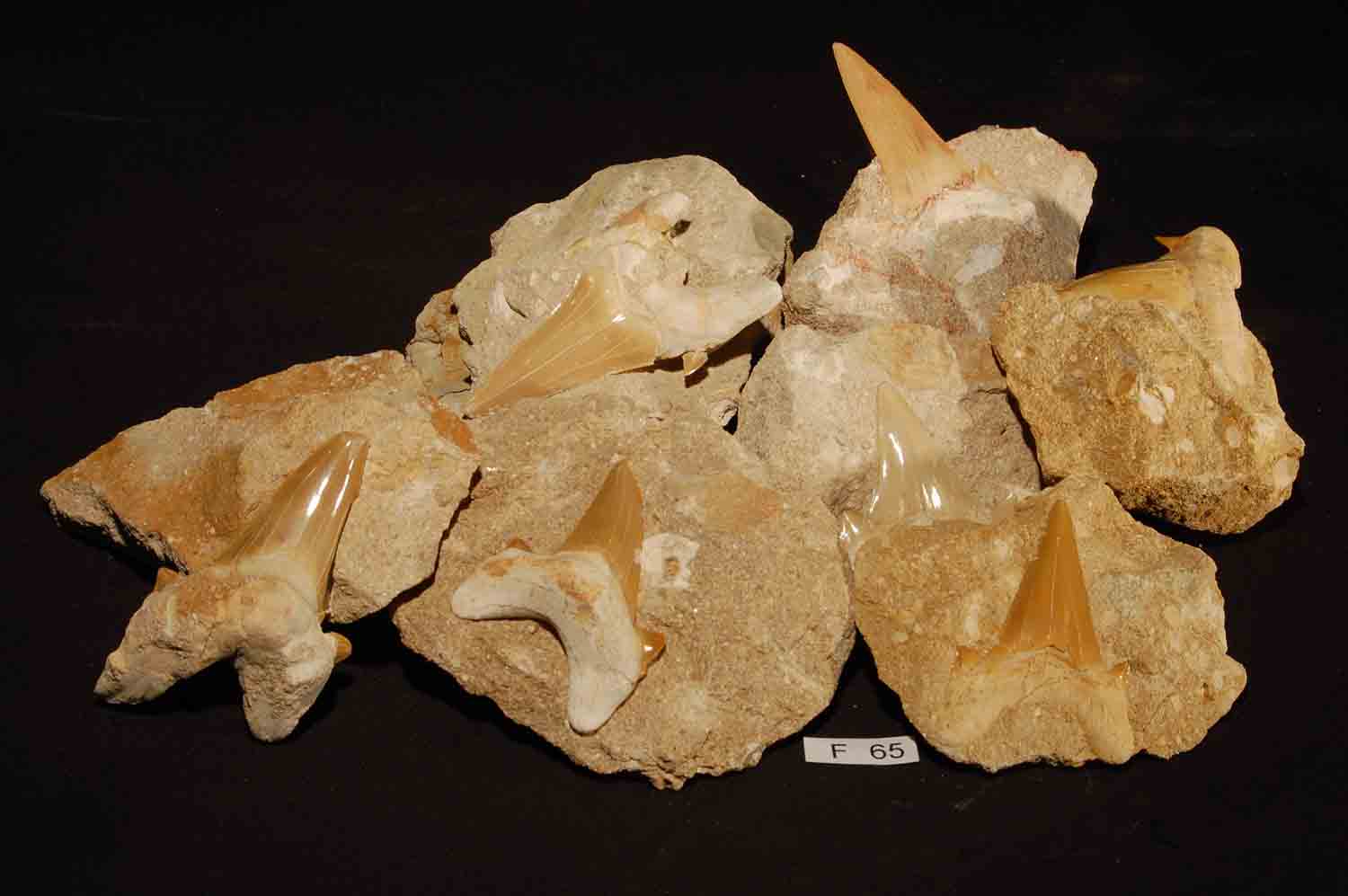
Image Code F65 |
Catalogue No.: F65
Description:
Mackerel Shark Teeth
Fossils, Otodus obliquus. Early Eocene,
Morocco,
Africa. 290 pieces.
Size: 64 X 100mm. |
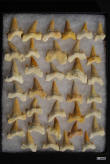
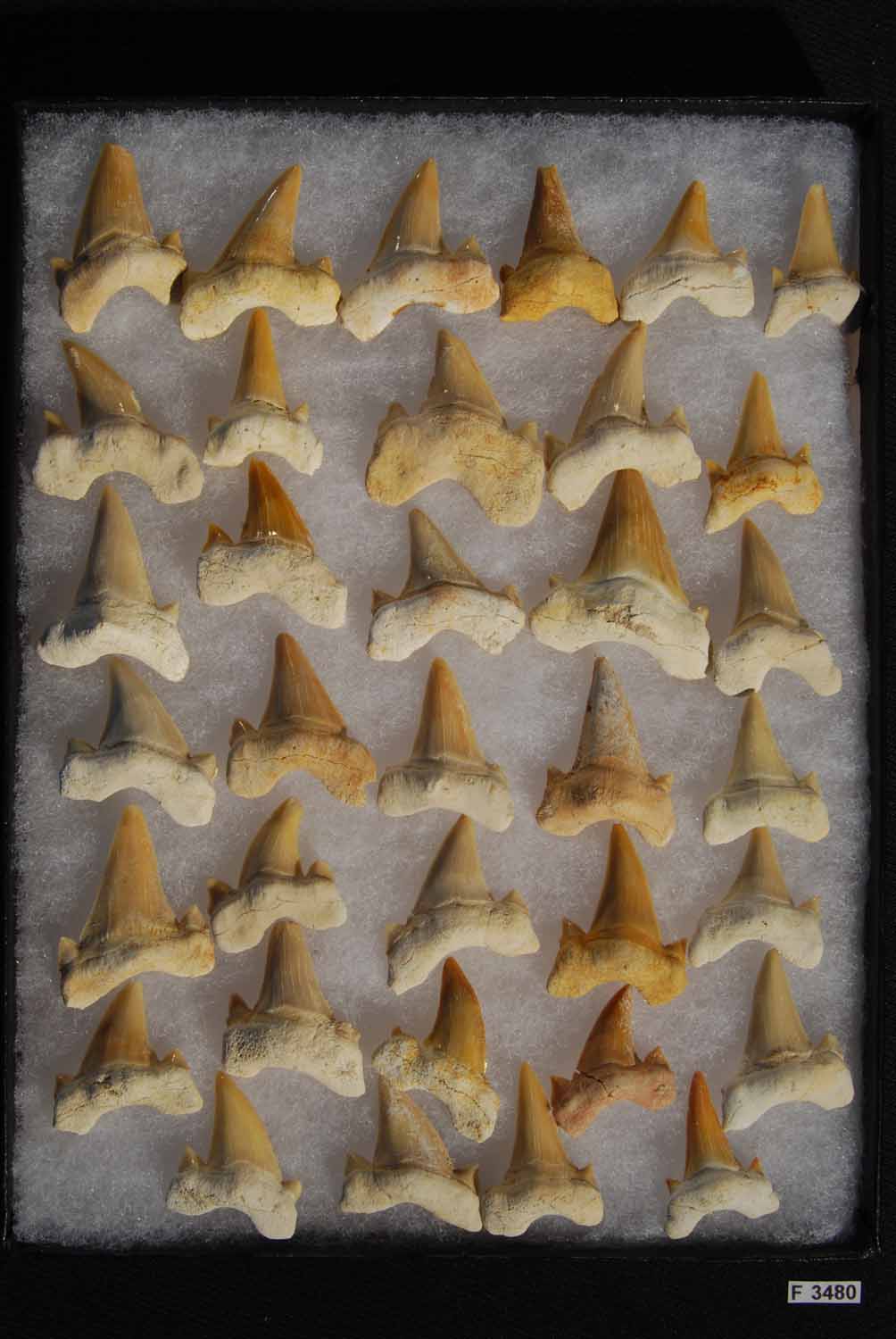
Image Code F3480 |
Catalogue No.: F3480
Description:
Mackerel Shark Teeth Fossils, Otodus
obliquus. Early Eocene, Morocco, Africa.
35 pieces.
Size: Average of 40 x 35mm. |

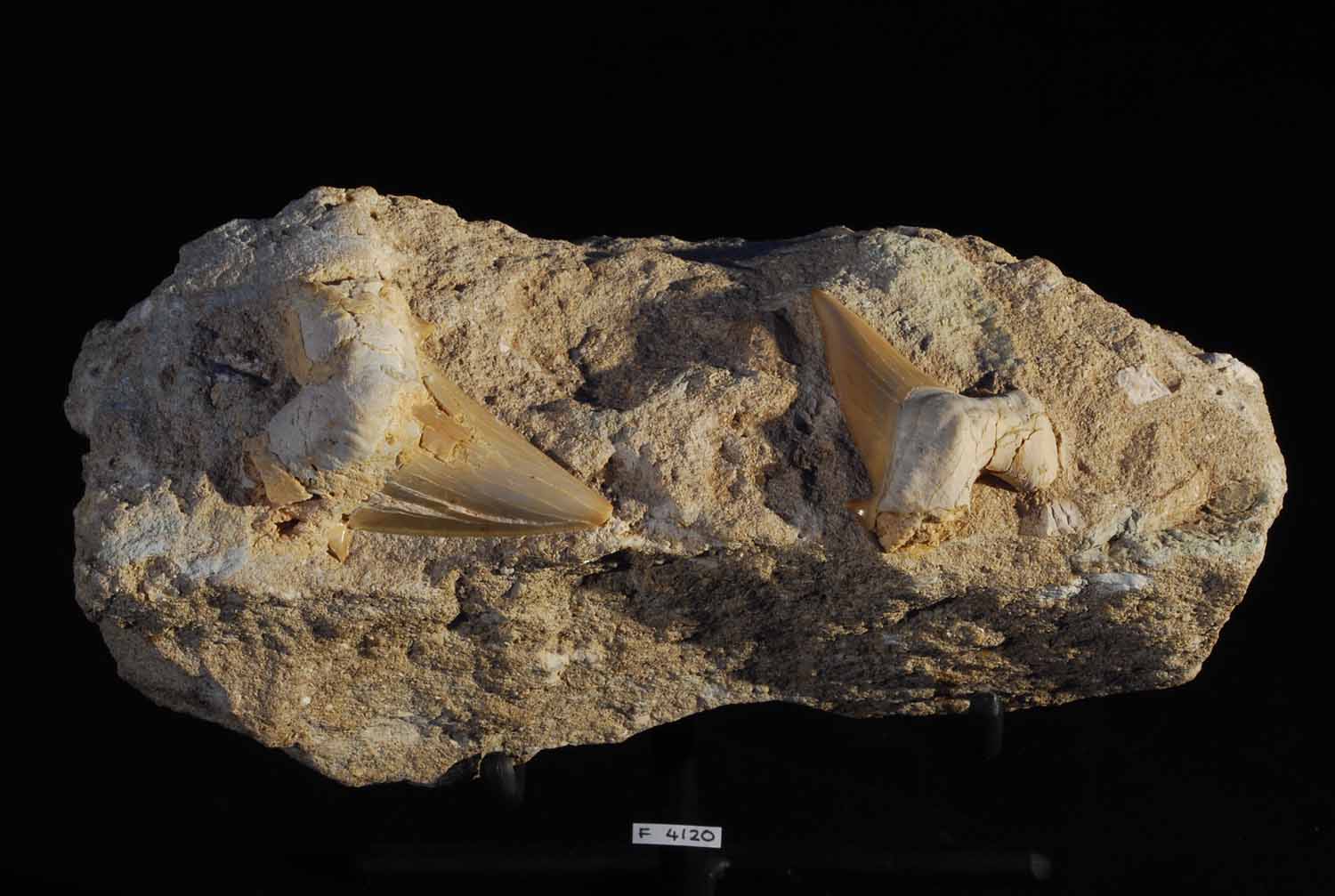
Image Code F4120 |
Catalogue No.: F4120
Description:
Mackerel Shark Teeth Fossils, Otodus
obliquus. Early Eocene, Morocco, Africa.
Size: 220 X 105mm. |
Family:
Odontaspididae.
Genus:
Carcharias
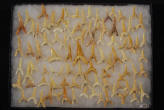
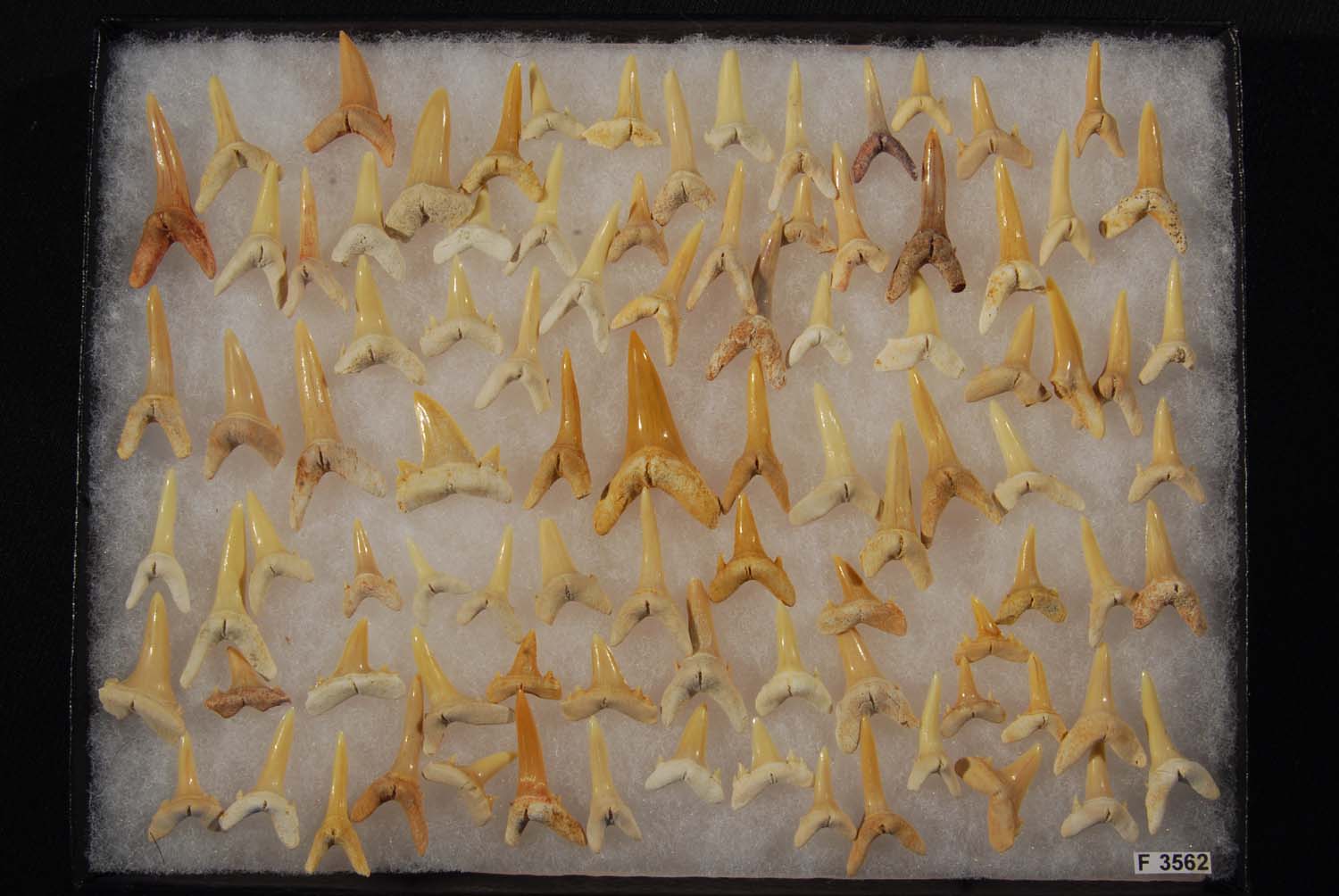
Image Code F3562 |
Catalogue No.: F3562
Description:
Shark teeth fossils,
Carcharias sp.
91 pieces.
Size: Average of 26 x 12mm. |
Family:
Anacoracidae
Genus:
Squalicorax
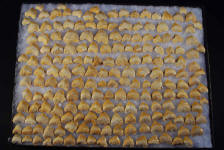
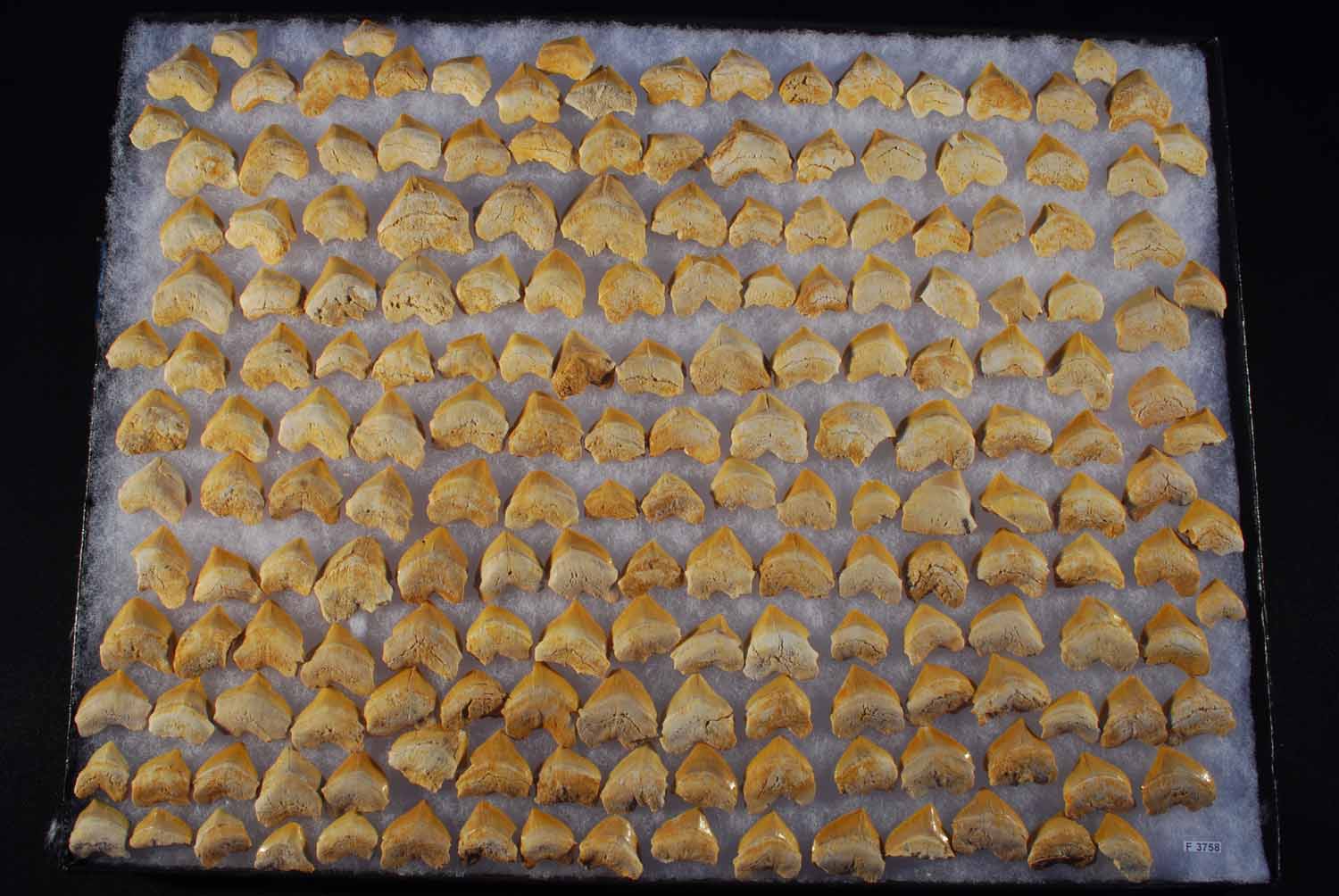
Image Code F3758 |
Catalogue No.: F3758
Description:
"Crow Shark" teeth,
Squalicorax
pristodontus. 188 pieces.
Size: average 25-30mm each. |
Order:
Carcharhiniformes
The ground sharks, order Carcharhiniformes, are the largest order of sharks;
they are also called whaler sharks. With over 270 species, carcharhiniforms
include a number of common types, such as the blue shark, catsharks, swellsharks,
and sandbar shark.
Family:
Carcharhinidae
Genus:
Carcharhinus
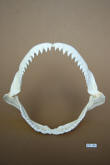
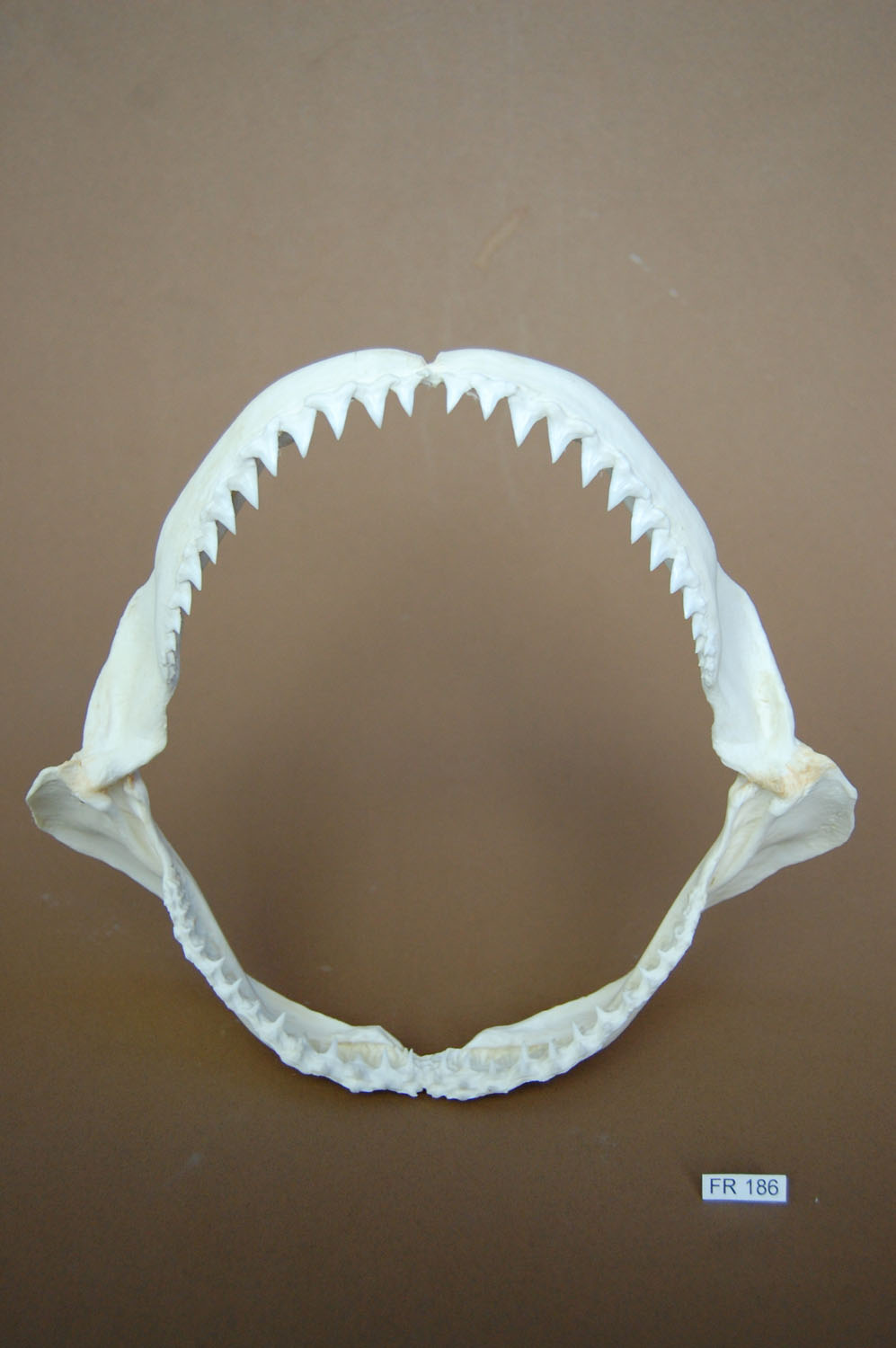
Image Code FR186 |
Catalogue No.: FR186
Description:
Sandbar Shark Jaw. Carcharhinus
plumbeus. Living up to
its name, the sandbar shark prefers the sandy bottoms of temperate or
tropical coastal waters worldwide. It typically swims at depths of 60-200',
feeding on bony fishes, mollusks and crustaceans. A popular target of both
commercial and recreational fishermen, the shark is about 6' long and weighs
up to 200 lbs. Its uncommonly tall first dorsal fin. With a rounded, short
snout, it has saw-edged upper teeth. Bone Clones BC-231.
Size: H250 X W290mm. |
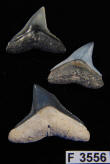
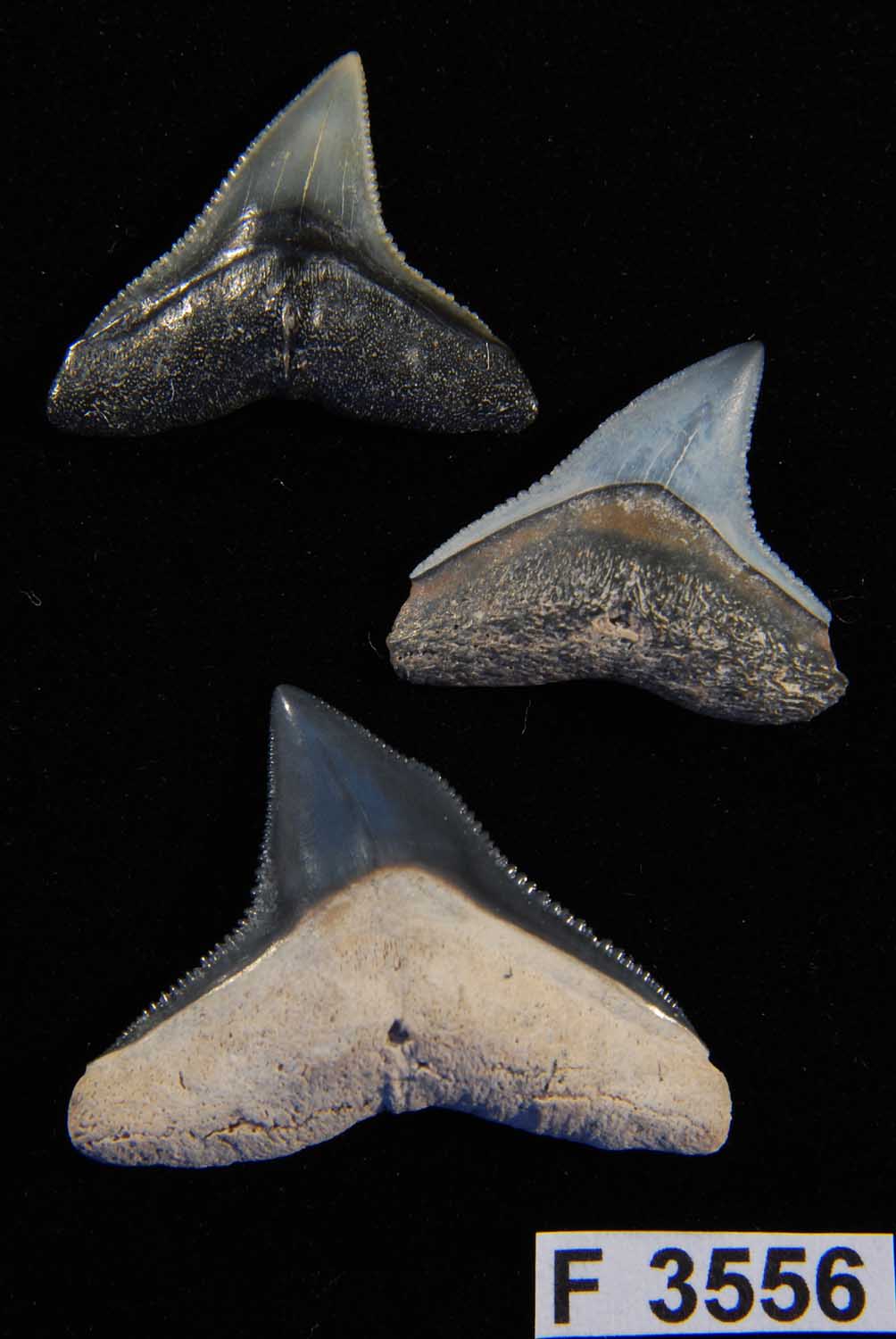
Image Code F3556 |
Catalogue No.: F3556
Description:
Shark teeth fossil,
Carcharhinus sp. 3 pieces.
Size: 24 x 20mm. |
Order:
Squaliformes
Family:
Dalatiidae

Image Code FR182 |
Catalogue No.: FR182
Description:
Kitefin Shark Jaw. Dalatias
licha. The Kitefin Shark
lives a solitary life in the watery depths of tropical and warm-temperate
regions. Its large liver allows it to achieve almost neutral buyoyancy. This
dark, cigar-shaped shark, which is absen an anal fin, usually reaches
3.5-4.5 feet. The teeth in its upper jaw are small and hooked while those in
its lower jaw are big, serrated triangles. Bone Clones BC-233.
Size: H130 X W100mm. |
Order:
Orectolobiformes
Family: Stegostomatidae
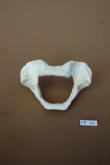
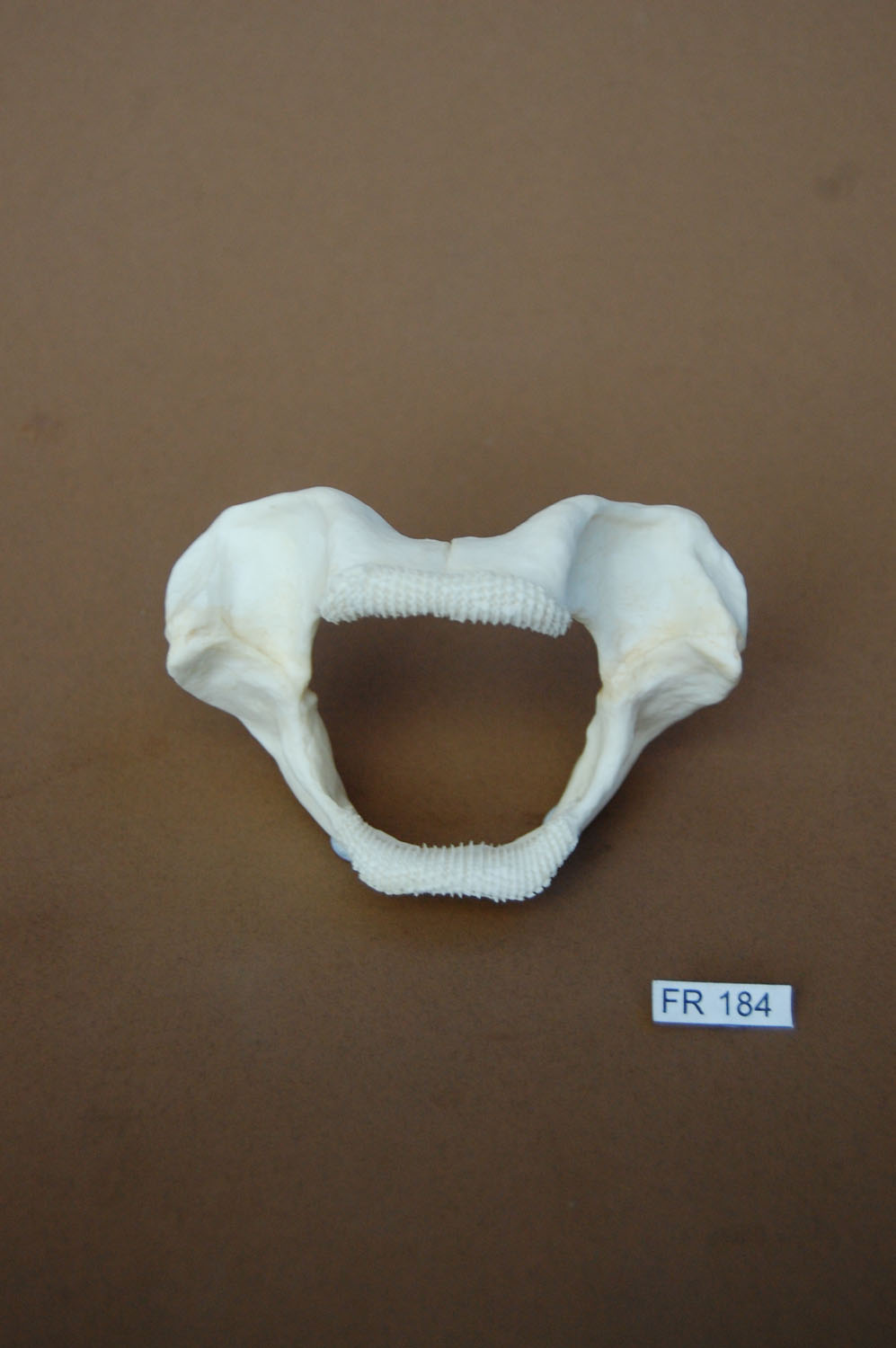
Image Code FR184 |
Catalogue No.: FR184
Description:
Zebra Shark Jaw,
Stegostoma fasciatum. While the young
Zebra Shark is dark brown with whitish stripes, the mature shark is tan with
brown spots, motivating its alternative name, the Leopard Shark. Ridges run
down each side from the head to the caudal fin, the length of which is
nearly that of hte rest of the body. This sleek, docile shark, which grows
to 11.5 feet, is found in the western Pacific and Indian Oceans. Bone Clones
BC-237.
Size: 70 X 110mm. |
Order:
Heterodontiformes
Family: Heterodontidae
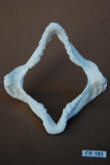
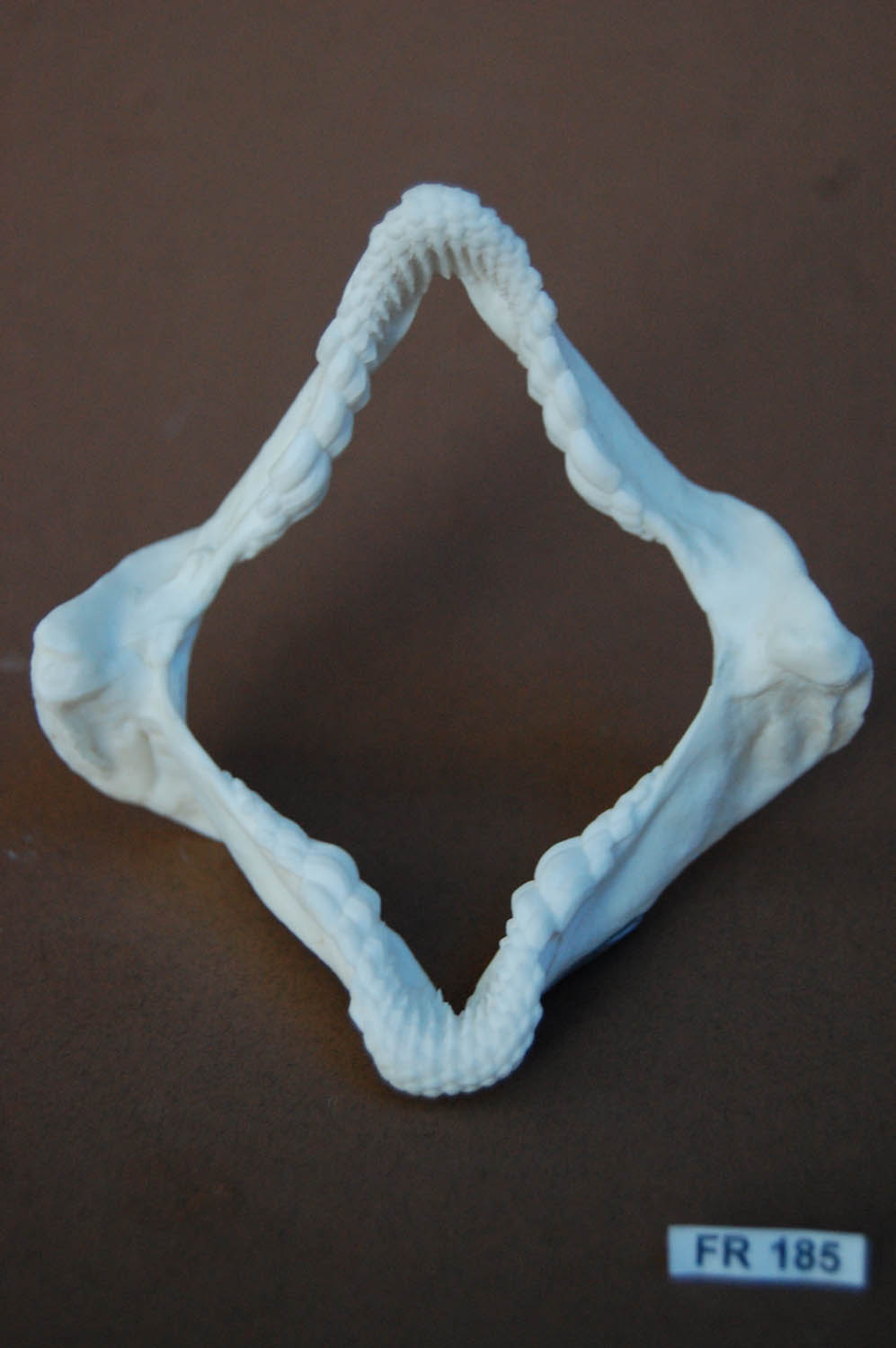
Image Code FR185 |
Catalogue No.: FR185
Description: Bullhead Shark Jaw. Heterodontus zebra. The Zebra
Bullhead is a little-known bottom-feeder found in the western Pacific Ocean.
Appropriately named, the shark has dark, vertical stripes against a lighter
background and a noticably short, blunt snout. Typically growing to 4 feet,
it feeds on crustaceans and mollusks. Both dorsal fins possess a fin spine.
Bone Clones.
Size: 95 X 90mm. |
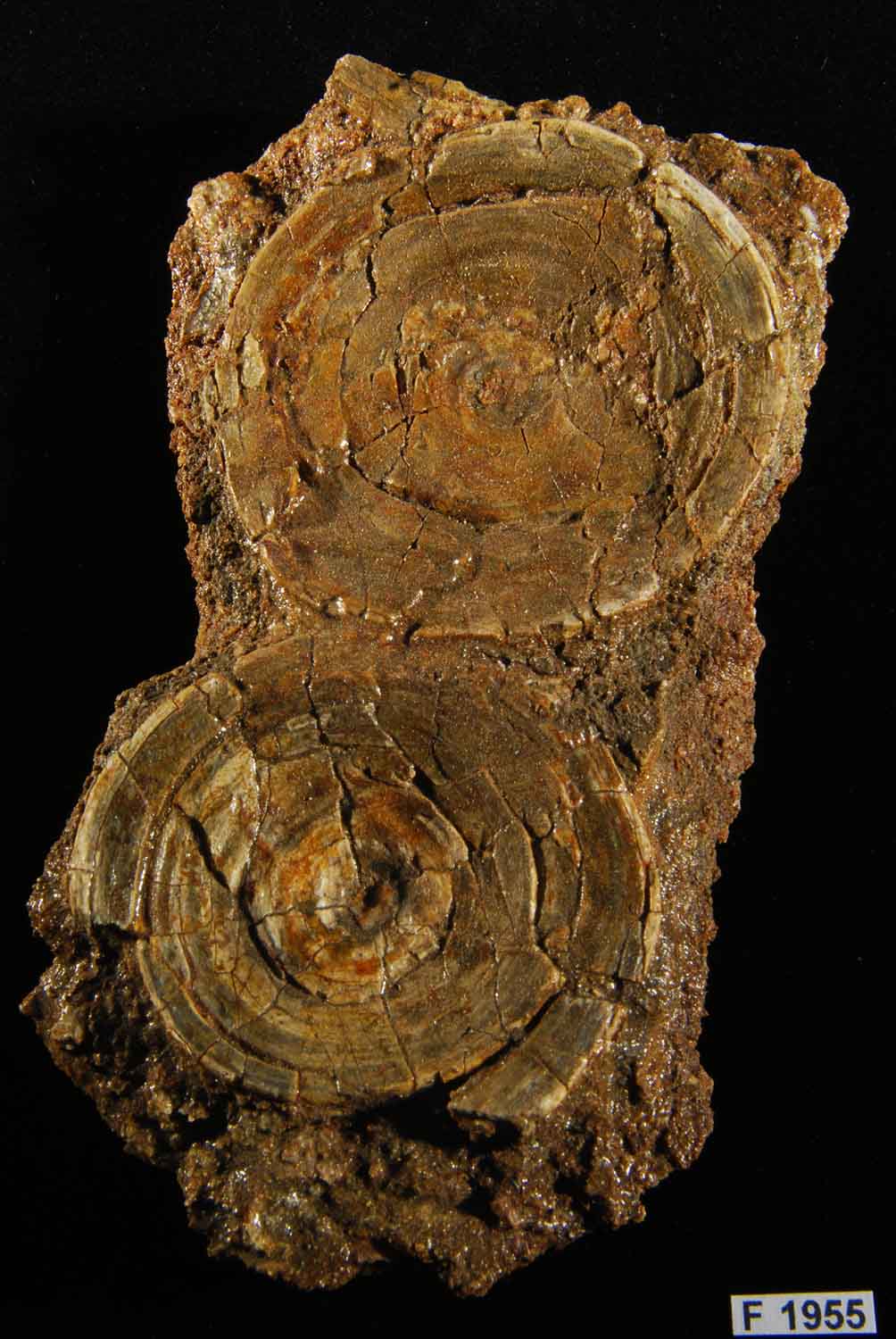
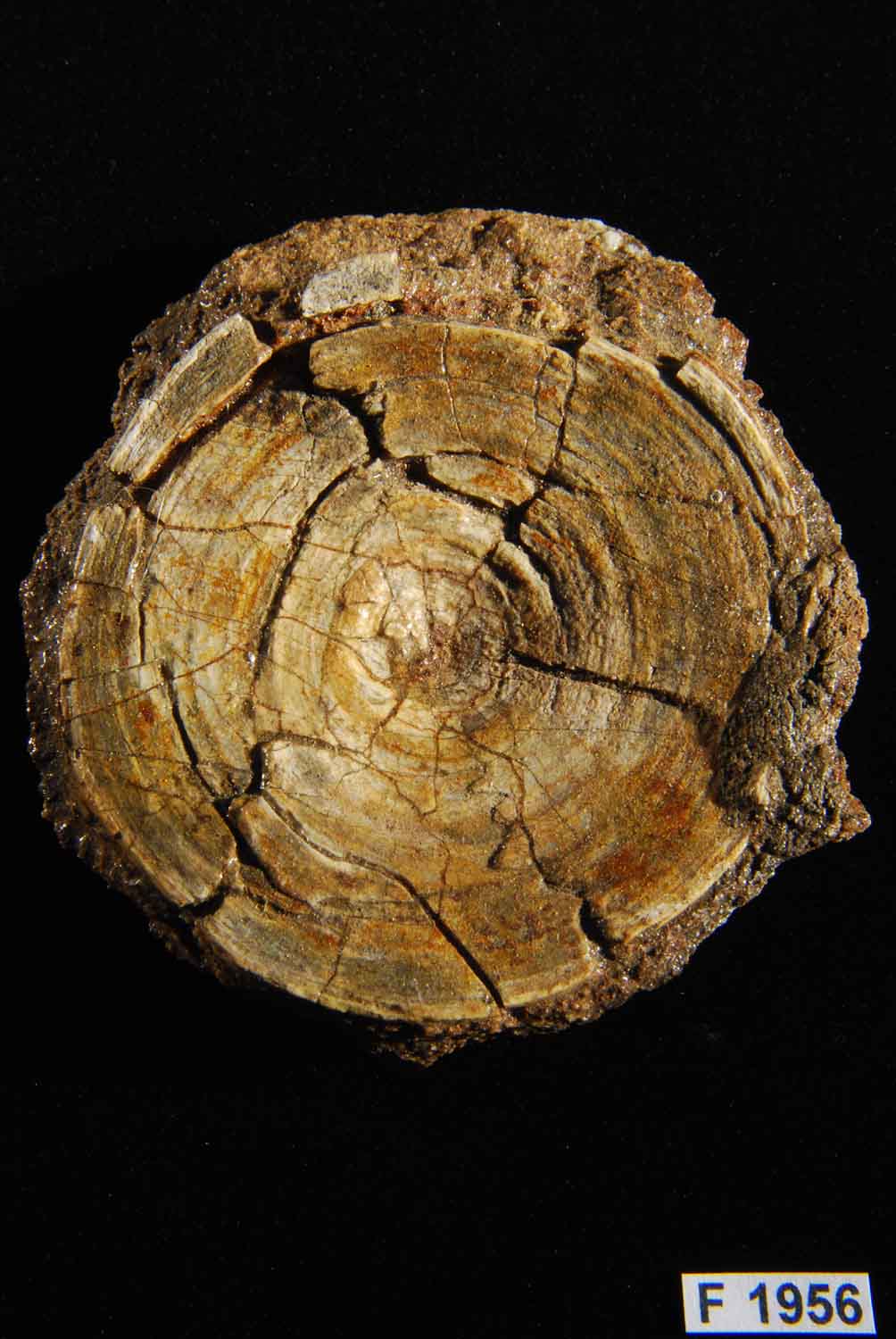
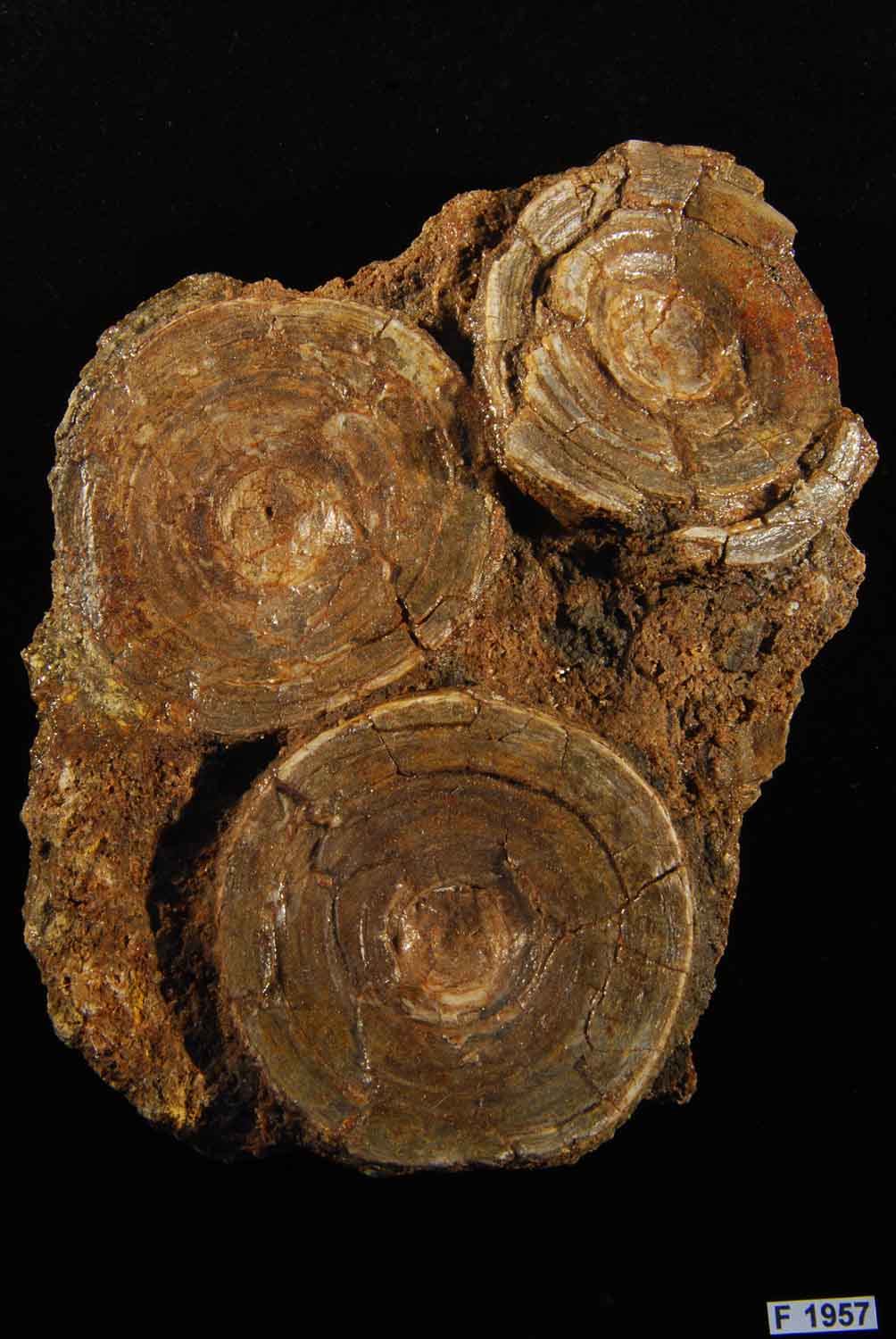
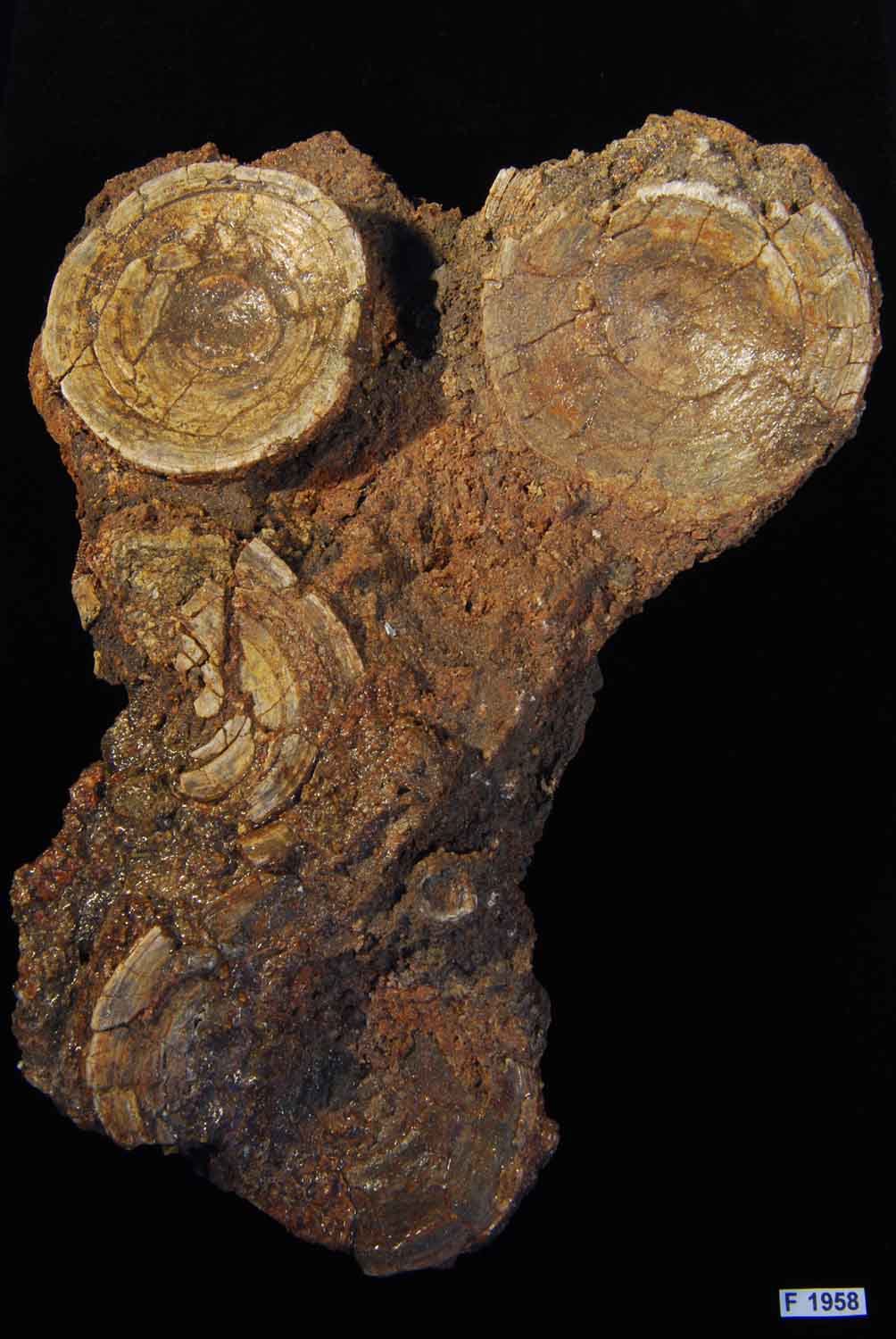
General
Chondrichthyes

Image Code F1955 |
Catalogue No.: F1955
Description:
Subclass:
Elasmobranchii.
Shark Bone Fossil.
Size: 139 X 116mm. |
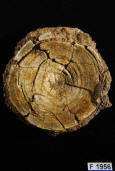
Image Code F1956 |
Catalogue No.: F1956
Description:
Subclass:
Elasmobranchii.
Shark Bone Fossil.
Size: 72 X 69mm. |
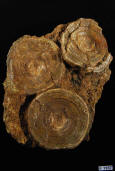
Image Code F1957 |
Catalogue No.: F1957
Description:
Subclass:
Elasmobranchii.
Shark Bone Fossil.
Size: 154 X 116mm. |
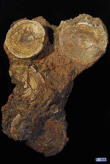
Image Code F1958 |
Catalogue No.: F1958
Description:
Subclass:
Elasmobranchii.
Shark Bone Fossil.
Size: 195 X 146mm. |
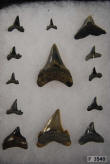
Image Code F3549 |
Catalogue No.: F3549
Description:
Subclass:
Elasmobranchii.
Fossil shark teeth (various species).
13
pieces.
Size: Average of 37 x 29mm. |

Image Code F3556 |
Catalogue No.: F3556
Description:
Subclass:
Elasmobranchii.
Fossil shark teeth (various species). 3
pieces.
Size: 24 X 20mm. |
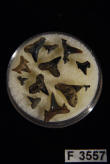
Image Code F3557 |
Catalogue No.: F3557
Description:
12 pieces
teeth set including:
Mackerel sharks teeth (Class:
Chondrichthyes.
Subclass:
Elasmobranchii. Order:
Lamniformes. Family:
Lamnidae
Genus:
Lamna);
Sand
Tiger Shark
teeth (Order:
Lamniformes.
Family:
Odontaspididae. Genus:
Carcharias,
Carcharias
taurus.)
and
Tiger Shark
teeth
(Order:
Carcharhiniformes. Family:
Carcharhinidae. Genus:
Galeocerdo,
Galeocerdo
sp.)
Size: Average of 5mm. |
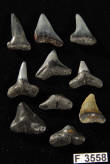
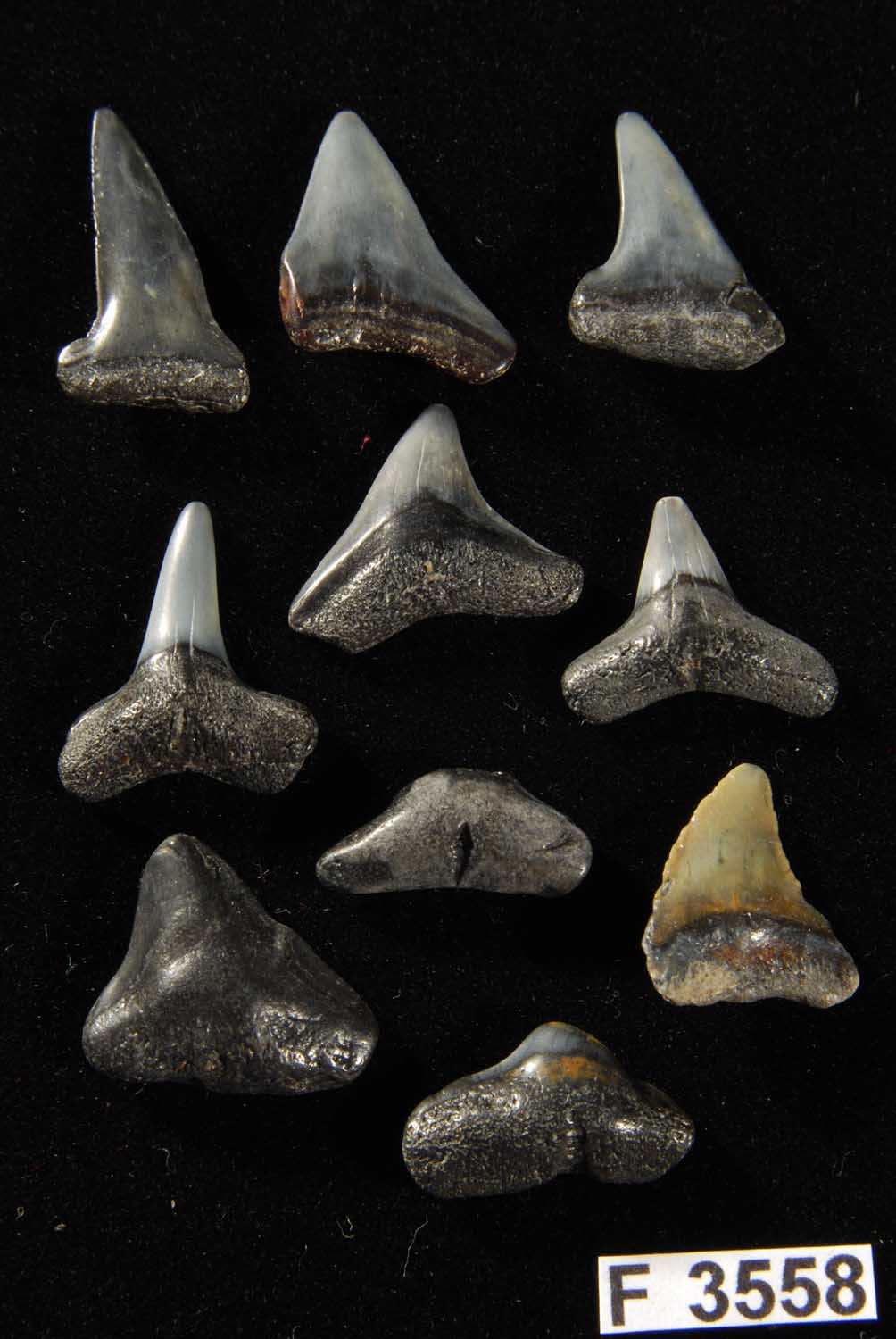
Image Code F3558 |
Catalogue No.: F3558
Description:
Shark teeth fossils (various species) Most
of these teeth are from bull and dusky sharks. 12-28 MYA. These shark teeth
were found on beaches in the southeastern part of the United States of
America. 10 pieces.
Size: Average of 15 x 12mm. |

Image Code F4126 |
Catalogue No.: F4126
Description:
Incomplete fossil shark teeth. Originally
formed in Miocene Pungo River Formation(24-15 MYA). Then exposited to
Pliocene Yorktown Formation (4.4 MYA). Pungo River Formation, Lee Creek Mine.
Beaufort County, North Carolina.
Note: These teeth were exposited to matrix from the Pungo River Formation of
the famous Lee Creek Mine in Beaufort County, North Carolina, to create this
deposit.
Size: 290 X 210mm. |
Return to Top
|